Rodenticide Bait Block
CN → US| HS Code | Tariff Rate | Origin | Destination | Doc |
|---|---|---|---|---|
| 3808990800 | 41.5% | CN | US | Official Doc |
| 3808997000 | 40.0% | CN | US | Official Doc |
| 3808595000 | 15.0% | CN | US | Official Doc |
| 3808999501 | 40.0% | CN | US | Official Doc |
Product Images
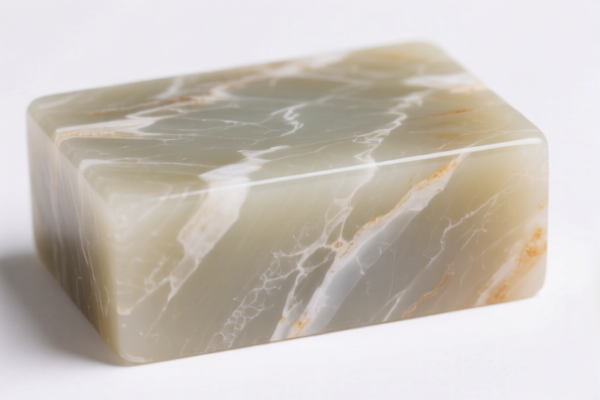
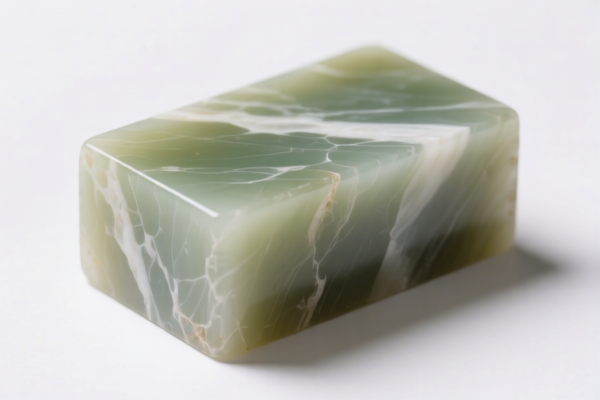
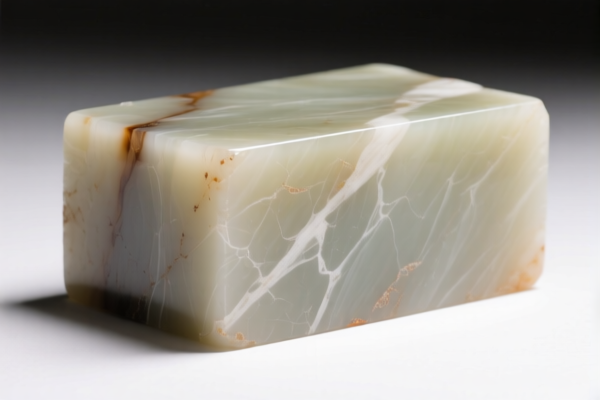
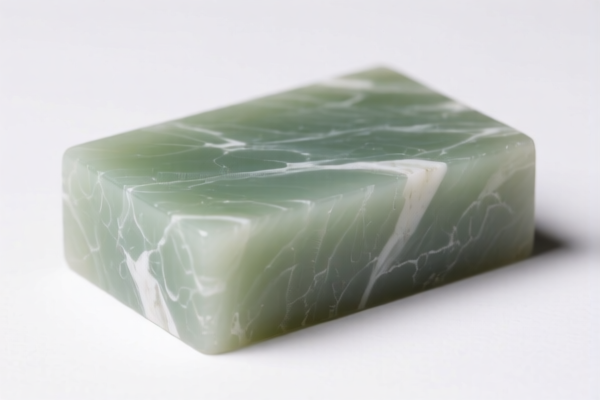
AI Analysis
🐀 Rodenticide Bait Block (杀鼠剂 - 毒饵块)
🌐 HS Code Reference & Customs Clearance Guide | 2026 Latest Tariff Analysis | Professional Clearance Strategy
📌 I. Product Definition & Classification: Do You Really Understand "Rodenticide"?
Rodenticide Bait Blocks are specialized pest control products designed to eliminate rodents (rats, mice) through ingestion. In international trade, they are classified under Chapter 38 (Miscellaneous Chemical Products), specifically as prepared insecticides, fungicides, and similar products.
The core classification depends on two factors:
1. Formulation: Is it a "preparation" (mixed with attractants/binders)?
2. Active Ingredient: Does it contain a specific registered active substance that mandates a specific subheading?
⚠️ Critical Distinction:
- If the product is a generic rodenticide preparation without a specific active ingredient listed in the more precise subheadings, it falls under "Other" categories (3808.99...).
- If the product contains specific active ingredients or fits the "other insecticides/fungicides" criteria, it may fall under 3808.59... or 3808.99.95....
- Misclassification Risk: Incorrectly classifying this product can lead to severe penalties due to differing tariff rates (15% vs. 41.5%) and strict regulatory oversight.
📦 II. HS Code Classification Details (2026 Latest Tariff Authority Comparison)
| HS Code | Product Description | Application Scenario | Tax Rate (Total) | Key Characteristic |
|---|---|---|---|---|
3808.99.08.00 |
Rodenticide (Bait Block) HS Code, purpose and classification consistent, form is a preparation. | General rodenticide bait blocks without specific active ingredient prioritization. | 41.5% | High tariff due to higher USITC surcharge. |
3808.99.70.00 |
Rodenticide (Bait Block) HS Code, purpose and classification explanation consistent, form belongs to preparations. | Generic rodenticide preparations, often used for broad-spectrum pest control. | 40.0% | High tariff, standard preparation category. |
3808.59.50.00 |
Rodenticide (Bait Block) HS Code, name clearly belongs to rodenticides, form meets preparation requirements. | Specific rodenticide preparations with distinct active ingredients categorized under "Other insecticides/fungicides". | 15.0% | Lowest Tariff Option - Requires precise matching of active ingredient criteria. |
3808.99.95.01 |
Rodenticide (Bait Block) HS Code, name and classification purpose match, form is in preparation format. | Other prepared rodenticides not covered by more specific subheadings. | 40.0% | High tariff, residual category for preparations. |
🔍 Key Reminder:
-3808.59.50.00offers the lowest total tax (15%), but requires strict verification that the product's active ingredients and formulation meet the specific criteria for this subheading.
- The remaining codes (3808.99...) carry significantly higher tariffs (40%-41.5%) due to additional USITC surcharges.
- Form is Key: All these codes require the product to be in a "preparation" form (mixed with bait, binders, etc.), not pure active ingredient.
💰 III. 2026 Latest Tariff Rate Details (Including Surcharges & Policy Additions)
✅ Applicable Country: United States (US)
✅ Origin: China (CN)
✅ Effective Time: 2025年11月10日起 (Including subsequent imports)
🎯 1. 3808.59.50.00 —— Rodenticide (Bait Block) - Specific Preparation
| Item | Content |
|---|---|
| Base Tariff | 5.0% (ad valorem) |
| USITC Surcharge | +0.0% |
| Section 122 Surcharge | +10.0% (Specific to China/US trade relations) |
| Total Rate | 15.0% |
| Tax Calculation | CIF Value × 15% |
| De Minimis Eligibility | ❌ No (High tax rate disqualifies de minimis) |
| Legal Basis Path | 3808.59.50.00 → Section 122: 10% |
📌 Explanation:
- This is the most cost-effective classification if the product qualifies.
- The 0% USITC surcharge makes it significantly cheaper than other rodenticide codes.
- Only the 10% Section 122 surcharge applies, in addition to the 5% base rate.
- Crucial: You must prove the product fits the specific definition of this subheading to avoid penalties for misclassification.
🎯 2. 3808.99.08.00 —— Rodenticide (Bait Block) - General Preparation
| Item | Content |
|---|---|
| Base Tariff | 6.5% |
| USITC Surcharge | +25.0% (USITC Footnote) |
| Section 122 Surcharge | +10.0% |
| Total Rate | 41.5% |
| Tax Calculation | CIF Value × 41.5% |
| De Minimis Eligibility | ❌ No |
| Legal Basis Path | Section 122: 10% → USITC: 25% → 3808.99.08.00 |
📌 Explanation:
- This is a high-cost classification.
- The 25% USITC surcharge is the primary driver of the high tax rate.
- Applicable if the product does not qualify for the lower-rate3808.59.50.00.
🎯 3. 3808.99.70.00 & 3808.99.95.01 —— Other Rodenticide Preparations
| Item | Content |
|---|---|
| Base Tariff | 5.0% |
| USITC Surcharge | +25.0% |
| Section 122 Surcharge | +10.0% |
| Total Rate | 40.0% |
| Tax Calculation | CIF Value × 40.0% |
| De Minimis Eligibility | ❌ No |
| Legal Basis Path | Section 122: 10% → USITC: 25% → 3808.99.70.00 / 3808.99.95.01 |
📌 Explanation:
- Similar to3808.99.08.00, these codes incur the 25% USITC surcharge.
- The base rate is slightly lower (5% vs. 6.5%), resulting in a total of 40% instead of 41.5%.
- Use these only if the product cannot be classified under3808.59.50.00or3808.99.08.00.
🛠️ IV. Customs Clearance Practical Advice (Battle-Proven Pitfall Guide)
✅ 1. Required Documentation Checklist (Non-Negotiable)
| Document | Mandatory? | Notes |
|---|---|---|
| ✅ Product Specification Sheet | ✔️ | Must list active ingredients, concentration, bait composition. |
| ✅ Safety Data Sheet (SDS) | ✔️ | Required for hazardous chemical classification. |
| ✅ Product Photos (Labeled) | ✔️ | Clear view of packaging, warnings, and ingredients. |
| ✅ Certificate of Analysis (COA) | ✔️ | To verify active ingredient content for HS code justification. |
| ✅ Commercial Invoice | ✔️ | Must clearly state "Rodenticide Bait Block" and HS Code. |
| ✅ EPA Registration Number | ✔️ | Critical for US import. Product must be EPA-registered. |
| ✅ Packing List | ✔️ | Details net/gross weight, dimensions. |
✅ 2. Declaration Tips (Key Mnemonic)
🔥 "Active Ingredient Dictates Code, EPA Registration is Mandatory, High Tariff Needs Justification!"
| Scenario | Correct Declaration | Wrong Practice |
|---|---|---|
Product has specific active ingredient qualifying for 3808.59.50.00 |
Use 3808.59.50.00 (15%) |
Use 3808.99... → 40%+ tax loss |
| Generic rodenticide bait block | Use 3808.99.08.00 or 3808.99.70.00 |
Declare as "Fertilizer" or "Chemical" → Severe penalties |
| Unregistered rodenticide | Cannot Import | Attempt to import without EPA Reg No → Seizure & Fine |
| Pure active ingredient (not a bait block) | Different HS Code (e.g., 29xx) | Declare as "Bait Block" → Misclassification |
✅ 3. Special Cases Handling
| Situation | Handling Advice |
|---|---|
| OEM Private Label | Provide authorization letter from EPA-registered owner. |
| New Active Ingredient | Ensure EPA registration is current. New products may face additional scrutiny. |
| Mixed Pesticide (Rodenticide + Insecticide) | May fall under 3808.99.95.01 or higher tax brackets. Verify primary use. |
| Organic/Bait Station Only | If only the bait block is shipped, ensure it meets US pesticide regulations. |
🌍 V. Global Market Clearance Comparison (2026 Latest)
| Country/Region | Recommended HS Code | Tariff | Certification Requirement | Notes |
|---|---|---|---|---|
| 🇺🇸 USA | 3808.59.50.00 (if eligible) |
15% | EPA Registration Mandatory | Highest regulatory barrier. |
| 🇺🇸 USA | 3808.99.08.00 |
41.5% | EPA Registration Mandatory | Default high-tax category. |
| 🇨🇳 China | 3808.99.00.00 |
5% | Pesticide Registration | Lower regulatory barrier for domestic sale. |
| 🇪🇺 EU | 3808.94.00 |
0-6% | EU Pesticide Regulation (PPRB) | Strict MRL and approval requirements. |
| 🇯🇵 Japan | 3808.93.00 |
0% | Fumigant/Insecticide Registration | Requires Japanese approval. |
📌 Conclusion:
- USA is the most complex market for rodenticides due to EPA regulations and high tariffs on misclassified goods.
- China Origin to US: Be extremely cautious about HS code selection. Misclassification can cost 25-26% more in taxes.
- EPA Registration is Non-Negotiable: Without it, the product will be denied entry regardless of HS code.
📌 VI. Common Mistakes & Pitfall Guide (Blood-Taught Lessons)
❌ Mistake 1: Using 3808.59.50.00 without verifying active ingredient eligibility
👉 Consequence: Customs audit → Back taxes + Penalties + Product seizure.
❌ Mistake 2: Declaring as "Chemical Product" without specifying "Rodenticide"
👉 Consequence: Customs holds shipment for chemical classification review → Delays + Storage Fees.
❌ Mistake 3: Ignoring EPA Registration Number on Invoice
👉 Consequence: Automatic Rejection by CBP. No exceptions.
❌ Mistake 4: Confusing "Bait Block" with "Pure Active Ingredient"
👉 Consequence: Wrong HS code (e.g., using 29xx) → Incorrect tax + Regulatory violation.
✅ Correct Practice:
"EPA-Registered Rodenticide Bait Block, Contains [Active Ingredient], For Pest Control Only, HS Code: [Verified Code], EPA Reg No: [Number]"
🎯 VII. Conclusion: Professional Declaration, Save Time, Reduce Cost!
🎯 Remember the Mnemonic:
🔹 "EPA First, HS Code Second, 15% vs 41.5% is the Difference!"
🔹 "Bait Block is a Preparation, Not a Pure Chemical, Choose Carefully!"
📌 Pro Tip:
- If your rodenticide contains specific active ingredients that qualify for 3808.59.50.00, invest in a Pre-Ruling (Advance Ruling) from CBP to confirm eligibility.
- Always include the EPA Registration Number on all shipping documents.
- Consider supply chain diversification if tariffs are too high, but remember that EPA registration is product-specific, not country-specific.
📣 Immediate Action:
📞 Contact a Customs Broker + Provide EPA Registration + Verify HS Code Eligibility
🚀 Ensure Smooth Clearance, Avoid Seizure, Maximize Profit!
✨ Professional Clearance Starts with Precise Classification!
💼 Every Cent of Tax is Worth Calculating Accurately!
Customer Reviews
About HS Code Classification
The Harmonized System (HS) is an internationally standardized nomenclature developed by the World Customs Organization (WCO) to classify traded products. Over 200 countries use the HS system as the basis for customs tariffs, trade statistics, and import/export regulations.
Each HS code follows a hierarchical structure:
- Chapter (2 digits) — Broad category of goods (e.g., Chapter 84: Machinery and Mechanical Appliances)
- Heading (4 digits) — More specific grouping within the chapter
- Subheading (6 digits) — Internationally standardized breakdown, used by all WCO member countries
- National subdivisions (8-10 digits) — Country-specific extensions for further classification, such as US HTSUS 10-digit codes
Correct HS code classification is essential for smooth customs clearance, accurate duty payment, and compliance with trade regulations. Misclassification can lead to customs delays, overpayment of duties, or penalties.
When importing from CN to US, the applicable tariff rates may include:
- Most-Favored-Nation (MFN) rate — The standard duty rate applied to WTO members
- General rate — Applied to countries without trade agreements
- Trade remedy duties — Additional tariffs such as Section 301 (anti-dumping), Section 232 (national security), or countervailing duties
The information provided on this page is for reference purposes only. For official classification, please consult with your local customs authority or a licensed customs broker.