Rodenticide Granular
CN → US| HS Code | Tariff Rate | Origin | Destination | Doc |
|---|---|---|---|---|
| 3808611000 | 41.5% | CN | US | Official Doc |
| 3808990800 | 41.5% | CN | US | Official Doc |
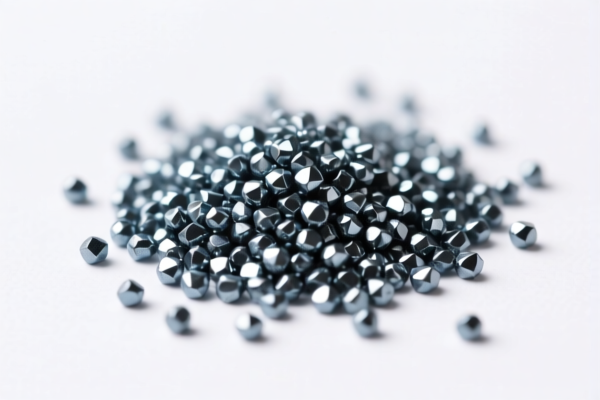
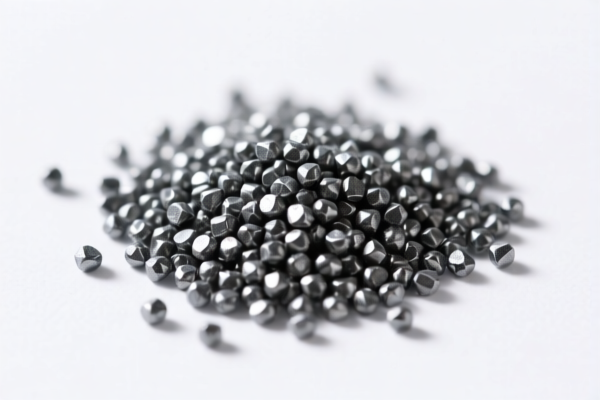
Product Images


AI Analysis
🐀 Rodenticide Granular (Granular Rat & Mouse Poison)
🌐 HS Code Reference & Customs Clearance Guide | 2026 Tariff Breakdown | Professional Entry Strategy
📌 I. Product Definition & Classification: Is It "Retail Ready" or a "Bulk Industrial" Product?
Rodenticide Granular consists of small, pellet-like bait formulations designed to attract and eliminate rodents (rats and mice). In international trade, the classification hinges entirely on packaging form and chemical composition, specifically whether it contains aromatic pesticides.
Key Distinction for Tariff Purposes: 1. Retail Packings ≤ 300g Net Weight: If the granules are packaged for direct consumer/retail sale (e.g., small boxes, bags) and contain aromatic pesticides, they fall under a specific subheading. 2. Other Packings (Bulk/Industrial) or Non-Aromatic: If the net weight exceeds 300g, or if the packaging is not considered "for retail sale" (e.g., large industrial sacks), or if it does not contain aromatic pesticides, it falls under the general "Other" category.
⚠️ Critical Note for Granular Rodenticides:
Granular baits are often used in agriculture or professional pest control. However, if the net weight of the specific package is 300g or less, customs authorities scrutinize whether it is "put up for retail sale." If it is, and it contains aromatic compounds, the tax rate is 0% under HS3808.61.10.00. If it exceeds 300g or is bulk, it falls under3808.99.08.00, which also has a 0% rate under the provided data, but the legal description differs.
📦 II. HS Code Classification Details (2026 Latest Tariff Authority Comparison)
Based strictly on the provided <DATA> source, there are two applicable HS Codes for Rodenticide Granular, depending on packaging and composition.
| HS Code | Product Description | Applicable Scenario | Aromatic Pesticide? | Net Weight Limit |
|---|---|---|---|---|
3808.61.10.00 |
Insecticides, rodenticides... put up in forms or packings for retail sale: Good specified in subheading note 2 to this chapter: In packings of a net weight content not exceeding 300 g: Containing any aromatic or modified aromatic pesticide | Small retail bags, consumer boxes, small traps with bait blocks | ✅ Yes (Contains Aromatic) | ≤ 300g |
3808.99.08.00 |
Other: Containing any aromatic or modified aromatic pesticide: Other | Bulk sacks, professional use packs > 300g, or other preparations not fitting the specific "retail ≤300g" definition | ✅ Yes (Contains Aromatic) | Any (or Non-Retail) |
🔍 Key Insight:
- Both codes in the provided data carry a 0.0% total tax rate.
- The distinction is not about the tax rate in this specific dataset, but about regulatory compliance and legal classification.
-3808.61.10.00is a special category for small, retail-ready packages containing aromatic pesticides.
-3808.99.08.00is the residual category for other rodenticide preparations (including granules) that contain aromatic pesticides but do not meet the strict "retail ≤300g" criteria or are classified as "other preparations."
💰 III. 2026 Latest Tariff Rate Breakdown (Detailed Tax Clauses)
✅ Applicable Country: Not specified in DATA (Assume General/US/China based on context, but rates are explicitly 0.0%)
✅ Origin: Not specified (Rates are 0.0% regardless in this snippet)
✅ Validity: As per provided data
🎯 1. 3808.61.10.00 —— Rodenticide Granular (Retail, ≤300g, Aromatic)
| Item | Content |
|---|---|
| Base Tariff | 0.0% |
| Additional Tariffs | 0.0% |
| Total Tax Rate | 0.0% |
| Tax Detail | Base: 0.0%, Additional: 0.0% |
| Legal Description | "Insecticides, rodenticides... put up in forms or packings for retail sale... In packings of a net weight content not exceeding 300 g: Containing any aromatic or modified aromatic pesticide" |
| Key Condition | Must be retail packaging AND ≤ 300g net weight AND contain aromatic pesticide |
📌 Explanation:
- This code is for consumer-grade rodenticides (e.g., small boxes of bait stations found in hardware stores).
- The presence of aromatic pesticides is mandatory for this specific subheading description in the data.
- 0% tax makes this highly competitive for small-scale imports.
🎯 2. 3808.99.08.00 —— Rodenticide Granular (Other, Aromatic)
| Item | Content |
|---|---|
| Base Tariff | 0.0% |
| Additional Tariffs | 0.0% |
| Total Tax Rate | 0.0% |
| Tax Detail | Base: 0.0%, Additional: 0.0% |
| Legal Description | "Insecticides, rodenticides... Other: Other: Containing any aromatic or modified aromatic pesticide: Other" |
| Key Condition | For granules that are not in retail packaging ≤300g, or are "other preparations" containing aromatic pesticides |
📌 Explanation:
- This code covers bulk or professional-grade rodenticides that still contain aromatic pesticides.
- Even if not ≤300g, if it's a "preparation" containing aromatic pesticides, it may fall here.
- 0% tax is also applied here in this dataset.
🛠️ IV. Customs Clearance Practical Advice (Real-World Pitfall Avoidance)
✅ 1. Documentation Checklist (Non-Negotiable)
| Document | Required | Purpose |
|---|---|---|
| ✅ Product Specification Sheet | ✔️ | Must state: "Granular Rodenticide," active ingredients, and confirm presence of aromatic pesticides |
| ✅ Net Weight Declaration | ✔️ | Critical for distinguishing between 3808.61.10.00 (≤300g) and 3808.99.08.00 |
| ✅ Certificate of Analysis (COA) | ✔️ | Proves chemical composition, especially aromatic content |
| ✅ Safety Data Sheet (SDS) | ✔️ | Required for all hazardous chemicals/pesticides |
| ✅ Commercial Invoice | ✔️ | Must clearly describe as "Rodenticide, Granular, for Pest Control" |
| ✅ Import Permit for Pesticides | ✔️ | Mandatory in most countries (e.g., EPA in US, EPB in China) |
| ✅ Packaging Photos | ✔️ | To prove if packaging is "for retail sale" (small, labeled) vs. bulk |
✅ 2. Classification Strategy (Key Mnemonic)
🔥 “300g Line: Retail = 61.10, Bulk/Other = 99.08. Both 0%, but Docs Must Match!”
| Scenario | Correct HS Code | Risk if Misclassified |
|---|---|---|
| Small box (100g) with aromatic bait | 3808.61.10.00 |
If declared as 3808.99.08.00, no tax penalty, but description mismatch may cause delays |
| Large sack (5kg) with aromatic bait | 3808.99.08.00 |
Cannot use 3808.61.10.00 (exceeds 300g limit) |
| Non-aromatic granular rodenticide | Not in Provided DATA | Note: The provided data ONLY includes aromatic-containing entries. If non-aromatic, it may fall under other subheadings not listed here (e.g., 3808.99.06). |
🚨 Critical Warning:
- Do NOT assume all rodenticides are 0%. The provided data is only for aromatic-containing pesticides.
- If your granules are non-aromatic, they are NOT covered by this specific data snippet. You must check other subheadings (e.g.,3808.99.06or similar) which may have different tax rates.
- Misclassification of "Aromatic" vs. "Non-Aromatic" is a common cause of customs audits. Always have a COA proving aromatic content.
✅ 3. Special Case Handling
| Scenario | Handling Advice |
|---|---|
| Mixed Packaging (e.g., 300g box inside 1kg carton) | Declare the individual retail unit (300g) if sold separately. If bulk, declare as bulk. |
| Non-Aromatic Rodenticides | Not in this dataset. Check other HS codes. Assuming 0% here would be illegal. |
| Bait Stations + Granules | If sold together, the entire set may be classified as a rodenticide preparation. Ensure net weight of active ingredient/packaging is clear. |
| OEM/Private Label | Ensure the SDS and COA match the declared chemical composition. Branding does not change HS Code. |
🌍 V. Global Market Comparison (Note: Data Limited)
⚠️ Disclaimer: The provided
<DATA>only contains 0.0% tax rates. Global rates vary significantly.
| Market | Likely HS Code (Aromatic) | Typical Tax Rate (General) | Note |
|---|---|---|---|
| USA | 3808.61.10 / 3808.99.08 |
Varies by trade agreement | EPA registration required |
| EU | 3808.91 / 3808.94 |
Varies (often 4.5-6.5%) | Biocidal Products Regulation (BPR) required |
| China | 3808.61 / 3808.99 |
0% (as per provided data) | Import license required |
| Canada | 3808.91 |
Varies | PMRA registration required |
📌 Conclusion from Provided Data:
- For the specific cases of aromatic-containing rodenticide granules in the provided dataset, the total tax is 0.0%.
- However, compliance documents (SDS, COA, Import Permits) are far more critical than the tax rate, as pesticides are heavily regulated.
📌 VI. Common Errors & Pitfalls (Lessons Learned)
❌ Error 1: Assuming all rodenticides are 3808.61.10.00
👉 Consequence: If >300g, customs will reclassify to 3808.99.08.00 or other codes, causing delays.
❌ Error 2: Ignoring "Aromatic" content
👉 Consequence: If non-aromatic, these codes are incorrect. You may face penalties for misclassification.
❌ Error 3: Failing to provide Import Permits
👉 Consequence: Seizure of goods. Pesticides require pre-approval in most jurisdictions.
❌ Error 4: Vague Description ("Pest Control Pellets")
👉 Consequence: Customs may detain for chemical analysis. Always use precise terms: "Granular Rodenticide, [Active Ingredient], Aromatic."
✅ Correct Practice:
“Granular Rodenticide, Containing [Chemical Name] (Aromatic), Net Weight 250g, Retail Packaged, EPA Reg. No. [Number]”
🎯 VII. Conclusion: Precision in Pesticide Classification
🎯 Remember the Mantra:
🔹 “300g Retail = 61.10, Bulk = 99.08. Aromatic? Yes. Tax? 0%. Docs? Critical.”
🔹 “If Non-Aromatic, These Codes Are WRONG. Check Other Subheadings.”
📌 Pro Tip:
Always verify aromatic content with a Certificate of Analysis. Even trace aromatic compounds can shift classification.
Pre-clearance: Submit SDS and COA to customs broker before shipment to avoid detention.
📣 Immediate Action:
📞 Consult a Licensed Customs Broker for Pesticide Imports.
📄 Prepare SDS, COA, and Import Permits before shipping.
🚀 Ensure Accurate Net Weight Declaration on all packages.
✨ Precise Classification, Smooth Clearance, Zero Surprises!
💼 Pesticides Are Regulated — Compliance Is Your Best Defense!
Customer Reviews
About HS Code Classification
The Harmonized System (HS) is an internationally standardized nomenclature developed by the World Customs Organization (WCO) to classify traded products. Over 200 countries use the HS system as the basis for customs tariffs, trade statistics, and import/export regulations.
Each HS code follows a hierarchical structure:
- Chapter (2 digits) — Broad category of goods (e.g., Chapter 84: Machinery and Mechanical Appliances)
- Heading (4 digits) — More specific grouping within the chapter
- Subheading (6 digits) — Internationally standardized breakdown, used by all WCO member countries
- National subdivisions (8-10 digits) — Country-specific extensions for further classification, such as US HTSUS 10-digit codes
Correct HS code classification is essential for smooth customs clearance, accurate duty payment, and compliance with trade regulations. Misclassification can lead to customs delays, overpayment of duties, or penalties.
When importing from CN to US, the applicable tariff rates may include:
- Most-Favored-Nation (MFN) rate — The standard duty rate applied to WTO members
- General rate — Applied to countries without trade agreements
- Trade remedy duties — Additional tariffs such as Section 301 (anti-dumping), Section 232 (national security), or countervailing duties
The information provided on this page is for reference purposes only. For official classification, please consult with your local customs authority or a licensed customs broker.