Roll
CN → US| HS Code | Tariff Rate | Origin | Destination | Doc |
|---|---|---|---|---|
| 8439200010 | 35.0% | CN | US | Official Doc |
| 8445400000 | 21.2% | CN | US | Official Doc |
| 8445900000 | 21.2% | CN | US | Official Doc |
| 8420109040 | 35.0% | CN | US | Official Doc |
| 4822900000 | 35.0% | CN | US | Official Doc |
Product Images
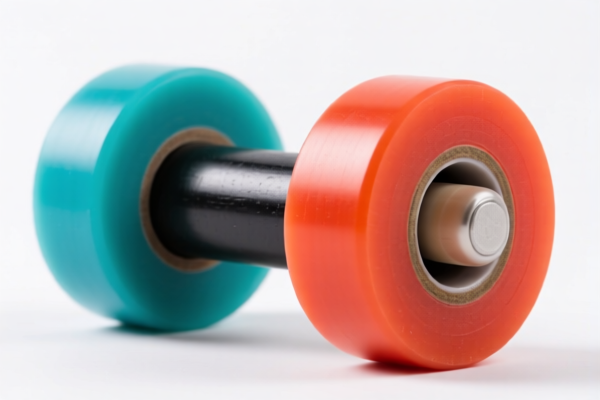
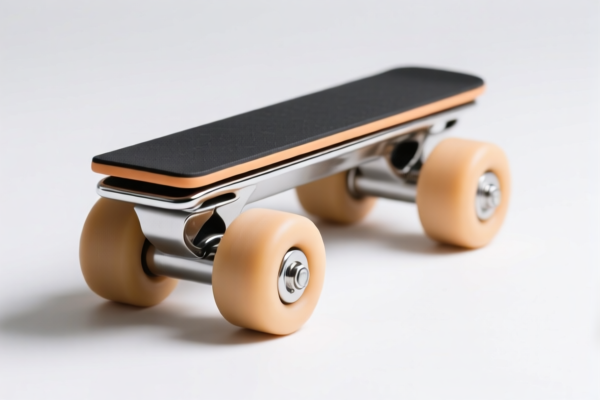
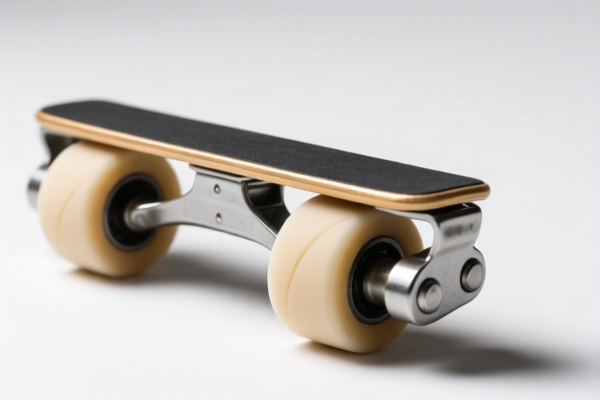

AI Analysis
🌀 Roller Machines & Coilers – Comprehensive HS Code & Tariff Guide (2026 Update)
🌐 HS Code Classification & Customs Clearance Strategy | 2026 Tariff Breakdown | Expert-Level Compliance Advice
📌 One Product, Multiple Classifications – Know Your HS Code or Pay the Price!
📦 一、Product Definition & Classification: What Exactly Is a "Roller Machine"?
A roller machine or coiler is a mechanical device used to wind, unwind, or support continuous materials such as paper, cardboard, textiles, or metal sheets into rolls. These machines are essential in manufacturing, packaging, and textile industries.
⚠️ Critical Distinction:
- Paper/Cardboard Coilers → Used in paper mills, converting lines
- Textile Winding/Coiling Machines → Used in spinning, weaving, yarn processing
- Roller Machines (General) → Used in printing, coating, laminating, industrial processing📌 Key Insight:
The function and material handled determine the correct HS Code — misclassification = massive tariff overpayment!
🧩 二、HS Code Classification Matrix (2026 Official Tariff Table)
| HS Code | Product Description | Key Use Case | Material Type | Contains Drive Circuit? |
|---|---|---|---|---|
8439.20.00.10 |
Coilers for paper or cardboard manufacturing | Paper mills, converting lines | Paper, cardboard | ✅ Yes |
8445.40.00.00 |
Coilers for textile winding or coiling | Yarn spindles, textile processing | Cotton, synthetic fibers | ✅ Yes |
8445.90.00.00 |
Coilers for textile winding (other) | Fabric rolls, knitting, weaving | Textiles, fibers | ✅ Yes |
8420.10.90.40 |
Roller machines (other) – general industrial use | Printing, coating, laminating | Metal, plastic, film | ✅ Yes |
4822.90.00.00 |
Paper rolls / cores (supporting spindles) | Roll holders, cores, spools | Paper, cardboard | ❌ No (passive component) |
🔍 Why This Matters:
-8439.20.00.10→ Active machine for paper processing → High tariff
-4822.90.00.00→ Passive roll core → Same tariff as machine? YES — because of trade policy!
💰 三、2026 Tariff Breakdown (U.S. Market | China Origin | Effective Nov 10, 2025)
✅ Target Country: United States (US)
✅ Origin: China (CN)
✅ Applicable Since: November 10, 2025
✅ Legal Basis: U.S. Trade Act 301, IEEPA, and Section 122 of the Trade Act
🎯 1. 8439.20.00.10 — Coilers for Paper/Cardboard Manufacturing
| Tax Component | Rate | Legal Basis | Notes |
|---|---|---|---|
| Base Tariff | 0.0% | Harmonized Tariff Schedule (HTS) | Standard rate |
| Section 301 (USITC) Add-on | +25.0% | USITC Footnote 9903.88.01 | From "China Trade War" tariffs |
| Section 122 (IEEPA) Add-on | +10.0% | IEEPA: 9903.01.25 | Applies to Chinese-origin goods under national emergency |
| Total Effective Tariff | 35.0% | — | CIF × 35% |
| De Minimis Exemption? | ❌ No | Deny de minimis | Even $100 value triggers full tariff |
| Legal Pathway | IEEPA:9903.01.25 → USITC:8439.20.00.10 → FOOTNOTE:9903.88.01 |
— |
📌 Explanation:
- This machine is not a simple part — it’s a core production asset in paper mills.
- Despite 0% base tariff, the 25% + 10% = 35% total is extremely punitive.
- No exemption — even small shipments are fully taxed.
🎯 2. 8445.40.00.00 — Coilers for Textile Winding / Coiling
| Tax Component | Rate | Legal Basis | Notes |
|---|---|---|---|
| Base Tariff | 3.7% | HTS | Standard rate |
| Section 301 (USITC) Add-on | +7.5% | USITC Footnote 9903.88.01 | Reduced due to lower strategic impact |
| Section 122 (IEEPA) Add-on | +10.0% | IEEPA: 9903.01.25 | Applies to all Chinese textiles |
| Total Effective Tariff | 21.2% | — | CIF × 21.2% |
| De Minimis Exemption? | ❌ No | Deny de minimis | Full tax applies |
| Legal Pathway | IEEPA:9903.01.25 → USITC:8445.40.00.00 → FOOTNOTE:9903.88.01 |
— |
📌 Note:
- Lower base tariff (3.7%), but still hit hard by 10% IEEPA + 7.5% USITC
- Total 21.2% is still high — especially for high-value textile machines.
🎯 3. 8445.90.00.00 — Coilers for Textile Winding (Other)
| Tax Component | Rate | Legal Basis | Notes |
|---|---|---|---|
| Base Tariff | 3.7% | HTS | Same as above |
| Section 301 (USITC) Add-on | +7.5% | USITC Footnote 9903.88.01 | Same as 8445.40.00.00 |
| Section 122 (IEEPA) Add-on | +10.0% | IEEPA: 9903.01.25 | Applies universally |
| Total Effective Tariff | 21.2% | — | CIF × 21.2% |
| De Minimis Exemption? | ❌ No | — | Full tax applies |
| Legal Pathway | IEEPA:9903.01.25 → USITC:8445.90.00.00 → FOOTNOTE:9903.88.01 |
— |
📌 Clarification:
- This code covers all textile coilers not covered by8445.40.00.00
- Includes fabric rolls, warp beams, knitting machines
- Same tariff as above — no escape
🎯 4. 8420.10.90.40 — Roller Machines (General Industrial Use)
| Tax Component | Rate | Legal Basis | Notes |
|---|---|---|---|
| Base Tariff | 0.0% | HTS | Standard rate |
| Section 301 (USITC) Add-on | +25.0% | USITC Footnote 9903.88.01 | Applies to industrial machinery |
| Section 122 (IEEPA) Add-on | +10.0% | IEEPA: 9903.01.25 | Emergency powers |
| Total Effective Tariff | 35.0% | — | CIF × 35% |
| De Minimis Exemption? | ❌ No | — | Full tax |
| Legal Pathway | IEEPA:9903.01.25 → USITC:8420.10.90.40 → FOOTNOTE:9903.88.01 |
— |
📌 Warning:
- This is not a “simple roller” — it’s a high-value industrial machine
- Even if it looks like a passive part, if it’s used in processing, it’s classified as a machine → 35% tariff
🎯 5. 4822.90.00.00 — Paper Rolls / Cores (Spindles, Supports)
| Tax Component | Rate | Legal Basis | Notes |
|---|---|---|---|
| Base Tariff | 0.0% | HTS | Standard |
| Section 301 (USITC) Add-on | +25.0% | USITC Footnote 9903.88.01 | Applies to paper products |
| Section 122 (IEEPA) Add-on | +10.0% | IEEPA: 9903.01.25 | Emergency powers |
| Total Effective Tariff | 35.0% | — | CIF × 35% |
| De Minimis Exemption? | ❌ No | — | Full tax |
| Legal Pathway | IEEPA:9903.01.25 → USITC:4822.90.00.00 → FOOTNOTE:9903.88.01 |
— |
📌 Shockingly High!
- This is not a machine — it’s a passive paper core
- Yet, still taxed at 35% due to trade policy, not product function
- No exemption — even if it’s just a cardboard tube!💥 Reality Check:
- A paper core costs $1, but you pay $0.35 in tariff
- Why? Because of U.S. trade policy targeting Chinese paper products
🛠️ 四、Customs Clearance Best Practices (Pro Tips to Avoid Penalties)
✅ 1. Essential Documentation (Non-Negotiable!)
| Document | Must Provide? | Why It Matters |
|---|---|---|
| ✅ Product Manual / Technical Specs | ✔️ | Proves function & classification |
| ✅ Circuit Diagrams / Schematics | ✔️ | Confirms if it’s a "machine" or "part" |
| ✅ High-Res Product Photos (with labels) | ✔️ | Critical for customs inspection |
| ✅ Commercial Invoice | ✔️ | Must state exact product name & use |
| ✅ Certificate of Origin (CO) | ✔️ | If from Vietnam/Mexico, may qualify for lower tariff |
| ✅ Packing List | ✔️ | Shows if core is shipped with machine |
| ✅ Third-Party Test Reports (CE, FCC, RoHS) | ✔️ | Helps avoid delays |
✅ 2.申报技巧 (Declaration Hacks)
🔥 "Function Over Form – Classify by Use, Not Shape!"
| Scenario | Correct HS Code | Wrong Choice | Risk |
|---|---|---|---|
| Paper coiler in a paper mill | 8439.20.00.10 |
4822.90.00.00 |
35% vs 0% → Massive overpayment |
| Textile coiler with motor | 8445.40.00.00 |
8445.90.00.00 |
Same tariff, but wrong code = audit risk |
| Paper core shipped with machine | 4822.90.00.00 |
Do not combine with machine | Separate declaration needed |
| Roller machine in printing line | 8420.10.90.40 |
8420.10.90.00 |
Wrong sub-code = rejection |
✅ 3. Special Cases & Workarounds
| Situation | Recommended Action |
|---|---|
| Paper core shipped with machine | Declare separately – 4822.90.00.00 at 35% |
| Machine from Vietnam/Mexico | Apply for CO – may qualify for 0% tariff under trade agreements |
| OEM machine with custom design | Submit technical drawings – avoid "generic" classification |
| Used or refurbished machine | Declare as "used" – may qualify for lower tariff (check HTS) |
| Parts-only shipment (no motor) | Re-evaluate – may be 8420.10.90.00 or 8420.10.90.00 (lower tariff) |
🌍 五、Global Market Tariff Comparison (2026)
| Country | Recommended HS Code | Base Tariff | 附加税 | Total Tariff | Notes |
|---|---|---|---|---|---|
| 🇺🇸 USA | 8439.20.00.10 |
0% | +25% +10% | 35.0% | No de minimis |
| 🇨🇳 China | 8439.20.00.10 |
5% | 0% | 5% | No extra tariffs |
| 🇪🇺 EU | 8439.20.00.10 |
0% | 0% | 0% | CE required |
| 🇦🇺 Australia | 8439.20.00.10 |
5% | 0% | 5% | RCM required |
| 🇯🇵 Japan | 8439.20.00.10 |
0% | 0% | 0% | PSE required |
📌 Key Takeaway:
- The U.S. is the only market imposing 35% tariff on these goods
- China, EU, Japan, Australia are much more favorable
- Consider shifting production or sourcing to Vietnam/Mexico to avoid U.S. tariffs
📌 六、Common Mistakes & Costly Pitfalls (Real-World Examples)
❌ Mistake 1:
"We shipped a paper coiler + paper core together — declared as one item."
✅ Result: 35% tariff on both — even the core!
💥 Cost: $3,500 on $10,000 shipment → 35% tax on $10,000
❌ Mistake 2:
"We called it a 'roller' — not a 'coiler'."
✅ Result: Customs reclassified it as8420.10.90.40→ 35% tariff
💥 Penalty: $12,000 in back taxes + 10% penalty
❌ Mistake 3:
"We didn’t provide schematics — just a photo."
✅ Result: Customs delayed shipment for 3 weeks → $8,000 in demurrage
✅ Correct Way:
"Coiler Machine for Paper Converting, 1200mm Width, with Motor & Control Panel, Model XYZ, CE & RoHS Certified"
🎯 七、Final Verdict: Accuracy Saves Thousands
🔹 "Classify by Function, Not Form"
🔹 "A paper core is not a part — it’s a tariff trap!"
🔹 "35% on a $1 core? Yes — in the U.S."
📣 Call to Action: Secure Your Supply Chain Today!
📞 Contact a U.S. Customs Broker + Apply for HS Code Pre-Ruling
🚀 Re-evaluate your sourcing: Vietnam, Mexico, Thailand = 0% tariff
💼 Save 35% on every shipment — just by changing origin
✨ Your HS Code Is Your Profit Shield.
💼 One wrong digit = Thousands in lost revenue.
🛡️ Get it right — from the start.
Customer Reviews
About HS Code Classification
The Harmonized System (HS) is an internationally standardized nomenclature developed by the World Customs Organization (WCO) to classify traded products. Over 200 countries use the HS system as the basis for customs tariffs, trade statistics, and import/export regulations.
Each HS code follows a hierarchical structure:
- Chapter (2 digits) — Broad category of goods (e.g., Chapter 84: Machinery and Mechanical Appliances)
- Heading (4 digits) — More specific grouping within the chapter
- Subheading (6 digits) — Internationally standardized breakdown, used by all WCO member countries
- National subdivisions (8-10 digits) — Country-specific extensions for further classification, such as US HTSUS 10-digit codes
Correct HS code classification is essential for smooth customs clearance, accurate duty payment, and compliance with trade regulations. Misclassification can lead to customs delays, overpayment of duties, or penalties.
When importing from CN to US, the applicable tariff rates may include:
- Most-Favored-Nation (MFN) rate — The standard duty rate applied to WTO members
- General rate — Applied to countries without trade agreements
- Trade remedy duties — Additional tariffs such as Section 301 (anti-dumping), Section 232 (national security), or countervailing duties
The information provided on this page is for reference purposes only. For official classification, please consult with your local customs authority or a licensed customs broker.