Roll Form Wallpaper Base Paper
CN → US| HS Code | Tariff Rate | Origin | Destination | Doc |
|---|---|---|---|---|
| 4814900200 | 17.5% | CN | US | Official Doc |
| 4802400000 | 35.0% | CN | US | Official Doc |
| 4802201000 | 35.0% | CN | US | Official Doc |
| 4814200000 | 17.5% | CN | US | Official Doc |
| 5905009000 | 35.0% | CN | US | Official Doc |
Product Images
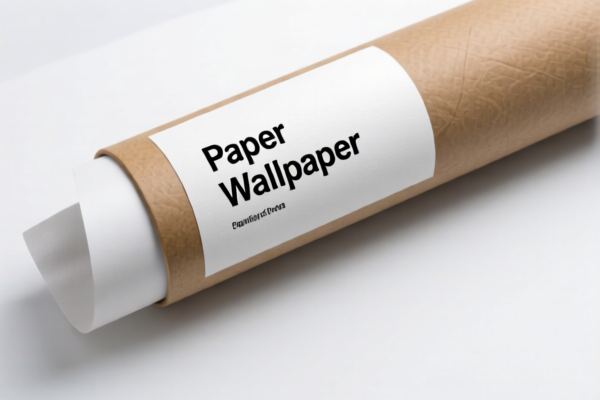
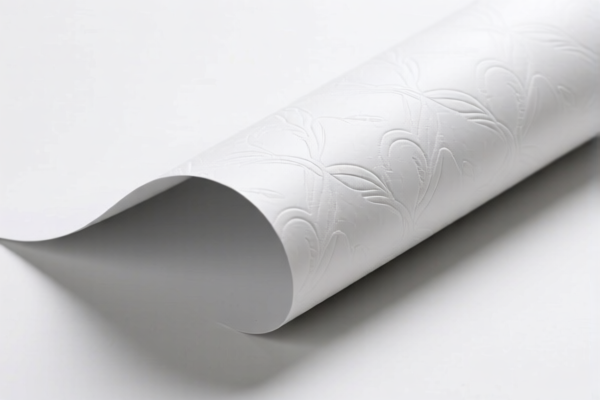
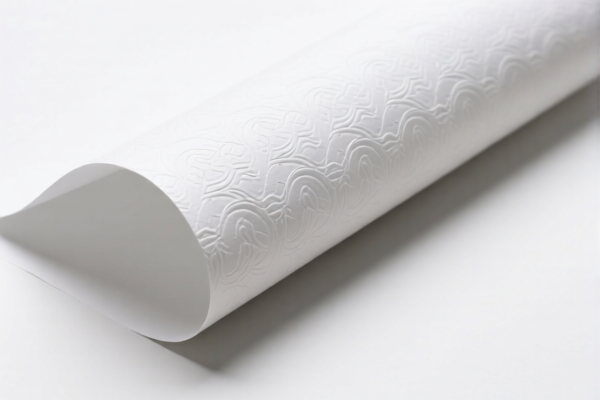
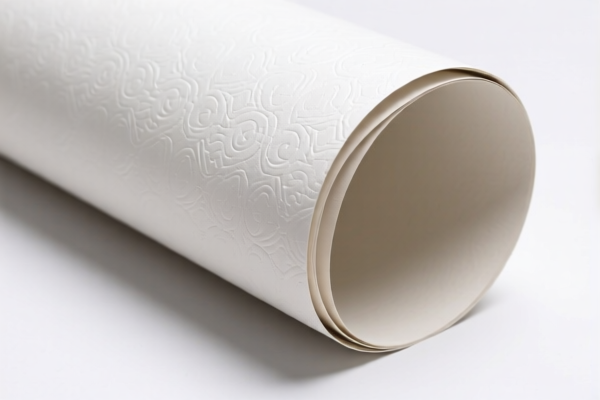
AI Analysis
🖼️ Roll Form Wallpaper Base Paper (矩形墙纸基纸)
🌐 HS Code Reference & Customs Clearance Guide | 2026 Latest Tariff Breakdown | Professional Compliance Strategy
📌 I. Product Definition & Classification: What Exactly is "Wallpaper Base Paper"?
Wallpaper Base Paper (specifically in roll form) is the foundational substrate used for manufacturing decorative wallpapers. It serves as the structural backbone upon which patterns, textures, and protective coatings are applied.
In international trade, its classification depends heavily on: 1. Material Composition: Is it pure paper, paperboard, or textile? 2. Surface Treatment: Is it coated, uncoated, impregnated, or plain? 3. Specific Heading: Does it fall under "Wallpaper coverings" or general "Paper products"?
⚠️ Key Distinction:
- If it is specifically designed and marketed as a wall covering (even if plain/base), it often falls under Heading 4814.
- If it is uncoated paperboard used as a base, it may fall under Heading 4802.
- If it is a textile or generic wall covering not elsewhere specified, it may fall under Heading 5905.
📦 II. HS Code Classification Details (2026 Latest Tariff Authority Comparison)
Based on the provided data, here are the potential HS Codes for "Roll Form Wallpaper Base Paper" and their corresponding tax implications for imports from China to the US.
| HS Code | Product Description | Applicability | Total Tax Rate |
|---|---|---|---|
| 4814.90.02.00 | Rectangular wallpaper base paper falls under paper window transparencies or wall coverings. | Fits material and use case for wall coverings. | 17.5% |
| 4802.40.00.00 | Rectangular wallpaper base paper; rectangular shape, used as wallpaper base. | Fits shape and use limitations. | 35.0% |
| 4802.20.10.00 | Rectangular wallpaper base paper falls under uncoated paperboard category. | Fits material requirements and morphological characteristics. | 35.0% |
| 4814.20.00.00 | Wallpaper matches the use (wallpaper and similar wall decorations) completely. | Direct fit for wallpaper category. | 17.5% |
| 5905.00.90.00 | Wallpaper is usually textile or paper material; falls under residual category for other items. | Generic fallback for textile/paper wall coverings. | 35.0% |
🔍 Critical Analysis:
- 4814 Series (17.5%): This is generally the preferred classification for wallpaper base papers specifically intended for wall decoration. It acknowledges the end-use.
- 4802 Series (35.0%): This classifies it as general paper/paperboard. This is higher due to broader categorization.
- 5905 Series (35.0%): This is a "catch-all" for wall coverings, often used if the material is textile-based or doesn't fit neatly into 4814.
💰 III. 2026 Latest Tariff Rate Breakdown (Including Surcharge Policies)
✅ Applicable Country: USA (US)
✅ Origin: China (CN)
✅ Effective Date: November 10, 2025 (and subsequent imports)
🎯 1. 4814.90.02.00 & 4814.20.00.00 —— Wallpaper Base Paper (Wall Covering Category)
| Item | Content |
|---|---|
| Base Tariff | 0% (Ad Valorem) |
| Section 301 Surcharge | +7.5% (Additional duty under USITC Section 301) |
| Section 122 Tariff | +10% (Specific tariff applied under Section 122 provisions) |
| Total Tax Rate | 17.5% |
| Tax Calculation | CIF Value × 17.5% |
| De Minimis Exemption | ❌ Not Applicable (Subject to full tariff assessment) |
| Legal Basis Path | USITC:4814.xxxx.xxxx → Section 301: Footnote 9903.88.01 → Section 122: Specific Provision |
📌 Explanation:
- The 0% base rate makes this category attractive compared to others.
- However, the 17.5% total (7.5% + 10%) is significant for high-volume imports.
- Section 301 reflects the ongoing trade tensions, while Section 122 is a specific tariff mechanism affecting certain Chinese goods.
🎯 2. 4802.40.00.00 & 4802.20.10.00 —— Uncoated Paper/Paperboard (General Paper Category)
| Item | Content |
|---|---|
| Base Tariff | 0% (Ad Valorem) |
| Section 301 Surcharge | +25.0% (Higher Section 301 rate for paper products) |
| Section 122 Tariff | +10% |
| Total Tax Rate | 35.0% |
| Tax Calculation | CIF Value × 35.0% |
| De Minimis Exemption | ❌ Not Applicable |
| Legal Basis Path | USITC:4802.xxxx.xxxx → Section 301: Higher Tier → Section 122 |
📌 Critical Warning:
- Misclassifying wallpaper base paper as general paper (4802) doubles the tax burden from 17.5% to 35.0%.
- This is a high-risk error that significantly impacts profit margins.
🎯 3. 5905.00.90.00 —— Other Wall Coverings (Residual Category)
| Item | Content |
|---|---|
| Base Tariff | 0% (Ad Valorem) |
| Section 301 Surcharge | +25.0% |
| Section 122 Tariff | +10% |
| Total Tax Rate | 35.0% |
| Tax Calculation | CIF Value × 35.0% |
| De Minimis Exemption | ❌ Not Applicable |
📌 Note:
- This code is used for wall coverings that are not specifically "paper" in the traditional sense or do not fit 4814.
- Same high tax burden as4802due to higher Section 301 rates for this category.
🛠️ IV. Customs Clearance Practical Advice (Real-World Pitfall Guide)
✅ 1. Required Documentation Checklist (Must-Have)
| Document | Mandatory? | Description |
|---|---|---|
| ✅ Product Specification Sheet | ✔️ | Must specify: Material (paper/board), Coating status, Dimensions, Intended Use (Wallpaper Base). |
| ✅ Commercial Invoice | ✔️ | Clearly state: "Wallpaper Base Paper" or "Paper for Wall Coverings". Avoid vague terms like "Roll Material". |
| ✅ Packing List | ✔️ | Detail weight, dimensions, and number of rolls. |
| ✅ Letter of Guarantee | ✔️ | If requested, confirm the product is exclusively used for wallpaper production. |
| ✅ Third-Party Test Report | ✔️ | Optional but helpful: Proof of material composition (e.g., FSC certification, chemical safety). |
✅ 2. Declaration Tips (Key Mnemonics)
🔥 "Specify Use, Avoid General Paper, 4814 Saves Money!"
| Scenario | Correct Declaration | Incorrect Action | Consequence |
|---|---|---|---|
| Wallpaper Base | 4814.90.02.00 or 4814.20.00.00 |
Declare as 4802 (General Paper) |
Tax doubles to 35% |
| Textile-Based Wall Covering | 5905.00.90.00 |
Declare as 4814 (Paper) |
Misclassification Risk |
| Plain Paper Rolls (No Specific Use) | 4802.xxxx.xxxx |
Declare as "Wallpaper" | Rejection/Query |
✅ 3. Special Cases Handling
| Case | Handling Advice |
|---|---|
| OEM Custom Wallpaper Base | Provide end-user contract showing use for wallpaper. Justifies 4814. |
| Mixed Shipments (Paper + Wallpaper) | Declare separately. Do not mix 4814 and 4802 in one line item without clear separation. |
| Sample Shipments | Even samples are subject to the same tariffs if declared as commercial goods. |
🌍 V. Global Market Customs Comparison (2026 Latest)
| Country/Region | Recommended HS Code | Tariff (China Origin) | Certification | Notes |
|---|---|---|---|---|
| 🇺🇸 USA | 4814.20.00.00 / 4814.90.02.00 |
17.5% (Wallpaper) 35.0% (Paper) |
No specific | US is the most expensive due to Section 301 & 122. |
| 🇨🇳 China | 4814.90.02.00 |
0% - 5% | CCC (if applicable) | Domestic trade may have different VAT rates. |
| 🇪🇺 EU | 4814.20.00.00 |
6.5% | CE (if decorated) | No Section 301 equivalent; lower base rates. |
| 🇬🇧 UK | 4814.20.00.00 |
6.5% | UKCA | Post-Brexit rules align closely with EU. |
| 🇦🇺 Australia | 4814.20.00.00 |
5% | G label | Competitive market, lower tariffs. |
📌 Conclusion:
- USA imposes the highest effective tariff burden (17.5%-35%) due to trade policies.
- Classification as4814(Wall Covering) is crucial to avoid the 35% rate.
- For non-US markets, the tax burden is significantly lower.
📌 VI. Common Errors & Pitfall Guide (Lessons Learned)
❌ Error 1: Declaring "Wallpaper Base Paper" as "General Paper" (4802).
👉 Result: Tax jumps from 17.5% to 35.0%.
💡 Fix: Clearly state "For Wallpaper Production" in the description.
❌ Error 2: Using vague terms like "Paper Roll" or "Cardboard Tube".
👉 Result: Customs queries, delays, and potential reclassification.
💡 Fix: Use specific HS Code descriptions: "Uncoated paper for wall coverings".
❌ Error 3: Ignoring Section 122 Tariff.
👉 Result: Underpayment by 10%.
💡 Fix: Ensure all HS Codes are checked for Section 122 applicability.
✅ Correct Declaration Example:
"Wallpaper Base Paper, Uncoated, Roll Form, HS Code 4814.20.00.00, Made in China, For Wall Covering Manufacturing"
🎯 VII. Conclusion: Professional Declaration, Save Costs, Ensure Compliance!
🎯 Remember the Mantra:
🔹 "Base Paper ≠ General Paper; 4814 is the Key!"
🔹 "17.5% vs 35.0%: A Simple Classification Saves 17.5% in Tariffs!"
🔹 "Section 301 + Section 122 = High Costs, Plan Ahead!"
📌 Pro Tip:
If your wallpaper base paper is part of a composite product (e.g., pre-pasted wallpaper), ensure the entire product is declared correctly. The base paper alone may be 4814, but the finished wallpaper might have a different classification.
📣 Immediate Action:
📞 Consult with a licensed customs broker.
📄 Provide product samples/specs.
🚀 Apply for Advance Ruling if available, to lock in the correct HS Code and tariff rate.
✨ Professional Customs Clearance Starts with Accurate Classification!
💼 Every Percentage Point Counts in Your Profit Margin!
Customer Reviews
About HS Code Classification
The Harmonized System (HS) is an internationally standardized nomenclature developed by the World Customs Organization (WCO) to classify traded products. Over 200 countries use the HS system as the basis for customs tariffs, trade statistics, and import/export regulations.
Each HS code follows a hierarchical structure:
- Chapter (2 digits) — Broad category of goods (e.g., Chapter 84: Machinery and Mechanical Appliances)
- Heading (4 digits) — More specific grouping within the chapter
- Subheading (6 digits) — Internationally standardized breakdown, used by all WCO member countries
- National subdivisions (8-10 digits) — Country-specific extensions for further classification, such as US HTSUS 10-digit codes
Correct HS code classification is essential for smooth customs clearance, accurate duty payment, and compliance with trade regulations. Misclassification can lead to customs delays, overpayment of duties, or penalties.
When importing from CN to US, the applicable tariff rates may include:
- Most-Favored-Nation (MFN) rate — The standard duty rate applied to WTO members
- General rate — Applied to countries without trade agreements
- Trade remedy duties — Additional tariffs such as Section 301 (anti-dumping), Section 232 (national security), or countervailing duties
The information provided on this page is for reference purposes only. For official classification, please consult with your local customs authority or a licensed customs broker.