Roll Microfilm
CN → US| HS Code | Tariff Rate | Origin | Destination | Doc |
|---|---|---|---|---|
| 3702320130 | 38.7% | CN | US | Official Doc |
| 3705000000 | 35.0% | CN | US | Official Doc |
| 3701996060 | 35.0% | CN | US | Official Doc |
| 3926908300 | 40.3% | CN | US | Official Doc |
| 3926909989 | 22.8% | CN | US | Official Doc |
Product Images
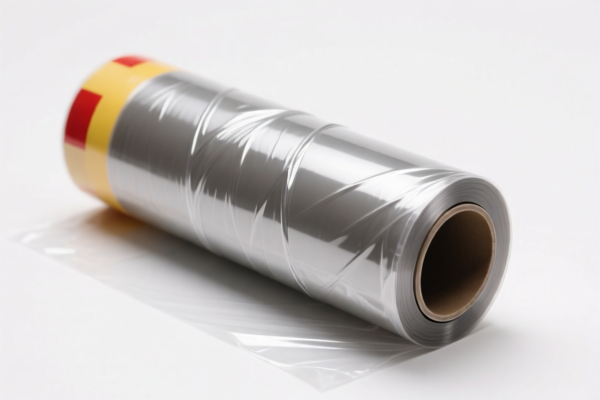

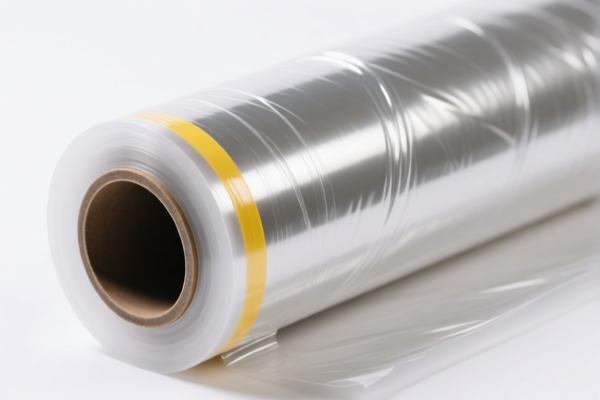
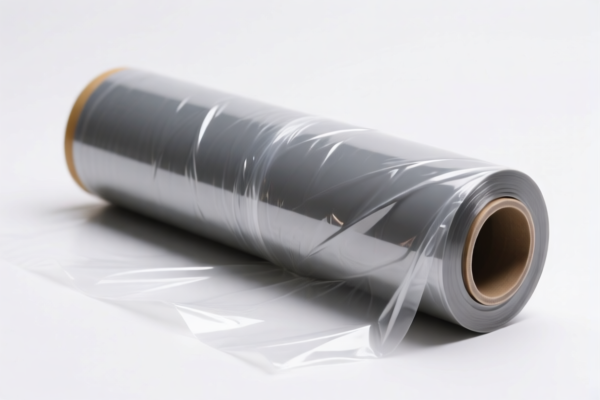
AI Analysis
🎞️ Roll Microfilm (缩微胶卷)
🌐 HS Code Reference & Customs Clearance Guide | 2026 Latest Tariff Analysis | Professional Clearance Strategy
📌 I. Product Definition & Classification: Do You Really Understand "Microfilm"?
Roll Microfilm refers to film recorded in a spiral or roll format, primarily used for storing documents, records, or images at a reduced scale. In international trade, it falls under the broader category of photographic/film products. However, its classification depends heavily on its physical form (roll vs. sheet/box) and packaging components.
⚠️ Key Distinction Point:
- If the product is pure film rolls intended for reading/microfilming equipment → Classified under Chapter 37 (Photographic/Film Goods).
- If the product is sold as a complete kit including plastic cases/boxes → The packaging might be classified separately as plastic products or bundled under the film if considered accessories.
- Critical Note: Misclassifying the container as part of the film or vice versa can lead to significant tariff differences due to additional duties (Section 301 & IEEPA).
📦 II. HS Code Classification Details (2026 Latest Tariff Authority Comparison)
| HS Code | Product Description | Application Scenario | Total Tax Rate | Tax Composition Detail |
|---|---|---|---|---|
3702.32.01.30 |
Roll Microfilm (Matched to Microfilm Roll Format) | Pure film rolls, spiral/roll format for microfilm readers | 38.7% | Base: 3.7%, Section 301: 25.0%, IEEPA (122 Clause): 10% |
3705.00.00.00 |
Microfilm/Film Category (Broad Film Category) | Fits general photographic/film classification criteria | 35.0% | Base: 0.0%, Section 301: 25.0%, IEEPA (122 Clause): 10% |
3701.99.60.60 |
Microfilm Cases (As Parts/Accessories) | Treated as accessories/components for other items | 35.0% | Base: 0.0%, Section 301: 25.0%, IEEPA (122 Clause): 10% |
3926.90.83.00 |
Microfilm Cases (Inferred as Plastic Products) | Plastic containers/housings for microfilm | 40.3% | Base: 5.3%, Section 301: 25.0%, IEEPA (122 Clause): 10% |
3926.90.99.89 |
Microfilm Cases (Other Plastic Finished Goods) | General plastic finished goods, lower duty bracket | 22.8% | Base: 5.3%, Section 301: 7.5%, IEEPA (122 Clause): 10% |
🔍 Key Insight:
- Code3702.32.01.30is the most accurate for "Roll Microfilm" itself, as it specifically matches the roll form.
- Code3705.00.00.00is a broader fallback for film-related items but lacks the specific "roll" designation, resulting in a slightly lower base tax (0% vs 3.7%).
- Codes3701.99.60.60,3926.90.83.00,3926.90.99.89relate to cases/packaging, not the film itself. If you import only the film rolls, do not use these codes unless you are importing the cases separately.
- Tariff Impact: The IEEPA 122 Clause (10%) is consistently applied across all categories, but the Section 301 rate varies (25% vs 7.5%), and the Base Rate varies (0% vs 5.3%). This leads to a total tax range of 22.8% to 40.3%.
💰 III. 2026 Latest Tariff Rate Breakdown (Detailed Explanation)
✅ Applicable Country: United States (US)
✅ Origin: China (CN)
✅ Effective Date: From November 10, 2025 (and subsequent imports)
🎯 1. 3702.32.01.30 —— Roll Microfilm (Best Match for Film Rolls)
| Item | Content |
|---|---|
| Base Rate | 3.7% (ad valorem) |
| USITC Additional Duty | +25% (Section 301 Tariffs) |
| IEEPA Additional Duty | +10% (122 Clause, targeting China/HK products) |
| Total Tax Rate | 38.7% |
| Tax Calculation | CIF Value × 38.7% |
| De Minimis Exemption | ❌ Not Eligible (deny_de_minimis) |
| Legal Basis Path | IEEPA:9903.01.25 → USITC:3702.32.01.30 → FOOTNOTE:122 |
📌 Explanation:
- This is the most precise classification for roll-shaped microfilm.
- The 3.7% base rate is higher than3705.00.00.00(0%), but it ensures accurate product description, reducing customs scrutiny risk.
- Total 38.7% is a high tariff, so cost planning is essential.
🎯 2. 3705.00.00.00 —— General Film Category (Broad Classification)
| Item | Content |
|---|---|
| Base Rate | 0.0% |
| USITC Additional Duty | +25% |
| IEEPA Additional Duty | +10% |
| Total Tax Rate | 35.0% |
| Tax Calculation | CIF Value × 35.0% |
| De Minimis Exemption | ❌ Not Eligible |
| Legal Basis Path | IEEPA:9903.01.24 → USITC:3705.00.00.00 |
📌 Note:
- This code has a lower total tax (35.0%) due to the 0% base rate.
- However, it is less specific. If customs questions the "roll" nature, they may reclassify it to3702.32.01.30, leading to back taxes and penalties.
- Recommendation: Use only if the product is not clearly "roll-form" or if you have prior ruling confirmation.
🎯 3. 3926.90.83.00 & 3926.90.99.89 —— Plastic Cases/Packaging
| Item | Content |
|---|---|
| Base Rate | 5.3% |
| USITC Additional Duty | +25% (for 3926.90.83.00), +7.5% (for 3926.90.99.89) |
| IEEPA Additional Duty | +10% |
| Total Tax Rate | 40.3% (for 3926.90.83.00) / 22.8% (for 3926.90.99.89) |
| Tax Calculation | CIF Value × Total Rate |
| De Minimis Exemption | ❌ Not Eligible |
📌 Critical Warning:
- These codes apply ONLY to the plastic cases/boxes, NOT the microfilm itself.
- If you import film rolls + plastic cases together, you must separately declare them.
- Do NOT misdeclare film rolls as plastic cases to save tax (e.g., using3926.90.99.89for 22.8%). This is customs fraud and will result in severe penalties.
- Correct Approach: Declare Film (3702.32.01.30@ 38.7%) + Cases (3926.90.99.89@ 22.8%) separately.
🛠️ IV. Customs Clearance Practical Advice (Avoid Pitfalls)
✅ 1. Required Documentation Checklist (Mandatory)
| Document | Must Provide | Explanation |
|---|---|---|
| ✅ Product Specification Sheet | ✔️ | Specify "Roll Microfilm," dimensions, length, material (acetate/polyester) |
| ✅ Product Photos | ✔️ | Clear images of the roll, labels, and any packaging/cases |
| ✅ Commercial Invoice | ✔️ | Must clearly state "Roll Microfilm" and HS Code 3702.32.01.30 |
| ✅ Packing List | ✔️ | Separate quantities for film rolls and plastic cases if applicable |
| ✅ Certificate of Origin | ✔️ | Required for origin determination (China origin triggers additional duties) |
| ✅ Third-Party Test Report | ✔️ | If applicable (e.g., fire retardancy, archival quality) |
✅ 2. Declaration Tips (Key Mantras)
🔥 "Film is Film, Case is Case; Do Not Mix, Save the Price!"
| Scenario | Correct Declaration | Wrong Practice |
|---|---|---|
| Importing only Roll Microfilm | 3702.32.01.30 (38.7%) |
Misdeclare as 3926.90.99.89 (22.8%) → High Risk of Penalty |
| Importing Film + Plastic Cases Together | Declare separately: Film (3702.32.01.30) + Cases (3926.90.99.89) |
Bundle as "Plastic Box" → Customs Rejection |
| Using "Microfilm" as Generic Term | Specify "Roll Microfilm" or "Sheet Microfilm" | Vague description → Customs Delay |
✅ 3. Special Situation Handling
| Situation | Handling Advice |
|---|---|
| OEM Custom Microfilm | Provide client order + design specs to prove "roll" format |
| Microfilm with Pre-installed Cases | Declare separately; do not bundle as one "kit" unless legally permitted |
| Non-Chinese Origin | If from Vietnam/Mexico, IEEPA 10% may not apply, reducing total tax significantly |
| Pre-Ruling (Advance Ruling) | Highly Recommended: Apply for an Advance Ruling to confirm HS Code 3702.32.01.30 vs 3705.00.00.00 |
🌍 V. Global Market Comparison (2026 Latest)
| Country/Region | Recommended HS Code | Tariff (China Origin) | Certification Requirements | Notes |
|---|---|---|---|---|
| 🇺🇸 USA | 3702.32.01.30 |
38.7% (Film) / 22.8%-40.3% (Cases) | None specific | High tariffs due to Section 301 & IEEPA |
| 🇨🇳 China | 3702.32.01.30 |
3.7% | None | No additional duties |
| 🇪🇺 EU | 3702.32.01.30 |
0% (if eligible) | CE (if applicable) | No Section 301 |
| 🇦🇺 Australia | 3702.32.01.30 |
5% | None | Lower base tariff |
| 🇯🇵 Japan | 3702.32.01.30 |
0% | None | No additional duties |
📌 Conclusion:
- USA has the highest clearance cost due to combined tariffs (Base + 301 + IEEPA).
- China, EU, Australia, and Japan have significantly lower or zero additional duties.
- Strategy: If targeting the US market, consider supply chain diversification (e.g., sourcing from non-China origins) to avoid IEEPA 10% duty.
📌 VI. Common Errors & Pitfalls (Lessons Learned)
❌ Error 1: Declaring Microfilm Rolls as Plastic Cases (3926.90.99.89) to save tax.
👉 Consequence: Customs inspection reveals film → Back taxes + Penalties + Possible Seizure.
❌ Error 2: Using Generic Description ("Microfilm") without specifying "Roll" or "Sheet".
👉 Consequence: Customs assigns higher-duty code (3701.xxxx) or delays clearance for further inquiry.
❌ Error 3: Bundling Film and Cases into one HS Code.
👉 Consequence: Incorrect tax calculation → Underpayment of duties → Audit risk.
❌ Error 4: Ignoring IEEPA 122 Clause (10% Additional Duty).
👉 Consequence: Underestimating total cost by 10% → Profit margin erosion.
✅ Correct Approach:
"Roll Microfilm, Acetate Base, Spiral Format, 16mm Width, Model XYZ, Packaged in Plastic Cases (Declared Separately)"
🎯 VII. Conclusion: Professional Declaration, Cost Optimization, Risk Mitigation!
🎯 Remember the Mantra:
🔹 "Film is Film, Case is Case; Separate Codes, Save the Space!"
🔹 "HS Code Determines Life, Tax Rate Differs by 15 Points; One Step Wrong, Tax Bill Soars!"
📌 Pro Tip:
If your microfilm is originated from Vietnam, Mexico, or Thailand, you may exempt from IEEPA 10%, reducing total tax to ~28.7%–30% (for film) or ~12.8%–15.3% (for cases).
Recommendation: Apply for an Advance Ruling (Advance Ruling) from US Customs and Border Protection (CBP) to confirm the correct HS Code and avoid post-import audits.
📣 Immediate Action:
📞 Contact a Professional Customs Broker + Provide Product Photos + Apply for HS Code Advance Ruling
🚀 Let your Microfilm Clear Customs Smoothly, Efficiently Expand, Maximize Profits!
✨ Professional Customs Clearance Starts with Accurate Classification!
💼 Every Penny of Your Cost Deserves Precise Calculation!
Customer Reviews
About HS Code Classification
The Harmonized System (HS) is an internationally standardized nomenclature developed by the World Customs Organization (WCO) to classify traded products. Over 200 countries use the HS system as the basis for customs tariffs, trade statistics, and import/export regulations.
Each HS code follows a hierarchical structure:
- Chapter (2 digits) — Broad category of goods (e.g., Chapter 84: Machinery and Mechanical Appliances)
- Heading (4 digits) — More specific grouping within the chapter
- Subheading (6 digits) — Internationally standardized breakdown, used by all WCO member countries
- National subdivisions (8-10 digits) — Country-specific extensions for further classification, such as US HTSUS 10-digit codes
Correct HS code classification is essential for smooth customs clearance, accurate duty payment, and compliance with trade regulations. Misclassification can lead to customs delays, overpayment of duties, or penalties.
When importing from CN to US, the applicable tariff rates may include:
- Most-Favored-Nation (MFN) rate — The standard duty rate applied to WTO members
- General rate — Applied to countries without trade agreements
- Trade remedy duties — Additional tariffs such as Section 301 (anti-dumping), Section 232 (national security), or countervailing duties
The information provided on this page is for reference purposes only. For official classification, please consult with your local customs authority or a licensed customs broker.