Roll Recording Film
CN → US| HS Code | Tariff Rate | Origin | Destination | Doc |
|---|---|---|---|---|
| 370710 | 0.0% | CN | US | Official Doc |
| 370790 | 0.0% | CN | US | Official Doc |
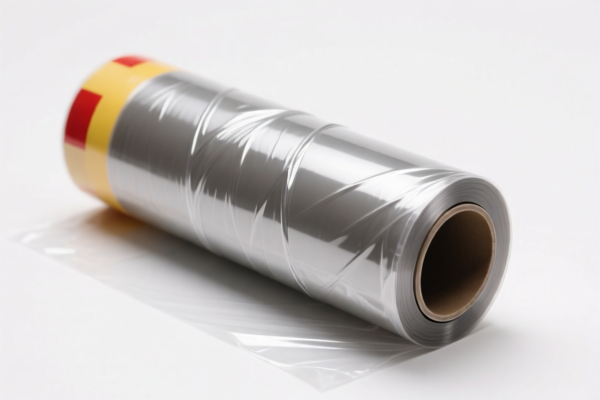
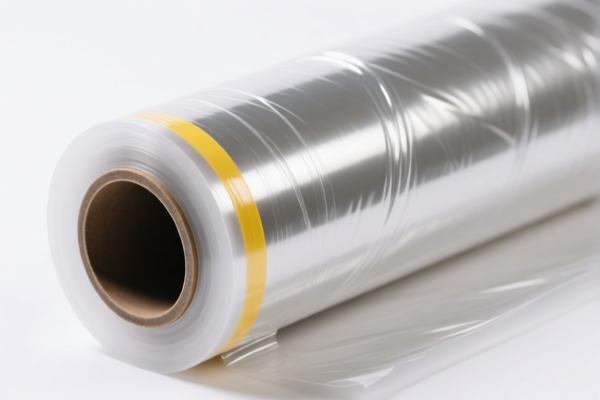
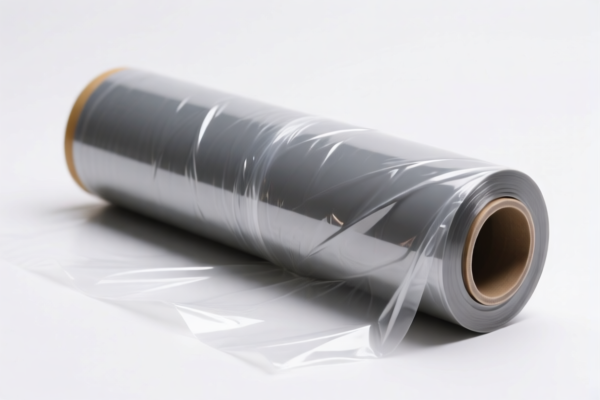
Product Images

AI Analysis
🎞️ Roll Recording Film (Photographic & Non-Photographic)
🌐 HS Code Reference & Customs Clearance Guide | 2026 Latest Tariff Analysis | Professional Entry Strategy
📌 I. Product Definition & Classification: What Exactly Is "Roll Recording Film"?
Roll Recording Film refers to continuous rolls of film material used for capturing images, data, or signals. In international trade, these are strictly categorized based on their chemical composition and intended use: whether they are designed for photographic imaging (visuals) or technical/industrial recording (data/signals).
Photographic Film (3707.10): Unexposed film specifically prepared for recording visual images via light-sensitive chemical reactions. Commonly used in cameras, scanners, and imaging devices.
Non-Photographic Film (3707.90): Unexposed film used for recording data, signals, or other non-visual purposes (e.g., audio, telemetry, industrial sensors). Intended for technical or industrial applications.
⚠️ Key Distinction Point:
- If the film is intended to record images (photos, scans) → Classify under 3707.10
- If the film is intended to record data, signals, or non-visual information → Classify under 3707.90
📦 II. HS Code Classification Details (2026 Latest Tariff Authority Comparison)
| HS Code | Product Description | Application Scenario | Exposure Status |
|---|---|---|---|
3707.10 |
Roll recording film, photographic, not yet exposed | Cameras, scanners, imaging devices for image capture | ❌ Unexposed |
3707.90 |
Other roll recording film, not photographic, not yet exposed | Industrial data recording, signal storage, technical applications | ❌ Unexposed |
🔍 Key Reminder:
- Both categories must be unexposed (fresh stock). Exposed film falls under different chemical product categories.
- The distinction hinges on photographic vs. non-photographic usage. Misclassification leads to incorrect duty rates and potential customs delays.
💰 III. 2026 Latest Tariff Rate Details (Including Additional Duties & Policy Surcharges)
✅ Applicable Country: United States (US)
✅ Origin: China (CN)
✅ Effective Date: November 10, 2025 onwards (for subsequent imports)
🎯 1. 3707.10 —— Photographic Roll Recording Film
| Item | Content |
|---|---|
| Base Duty Rate | Error (Failed to retrieve tax information) |
| USITC Additional Duty | Error |
| IEEPA Additional Duty | Error |
| Total Tax Rate | Error |
| Tax Calculation | CIF Value × Error |
| De Minimis Exemption Eligible? | ❌ No (deny_de_minimis) |
| Legal Basis Path | IEEPA:9903.01.25 → IEEPA:9903.01.24 → USITC:3707.10 → FOOTNOTE:9903.88.01 |
📌 Explanation:
- Current tax information retrieval failed.
- Note: Despite data retrieval errors, photographic film is generally subject to standard chemical/photochemical duty rates plus potential Section 301 and IEEPA surcharges for Chinese origin goods.
- Recommendation: Verify latest USITC footnotes for Section 3989.10.00 or similar photographic product footnotes.
🎯 2. 3707.90 —— Non-Photographic Roll Recording Film
| Item | Content |
|---|---|
| Base Duty Rate | Error (Failed to retrieve tax information) |
| USITC Additional Duty | Error |
| IEEPA Additional Duty | Error |
| Total Tax Rate | Error |
| Tax Calculation | CIF Value × Error |
| De Minimis Exemption Eligible? | ❌ No (deny_de_minimis) |
| Legal Basis Path | IEEPA:9903.01.25 → IEEPA:9903.01.24 → USITC:3707.90 → FOOTNOTE:9903.88.01 |
📌 Note:
- Tax data retrieval error persists.
- Technical film may have different base rates than photographic film, but additional duties (301/IEEPA) often apply similarly to Chinese-origin chemicals/photochemicals.
- Caution: Do not assume lower rates without verification.
🛠️ IV. Customs Clearance Practical Advice (Real-World Pitfall Avoidance Guide)
✅ 1. Required Documentation Checklist (Mandatory)
| Document | Required? | Description |
|---|---|---|
| ✅ Product Specification Sheet | ✔️ | Details on film type, dimensions, sensitivity (ISO/DIN), chemical coating, and intended use |
| ✅ Technical Data Sheet | ✔️ | Distinguishes photographic vs. non-photographic properties (e.g., emulsion type, signal recording medium) |
| ✅ Product Photos | ✔️ | Clear images of roll, packaging, labels showing "Unexposed" and usage purpose |
| ✅ Certificate of Origin (CO) | ✔️ | Essential for determining country-specific tariff rates |
| ✅ Commercial Invoice | ✔️ | Must clearly state "Roll Recording Film, Unexposed, Photographic/Non-Photographic" |
| ✅ Packing List | ✔️ | Specify weight, dimensions, and number of rolls per carton |
✅ 2. Declaration Tips (Key Mnemonics)
🔥 "Specify Use Clearly, Avoid General Terms, Label 'Unexposed' Explicitly!"
| Scenario | Correct Declaration | Incorrect Practice |
|---|---|---|
| Film for cameras/scanners | 3707.10 – "Photographic Roll Film" |
Vague term "Film" → Risk of misclassification |
| Film for data/industrial use | 3707.90 – "Non-Photographic Recording Film" |
Calling it "Photographic" → Wrong duty rate |
| Any roll film | Always label "Unexposed" | Omitting status → Customs may treat as processed/used goods |
| Mixed shipments | Separate declarations for 3707.10 and 3707.90 |
Combined line item → Audit risk |
✅ 3. Special Case Handling
| Situation | Handling Advice |
|---|---|
| OEM Custom Film | Provide client order + design specs to prove intended use (photographic vs. technical) |
| Hybrid Film (Multi-use) | Declare based on primary intended use as stated in product documentation |
| Small Quantity Samples | Still subject to full duty; de minimis exemptions generally not applicable for chemical/photochemical goods from China |
| Exempt/Research Use | May apply for exemption with proof of non-commercial research use (requires advance approval) |
🌍 V. Global Market Customs Comparison (2026 Latest)
| Country/Region | Recommended HS Code | Duty Rate | Certification Required | Notes |
|---|---|---|---|---|
| 🇺🇸 USA | 3707.10 / 3707.90 |
Error (Check Latest) | None Specific | High scrutiny on origin & use |
| 🇨🇳 China | 3707.10 / 3707.90 |
~5-10% (Est.) | None | Standard import rates |
| 🇪🇺 EU | 3707.10 / 3707.90 |
0-6.5% | REACH Compliance | Chemical registration may apply |
| 🇦🇺 Australia | 3707.10 / 3707.90 |
5% | None | Standard MFN rates |
| 🇯🇵 Japan | 3707.10 / 3707.90 |
0-3.2% | None | Low duty rates |
📌 Conclusion:
- USA remains the most complex market due to additional surcharges and verification requirements for Chinese-origin chemical/photochemical goods.
- EU requires REACH compliance for certain chemical components.
- Asia-Pacific markets generally have lower barriers for photographic/technical film.
📌 VI. Common Errors & Pitfall Guide (Lessons Learned)
❌ Error 1: Using generic term "Film" without specifying photographic vs. non-photographic
👉 Consequence: Customs may misclassify → Delay or penalties
❌ Error 2: Failing to state "Unexposed" on invoice
👉 Consequence: Treated as used/processed material → Higher duty or rejection
❌ Error 3: Assuming all film has the same tax rate
👉 Consequence: 3707.10 and 3707.90 may have different base rates and policy treatments
❌ Error 4: Ignoring REACH/chemical compliance for EU shipments
👉 Consequence: Goods held at border until chemical safety data is provided
✅ Correct Practice:
"Unexposed Photographic Roll Film, 35mm, ISO 400, for Camera Use, Model XYZ, Chemical Composition: Silver Halide Emulsion on Polyester Base"
🎯 VII. Conclusion: Professional Declaration, Time-Saving, Cost-Efficiency!
🎯 Remember the Mnemonics:
🔹 "Specify Use: Photo or Data? Label 'Unexposed' Clearly!"
🔹 "HS Code Determines Duty, Misclassification Costs More Than Verification!"
📌 Tips:
- If your film is originating from Vietnam, Thailand, Malaysia, check for preferential tariff agreements (e.g., CPTPP, ASEAN-Australia FTA).
- Recommend applying for a Pre-Ruling (Advance Classification Ruling) from US CBP to confirm correct HS code before shipment.
📣 Immediate Action:
📞 Contact a Professional Customs Broker + Provide Product Specs + Apply for HS Code Pre-Ruling
🚀 Ensure Smooth Clearance, Efficient Export, and Cost Optimization!
✨ Professional Clearance Begins with Accurate Classification!
💼 Every Penny of Cost Deserves Precise Calculation!
Customer Reviews
About HS Code Classification
The Harmonized System (HS) is an internationally standardized nomenclature developed by the World Customs Organization (WCO) to classify traded products. Over 200 countries use the HS system as the basis for customs tariffs, trade statistics, and import/export regulations.
Each HS code follows a hierarchical structure:
- Chapter (2 digits) — Broad category of goods (e.g., Chapter 84: Machinery and Mechanical Appliances)
- Heading (4 digits) — More specific grouping within the chapter
- Subheading (6 digits) — Internationally standardized breakdown, used by all WCO member countries
- National subdivisions (8-10 digits) — Country-specific extensions for further classification, such as US HTSUS 10-digit codes
Correct HS code classification is essential for smooth customs clearance, accurate duty payment, and compliance with trade regulations. Misclassification can lead to customs delays, overpayment of duties, or penalties.
When importing from CN to US, the applicable tariff rates may include:
- Most-Favored-Nation (MFN) rate — The standard duty rate applied to WTO members
- General rate — Applied to countries without trade agreements
- Trade remedy duties — Additional tariffs such as Section 301 (anti-dumping), Section 232 (national security), or countervailing duties
The information provided on this page is for reference purposes only. For official classification, please consult with your local customs authority or a licensed customs broker.