Roll or Sheet Paper and Paperboard
CN → US| HS Code | Tariff Rate | Origin | Destination | Doc |
|---|---|---|---|---|
| 4810131900 | 35.0% | CN | US | Official Doc |
| 4810131140 | 35.0% | CN | US | Official Doc |
| 4822900000 | 35.0% | CN | US | Official Doc |
| 4822100000 | 35.0% | CN | US | Official Doc |
| 4823400000 | 35.0% | CN | US | Official Doc |
Product Images
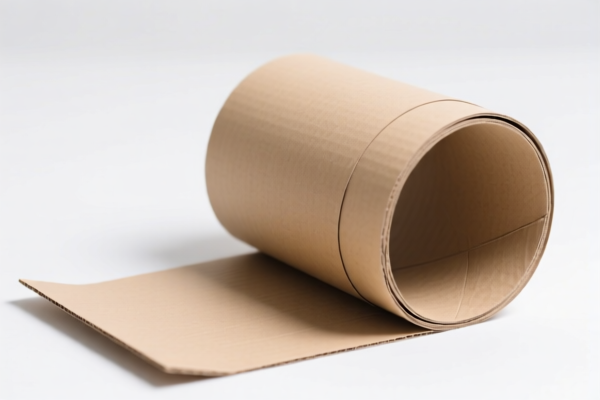
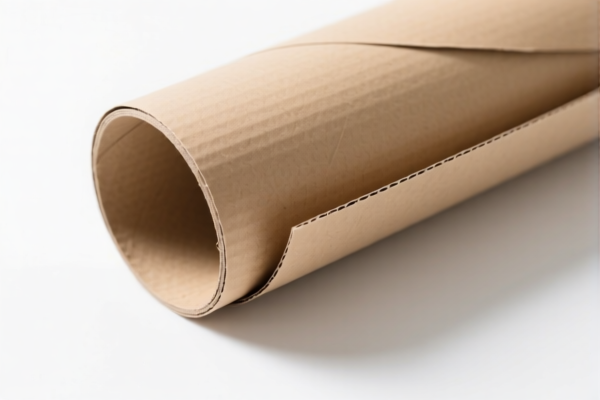
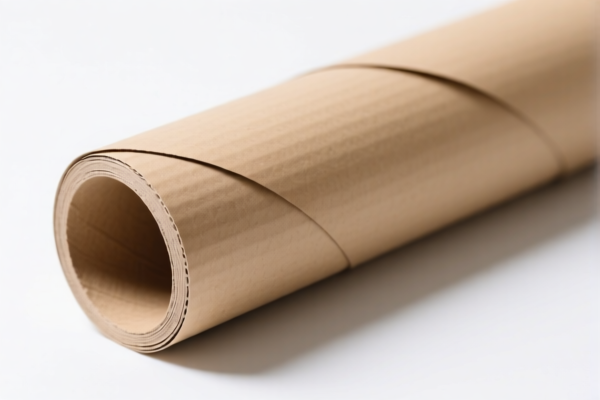
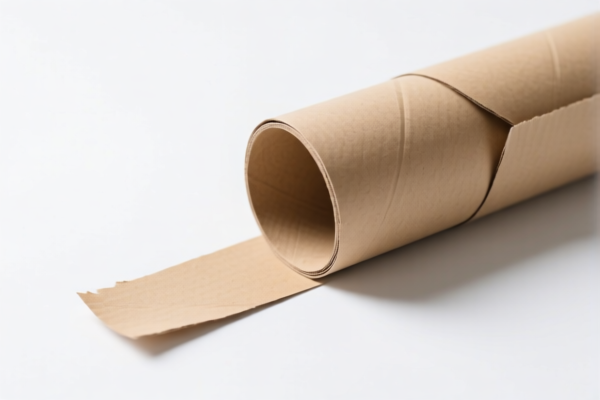
AI Analysis
📜 Roll or Sheet Paper and Paperboard
🌐 HS Code Reference & Customs Clearance Guide | 2026 Latest Tariff Breakdown | Professional-Level Compliance Strategy
📌 1. Product Definition and Classification: Do You Really Understand "Paper Rolls"?
"Roll or Sheet Paper and Paperboard" is a broad category in international trade, covering various forms of paper products used for packaging, printing, and industrial applications. In customs declarations, the classification depends heavily on the material composition, physical form (roll vs. sheet), and specific end-use (e.g., core tubes, printing rolls, recycled content).
Key Distinctions: - Paper Rolls/Sheets (4810 Series): Base paper or cardboard in rolls or sheets, primarily characterized by shape and material features. - Paperboard Cores/Tubes (4822 Series): Hollow cylinders made of paper or paperboard, specifically designed to serve as cores for other materials (e.g., fabric, film) or for storage. - Specialty Paper Rolls (4823 Series): Paperboard rolls with specific uses, such as thermal printing rolls or specialized industrial applications, matching specific functional criteria.
⚠️ Critical Classification Point:
- If the product is base paper/cardboard in roll or sheet form → Classify under 4810.xx
- If the product is a hollow tube/cylinder made of paper/board → Classify under 4822.xx
- If the product is a specialty roll (e.g., thermal, printing) → Classify under 4823.xx
📦 2. HS Code Classification Details (2026 Latest Tariff Authority Comparison)
| HS Code | Product Description | Application Scenario | Key Matching Feature |
|---|---|---|---|
4810.13.19.00 |
Paper and paperboard, in rolls or sheets, based on morphological features | General base paper/cardboard, non-specific use | ✅ Morphology-based match |
4810.13.11.40 |
Paper and paperboard, rolls or sheets, based on material and form | Standard paperboard rolls, generic industrial use | ✅ Material & Form match |
4822.90.00.00 |
Paperboard cores (recycled material), matching material and reel category | Recycled paper core tubes, general industrial use | ✅ Recycled Material + Reel Category |
4822.10.00.00 |
Paperboard cores (recycled material), matching paper/board form and reel/spool purpose | Core tubes for packaging, recycled content | ✅ Paper/Board Form + Core Purpose |
4823.40.00.00 |
Paperboard cores (recycled material), matching paper form, reel shape, and printing roll use | Thermal printing rolls, specialty paperboard rolls | ✅ Specific Function (Printing Roll) |
🔍 Key Reminder:
- Recycled Content: All 2026 classifications for recycled paperboard cores (4822 series) trigger the same high tariff rates due to US-China trade policies. - Form Factor: Distinguish clearly between "base paper in rolls" (4810) and "hollow cores/tubes" (4822/4823). Misclassification can lead to severe penalties.
💰 3. 2026 Latest Tariff Rate Details (Including Surtaxes, Policy Surcharges)
✅ Applicable Country: United States (US)
✅ Origin: China (CN)
✅ Effective Date: November 10, 2025 (and onwards)
🎯 1. 4810.13.19.00 & 4810.13.11.40 —— Paper and Paperboard, Rolls/Sheets
| Item | Content |
|---|---|
| Base Tariff | 0.0% (ad valorem) |
| USITC Surtax (Section 301) | +25.0% |
| IEEPA Surtax (Section 122) | +10.0% |
| Total Tariff Rate | 35.0% |
| Tax Calculation | CIF Value × 35% |
| De Minimis Exemption Eligible? | ❌ No (deny_de_minimis) |
| Legal Basis Path | USITC:4810.13.19.00 → FOOTNOTE:301 → IEEPA:122 |
📌 Explanation:
- The 25% surtax is imposed under US Trade Act Section 301 against Chinese goods. - The 10% surtax is added under IEEPA Section 122, specifically targeting certain Chinese imports. - Total 35% applies to both4810.13.19.00and4810.13.11.40. - No de minimis exemption: Even small shipments are subject to this tariff.
🎯 2. 4822.90.00.00 & 4822.10.00.00 —— Paperboard Cores (Recycled)
| Item | Content |
|---|---|
| Base Tariff | 0.0% |
| USITC Surtax (Section 301) | +25.0% |
| IEEPA Surtax (Section 122) | +10.0% |
| Total Tariff Rate | 35.0% |
| Tax Calculation | CIF Value × 35% |
| De Minimis Exemption Eligible? | ❌ No (deny_de_minimis) |
| Legal Basis Path | USITC:4822.x.x.x → FOOTNOTE:301 → IEEPA:122 |
📌 Note:
- Both4822.90.00.00and4822.10.00.00carry the same 35% total tariff. - This applies regardless of whether the core is for general use or specific packaging purposes. - Recycled material does not provide any tariff advantage under current US-China trade rules.
🎯 3. 4823.40.00.00 —— Specialty Paperboard Rolls (Printing)
| Item | Content |
|---|---|
| Base Tariff | 0.0% |
| USITC Surtax (Section 301) | +25.0% |
| IEEPA Surtax (Section 122) | +10.0% |
| Total Tariff Rate | 35.0% |
| Tax Calculation | CIF Value × 35% |
| De Minimis Exemption Eligible? | ❌ No (deny_de_minimis) |
| Legal Basis Path | USITC:4823.40.00.00 → FOOTNOTE:301 → IEEPA:122 |
📌 Important:
- Even though this is a "specialty" roll (e.g., thermal, printing), it is not exempt from the 35% tariff. - The key matching factor is the morphology (roll) and material (paperboard), not just the function.
🛠️ 4. Customs Clearance Practical Advice (Avoid Pitfalls)
✅ 1. Documentation Checklist (All Required)
| Document | Required | Notes |
|---|---|---|
| ✅ Product Specifications | ✔️ | Include dimensions, diameter, width, material type (virgin/recycled) |
| ✅ Material Composition Proof | ✔️ | For recycled products, provide certification to avoid misclassification |
| ✅ Product Photos (Clear) | ✔️ | Show roll structure, core type, and any branding |
| ✅ Commercial Invoice | ✔️ | Must specify "Paper Rolls" or "Paperboard Cores" clearly |
| ✅ Packing List | ✔️ | Detail net/gross weight, number of rolls per carton |
| ✅ Certificate of Origin (CO) | ✔️ | If not from China, may qualify for lower rates |
| ✅ Third-Party Test Reports | ✔️ | If applicable (e.g., sustainability certs) |
✅ 2. Declaration Tips (Key Mantras)
🔥 "Form Determines Code, Origin Determines Tax, Recycled Doesn't Help!"
| Scenario | Correct Declaration | Wrong Practice |
|---|---|---|
| Base paper in rolls | 4810.13.19.00 or 4810.13.11.40 |
Mislabel as "Core" → Risk of penalty |
| Hollow paperboard tubes | 4822.10.00.00 or 4822.90.00.00 |
Mislabel as "Paper" → Tariff mismatch |
| Thermal/printing rolls | 4823.40.00.00 |
Mislabel as general paper → Audit risk |
| Recycled Content | No tariff benefit | Assume recycled = cheaper → False! |
✅ 3. Special Cases Handling
| Situation | Handling Advice |
|---|---|
| Mixed Shipments | Declare each HS Code separately. Do not bundle different types. |
| OEM Custom Cores | Provide client drawings to prove core-specific design, but tariff remains 35%. |
| Recycled vs. Virgin | No tariff difference for Chinese origin. Ensure accurate material description to avoid fraud claims. |
| Small Samples | No de minimis exemption. Even $100 shipments are taxed at 35%. |
🌍 5. Global Market Comparison (2026 Latest)
| Country/Region | Recommended HS Code | Tariff (China Origin) | Notes |
|---|---|---|---|
| 🇺🇸 USA | 4810/4822/4823 |
35% | 25% Section 301 + 10% IEEPA. No exemption. |
| 🇨🇳 China | 4810/4822/4823 |
5–15% | Varies by product type. No additional surtax. |
| 🇪🇺 EU | 4810/4822/4823 |
0–6.5% | Generally low. No trade war surtaxes. |
| 🇨🇦 Canada | 4810/4822/4823 |
0–5% | CUSMA benefits may apply if originating. |
| 🇲🇽 Mexico | 4810/4822/4823 |
0–10% | USMCA benefits may apply if originating. |
📌 Conclusion:
- USA is the only market with the 35% effective tariff for these paper products from China. - No recycled content advantage under current US policy. - Diversify supply chain: Consider sourcing from Vietnam, India, or Mexico to avoid US surtaxes.
📌 6. Common Errors & Pitfalls (Lessons Learned)
❌ Error 1: Declaring "Paperboard Cores" as "Paper Rolls"
👉 Consequence: Misclassification, potential 35% vs. different rate confusion, audit risk.
❌ Error 2: Assuming Recycled Paper Gets Lower Tariff
👉 Consequence: False. Current US policy treats recycled Chinese paper/board the same as virgin.
❌ Error 3: Using "De Minimis" for Small Shipments
👉 Consequence: Denied. These HS codes are explicitly excluded from de minimis exemption under IEEPA/Section 301.
❌ Error 4: Vague Descriptions on Invoice
👉 Consequence: "Paper" is too vague. Must specify "Paperboard Core," "Thermal Roll," etc.
✅ Correct Practice:
"Paperboard Core, 1200mm Diameter, Recycled Content, for Packaging Use, Made in China, HS Code 4822.10.00.00"
🎯 7. Conclusion: Precise Classification Saves Money!
🎯 Remember:
🔹 "35% is the standard for Chinese Paper Products in the US."
🔹 "Recycled ≠ Cheaper under Current US Policy."
🔹 "No De Minimis Exemption for Small Shipments."
📌 Tip:
If your paperboard cores or rolls are originating from Vietnam, India, or Mexico, you may qualify for lower or zero tariffs under various trade agreements.
Recommendation:
- Conduct HS Code Pre-Ruling with US Customs (CBP).
- Evaluate supply chain diversification to avoid the 35% burden.
📣 Immediate Action:
📞 Contact a Professional Customs Broker
📄 Provide Product Specs + Origin Certificate
🚀 Ensure Smooth Clearance and Cost Efficiency!
✨ Professional Clearance Starts with Accurate Classification!
💼 Every Percent of Tariff Matters!
Customer Reviews
About HS Code Classification
The Harmonized System (HS) is an internationally standardized nomenclature developed by the World Customs Organization (WCO) to classify traded products. Over 200 countries use the HS system as the basis for customs tariffs, trade statistics, and import/export regulations.
Each HS code follows a hierarchical structure:
- Chapter (2 digits) — Broad category of goods (e.g., Chapter 84: Machinery and Mechanical Appliances)
- Heading (4 digits) — More specific grouping within the chapter
- Subheading (6 digits) — Internationally standardized breakdown, used by all WCO member countries
- National subdivisions (8-10 digits) — Country-specific extensions for further classification, such as US HTSUS 10-digit codes
Correct HS code classification is essential for smooth customs clearance, accurate duty payment, and compliance with trade regulations. Misclassification can lead to customs delays, overpayment of duties, or penalties.
When importing from CN to US, the applicable tariff rates may include:
- Most-Favored-Nation (MFN) rate — The standard duty rate applied to WTO members
- General rate — Applied to countries without trade agreements
- Trade remedy duties — Additional tariffs such as Section 301 (anti-dumping), Section 232 (national security), or countervailing duties
The information provided on this page is for reference purposes only. For official classification, please consult with your local customs authority or a licensed customs broker.