Rolled PVC Floor Tiles
CN → US| HS Code | Tariff Rate | Origin | Destination | Doc |
|---|---|---|---|---|
| 5904901000 | 35.0% | CN | US | Official Doc |
| 3918102000 | 40.3% | CN | US | Official Doc |
| 3918101040 | 40.3% | CN | US | Official Doc |
| 5904909000 | 35.0% | CN | US | Official Doc |
| 3918101040 | 40.3% | CN | US | Official Doc |
Product Images

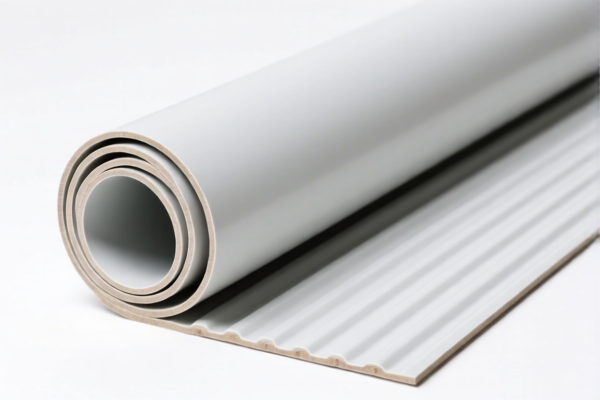
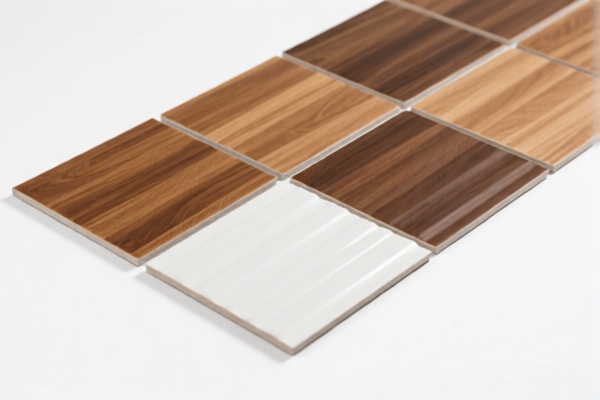
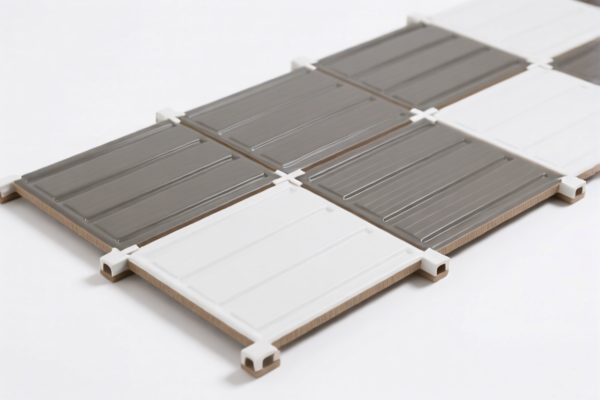
AI Analysis
🏗️ Rolled PVC Floor Tiles (Vinyl Flooring Rolls)
🌐 HS Code Reference & Customs Clearance Guide | 2026 Latest Tariff Analysis | Professional Entry Strategy
📌 I. Product Definition & Classification: Do You Truly Understand "PVC Floor Tiles"?
Rolled PVC Floor Tiles, often referred to as Vinyl Sheet Flooring or PVC Rolls, are flexible floor covering materials composed primarily of Polyvinyl Chloride (PVC). In international trade, they are typically classified based on their base material and construction method.
There are two primary classification paths depending on whether the product is considered a "Textile-backed, coated/flocked material" or a "Plastic product itself":
Path A: Textile Base with PVC Coating (Chapter 59)
Characteristics: The primary structure is a textile fabric (non-woven or woven) coated or covered with PVC to provide durability and waterproofing.
Classification Logic: Regarded as "Textiles impregnated, coated, covered or laminated with plastic."
Path B: Solid Plastic Product (Chapter 39)
Characteristics: The product is manufactured entirely from PVC compounds, possibly with fillers, without a distinct textile substrate acting as the primary structural base.
Classification Logic: Regarded as "Plastics and articles thereof."
⚠️ Key Distinction Point:
- If the product has a visible textile fabric base coated with PVC → Classify under 5904.90.10.00 / 5904.90.90.00
- If the product is solid PVC plastic (homogeneous or composite without textile base) → Classify under 3918.10.20.00 / 3918.10.10.40
📦 II. HS Code Classification Details (2026 Latest Tariff Authority Comparison)
| HS Code | Product Description | Application Scenario | Material Structure |
|---|---|---|---|
5904.90.10.00 |
PVC material rolls, classified as floor coverings made by coating/covering textile substrates | High-end commercial vinyl flooring with fabric backing | ✅ Textile Base + PVC Coating |
5904.90.90.00 |
PVC plastic material, roll form, meeting attributes of floor coverings | General PVC floor rolls, often with textile backing where specific subheading 10 doesn't apply | ✅ Textile Base (General) + PVC |
3918.10.20.00 |
PVC material, roll form, used as floor covering | Solid PVC vinyl flooring, laminate flooring without textile backing | ❌ Solid Plastic (No Textile) |
3918.10.10.40 |
Material PVC, roll form, use as floor covering | Similar to above, specific sub-category for PVC floor coverings | ❌ Solid Plastic (No Textile) |
🔍 Important Reminder:
- Products with a textile backing (e.g., polyester felt, glass fiber mesh) should NOT be classified under Chapter 39 to avoid misdeclaration; they belong to 5904.
- Solid PVC rolls (common in residential LVT/SPC hybrid rolls where the core is plastic) fall under 3918.
- Misclassification can lead to significant duty differences due to Section 301 and Section 122 tariffs.
💰 III. 2026 Latest Tariff Rate Breakdown (Including Surtaxes & Policy Add-ons)
✅ Applicable Country: United States (US)
✅ Country of Origin: China (CN)
✅ Effective Date: Current active tariffs (2025-2026 period)
🎯 1. Classification Group A: Textile-Based PVC Floor Coverings (5904 Series)
This group includes 5904.90.10.00 and 5904.90.90.00. These goods are generally considered floor coverings.
| Item | Detail |
|---|---|
| Base Tariff Rate | 0.0% (Free) |
| Section 301 Surtax | +25.0% (List 4B/China-specific) |
| Section 122 Tariff | +10.0% (Targeting Chinese imports, often applied concurrently) |
| Total Tariff Rate | 35.0% |
| Tax Calculation | CIF Value × 35% |
| De Minimis Eligibility | ❌ No (Not eligible for $800 exemption under current enforcement) |
| Legal Basis Path | USITC:5904.90.10.00 → Section 301: Footnote 9903.88.01 → Section 122: Special Measures |
📌 Explanation:
- Base Rate: Under normal MFN (Most Favored Nation) treatment, textile-based floor coverings often have a 0% base duty.
- Surcharge 1 (25%): Standard Section 301 tariff on many Chinese manufactured goods.
- Surcharge 2 (10%): Section 122 tariffs may apply depending on specific customs rulings for floor coverings from China.
- Total Cost Impact: A 35% duty significantly impacts margin. Precise classification is vital.
🎯 2. Classification Group B: Solid Plastic PVC Floor Coverings (3918 Series)
This group includes 3918.10.20.00 and 3918.10.10.40. These are classified strictly as plastic products.
| Item | Detail |
|---|---|
| Base Tariff Rate | 5.3% |
| Section 301 Surtax | +25.0% |
| Section 122 Tariff | +10.0% |
| Total Tariff Rate | 40.3% |
| Tax Calculation | CIF Value × 40.3% |
| De Minimis Eligibility | ❌ No |
| Legal Basis Path | USITC:3918.10.20.00 → Section 301: Footnote 9903.88.01 → Section 122 |
📌 Explanation:
- Base Rate: Plastic floor coverings generally carry a 5.3% base duty.
- Surcharges: The same 25% (Sec 301) and 10% (Sec 122) surcharges apply.
- Comparison: This group is 5.3% more expensive in total duty than the textile-based group (35.0%vs40.3%).
- Strategic Note: If your product has a textile backing, ensure it is classified under 5904 to save 5.3% in duties, provided the technical definition holds.
🛠️ IV. Customs Clearance Practical Advice (Real-World Pitfall Guide)
✅ 1. Documentation Checklist (Mandatory)
| Document | Required | Explanation |
|---|---|---|
| ✅ Product Specification Sheet | ✔️ | Must detail: Material composition (% PVC, % Textile), Thickness, Width, Length, Intended Use (Residential/Commercial). |
| ✅ Cross-Section Photo | ✔️ | Crucial: Shows if there is a textile backing layer. Proves classification under 5904 vs 3918. |
| ✅ Commercial Invoice | ✔️ | Clearly state: "Rolled PVC Floor Tiles," "PVC Coated Textile Flooring," or "Plastic Floor Covering." Avoid vague terms like "Vinyl." |
| ✅ Packing List | ✔️ | Include roll dimensions and weight. |
| ✅ Customs Ruling / Advance Decision | ✔️ | Highly recommended for high-volume imports to confirm 5904 vs 3918. |
| ✅ Origin Certificate | ✔️ | Required for US origin determination. |
✅ 2. Declaration Tips (Critical Mnemonics)
🔥 “Look at the Backing, Check the Tax!”
| Scenario | Correct Declaration | Wrong Action | Consequence |
|---|---|---|---|
| Has Fabric Backing | HS 5904.90.10.00 |
Declare as 3918.10.20.00 |
Overpayment: Pay 40.3% instead of 35%. Lose 5.3%. |
| Solid PVC (No Fabric) | HS 3918.10.20.00 |
Declare as 5904.90.10.00 |
Underpayment Penalty: Customs will reassess + fines. |
| Mixed Materials | Provide Cross-section | Vague description "Floor Tile" | Detention: Customs lab tests, delays shipment by weeks. |
| Section 122 Applicable | Acknowledge 10% surcharge | Ignore surcharge | Seizure/Redelivery: If declared as duty-free without justification. |
✅ 3. Special Case Handling
| Situation | Handling Advice |
|---|---|
| PVC with Glass Fiber Mesh | Usually classified under 5904 if the mesh provides the structural integrity. Confirm with expert. |
| LVT (Luxury Vinyl Tile) Rolls | If homogeneous plastic, use 3918. If backed, use 5904. |
| Samples vs. Commercial | Both are subject to duties. "Samples" do not automatically exempt from Section 301/122. |
| Bonded Warehouse | Consider importing into a Foreign Trade Zone (FTZ) to defer duty payment until sale. |
🌍 V. Global Market Comparison (2026 Update)
| Country/Region | Recommended HS Code | Estimated Duty (China Origin) | Key Certification | Notes |
|---|---|---|---|---|
| 🇺🇸 USA | 5904.90.10.00 / 3918.10.20.00 |
35.0% (Textile) 40.3% (Plastic) |
CPC (Consumer Product Safety) | High Tariff Risk. Section 122 & 301 apply. |
| 🇨🇳 China | 5904 / 3918 | 5% - 10% (Import Duty) | GB Standards | Lower base duties, no Section 301. |
| 🇪🇺 EU | 5904 / 3918 | ~6.5% | CE (REACH/RoHS) | No high surcharges like US, but strict environmental compliance. |
| 🇬🇧 UK | 5904 / 3918 | ~6.5% | UKCA | Post-Brexit rules apply. |
📌 Conclusion:
- The USA is the most expensive market due to layered surcharges (Section 301 + Section 122).
- Classifying correctly as 5904 (Textile-based) saves 5.3% compared to 3918 (Plastic).
- Do not ignore Section 122, as it is often overlooked by importers relying on old data.
📌 VI. Common Errors & Pitfall Guide (Lessons Learned)
❌ Mistake 1: Declaring PVC flooring as "Textile Floor Mats" without proving textile base.
👉 Result: Customs rejects 5904, reclassifies to 3918, and charges 40.3% + penalties.
❌ Mistake 2: Ignoring Section 122 (10%).
👉 Result: Underpayment by 10% on high-value shipments → Seizure at port.
❌ Mistake 3: Using vague terms like "Vinyl Sheet" without material breakdown.
👉 Result: CBP issues a "Request for Additional Information," delaying clearance by 7-14 days.
❌ Mistake 4: Assuming "Floor Tiles" means rigid SPC/LVT.
👉 Result: If it is rolled, it is likely "Sheet Flooring." Misclassification leads to error in use-case reporting.
✅ Correct Practice:
"Rolled PVC Floor Covering, 2.0mm thick, Polyester Felt Backed, 6m Width, For Commercial Use. HS 5904.90.10.00."
🎯 VII. Conclusion: Precision in Classification Saves Money!
🎯 Remember the Golden Rule:
🔹 "Textile Back = 5904 (35%)
🔹 "Solid Plastic = 3918 (40.3%)"
🔹 "Section 301 + 122 Apply to Both!"🔹 "5.3% Difference is Real Money. Check Your Backing!"
📌 Pro Tip:
If your PVC flooring has a non-Chinese origin (e.g., Vietnam, Thailand), you may be exempt from Section 301 and 122 tariffs, reducing the duty to the Base Rate only (0% or 5.3%).
Action:
📞 Consult a licensed customs broker.
📄 Provide cross-section photos for pre-classification.
🚀 Optimize your supply chain to minimize duty exposure.
✨ Professional Clearance Starts with Precise Classification!
💼 Every Percent Matters in Floor Covering Trade!
Customer Reviews
About HS Code Classification
The Harmonized System (HS) is an internationally standardized nomenclature developed by the World Customs Organization (WCO) to classify traded products. Over 200 countries use the HS system as the basis for customs tariffs, trade statistics, and import/export regulations.
Each HS code follows a hierarchical structure:
- Chapter (2 digits) — Broad category of goods (e.g., Chapter 84: Machinery and Mechanical Appliances)
- Heading (4 digits) — More specific grouping within the chapter
- Subheading (6 digits) — Internationally standardized breakdown, used by all WCO member countries
- National subdivisions (8-10 digits) — Country-specific extensions for further classification, such as US HTSUS 10-digit codes
Correct HS code classification is essential for smooth customs clearance, accurate duty payment, and compliance with trade regulations. Misclassification can lead to customs delays, overpayment of duties, or penalties.
When importing from CN to US, the applicable tariff rates may include:
- Most-Favored-Nation (MFN) rate — The standard duty rate applied to WTO members
- General rate — Applied to countries without trade agreements
- Trade remedy duties — Additional tariffs such as Section 301 (anti-dumping), Section 232 (national security), or countervailing duties
The information provided on this page is for reference purposes only. For official classification, please consult with your local customs authority or a licensed customs broker.