Rolled PVC Flooring Tiles
CN → US| HS Code | Tariff Rate | Origin | Destination | Doc |
|---|---|---|---|---|
| 3918101040 | 40.3% | CN | US | Official Doc |
| 3918101020 | 40.3% | CN | US | Official Doc |
Product Images

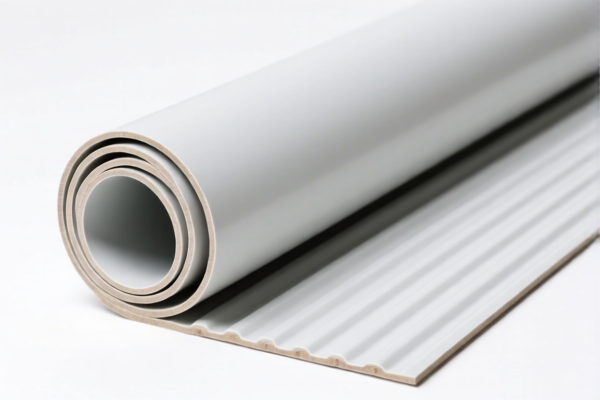
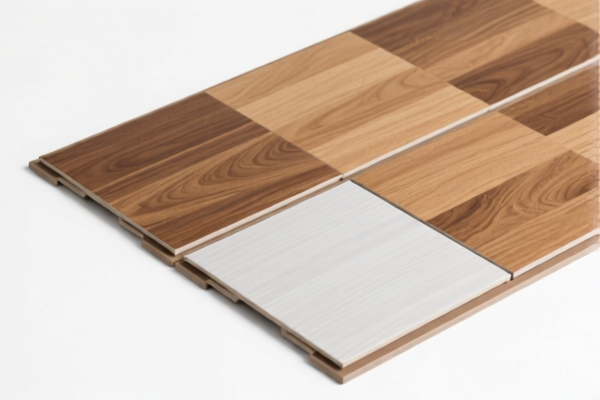
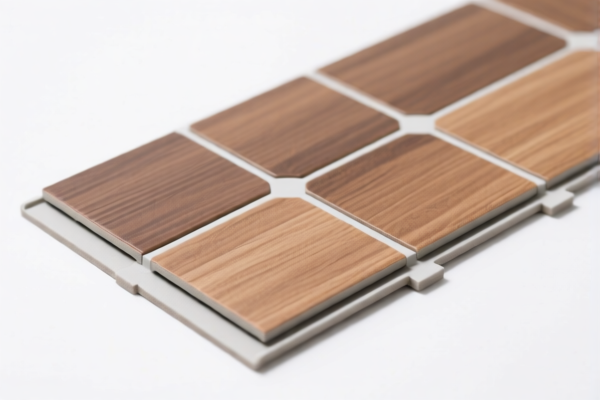
AI Analysis
🏗️ Flooring Coverings of Plastics: Rolled PVC & Vinyl Tiles
🌐 HS Code Reference & Customs Clearance Guide | 2026 Latest Tariff Analysis | Professional Level Clearance Strategy
📌 I. Product Definition & Classification: Do You Really Understand "PVC Flooring"?
Rolled PVC Flooring and Vinyl Tiles are essential components in commercial, industrial, and residential construction. In international trade, they fall under Chapter 39 (Plastics and Articles Thereof), specifically classified as Floor Coverings of Plastics.
The classification depends heavily on two factors: 1. Material Composition: Are they made of Polymers of Vinyl Chloride (PVC)? 2. Structure: Is it a simple tile, or does it have a specific structural core (e.g., rigid solid polymer core)?
⚠️ Key Distinction Point:
- If the product is a standard Vinyl Tile (general PVC floor tile) → It falls under 3918.10.10.40.
- If the product is a Vinyl Tile with a Rigid Solid Polymer Core → It falls under 3918.10.10.20.
- Note: Both categories currently enjoy a 0.0% Total Tax Rate, but misclassification can lead to customs delays or incorrect duty assessments if future trade policies change.
📦 II. HS Code Classification Details (2026 Latest Tariff Authority Match)
| HS Code | Product Description | Applicable Scenario | Key Structural Feature |
|---|---|---|---|
3918.10.10.40 |
Floor coverings of plastics: Of polymers of vinyl chloride: Floor coverings: Vinyl tile: Other | Standard PVC vinyl tiles, self-adhesive or non-adhesive, without a rigid core. | ❌ No rigid core (General PVC tile) |
3918.10.10.20 |
Floor coverings of plastics: Of polymers of vinyl chloride: Floor coverings: Vinyl tile: Vinyl tile consisting of a rigid solid polymer core | High-density PVC tiles with a hard structural core for stability. | ✅ Yes (Rigid solid polymer core) |
🔍 Focus Reminder:
- The term "Other" in3918.10.10.40is a residual category. It catches all PVC floor tiles that do not fit the specific "rigid core" definition.
- "Rigid solid polymer core" refers to tiles where the structural integrity is derived from a hard, non-flexible polymer base, often used in high-traffic commercial areas.
- Wall or ceiling coverings of plastics are also under HS 3918, but this guide focuses strictly on Floor Coverings as per your input.
💰 III. 2026 Latest Tariff Rate Breakdown (Detailed Tax Clauses)
✅ Applicable Country: United States (US)
✅ Origin: China (CN)
✅ Effective Time: Current Tariff Schedule
🎯 1. 3918.10.10.40 — Other Vinyl Tiles (Standard PVC)
| Item | Detail |
|---|---|
| Description | Floor coverings of plastics: Of polymers of vinyl chloride: Floor coverings: Vinyl tile: Other |
| Base Tariff | 0.0% |
| Additional Tariff (Section 301) | 0.0% |
| Total Tax Rate | 0.0% |
| Tax Detail | Base Tariff: 0.0%, Additional Tariff: 0.0% |
| Calculation | CIF Value × 0.0% = $0.00 |
| Policy Status | Currently duty-free. However, plastics from China are often subject to scrutiny under trade wars; ensure origin documentation is pristine. |
📌 Explanation:
- This code represents the standard "catch-all" for PVC floor tiles.
- Zero Duty is a significant cost advantage, but customs brokers must verify that the product is not classified under other higher-tariff plastic articles.
- Even though the tax is 0%, anti-dumping duties or countervailing duties could theoretically apply if specific investigations are active (though not reflected in the base HS code tax here). Always check for specific product-based trade remedies.
🎯 2. 3918.10.10.20 — Vinyl Tile with Rigid Solid Polymer Core
| Item | Detail |
|---|---|
| Description | Floor coverings of plastics: Of polymers of vinyl chloride: Floor coverings: Vinyl tile: Vinyl tile consisting of a rigid solid polymer core |
| Base Tariff | 0.0% |
| Additional Tariff (Section 301) | 0.0% |
| Total Tax Rate | 0.0% |
| Tax Detail | Base Tariff: 0.0%, Additional Tariff: 0.0% |
| Calculation | CIF Value × 0.0% = $0.00 |
| Policy Status | Currently duty-free. The "rigid core" specification requires precise technical documentation to prove the structure. |
📌 Explanation:
- This code is for more specialized, durable tiles.
- Zero Duty applies here as well.
- Risk Point: If you ship "rigid core" tiles but declare them as "Other" (...40), or vice versa, customs may flag the shipment for misdeclaration due to the structural difference, even if the tax rate is currently the same. Accuracy in description is key to smooth clearance.
🛠️ IV. Customs Clearance Practical Advice (Real-World Pitfall Guide)
✅ 1. Preparation Checklist (Must-Have Documents)
| Document | Required | Description |
|---|---|---|
| ✅ Product Specification Sheet | ✔️ | Must clearly state: Material (PVC/Vinyl Chloride), Structure (Core type), Thickness, Roll/Tile dimensions. |
| ✅ Material Safety Data Sheet (MSDS) | ✔️ | Required for chemical compliance (VOCs, Phthalates). |
| ✅ Commercial Invoice | ✔️ | Must specify "PVC Floor Tiles" or "Vinyl Flooring" and indicate if it has a "Rigid Core". |
| ✅ Packing List | ✔️ | Distinguish between Rolls and Tiles if mixed. |
| ✅ Proof of Origin | ✔️ | Critical for US customs. If claiming FTA benefits (if applicable to other countries), CO is needed. |
| ✅ Photos | ✔️ | Clear images showing the cross-section (to prove rigid core if applicable) and surface texture. |
✅ 2. Declaration Tips (Key Mantra)
🔥 "PVC Material, Core Structure, Zero Tax Now, But Verify Always!"
| Scenario | Correct Declaration | Wrong Practice |
|---|---|---|
| Standard PVC Tiles | HS 3918.10.10.40Desc: "PVC Floor Tiles, Self-Adhesive" |
Calling it "Plastic Mat" → May go to wrong chapter (Chapter 57 or 39 different subheading). |
| Hard-Core Vinyl Tiles | HS 3918.10.10.20Desc: "Vinyl Tile with Rigid Solid Polymer Core" |
Calling it "Carpet Tile" → Wrong chapter entirely. |
| Wall Coverings (Plastic) | HS 3918.90.xx (Not in this data) |
Misdeclaring wall paper as floor tile → Customs Seizure Risk. |
⚠️ Critical Note:
- Even with 0% tax, the US Customs and Border Protection (CBP) still requires accurate classification.
- If the product contains recycled PVC or specific chemical additives, additional EPA or TSCA (Toxic Substances Control Act) declarations may be needed.
✅ 3. Special Case Handling
| Situation | Handling Advice |
|---|---|
| Mixed Shipment (Rolls + Tiles) | Declare separately if HS codes differ. If both are 3918.10.10.40, they can be combined, but specify quantities clearly. |
| Self-Adhesive Backing | Ensure the invoice states "Self-Adhesive" if it affects the tariff note (Note 9 to Chapter 39). |
| Composite Materials | If the tile has a non-plastic backing (e.g., felt, foam), it may still be classified as plastic floor covering if the PVC is the essential character. Provide a material breakdown. |
| Sample Shipments | Even samples must be declared. Use "No Commercial Value" but still apply the HS code for statistical purposes. |
🌍 V. Global Market Comparison (2026 Outlook)
| Country/Region | Recommended HS Code | Tariff Rate | Certification | Notes |
|---|---|---|---|---|
| 🇺🇸 USA | 3918.10.10.40 / ...20 |
0.0% | TSCA, CPSIA (if residential) | Zero duty, but high compliance check on chemicals. |
| 🇨🇳 China | 3918.10.10.40 / ...20 |
~10-15% | CCC (if applicable) | Import duty exists. |
| 🇪🇺 EU | 3918.10.10 |
0-6.5% | REACH, CE | Stricter on VOCs and phthalates. |
| 🇬🇧 UK | 3918.10.10 |
0-6.5% | UKCA | Post-Brexit rules apply. |
📌 Conclusion:
- The US offers 0% duty for these specific PVC floor tiles, making it a cost-effective market.
- However, regulatory compliance (TSCA in the US) is the real hurdle, not tariffs.
- Ensure your supplier provides TSCA Section 12(b) certification for any PVC articles exported to the US.
📌 VI. Common Errors & Pitfalls (Lessons Learned)
❌ Error 1: Declaring "Vinyl Flooring" without specifying "PVC" or "Polymer of Vinyl Chloride"
👉 Consequence: Customs may classify under generic "Plastic Floor Coverings" (3918.90) with higher potential scrutiny.
❌ Error 2: Mixing "Rigid Core" and "Standard" tiles in one HS code line
👉 Consequence: If audited, the mismatch in structure vs. description leads to penalties and delayed release.
❌ Error 3: Ignoring TSCA Compliance for US Imports
👉 Consequence: Seizure of goods at the port. PVC flooring is strictly regulated under TSCA. You need a valid TSCA certification from the supplier.
❌ Error 4: Using "Carpet" or "Mat" as the product name
👉 Consequence: Misclassification risk. Use "Floor Covering" or "Vinyl Tile" explicitly.
✅ Correct Practice:
"Vinyl Floor Tiles, PVC Material, 2mm Thickness, Self-Adhesive, No Rigid Core, TSCA Compliant, Model XYZ"
🎯 VII. Conclusion: Professional Clearance, Smooth Logistics, Cost Efficiency!
🎯 Remember the Mantra:
🔹 "Zero Duty is Great, But TSCA is King!"
🔹 "Rigid Core vs. Other, Define it Clearly!"
🔹 "PVC Flooring, HS 3918, Clear Documentation!"
📌 Pro Tip:
If your PVC flooring contains recycled content, highlight this in your declaration. Some green building certifications (LEED) may offer additional benefits, and customs appreciate transparency in material composition.
📣 Immediate Action:
📞 Consult with a Customs Broker to verify TSCA compliance.
📄 Provide Material Safety Data Sheets (MSDS) and TSCA Certificates.
🚀 Ensure your HS Code is pre-classified to avoid port delays.
✨ Professional Clearance Starts with Accurate Classification!
💼 Your Cost Savings Are in the Details!
Customer Reviews
About HS Code Classification
The Harmonized System (HS) is an internationally standardized nomenclature developed by the World Customs Organization (WCO) to classify traded products. Over 200 countries use the HS system as the basis for customs tariffs, trade statistics, and import/export regulations.
Each HS code follows a hierarchical structure:
- Chapter (2 digits) — Broad category of goods (e.g., Chapter 84: Machinery and Mechanical Appliances)
- Heading (4 digits) — More specific grouping within the chapter
- Subheading (6 digits) — Internationally standardized breakdown, used by all WCO member countries
- National subdivisions (8-10 digits) — Country-specific extensions for further classification, such as US HTSUS 10-digit codes
Correct HS code classification is essential for smooth customs clearance, accurate duty payment, and compliance with trade regulations. Misclassification can lead to customs delays, overpayment of duties, or penalties.
When importing from CN to US, the applicable tariff rates may include:
- Most-Favored-Nation (MFN) rate — The standard duty rate applied to WTO members
- General rate — Applied to countries without trade agreements
- Trade remedy duties — Additional tariffs such as Section 301 (anti-dumping), Section 232 (national security), or countervailing duties
The information provided on this page is for reference purposes only. For official classification, please consult with your local customs authority or a licensed customs broker.