Rolls of Drawing Paper
CN → US| HS Code | Tariff Rate | Origin | Destination | Doc |
|---|---|---|---|---|
| 4802612000 | 35.0% | CN | US | Official Doc |
| 4802552000 | 35.0% | CN | US | Official Doc |
| 3919102055 | 40.8% | CN | US | Official Doc |
| 4821902000 | 35.0% | CN | US | Official Doc |
Product Images
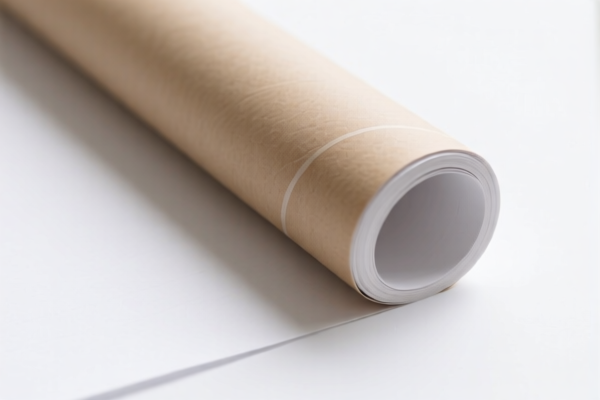
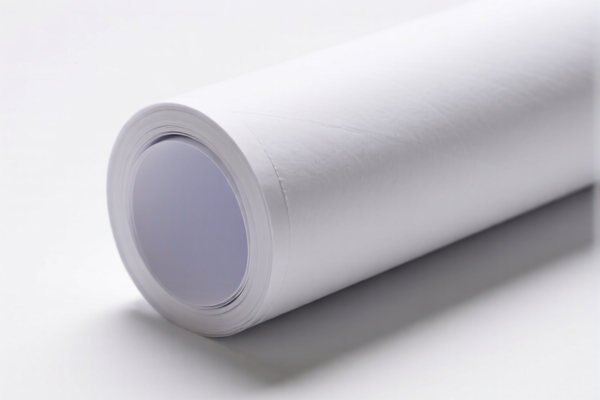
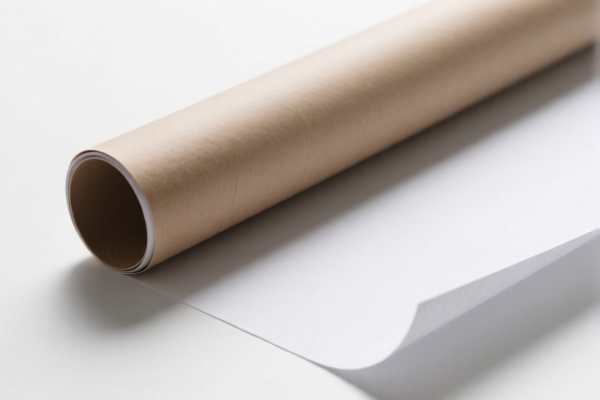

AI Analysis
📄 Rolls of Drawing Paper (卷装绘图纸)
🌐 HS Code Reference & Customs Clearance Guide | 2026 Latest Tariff Analysis | Professional Clearance Strategy
📌 I. Product Definition & Classification: What Exactly is "Drawing Paper"?
In international trade, "Rolls of Drawing Paper" are primarily defined by their state (rolls), material (paper), and purpose (for drafting/drawing). It is crucial to distinguish between coated and uncoated paper, as well as between genuine drawing paper and adhesive labels/stickers, as these distinctions dictate the HS Code and, consequently, the tax burden.
⚠️ Key Distinction Points:
- Genuine Drawing Paper (Non-Adhesive): Raw material for architects, engineers, and artists. Falls under Chapter 48 (Paper/Paperboard).
- Adhesive Labels/Stickers (Rolls): Products with self-adhesive backing, used for labeling or decoration. Falls under Chapter 39 (Plastics) or Chapter 48 (Paper Labels).
- Misclassification Risk: Declaring adhesive stickers as "drawing paper" or vice versa leads to severe penalties and duty re-assessment.
📦 II. HS Code Classification Details (2026 Latest Tariff Authority Comparison)
Based on the specific characteristics provided in your data, here are the precise HS Codes, summaries, and applicable tax rates.
| HS Code | Product Description | Summary & Key Features | Applicable Tax Rate (Total) |
|---|---|---|---|
4802.61.20.00 |
Rolls of Drawing Paper, Coated | Material: Paper. Form: Rolls. Purpose: Drawing/Drafting. Type: Specifically refers to coated drawing paper (e.g., tracing paper, vellum) intended for technical or artistic drafting. |
35.0% |
4802.55.20.00 |
Rolls of Drawing Paper, Uncoated | Material: Paper. Form: Rolls. Purpose: Drawing/Drafting. Type: Specifically refers to uncoated plain paper used for sketching, drafting, or general artistic use. |
35.0% |
3919.10.20.55 |
Rolls of Stickers (Plastic) | Material: Plastic (Plastic films/sheets). Form: Rolls. Type: Self-adhesive plastic stickers. Classified as a "catch-all" for plastic-based adhesive rolls that do not fit specific plastic article codes. |
40.8% |
4821.90.20.00 |
Rolls of Stickers (Paper/Film) | Material: Paper or Plastic Film. Form: Rolls. Type: Self-adhesive labels/stickers. Classified under "Adhesive labels of paper or paperboard" (catch-all for paper-based adhesive items). |
35.0% |
🔍 Critical Note:
- If the product is non-adhesive and used for drawing, use 4802.xxxxxx codes (4802.61.20.00or4802.55.20.00).
- If the product has an adhesive backing (stickers/labels), use 3919.10.20.55 (if plastic) or 4821.90.20.00 (if paper/film).
- Do not mix: A plastic sticker declared as "drawing paper" will be rejected or reclassified, leading to higher duties and delays.
💰 III. 2026 Latest Tariff Rate Breakdown (Including Surtaxes & Policy Add-ons)
✅ Applicable Country: United States (US)
✅ Origin: China (CN)
✅ Effective Time: As per current 2025/2026 trade policies (Section 301 & IEEPA)
🎯 1. 4802.61.20.00 & 4802.55.20.00 —— Rolls of Drawing Paper (Non-Adhesive)
| Item | Detail |
|---|---|
| Base Tariff | 0.0% |
| Section 301 Surtax | +25.0% |
| 122 Clause Tariff | +10.0% |
| Total Tax Rate | 35.0% |
| Calculation Basis | CIF Value × 35.0% |
| De Minimis Exemption | ❌ Not Applicable (Deny de minimis for Section 301 goods) |
| Legal Basis | HTSUS 4802.61.20.00 / 4802.55.20.00 + USITC Footnotes for Section 301 + IEEPA Proclamations |
📌 Explanation:
- Although the base duty is 0%, the heavy import restrictions apply.
- 25% Section 301 Tax: Applied to a wide range of Chinese goods, including certain paper products.
- 10% IEEPA/122 Clause Tax: Additional penalty surcharge for specific Chinese imports.
- Total Impact: A $10,000 shipment will incur $3,500 in taxes. This is a significant cost factor that must be baked into pricing.
🎯 2. 3919.10.20.55 —— Rolls of Plastic Stickers
| Item | Detail |
|---|---|
| Base Tariff | 5.8% |
| Section 301 Surtax | +25.0% |
| 122 Clause Tariff | +10.0% |
| Total Tax Rate | 40.8% |
| Calculation Basis | CIF Value × 40.8% |
| De Minimis Exemption | ❌ Not Applicable |
| Legal Basis | HTSUS 3919.10.20.55 + USITC Footnotes + IEEPA Proclamations |
📌 Explanation:
- Plastic-based adhesive products often have a higher base rate (5.8%) compared to paper drawing paper.
- Adding 25% and 10% surtaxes results in the highest total rate (40.8%) among the listed options.
- Cost Warning: This is the most expensive category. Consider if paper-based stickers (4821.90.20.00) are a viable alternative if the material allows.
🎯 3. 4821.90.20.00 —— Rolls of Paper/Film Stickers
| Item | Detail |
|---|---|
| Base Tariff | 0.0% |
| Section 301 Surtax | +25.0% |
| 122 Clause Tariff | +10.0% |
| Total Tax Rate | 35.0% |
| Calculation Basis | CIF Value × 35.0% |
| De Minimis Exemption | ❌ Not Applicable |
| Legal Basis | HTSUS 4821.90.20.00 + USITC Footnotes + IEEPA Proclamations |
📌 Explanation:
- Paper-based adhesive labels enjoy a 0% base rate.
- However, the 25% + 10% surtaxes still apply, bringing the total to 35.0%.
- This is cost-effective if the product can be classified as a paper label rather than a plastic sticker.
🛠️ IV. Customs Clearance Practical Advice (Avoid Pitfalls)
✅ 1. Required Documentation Checklist (Non-Negotiable)
| Document | Required? | Purpose |
|---|---|---|
| ✅ Commercial Invoice | ✔️ | Must clearly state: "Rolls of Drawing Paper, Non-Adhesive" OR "Self-Adhesive Stickers, Material: Paper/Plastic". |
| ✅ Packing List | ✔️ | Detail roll dimensions (width, length, weight) to confirm "Roll" format. |
| ✅ Product Photo | ✔️ | Critical: Show the cross-section. If it’s a roll of plain paper → 4802. If it has a backing liner or glue → 3919 or 4821. |
| ✅ Material Declaration | ✔️ | Explicitly state: "100% Paper, Uncoated" or "Paper Base with Adhesive". |
| ✅ Certificate of Origin | ✔️ | Required to verify China origin for surtax calculation. |
| ✅ Section 301 Exclusion | ❌ | Note: As of 2026, most paper/adhesive products from China do not qualify for exclusions. Do not rely on old exclusions. |
✅ 2. Declaration Tips (Key Mantra)
🔥 "Be Precise: Adhesive? No? Plastic? Paper? Tax Changes Dramatically!"
| Scenario | Correct Declaration | Incorrect Declaration | Consequence |
|---|---|---|---|
| Plain Drawing Paper Rolls | "Rolls of Drawing Paper, Uncoated, Paper" | "Stickers" or "Labels" | Risk of misclassification → Penalty + Higher Tax |
| Plastic Sticker Rolls | "Rolls of Self-Adhesive Plastic Stickers, HS 3919.10.20.55" | "Drawing Paper" | 40.8% vs 0% Base. Risk of audit & back-taxes |
| Paper Sticker Rolls | "Rolls of Self-Adhesive Paper Labels, HS 4821.90.20.00" | "Drawing Paper" | Misclassification. Paper labels have 0% base, but surtaxes still apply. |
| Mixed Shipment | Split Line Items | One Line Item for all | Customs may reject mixed classification → Delay |
✅ 3. Special Considerations
| Situation | Advice |
|---|---|
| Is it "Tracing Paper"? | If it’s translucent, coated, and for drafting, it may fall under 4802.61.20.00. Ensure it’s not classified as "graphic paper" which might have different rules. |
| Is it "Adhesive"? | If the product has a peel-and-stick backing, it is NOT drawing paper. It is a sticker/label. This is the #1 reason for customs holds. |
| Plastic vs. Paper Stickers | Plastic stickers (3919) have a 5.8% base duty. Paper stickers (4821) have 0%. If your product is compatible with paper backing, choose 4821 to lower the base burden. |
| De Minimis ($800) | Warning: Section 301 goods (including these HS codes from China) cannot use the de minimis exemption. Even small samples under $800 may be subject to duty and require formal entry. |
🌍 V. Global Market Comparison (2026 Latest)
| Country/Region | Recommended HS Code | Total Tariff (China Origin) | Key Certification | Note |
|---|---|---|---|---|
| 🇺🇸 USA | 4802.61.20.00 / 4802.55.20.00 / 3919.10.20.55 / 4821.90.20.00 |
35.0% - 40.8% | None specific for paper, but FCC/UL if electronic components included | High Surtaxes (35-41%). No de minimis. |
| 🇨🇳 China | Same HS Codes | 0% - 5% | CCC (if applicable) | Import into China is cheaper. |
| 🇪🇺 EU | 4802 / 3919 / 4821 | 0% - 6% | CE (if labeled for EU), REACH | No Section 301 taxes. VAT applies separately. |
| 🇬🇧 UK | Same HS Codes | 0% - 6% | UKCA | Post-Brexit rules apply. |
| 🇯🇵 Japan | Same HS Codes | 0% - 8% | PSE (if electronic) | Generally favorable. |
📌 Conclusion:
- The US market is the most challenging due to the 35-41% total tariff burden.
- EU/UK/Japan are much more cost-effective for these products.
- If shipping to the US, ensure accurate classification to avoid double taxation or penalties.
📌 VI. Common Errors & Pitfalls (Lessons Learned)
❌ Error 1: Declaring "Stickers" as "Drawing Paper" to avoid higher taxes.
👉 Result: Customs inspects, finds adhesive, reclassifies to 3919 or 4821, issues penalty.
❌ Error 2: Not specifying "Coated" vs "Uncoated" for Drawing Paper.
👉 Result: Customs may choose the worst-case scenario or hold the shipment for clarification.
❌ Error 3: Assuming de minimis ($800) applies to small shipments.
👉 Result: Refusal of Entry. Section 301 goods from China are excluded from de minimis. Even $100 samples may be taxed.
❌ Error 4: Mixing Plastic and Paper Stickers in one HS Code.
👉 Result: Audit risk. Separate lines for 3919 (Plastic) and 4821 (Paper).
✅ Correct Practice:
"Rolls of Uncoated Drawing Paper, Paper Material, Non-Adhesive, for Architectural Drafting"
vs.
"Rolls of Self-Adhesive Paper Labels, Paper Base, For Product Labeling"
🎯 VII. Conclusion: Precision Classification Saves Money
🎯 Remember the Mantra:
🔹 "Adhesive? Check Backing. Plastic? 40.8%. Paper? 35.0%. Plain Paper? 35.0%. Base is 0%, but Surtaxes are High!"
🔹 "No De Minimis for China. Every Shipment is Taxable in the US."
📌 Pro Tip:
If your volume is high, consider pre-classification rulings from U.S. Customs and Border Protection (CBP) to lock in the HS Code and avoid future disputes. Also, evaluate if supply chain diversification (e.g., sourcing from Vietnam or Mexico) can help avoid the 25% Section 301 surtax, potentially reducing the total tax burden significantly.
📣 Immediate Action:
📞 Consult a Licensed Customs Broker + Provide Product Photos + Verify Adhesive Status
🚀 Ensure Compliance, Avoid Delays, and Calculate True Landed Cost!
✨ Professional Clearance Starts with Accurate Classification!
💼 Every Percent of Duty Counts in Your Profit Margin!
Customer Reviews
About HS Code Classification
The Harmonized System (HS) is an internationally standardized nomenclature developed by the World Customs Organization (WCO) to classify traded products. Over 200 countries use the HS system as the basis for customs tariffs, trade statistics, and import/export regulations.
Each HS code follows a hierarchical structure:
- Chapter (2 digits) — Broad category of goods (e.g., Chapter 84: Machinery and Mechanical Appliances)
- Heading (4 digits) — More specific grouping within the chapter
- Subheading (6 digits) — Internationally standardized breakdown, used by all WCO member countries
- National subdivisions (8-10 digits) — Country-specific extensions for further classification, such as US HTSUS 10-digit codes
Correct HS code classification is essential for smooth customs clearance, accurate duty payment, and compliance with trade regulations. Misclassification can lead to customs delays, overpayment of duties, or penalties.
When importing from CN to US, the applicable tariff rates may include:
- Most-Favored-Nation (MFN) rate — The standard duty rate applied to WTO members
- General rate — Applied to countries without trade agreements
- Trade remedy duties — Additional tariffs such as Section 301 (anti-dumping), Section 232 (national security), or countervailing duties
The information provided on this page is for reference purposes only. For official classification, please consult with your local customs authority or a licensed customs broker.