Rolls of tape and other adhesive products
CN → US| HS Code | Tariff Rate | Origin | Destination | Doc |
|---|---|---|---|---|
| 3919102055 | 40.8% | CN | US | Official Doc |
| 3506990000 | 37.1% | CN | US | Official Doc |
| 3506990000 | 37.1% | CN | US | Official Doc |
| 3506915000 | 37.1% | CN | US | Official Doc |
Product Images
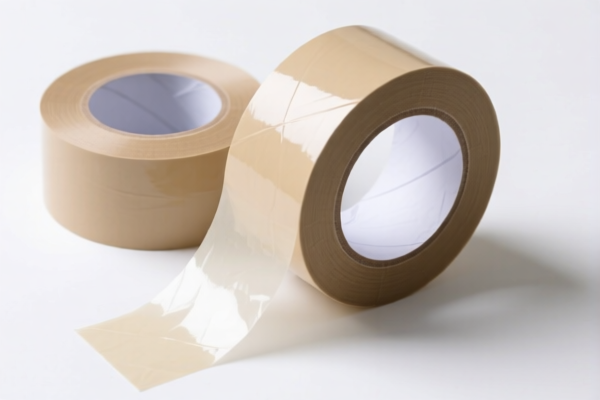
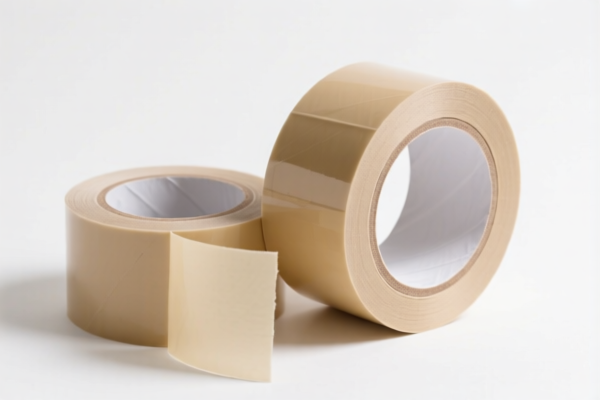
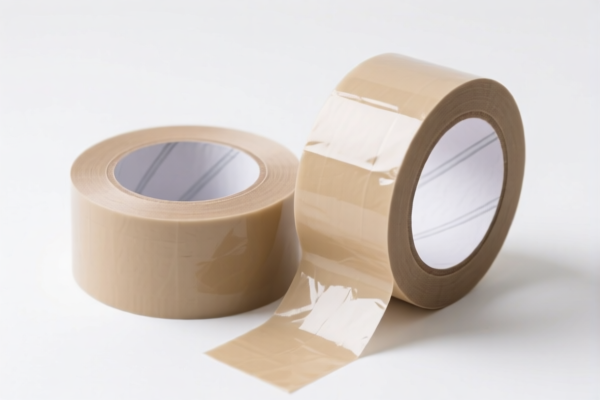
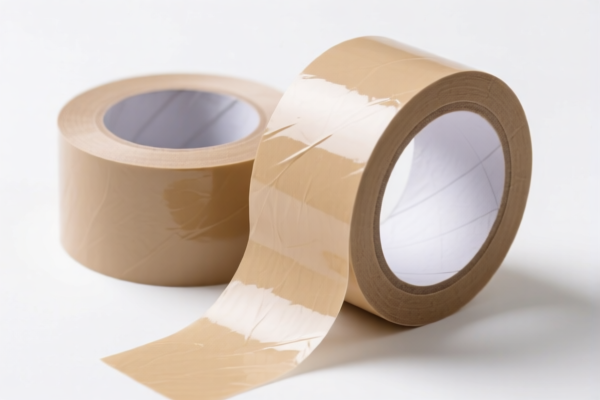
AI Analysis
🎞️ Rolls of Tape & Other Adhesive Products
🌐 HS Code Reference & Customs Clearance Guide | 2026 Latest Tariff Analysis | Professional Clearance Strategy
📌 One, Product Definition and Classification: Do You Really Understand "Tape and Adhesives"?
In international trade, "rolls of tape and other adhesive products" is a broad category that spans from simple household packaging tape to industrial-grade structural adhesives. The core distinction lies in form (pre-formed roll vs. liquid/paste) and material (plastic/self-adhesive vs. chemical formulation).
Key Classification Logic: 1. Plastic Self-Adhesive Rolls (e.g., Packing Tape, Masking Tape): If the product is in roll form and the adhesive is integrated into a plastic backing, it falls under Chapter 39 (Plastics). 2. Prepared Adhesives (e.g., Liquid Glue, Paste, Industrial Glue): If the product is a "prepared adhesive" (mixed chemicals) not primarily defined by a plastic roll structure, it falls under Chapter 35 (Animal or Vegetable Materials; Prepared Foods; Starches; Gluten; Malt Extracts; Prepared Adhesives).
⚠️ Critical Distinction:
- If it is a roll made of plastic with adhesive backing → 3919.10
- If it is a jar/bottle/pack of mixed glue, regardless of "stickiness" → 3506.99 or 3506.91
- Note: Even if a product is described as "adhesive," if it is in "roll form" and is plastic-based, customs often prefers 3919 over Chapter 35.
📦 Two, HS Code Classification Details (2026 Latest Tariff Authority Comparison)
Based on the provided data, here are the three potential HS Code classifications for "Rolls of tape and other adhesive products," along with their specific tax implications.
| HS Code | Product Description | Application Scenario | Key Classification Logic |
|---|---|---|---|
3919.10.20.55 |
Rolls of self-adhesive plastic tape and other flat shapes | Packing tape, masking tape, duct tape (in roll form) | Form: Roll shape; Material: Plastic self-adhesive. Matches "self-adhesive plastic tapes." |
3506.99.00.00 |
Other prepared adhesives (including mixes based on rubber or cellulose) | Liquid glues, industrial adhesive mixes not specifically listed elsewhere | Name Match: "Prepared adhesives"; Use: General adhesion. "Adhesive products" in name matches "prepared adhesives" in purpose. |
3506.91.50.00 |
Adhesives based on rubber or cellulose derivatives | Specific rubber-based or cellulose-based adhesive mixes | Category Match: "Other" category in Chapter 35; Matches adhesive use without material conflict. |
🔍 Important Note:
-3919.10.20.55is the most precise fit for physical rolls of tape (like Scotch tape, packing tape).
-3506.99.00.00and3506.91.50.00are for chemical adhesives (glues, pastes). The data suggests that if the product name emphasizes "adhesive products" broadly, these codes may apply, but 3919 is standard for rolls.
- All three codes carry high additional tariffs due to US-China trade measures.
💰 Three, 2026 Latest Tariff Rate Breakdown (Including Surtaxes & Policy Surcharges)
✅ Applicable Country: United States (US)
✅ Origin: China (CN)
✅ Effective Date: 2025 November 10 onwards (including subsequent imports)
🎯 1. 3919.10.20.55 —— Rolls of Self-Adhesive Plastic Tape
| Item | Content |
|---|---|
| Base Tariff Rate | 5.8% |
| USITC Surtax (Section 301) | +25.0% |
| 122 Clause Surtax | +10.0% |
| Total Tax Rate | 40.8% |
| Tax Calculation | CIF Value × 40.8% |
| De Minimis Exemption | ❌ Not Eligible (High tariff rates usually disqualify from de minimis benefits depending on value, but effectively high cost applies) |
| Legal Basis Path | Base Tariff → USITC Footnote 9903.88.01 (Section 301) → 122 Clause |
📌 Explanation:
- This is the standard classification for physical rolls of plastic tape.
- The total tariff is 40.8%, which is extremely high.
- The 25% Section 301 tariff and 10% 122 Clause tariff are additive surcharges on top of the base duty.
🎯 2. 3506.99.00.00 —— Other Prepared Adhesives
| Item | Content |
|---|---|
| Base Tariff Rate | 2.1% |
| USITC Surtax (Section 301) | +25.0% |
| 122 Clause Surtax | +10.0% |
| Total Tax Rate | 37.1% |
| Tax Calculation | CIF Value × 37.1% |
| De Minimis Exemption | ❌ Not Eligible |
| Legal Basis Path | Base Tariff → USITC Footnote 9903.88.01 (Section 301) → 122 Clause |
📌 Explanation:
- Used if the product is classified as a "prepared adhesive" rather than a plastic tape.
- The total tariff is 37.1%, slightly lower than the tape classification but still significant.
- The 25% Section 301 and 10% 122 Clause still apply fully.
🎯 3. 3506.91.50.00 —— Adhesives Based on Rubber or Cellulose
| Item | Content |
|---|---|
| Base Tariff Rate | 2.1% |
| USITC Surtax (Section 301) | +25.0% |
| 122 Clause Surtax | +10.0% |
| Total Tax Rate | 37.1% |
| Tax Calculation | CIF Value × 37.1% |
| De Minimis Exemption | ❌ Not Eligible |
| Legal Basis Path | Base Tariff → USITC Footnote 9903.88.01 (Section 301) → 122 Clause |
📌 Explanation:
- Similar tax burden to3506.99.00.00.
- Specific to rubber/cellulose-based adhesives.
- The 37.1% total rate is unavoidable under current US import policies for Chinese-origin goods.
🛠️ Four, Customs Clearance Practical Advice (Practical Pitfall Avoidance Guide)
✅ 1. Document Preparation Checklist (All Required)
| Document | Must Provide | Description |
|---|---|---|
| ✅ Product Specification Sheet | ✔️ | Must detail: Roll dimensions, width, length, adhesive type, backing material (plastic vs. paper). |
| ✅ Composition Analysis | ✔️ | If claiming 3506 classification, provide chemical composition. If claiming 3919, provide plastic backing details. |
| ✅ Product Photos (Including Label) | ✔️ | Clear images of the roll, label, and any packaging. Must show if it's pre-cut or continuous roll. |
| ✅ Commercial Invoice | ✔️ | Must explicitly state: "Rolls of Self-Adhesive Plastic Tape" or "Prepared Adhesives." Avoid vague terms like "Sticky Stuff." |
| ✅ Packing List | ✔️ | Details quantity, weight, and packaging type. |
✅ 2. Declaration Tips (Key Mantra)
🔥 "Rolls Go to 39, Glue Goes to 35. Name It Right, Save Money!"
| Scenario | Correct Declaration | Wrong Practice |
|---|---|---|
| Packing Tape (Plastic Roll) | 3919.10.20.55 |
Declare as "Glue" → Risk of reclassification & penalty |
| Industrial Glue (Jar/Bottle) | 3506.99.00.00 |
Declare as "Tape" → Misclassification |
| Masking Tape (Paper + Adhesive) | Still likely 3919 (if roll/self-adhesive) |
Declare as 3506 → Risk of audit |
| Hot Melt Sticks | 3506.99.00.00 |
Declare as "Tape" → Incorrect form |
📌 Note:
- The form factor (roll) is critical. Even if it's "adhesive," if it's in a roll and plastic-based, 3919 is the stronger candidate.
- Misclassification can lead to higher duties or seizure if the海关 (Customs) disagrees with the "adhesive" vs. "tape" definition.
✅ 3. Special Case Handling
| Scenario | Handling Advice |
|---|---|
| Mixed Shipments (Tape + Glue) | Declare separately with distinct HS Codes. Do not bundle under one code. |
| OEM Custom Tape | Provide client order and design specs. Ensure the material (plastic vs. paper) is clearly stated. |
| High-Value Shipments | Consider Advance Ruling (Ruling Letter) from US CBP to confirm HS Code and tariff rate. |
| Origin Verification | Ensure Certificate of Origin (CO) confirms China Origin to accurately apply surtaxes. |
🌍 Five, Global Market Comparison (2026 Latest)
| Country/Region | Recommended HS Code | Tariff (China Origin) | Certification Requirements | Remarks |
|---|---|---|---|---|
| 🇺🇸 United States | 3919.10.20.55 |
40.8% (Tape) / 37.1% (Glue) | FCC (if electronic), SDS | High Surtax: 25% Sec 301 + 10% 122 Clause |
| 🇨🇳 China | 3919.10.20.55 |
~5-8% | CCC (if applicable) | Lower base duty, no US surtaxes |
| 🇪🇺 European Union | 3919.10.00 |
0-3% | REACH, RoHS | No Section 301 surtaxes; lower overall cost |
| 🇨🇦 Canada | 3919.10.20.00 |
0-5% | Health Canada | No US-style surtaxes |
| 🇯🇵 Japan | 3919.10.00.00 |
0-3% | JIS | No surtaxes |
📌 Conclusion:
- The United States is the most expensive market for these products due to Section 301 and 122 Clause tariffs.
- Total landed cost in the US can be 40%+ higher than in EU or Asia.
- Supply chain diversification (e.g., sourcing from Vietnam or Thailand) may be necessary to avoid surtaxes.
📌 Six, Common Errors & Pitfall Guide (Lessons Learned)
❌ Error 1: Declaring Rolls of Tape as "Adhesives" (3506) to get a lower base rate (2.1%)
👉 Consequence: Customs will reclassify to 3919 (5.8% base) + penalties + delay. The difference is small, but misclassification risks are high.
❌ Error 2: Ignoring the 122 Clause and Section 301 surtaxes
👉 Consequence: Profit margin collapse. A 40.8% tariff can wipe out all profit on low-margin tape products.
❌ Error 3: Vague Product Description ("Sticky Tape")
👉 Consequence: Customs inspection, detention, and potential seizure. Must specify "Self-Adhesive Plastic Tape, Roll Form."
❌ Error 4: Not Checking HS Code Granularity
👉 Consequence: 3919.10.20.55 is specific. Using a broader code like 3919.90 may lead to incorrect tax assessment.
✅ Correct Practice:
"Self-Adhesive Plastic Tape, Roll Form, 1 inch width, 50 yards length, Backing Material: Polypropylene, Adhesive Type: Acrylic"
🎯 Seven, Conclusion: Precise Classification, Cost Control, Efficient Clearance!
🎯 Remember the Mantra:
🔹 "Rolls are Plastic (3919), Glue is Chemical (3506)."
🔹 "US Tariff is High: 40.8% for Tape, 37.1% for Glue."
🔹 "Surtaxes are Additive: 25% + 10% on top of Base Rate."
📌 Pro Tip:
If your product is not of Chinese origin (e.g., Vietnam, Malaysia), check for IEEPA Exemptions. The 10% 122 Clause and 25% Section 301 may not apply, reducing the tariff to 0-5%.
Recommendation: Apply for a Pre-Ruling with US CBP before large shipments to confirm HS Code and tariff applicability.
📣 Immediate Action:
📞 Contact a Professional Customs Broker + Provide Product Photos + Apply for HS Code Pre-Ruling
🚀 Let your adhesive products clear customs smoothly, control costs, and maximize profits!
✨ Professional Clearance Starts with Accurate Classification!
💼 Every cent of your cost deserves precise calculation!
Customer Reviews
About HS Code Classification
The Harmonized System (HS) is an internationally standardized nomenclature developed by the World Customs Organization (WCO) to classify traded products. Over 200 countries use the HS system as the basis for customs tariffs, trade statistics, and import/export regulations.
Each HS code follows a hierarchical structure:
- Chapter (2 digits) — Broad category of goods (e.g., Chapter 84: Machinery and Mechanical Appliances)
- Heading (4 digits) — More specific grouping within the chapter
- Subheading (6 digits) — Internationally standardized breakdown, used by all WCO member countries
- National subdivisions (8-10 digits) — Country-specific extensions for further classification, such as US HTSUS 10-digit codes
Correct HS code classification is essential for smooth customs clearance, accurate duty payment, and compliance with trade regulations. Misclassification can lead to customs delays, overpayment of duties, or penalties.
When importing from CN to US, the applicable tariff rates may include:
- Most-Favored-Nation (MFN) rate — The standard duty rate applied to WTO members
- General rate — Applied to countries without trade agreements
- Trade remedy duties — Additional tariffs such as Section 301 (anti-dumping), Section 232 (national security), or countervailing duties
The information provided on this page is for reference purposes only. For official classification, please consult with your local customs authority or a licensed customs broker.