Roma Tomato
CN → US| HS Code | Tariff Rate | Origin | Destination | Doc |
|---|---|---|---|---|
| 2002100020 | 47.5% | CN | US | Official Doc |
| 2002100080 | 47.5% | CN | US | Official Doc |
| 1209918070 | 0.0% | CN | US | Official Doc |
| 1209918090 | 0.0% | CN | US | Official Doc |
Product Images
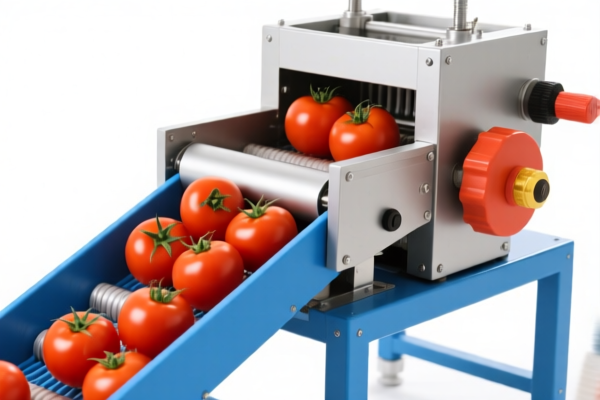
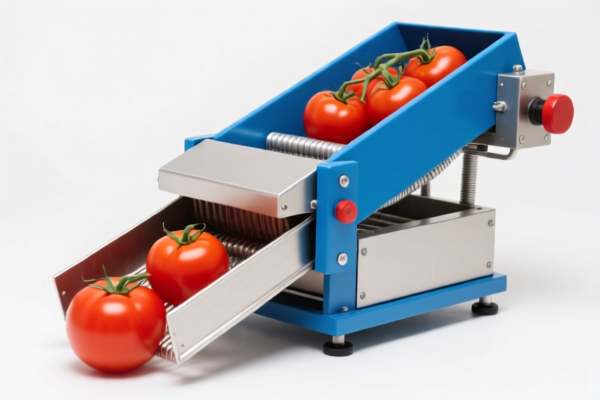
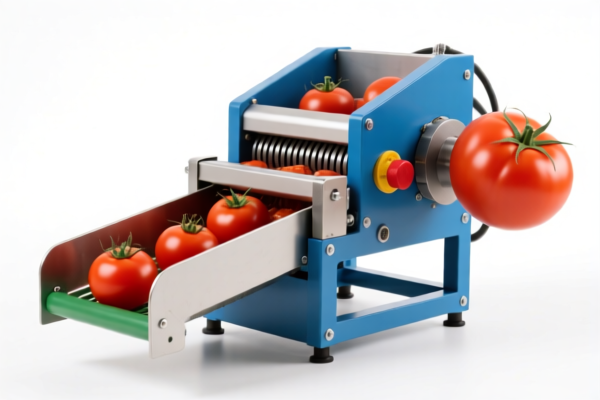
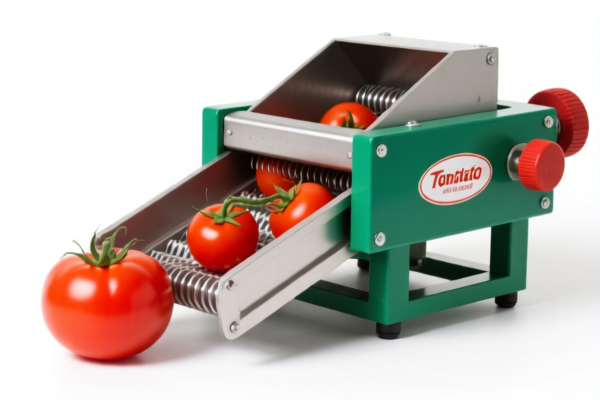
AI Analysis
🍅 Roma Tomatoes: The Dual-Nature of Produce (Seeds vs. Prepared)
🌐 HS Code Reference & Customs Clearance Guide | 2026 Tariff Analysis | Strategic Import Strategy
📌 I. Product Definition & Classification: Are You Importing Seeds or Food?
Roma tomatoes are not a single commodity in international trade. Their classification depends entirely on their state of processing and intended use. In the data provided, there is a critical bifurcation:
1. Planting Seeds (Sowing Seeds):
If the Roma tomatoes are dried, cleaned, and intended for planting/growing new crops, they fall under Chapter 12. These are treated as agricultural raw materials for sowing.
⚠️ Key Distinction:
- If the product is labeled as "Sowing Seeds" or "Vegetable Seeds" for planting → HS Code 1209.91.80.70
- If the product is processed (canned, pureed, preserved) for human consumption → HS Code 2002.10.00💡 Crucial Warning:
Misclassifying consumable tomato products as seeds (or vice versa) can lead to severe customs penalties, shipment rejection, or quarantine issues. Seeds require phytosanitary certificates; processed foods require FDA/FSMA compliance.
📦 II. HS Code Classification Details (Based on Provided Data)
| HS Code | Product Description | Category | Tax Rate (US) |
|---|---|---|---|
1209.91.80.70 |
Seeds, fruits and spores... Vegetable seeds: Other Tomato | Sowing Seeds (Plants) | 1.5¢/kg + 25.0% |
1209.91.80.90 |
Seeds, fruits and spores... Vegetable seeds: Other Other | Sowing Seeds (Other Veg) | 1.5¢/kg + 25.0% |
2002.10.00.20 |
Tomatoes prepared or preserved... Tomatoes, whole or in pieces In containers holding less than 1.4 kg | Prepared Food (Canned/Jarred <1.4kg) | 0.0% |
2002.10.00.80 |
Tomatoes prepared or preserved... Tomatoes, whole or in pieces Other | Prepared Food (Other Preserved) | 0.0% |
🔍 Analysis:
- Seeds (1209.91.80.70) attract significant tariffs due to trade tensions (25% additional duty).
- Prepared Tomatoes (2002.10.00) are duty-free (0.0%) under the current data snapshot. This creates a massive cost arbitrage opportunity if the product can be legally classified as food rather than seeds.
💰 III. 2026 Tariff Rate Detailed Breakdown
✅ Applicable Market: United States (US)
✅ Origin: Implied Non-US (Subject to Base + Additional Duties)
✅ Data Source: Provided JSON Tax Structure
🎯 1. 1209.91.80.70 — Tomato Seeds for Sowing
| Item | Detail |
|---|---|
| Base Duty | 1.5¢ per kg (Specific Duty) |
| Additional Duty | 25.0% (Ad Valorem) |
| Total Effective Tax | 1.5¢/kg + 25.0% of CIF Value |
| Tax Type | Mixed (Specific + Ad Valorem) |
| Note | This high percentage tariff suggests this product is subject to Section 301 or similar trade remediation measures affecting Chinese vegetable seeds. |
📌 Explanation:
- The 1.5¢/kg is a small fixed fee per kilogram of weight.
- The 25.0% is calculated on the total customs value (CIF). For a $10,000 shipment of seeds, this equals $2,500 in additional duties alone, plus the nominal weight-based fee.
- No de minimis exemption typically applies to seeds due to biosecurity risks.
🎯 2. 2002.10.00.20 & 2002.10.00.80 — Prepared/Preserved Tomatoes
| Item | Detail |
|---|---|
| Base Duty | 0.0% |
| Additional Duty | 0.0% |
| Total Effective Tax | 0.0% |
| Tax Type | Free |
| Note | This category includes canned whole tomatoes, tomato puree, or pieces in jars/cans. |
📌 Explanation:
- Zero Duty: These products are treated as basic food preparations.
- Distinction:
-2002.10.00.20: Containers < 1.4 kg (e.g., standard grocery jars/cans).
- `2002.10.00.80: Other sizes (e.g., industrial bulk cans > 1.4 kg).
- Both are duty-free** in this dataset, making them highly competitive.
🛠️ IV. Customs Clearance Practical Advice (Actionable Tips)
✅ 1. Documentation Requirements (By Category)
| Document | For Seeds (1209.91.80.70) |
For Prepared Tomatoes (2002.10.00) |
|---|---|---|
| Phytosanitary Certificate | MANDATORY | Not Required |
| FDA Prior Notice | Required (if for consumption, but usually seeds are exempt from food rules if strictly for planting) | MANDATORY (Food & Drug Act) |
| FSMA Compliance | Not Applicable | MANDATORY (Supplier Verification Program) |
| Labeling | "For Planting Only – Not for Human Consumption" | Standard Food Labeling (Nutrition Facts, Ingredients, Allergens) |
| Packing List | Must specify "Sowing Seeds" | Must specify "Canned/Jarred Tomatoes" |
⚠️ Critical Step:
- If you are importing Roma Tomatoes, you MUST clarify if they are seeds or food.
- Seeds require a Phytosanitary Certificate from the country of origin to prove they are pest-free. Without it, the shipment will be destroyed or returned.
- Prepared Tomatoes require FDA registration of the foreign facility and Prior Notice before arrival.
✅ 2. Classification Strategy & Cost Saving
| Scenario | Recommended HS Code | Tax Impact | Strategy |
|---|---|---|---|
| You want to grow tomatoes | 1209.91.80.70 |
High (25% + 1.5¢/kg) | Accept tariff cost; ensure proper seed labeling. |
| You want to sell canned tomatoes | 2002.10.00.20 |
FREE (0%) | Maximize Profit! Use this code for all edible products. |
| Bulk industrial tomatoes | 2002.10.00.80 |
FREE (0%) | Ideal for restaurants/catering suppliers. |
🔥 Pro Tip:
Never declare edible tomatoes as "seeds" to avoid food regulations. Conversely, never declare planting seeds as "food" to avoid phytosanitary checks. Accuracy prevents delays.
✅ 3. Common Mistakes to Avoid
❌ Mistake 1: Using "Tomato" as a generic term without specifying "Seeds" or "Canned".
👉 Result: Customs may classify under the wrong subheading, leading to audits or fines.
👉 Fix: Use precise descriptions: "Dried Roma Tomato Seeds for Sowing" vs. "Canned Whole Roma Tomatoes in Brine".
❌ Mistake 2: Ignoring the 1.4 kg container rule for 2002.10.00.
👉 Result: Misclassification between .20 and .80 may trigger secondary reviews.
👉 Fix: Clearly state container weight on the commercial invoice.
❌ Mistake 3: Forgetting Phytosanitary Certs for seeds.
👉 Result: Shipment held at port, potential destruction.
👉 Fix: Arrange certification before shipment departure.
🌍 V. Global Market Comparison (Contextual Note)
| Market | Likely HS Code for Seeds | Likely HS Code for Food | Duty Trend |
|---|---|---|---|
| 🇺🇸 USA | 1209.91.80.70 |
2002.10.00.20 |
Seeds: High (25%); Food: Free |
| 🇪🇺 EU | 1209.91 |
2002.10 |
Generally lower duties, but strict GMO/phytosanitary rules. |
| 🇨🇳 China | 1209.91 |
2002.10 |
Low import duties, but high quarantine standards. |
📌 Conclusion for US Importers:
- Importing Food: Very favorable (0% duty). Focus on FDA compliance.
- Importing Seeds: Expensive (25% duty). Focus on phytosanitary compliance and cost-benefit analysis.
📌 VI. Final Checklist for Shippers
- Define Intent: Are these for planting or eating?
- Choose HS Code:
- Planting →
1209.91.80.70 - Eating (Small Cans) →
2002.10.00.20 - Eating (Other) →
2002.10.00.80 - Prepare Docs:
- Seeds: Phytosanitary Certificate, "For Planting" Label.
- Food: FDA Prior Notice, Nutrition Label, Supplier Registration.
- Calculate Costs:
- Seeds: Budget for 25% + 1.5¢/kg.
- Food: Budget for 0% duty (plus standard logistics).
🎯 Remember:
🔹 "Seeds are plants, Food is pantry. Don't mix them up, or customs will ban you!"
🔹 "Canned Tomatoes = Free Entry. Growing Tomatoes = 25% Tax. Know your product!"
📌 Disclaimer:
This analysis is based on the provided JSON data (1209.91.80.70, 1209.91.80.90, 2002.10.00.20, 2002.10.00.80). Always verify with a licensed customs broker and check for updates in HTSUS (Harmonized Tariff Schedule of the United States) before shipment.
Customer Reviews
About HS Code Classification
The Harmonized System (HS) is an internationally standardized nomenclature developed by the World Customs Organization (WCO) to classify traded products. Over 200 countries use the HS system as the basis for customs tariffs, trade statistics, and import/export regulations.
Each HS code follows a hierarchical structure:
- Chapter (2 digits) — Broad category of goods (e.g., Chapter 84: Machinery and Mechanical Appliances)
- Heading (4 digits) — More specific grouping within the chapter
- Subheading (6 digits) — Internationally standardized breakdown, used by all WCO member countries
- National subdivisions (8-10 digits) — Country-specific extensions for further classification, such as US HTSUS 10-digit codes
Correct HS code classification is essential for smooth customs clearance, accurate duty payment, and compliance with trade regulations. Misclassification can lead to customs delays, overpayment of duties, or penalties.
When importing from CN to US, the applicable tariff rates may include:
- Most-Favored-Nation (MFN) rate — The standard duty rate applied to WTO members
- General rate — Applied to countries without trade agreements
- Trade remedy duties — Additional tariffs such as Section 301 (anti-dumping), Section 232 (national security), or countervailing duties
The information provided on this page is for reference purposes only. For official classification, please consult with your local customs authority or a licensed customs broker.