Roof Rack
CN → US| HS Code | Tariff Rate | Origin | Destination | Doc |
|---|---|---|---|---|
| 8708295110 | 0.0% | CN | US | Official Doc |
| 8708295160 | 0.0% | CN | US | Official Doc |
| 3926909989 | 22.8% | CN | US | Official Doc |
| 3926305000 | 22.8% | CN | US | Official Doc |
| 7326908688 | 87.9% | CN | US | Official Doc |
| 7326908630 | 87.9% | CN | US | Official Doc |
Product Images


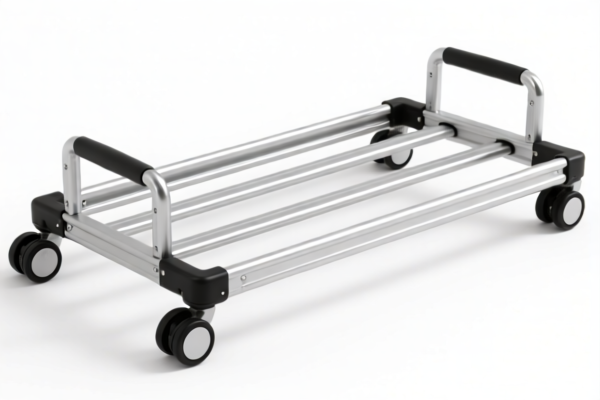
AI Analysis
🚗 Roof Rack (Vehicle Roof Luggage Rack)
🌐 Global HS Code Classification & Customs Strategy | 2026 Tariff Deep Dive | Critical Import Guide
📌 I. Product Definition & Classification Logic: Are You Classifying Correctly?
A Roof Rack is a vehicle accessory designed to carry cargo on the roof of a car, truck, or van. In international trade, its classification is highly material-dependent. The same physical object can face vastly different tax rates (from 2.5% to 87.9%) depending on whether it is classified as a Vehicle Part, Plastic Accessory, or Iron/Steel Product.
The 3 Critical Classification Paths:
- Vehicle Parts (8708): If the rack is primarily for vehicle attachment, made of metal, and designed as a chassis component.
- Risk: High "Add-on" tariffs (Section 301/122) may apply depending on the specific subheading.
- Plastic/Mixed Materials (3926): If the rack is primarily plastic or a plastic-metal composite.
- Risk: Moderate tax, but strict rules on "composite" materials.
- Iron/Steel Products (7326): If the rack is purely iron or steel (forged, cast, or stamped) and doesn't fit the specific "vehicle part" description perfectly.
- Risk: EXTREME Tariff Risk (up to 87.9%) due to heavy "Steel/Aluminum" add-on duties.
⚠️ Key Determinant: The Material Composition and the Specific Shape (e.g., is it a "support/bracket" vs. a "complete rack") dictate the HS Code. Misclassification leads to massive financial loss.
📦 II. HS Code Classification Details (2026 Authorized Reference)
Based on current trade data and tariff structures, here are the 6 possible HS Codes for Roof Racks, ranked by tax implication.
| HS Code | Material / Logic | Summary Description | Total Tax Rate (China Origin) |
|---|---|---|---|
| 8708.29.51.60 | Vehicle Part (Metal) | Classified as "Other body parts" for vehicles. Compatible with chassis logic. | 87.5% (Base 2.5% + 85% Add-ons) |
| 8708.29.51.10 | Vehicle Part (Stamped) | "Metal stamping" body parts. Fits the "Other body parts" logic. | 37.5% (Base 2.5% + 35% Add-ons) |
| 3926.90.99.89 | Plastic / Composite | Plastic/Metal composite. Fits "Other plastics/materials" fallback. | 22.8% (Base 5.3% + 17.5% Add-ons) |
| 3926.30.50.00 | Plastic / Car Parts | Plastic or metal parts for vehicle bodies/connectors. | 22.8% (Base 5.3% + 17.5% Add-ons) |
| 7326.90.86.88 | Iron/Steel (Misc) | "Other articles of iron/steel." Non-specific listing. | 87.9% (Base 2.9% + 85% Add-ons) |
| 7326.90.86.30 | Iron/Steel (Support) | "Supports, brackets, hangers." Fits pipe/bracket logic. | 87.9% (Base 2.9% + 85% Add-ons) |
🔍 Critical Observation:
- Codes 8708 (Vehicle Parts) offer the lowest base tax (2.5%), but 8708.29.51.60 carries a massive 85.0% add-on tariff.
- Codes 7326 (Iron/Steel) trigger a 50% "122 Clause" Steel/Aluminum surcharge, pushing the total to 87.9%.
- Codes 3926 (Plastic) offer a balanced 22.8% but require proof of plastic content.
💰 III. Detailed Tax Breakdown (The "Hidden" 85%+)
✅ Applicable Context: Export from China (CN) to US (US).
✅ 生效 Time: 2025/2026 Trade War Measures Active.
🎯 Scenario A: The "Steel Trap" (HS Code 7326 Series)
Codes: 7326.90.86.88 & 7326.90.86.30
Logic: If the rack is seen as generic "Iron/Steel articles" rather than a specific "Vehicle Part."
| Tax Component | Rate | Legal Basis |
|---|---|---|
| Base Duty (MFN) | 2.9% | Standard US Import Duty |
| Section 301 (Add-on) | 25.0% | "China Specific" 301 Tariff |
| Section 122 (Steel/Al) | 50.0% | CRITICAL: Specific surcharge for Steel/Al products |
| Total Effective Rate | 87.9% | CATASTROPHIC |
📌 Explanation:
The 50% "122 Clause" tariff is applied because these codes are treated as general steel products, not specifically engineered vehicle parts. This makes pure steel racks nearly impossible to import profitably under this code.
🎯 Scenario B: The "Vehicle Part" Trap (HS Code 8708.29.51.60)
Code: 8708.29.51.60
Logic: Classified strictly as a "Vehicle Accessory" but with high add-ons.
| Tax Component | Rate | Legal Basis |
|---|---|---|
| Base Duty | 2.5% | Standard Vehicle Part Duty |
| Section 301 (Add-on) | 25.0% | 301 Tariff |
| 122 Clause (Steel/Al) | 50.0% | CRITICAL: Steel/Aluminum surcharge applies |
| Total Effective Rate | 87.5% | CATASTROPHIC |
📌 Note: Even if classified as a car part, if the material is steel/aluminum and the subheading triggers the 122 clause, the 50% surcharge kills the margin.
🎯 Scenario C: The "Optimal" Path (HS Code 3926 Series)
Codes: 3926.90.99.89 & 3926.30.50.00
Logic: Proven to be Plastic or Plastic-Composite.
| Tax Component | Rate | Legal Basis |
|---|---|---|
| Base Duty | 5.3% | Plastic Goods Duty |
| Section 301 (Add-on) | 7.5% | Reduced 301 rate for plastics |
| 122 Clause (Steel/Al) | 10.0% | Lower surcharge (only on steel content) |
| Total Effective Rate | 22.8% | VIABLE |
📌 Strategy: If you can demonstrate the rack is plastic-dominated or a composite, you avoid the 50% steel penalty. This is the only profitable path for high-volume imports.
🛠️ IV. Customs Clearance Strategy (Practical Guide)
✅ 1. Material Declaration is King
You MUST prove the material composition to avoid the 87.9% tax. * If Plastic: Provide Material Safety Data Sheets (MSDS), composition certificates, and photos showing plastic texture/finish. * If Metal: Do NOT use HS Code 7326. Fight for 8708.29.51.10 (if stamped) to get the 35% rate (avoiding the 50% 122 clause). * Warning: If you declare "Steel" but use 7326, you will be hit with the 50% surcharge immediately.
✅ 2. Product Description Optimization
Wrong: "Roof Rack, Steel." → Leads to 7326 (87.9% tax).
Correct: "Roof Rack, Composite Material (Plastic/Steel), Vehicle Accessory." → Leads to 3926 (22.8% tax).
Correct Description Example:
"Vehicle Roof Rack, Plastic-Metal Composite, Non-Engineered, for SUV, Model X-200, Plastic Content > 60%."
✅ 3. Classification Defense
- For 8708.29.51.10: Argue that the rack is a "Stamped Metal Part" specifically designed for the vehicle body (8708), not a generic "Support" (7326). This avoids the 50% 122 clause if the ruling supports it.
- For 3926: Ensure the "Plastic" nature is dominant. If it's 50/50 metal/plastic, customs may reclassify as Steel (7326).
🚨 V. Common Pitfalls & Avoidance
| ❌ Mistake | 🚫 Consequence | ✅ Solution |
|---|---|---|
| Generic "Roof Rack" Declaration | Customs auto-assigns 7326 (Steel) → 87.9% Tax | Specify Material (Plastic/Composite) in declaration. |
| Using "Support" Keyword | Triggers 7326.90.86.30 (Supports) → 87.9% Tax | Use "Body Part" or "Vehicle Accessory" terminology. |
| Ignoring 122 Clause | Expecting 25% tax, getting 85%+ | Always check Section 122 applicability for Steel/Al. |
| Mixing Materials | Claiming "Plastic" but having high steel content | Re-classify to 8708 or 3926 with proof of plastic dominance. |
🌍 VI. Global Market Comparison (2026)
| Market | Recommended HS Code | Est. Total Tax | Strategy |
|---|---|---|---|
| 🇺🇸 USA | 3926.90.99.89 |
22.8% | Plastic focus is mandatory. Steel racks are too expensive. |
| 🇪🇺 EU | 8708.29 |
~0-5% | No "Section 301" or "122". Vehicle parts are tax-efficient. |
| 🇨🇳 China | 8708.29 |
~5% | Domestic export to China is cheap if vehicle part. |
| 🇯🇵 Japan | 8708.29 |
~0-3% | Similar to EU, prefer vehicle part classification. |
📌 Key Insight: The US Market is the ONLY place where the "Steel/Aluminum 122 Clause" makes roof racks prohibitively expensive if misclassified. In EU/Asia, vehicle parts (8708) are the safest bet.
🎯 VII. Conclusion: The "Material Matter"
The Golden Rule for Roof Racks:
🔹 "If it's Steel, it's 87.9% in the US."
🔹 "If it's Plastic, it's 22.8%."
🔹 "If it's a Vehicle Part (8708), you must avoid the 122 Clause to survive."
Action Plan: 1. Audit Material: Verify if your roof rack is >50% plastic. 2. Choose 3926: If plastic, declare under 3926.90.99.89 to lock in 22.8%. 3. Defend 8708: If metal, argue for 8708.29.51.10 (Stamped) to avoid the 50% steel surcharge, aiming for 37.5%. 4. Avoid 7326: Do not use "Other articles of iron/steel" unless you have zero profit expectations.
📌 Pro Tip:
Request a Customs Ruling or Pre-Category Determination from CBP (US) before shipping. A pre-approved HS Code of 3926 can save you ~65% in taxes compared to 7326.
🚀 Final Verdict: Plastic-Roof Racks are the only viable export path to the US in 2026.
✨ Professional Classification = Profit Protection.
💼 Do not gamble with HS Codes; the difference is between 22% and 87%!
Customer Reviews
About HS Code Classification
The Harmonized System (HS) is an internationally standardized nomenclature developed by the World Customs Organization (WCO) to classify traded products. Over 200 countries use the HS system as the basis for customs tariffs, trade statistics, and import/export regulations.
Each HS code follows a hierarchical structure:
- Chapter (2 digits) — Broad category of goods (e.g., Chapter 84: Machinery and Mechanical Appliances)
- Heading (4 digits) — More specific grouping within the chapter
- Subheading (6 digits) — Internationally standardized breakdown, used by all WCO member countries
- National subdivisions (8-10 digits) — Country-specific extensions for further classification, such as US HTSUS 10-digit codes
Correct HS code classification is essential for smooth customs clearance, accurate duty payment, and compliance with trade regulations. Misclassification can lead to customs delays, overpayment of duties, or penalties.
When importing from CN to US, the applicable tariff rates may include:
- Most-Favored-Nation (MFN) rate — The standard duty rate applied to WTO members
- General rate — Applied to countries without trade agreements
- Trade remedy duties — Additional tariffs such as Section 301 (anti-dumping), Section 232 (national security), or countervailing duties
The information provided on this page is for reference purposes only. For official classification, please consult with your local customs authority or a licensed customs broker.