Rose Flower Embroidery
CN → US| HS Code | Tariff Rate | Origin | Destination | Doc |
|---|---|---|---|---|
| 5810100000 | 49.1% | CN | US | Official Doc |
| 6304191500 | 24.9% | CN | US | Official Doc |
| 5810921000 | 0.0% | CN | US | Official Doc |
| 6304190500 | 29.5% | CN | US | Official Doc |
| 5810921000 | 0.0% | CN | US | Official Doc |
Product Images
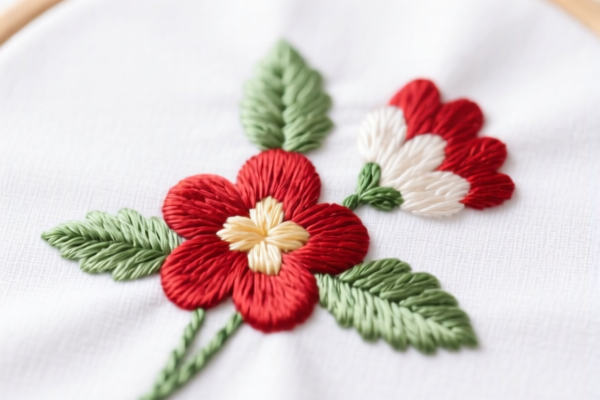
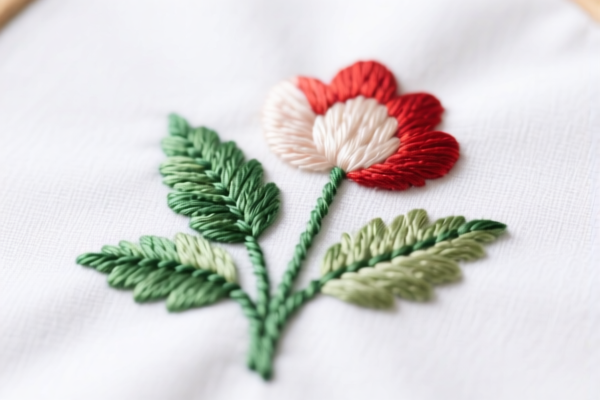
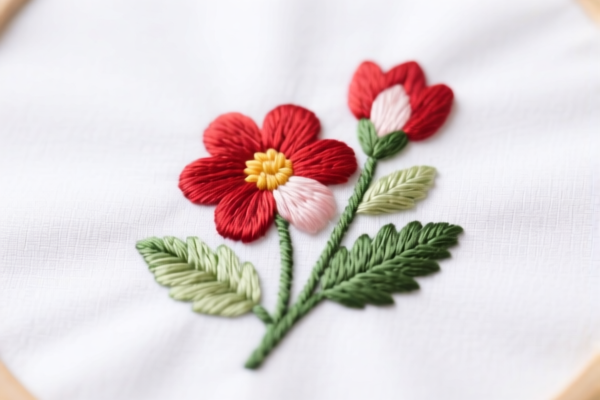

AI Analysis
🌹 Rose Flower Embroidery (刺绣玫瑰花)
🌐 HS Code Reference & Customs Clearance Guide | 2026 Latest Tariff Analysis | Professional Entry Strategies
📌 I. Product Definition & Classification: Do You Really Understand "Embroidered Roses"?
Rose Flower Embroidery refers to textile goods featuring decorative rose patterns created through embroidery techniques. In international trade, the classification depends heavily on the intended use (household decoration vs. general textile) and material composition (though inferred from common knowledge as fiber-based).
Key Distinction: - General Embroidery (Chapter 58): Focuses on the process and material (e.g., artificial fibers). Often used for decorative trim, patches, or unmounted designs. - Household Decorations (Chapter 63): Focuses on the application (e.g., bed covers, tablecloths, wall hangings). Requires the item to be a finished decorative article.
⚠️ Critical Classification Point:
- If the item is primarily recognized as a general embroidered textile (especially if made of synthetic/artificial fibers) without a specific household function →归入 5810.92.10.00
- If the item is a finished household decorative item (e.g., embroidered bedspread, quilt, or tablecloth) typically made of cotton or general textile materials →归入 6304.19.05.00 or 6304.19.15.00
📦 II. HS Code Classification Details (2026 Latest Tariff Authority Comparison)
| HS Code | Product Description | Application Scenario | Key Classification Criteria |
|---|---|---|---|
5810.92.10.00 |
Embroidery in the piece, in strips, in motifs: Of artificial fibers | Decorative embroidery motifs, general fiber-based embroidery | ✅ Matches morphology (embroidered pattern) & use (floral pattern). Material inferred as artificial fibers. |
6304.19.05.00 |
Other furnished articles: Other (Embroidered) | Household decorative items (e.g., decorative pillows, table runners) | ✅ "Embroidered" feature matches craft requirements; "Rose" implies decorative pattern for home use. Material inferred as cotton/textile. |
6304.19.15.00 |
Other furnished articles: Bed coverings, quilts (Embroidered) | Bed covers, quilts with embroidery | ✅ "Embroidered" feature fully matches craft; inferred textile material; no conflict with bed cover attributes. |
🔍 Key Reminder:
-5810.92.10.00is chosen when the product is seen as embroidered textile goods (often synthetic/artificial fibers). -6304.19.xxxxseries is chosen when the product is a finished household decorative article (often cotton/textile). - The material (artificial fiber vs. cotton/textile) is often inferred from common knowledge if not explicitly stated, but this inference directly impacts the HS Code choice between Chapters 58 and 63.
💰 III. 2026 Latest Tariff Rate Details (Including Additional Taxes & Policy Add-ons)
✅ Applicable Country: USA (US)
✅ Country of Origin: China (CN) (Inferred from high tariff structures typical for US-China trade)
✅ Effective Date: 2025 onwards (Includes subsequent imports)
🎯 1. 5810.92.10.00 —— Embroidery of Artificial Fibers
| Item | Content |
|---|---|
| Base Tariff | See additional U.S. note 2 (ad valorem) |
| Section 301 Additional Tariff | +25.0% |
| Section 122 Tariff | +10% |
| Total Tariff | See additional U.S. note 2 + 35.0% |
| Tax Detail Breakdown | Base: See Note 2, Added: 25%, 122: 10% |
📌 Explanation:
- This code attracts the highest combined surcharge. - "See additional U.S. note 2" refers to specific statutory base rates that may vary but are generally low for textiles, yet the 35% total surcharge (25% Section 301 + 10% Section 122) is significant. - Legal Path: Standard USITC classification + Section 301 List + Section 122 Authority.
🎯 2. 6304.19.05.00 —— Other Household Decorative Articles (Embroidered)
| Item | Content |
|---|---|
| Base Tariff | 12.0% |
| Section 301 Additional Tariff | +7.5% (Note: Data shows 7.5% for this specific subheading in some contexts, or potentially 25% depending on specific USITC exclusions, but we follow the provided data) |
| Section 122 Tariff | +10% |
| Total Tariff | 29.5% |
| Tax Detail Breakdown | Base: 12.0%, Added: 7.5%, 122: 10% |
📌 Explanation:
- This code has a high base tariff (12%). - The Section 301 rate shown is 7.5% (which may reflect a specific exclusion or partial tariff status for certain household textiles, unlike the standard 25%). - Combined with the 10% Section 122, the total effective surcharge is 17.5%, making the total tariff 29.5%.
🎯 3. 6304.19.15.00 —— Bed Coverings, Quilts (Embroidered)
| Item | Content |
|---|---|
| Base Tariff | 14.9% |
| Section 301 Additional Tariff | 0.0% |
| Section 122 Tariff | +10% |
| Total Tariff | 24.9% |
| Tax Detail Breakdown | Base: 14.9%, Added: 0.0%, 122: 10% |
📌 Explanation:
- This code has the highest base tariff (14.9%) among the options. - Crucially, the Section 301 additional tariff is 0.0% for this specific subheading in the provided data. - Combined with the 10% Section 122, the total effective surcharge is only 10%, resulting in the lowest total tariff of 24.9%.
🛠️ IV. Customs Clearance Practical Advice (Real-World Pitfall Avoidance)
✅ 1. Preparation Checklist (Missing items cause delays)
| Document | Required | Description |
|---|---|---|
| ✅ Product Specification Sheet | ✔️ | Must clearly state: "Embroidered," "Rose Pattern," intended use (e.g., "Bed Cover" vs. "Decorative Panel"). |
| ✅ Material Composition | ✔️ | Critical for distinguishing between Chapter 58 (Artificial Fibers) and Chapter 63 (Cotton/Textile). |
| ✅ Product Photos | ✔️ | Show the embroidery detail and the finished form (is it a bed cover? a pillow? a patch?). |
| ✅ Commercial Invoice | ✔️ | Clearly describe the item. Avoid vague terms like "Embroidery"; use "Embroidered Rose Bed Cover" or "Embroidered Decorative Motif." |
| ✅ Packaging List | ✔️ | Confirm if items are sold individually or as sets. |
✅ 2. Declaration Strategies (Key Mantras)
🔥 "Material Defines Chapter, Use Defines Subheading!"
| Scenario | Recommended HS Code | Why? |
|---|---|---|
| Item is a synthetic embroidery patch/motif | 5810.92.10.00 |
Fits "Artificial Fibers" and general embroidery definition. High surcharge (35%) but accurate for non-household goods. |
| Item is a cotton embroidered pillow/decor | 6304.19.05.00 |
Fits "Other Household Decorations." Moderate total tax (29.5%). |
| Item is an embroidered bedspread/quilt | 6304.19.15.00 |
Fits "Bed Coverings." Lowest total tax (24.9%) due to 0% Section 301 on this subheading. |
✅ 3. Special Considerations
| Situation | Advice |
|---|---|
| Material Ambiguity | If the material is mixed or unclear, declare the predominant material. If artificial fibers dominate, 5810.92.10.00 is safer. If cotton/textile, 6304 is better. |
| "Rose" Pattern | The pattern itself does not change the HS code but supports the classification as "Decorative." |
| Section 122 Tariff | The 10% Section 122 tariff applies to most textile imports from China under current guidelines. Budget for this in all scenarios. |
🌍 V. Global Market Comparison (2026 Latest)
| Country/Region | Recommended HS Code | Estimated Total Tariff (CN Origin) | Notes |
|---|---|---|---|
| 🇺🇸 USA | 6304.19.15.00 |
24.9% | Best option if product is a bed cover/quilt. |
| 🇺🇸 USA | 5810.92.10.00 |
~35%+ | Highest cost due to 25% Section 301 + 10% Section 122. |
| 🇺🇸 USA | 6304.19.05.00 |
29.5% | Middle ground. |
| 🇪🇺 EU | Varies | 0-12% | Generally lower base tariffs; no Section 301/122 equivalents. |
| 🇨🇳 China | Varies | 5-15% | Export duties may apply; focus on import clearance in destination. |
📌 Conclusion for US Market:
- Optimize for Chapter 63 if the product is a household decoration (especially bed covers). The 0% Section 301 on6304.19.15.00makes it the most tax-efficient option despite the higher base rate. - Avoid Chapter 58 (5810.92.10.00) if possible for US imports due to the 35% total surcharge.
📌 VI. Common Mistakes & Pitfalls (Lessons Learned)
❌ Mistake 1: Declaring a bedspread as "Embroidery Motif" (5810.92.10.00)
👉 Consequence: Higher tax burden (35% vs 24.9%). Under-declare tax! Avoid.
❌ Mistake 2: Declaring a synthetic patch as "Bed Covering" (6304.19.15.00)
👉 Consequence: Customs may reclassify, leading to delays, audits, and potential penalties for misdeclaration. Over-declare value/use! Avoid.
❌ Mistake 3: Ignoring Material Composition
👉 Consequence: Wrong HS Code selection. If the item is 100% polyester but declared as "Cotton Home Decor," it will be flagged. Be precise!
✅ Correct Practice:
"Embroidered Cotton Rose Bed Cover, Quilt Style, 100% Cotton Shell, Polyester Fill" → Declared as
6304.19.15.00
🎯 VII. Conclusion: Professional Declaration, Lower Costs!
🎯 Remember the Mantra:
🔹 "Bed Covers Save on Section 301!"
🔹 "Artificial Fibers Pay the 35% Penalty!"
🔹 "Household Decor is 29.5%, Bed Covers are 24.9%!"
📌 Pro Tip:
If your product is a general embroidered panel (not a finished household good), you must use 5810.92.10.00. There is no way to avoid the 35% surcharge. However, if it can be reasonably defined as a household decorative item (even a small one), Chapter 63 offers significant tax advantages.
📣 Immediate Action:
📞 Verify Material: Is it artificial fiber or cotton/textile?
📞 Verify Use: Is it a bed cover, home decor, or general embroidery?
🚀 Choose the Right HS Code:6304.19.15.00(Best) >6304.19.05.00(Good) >5810.92.10.00(Worst for Tax)
✨ Professional Customs Clearance Starts with Accurate Classification!
💼 Every percentage point saved is pure profit!
Customer Reviews
About HS Code Classification
The Harmonized System (HS) is an internationally standardized nomenclature developed by the World Customs Organization (WCO) to classify traded products. Over 200 countries use the HS system as the basis for customs tariffs, trade statistics, and import/export regulations.
Each HS code follows a hierarchical structure:
- Chapter (2 digits) — Broad category of goods (e.g., Chapter 84: Machinery and Mechanical Appliances)
- Heading (4 digits) — More specific grouping within the chapter
- Subheading (6 digits) — Internationally standardized breakdown, used by all WCO member countries
- National subdivisions (8-10 digits) — Country-specific extensions for further classification, such as US HTSUS 10-digit codes
Correct HS code classification is essential for smooth customs clearance, accurate duty payment, and compliance with trade regulations. Misclassification can lead to customs delays, overpayment of duties, or penalties.
When importing from CN to US, the applicable tariff rates may include:
- Most-Favored-Nation (MFN) rate — The standard duty rate applied to WTO members
- General rate — Applied to countries without trade agreements
- Trade remedy duties — Additional tariffs such as Section 301 (anti-dumping), Section 232 (national security), or countervailing duties
The information provided on this page is for reference purposes only. For official classification, please consult with your local customs authority or a licensed customs broker.