Rosin Aldehyde
CN → US| HS Code | Tariff Rate | Origin | Destination | Doc |
|---|---|---|---|---|
| 3824994190 | 39.6% | CN | US | Official Doc |
| 2942003500 | 41.5% | CN | US | Official Doc |
| 3824992900 | 41.5% | CN | US | Official Doc |
| 2942005000 | 38.7% | CN | US | Official Doc |
| 2942000500 | 41.5% | CN | US | Official Doc |
Product Images
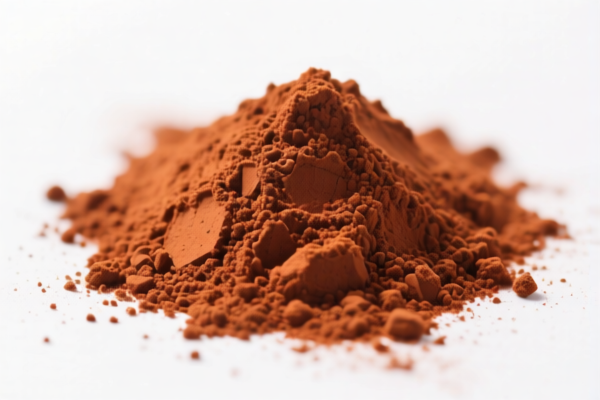


AI Analysis
🌲 Rosin Aldehyde (Hydrogenated Rosin Aldehyde)
🌐 HS Code Reference & Customs Clearance Guide | 2026 Latest Tariff Analysis | Professional Entry Strategy
📌 I. Product Definition & Classification: Do You Really Understand "Rosin Aldehyde"?
Rosin Aldehyde (often chemically referred to as Hydrogenated Rosin Aldehyde or Ketone) is a derivative of rosin, obtained through the hydrogenation and oxidation of rosin acids. It is widely used in adhesives, coatings, inks, and plastics.
In international trade, its classification is complex because it can be viewed either as a chemical modification of a natural resin (Chapter 38) or as a specific organic compound (Chapter 29). The choice of HS Code significantly impacts the total tax liability due to differing base duties and Section 301/IEEPA surcharges.
⚠️ Key Classification Distinction:
- If viewed as a modified natural resin (preparation/product) → Chapter 38
- If viewed as a specific organic compound (chemical structure) → Chapter 29
📦 II. HS Code Classification Details (2026 Latest Tariff Authority Comparison)
Based on the provided data, here are the five possible HS Code classifications for Rosin Aldehyde, along with their rationale and total tax rates (China Origin to US).
| HS Code | Product Description | Rationale for Classification | Total Tax Rate | Tax Detail Breakdown |
|---|---|---|---|---|
| 3824.99.41.90 | Resin/Resin-like Substances | Rosin aldehyde is derived from plant-based resins (rosin). It fits the characteristics of "animal or vegetable fats and oils... mixed or prepared," acting as a modified natural resin preparation. | 39.6% | Base: 4.6% + 301 Tariff: 25.0% + IEEPA Tariff: 10% |
| 2942.00.35.00 | Other Organic Compounds | Classified as an aromatic derivative (organic compound). This falls under the "Other organic compounds" category within Chapter 29. | 41.5% | Base: 6.5% + 301 Tariff: 25.0% + IEEPA Tariff: 10% |
| 3824.99.29.00 | Chemical Preparations | Viewed as a "chemical product/preparation" that doesn't fit specific subheadings. It is a "basket" classification for other chemical products. | 41.5% | Base: 6.5% + 301 Tariff: 25.0% + IEEPA Tariff: 10% |
| 2942.00.50.00 | Other Organic Compounds | Another subcategory within Chapter 29 for "Other organic compounds." This is often used for less specific organic derivatives. | 38.7% | Base: 3.7% + 301 Tariff: 25.0% + IEEPA Tariff: 10% |
| 2942.00.05.00 | Other Organic Compounds (Salts) | Note: Data mentions "Rosin Aldehyde Salts". If the product is chemically converted into a salt form, it falls under this specific organic compound subheading. | 41.5% | Base: 6.5% + 301 Tariff: 25.0% + IEEPA Tariff: 10% |
🔍 Critical Observation:
- 2942.00.50.00 offers the lowest total tax rate (38.7%) among all options.
- 3824.99.41.90 is the second lowest (39.6%).
- The 2942.00.xxxx series generally has a higher base duty (6.5%) compared to 3824 (4.6%) or 2942.00.50 (3.7%), but all are subject to the same 35% in additional tariffs (25% + 10%).
💰 III. 2026 Latest Tariff Rate Detailed Explanation (Including Surcharges)
✅ Applicable Country: United States (US)
✅ Country of Origin: China (CN)
✅ Effective Time: Current trade policy (Section 301 & IEEPA)
🎯 1. 2942.00.50.00 —— Best Rate for Organic Classification
| Item | Content |
|---|---|
| Base Duty | 3.7% (Ad Valorem) |
| USITC Surcharge (301) | +25.0% |
| IEEPA Surcharge | +10.0% |
| Total Effective Rate | 38.7% |
| Tax Calculation | CIF Value × 38.7% |
| De Minimis Exemption | ❌ Not Eligible (High-risk commodity, likely denied) |
| Legal Basis Path | USITC:2942.00.50.00 → FOOTNOTE:301 → IEEPA:9903.01.24 |
📌 Interpretation:
- The 3.7% base duty is the lowest among Chapter 29 options.
- The 25% Section 301 tariff applies to all Chinese-origin goods in this chemical category.
- The 10% IEEPA tariff applies specifically to Chinese/originated goods.
- Total: 38.7%. This is the most cost-effective classification if the product can be legally justified as "Other Organic Compounds."
🎯 2. 3824.99.41.90 —— Best Rate for Resin Classification
| Item | Content |
|---|---|
| Base Duty | 4.6% (Ad Valorem) |
| USITC Surcharge (301) | +25.0% |
| IEEPA Surcharge | +10.0% |
| Total Effective Rate | 39.6% |
| Tax Calculation | CIF Value × 39.6% |
| De Minimis Exemption | ❌ Not Eligible |
| Legal Basis Path | USITC:3824.99.41.90 → FOOTNOTE:301 → IEEPA:9903.01.24 |
📌 Interpretation:
- This classification views Rosin Aldehyde as a plant-based resin preparation.
- The 4.6% base duty is slightly higher than 2942.00.50 but lower than other 3824/2942 variants.
- Total: 39.6%. Only 0.9% more than the best Chapter 29 option.
🎯 3. Other Classifications (Higher Cost)
| HS Code | Base Duty | Total Rate | Note |
|---|---|---|---|
2942.00.35.00 |
6.5% | 41.5% | Higher base duty; "Other Organic" |
3824.99.29.00 |
6.5% | 41.5% | "Other Chemical Products" |
2942.00.05.00 |
6.5% | 41.5% | Specific to "Salts" (if applicable) |
📌 Note:
- These options have a 6.5% base duty, resulting in a 41.5% total tax rate.
- They are 2.8% more expensive than the optimal classification (2942.00.50.00).
- Only use these if your product is clearly a salt (for 2942.00.05) or if customs rejects the other classifications.
🛠️ IV. Customs Clearance Practical Advice (Real-World Pitfall Guide)
✅ 1. Documentation Checklist (Mandatory)
| Document | Required | Purpose |
|---|---|---|
| ✅ Chemical Structure Diagram | ✔️ | To prove whether it is an organic compound (Chapter 29) or a resin preparation (Chapter 38). |
| ✅ Certificate of Analysis (COA) | ✔️ | Shows purity, chemical composition, and confirms if it is a salt or aldehyde. |
| ✅ Product Specification Sheet | ✔️ | Details: Molecular weight, HLB value, color, acidity. |
| ✅ Commercial Invoice | ✔️ | Must accurately describe the product: "Hydrogenated Rosin Aldehyde, Synthetic Derivative of Plant Resin". |
| ✅ MSDS (SDS) | ✔️ | For safety handling and customs hazard classification. |
| ✅ Packing List | ✔️ | Net/Gross weight, packaging type. |
✅ 2. Declaration Strategy (Key Tips)
🔥 "Structure Defines Chapter, Origin Defines Duty!"
| Scenario | Recommended HS Code | Reason |
|---|---|---|
| Pure Aldehyde Structure | 2942.00.50.00 |
Lowest base duty (3.7%). Justify as "Other Organic Compound." |
| Resin-like Preparation | 3824.99.41.90 |
Justify as "Plant-based resin preparation." Slightly higher duty but chemically accurate. |
| Rosin Aldehyde Salt | 2942.00.05.00 |
Only if the product is chemically converted to a salt form. |
| Unspecified Chemical Mix | 3824.99.29.00 |
Fallback option. Avoid if possible due to higher base duty (6.5%). |
📌 Critical Warning:
- Do NOT claim "Rosin" (natural) if it is hydrogenated/oxidized. It is a chemical derivative.
- Do NOT confuse with "Rosin Esters" (which may have different codes).
- Customs Ruling: Consider applying for an Advance Ruling from CBP to lock in2942.00.50.00or3824.99.41.90to avoid audits.
✅ 3. Special Cases
| Situation | Handling Advice |
|---|---|
| OEM Custom Order | Provide customer-specific specifications to prove the chemical nature. |
| Blend with Other Resins | If mixed, it may fall under 3824.99.29.00 (Chemical Preparation). Pure product is better for lower rates. |
| Origin: Non-China | If sourced from Vietnam/Thailand, you may avoid the 35% surcharge (25%+10%). Total rate drops to base duty only (e.g., 3.7% or 4.6%). |
🌍 V. Global Market Clearance Comparison (2026)
| Market | Recommended HS Code | Base Duty | Additional Tariffs (China) | Total Rate | Notes |
|---|---|---|---|---|---|
| 🇺🇸 USA | 2942.00.50.00 |
3.7% | 35% (301+IEEPA) | 38.7% | Lowest among all options. |
| 🇺🇸 USA | 3824.99.41.90 |
4.6% | 35% (301+IEEPA) | 39.6% | Good alternative if Chapter 29 is rejected. |
| 🇨🇳 China (Import) | 2942.00.50.00 |
~3-6% | 0% | Low | No Section 301 tariffs. |
| 🇪🇺 EU | 3824.99.90 |
~5-6% | 0% (if no anti-dumping) | ~5-6% | EU tariffs are generally lower for chemical derivatives. |
📌 Conclusion:
- US Tariffs are High: Due to geopolitical trade policies, expect ~39-42% total duty.
- Optimization: Consider third-country manufacturing (Vietnam, Malaysia) to avoid the 35% surcharge.
- Classification Precision: Ensure your chemical description matches2942.00.50.00(3.7% base) for maximum savings.
📌 VI. Common Mistakes & Pitfalls (Lessons Learned)
❌ Mistake 1: Declaring as "Natural Rosin" (1302.xx)
👉 Consequence: Misclassification. Hydrogenated/oxidized rosin is not natural rosin. Customs will reclassify and apply higher duties or penalties.
❌ Mistake 2: Using 2942.00.35.00 without justification
👉 Consequence: Higher base duty (6.5% vs 3.7%). You pay 2.8% more unnecessarily.
❌ Mistake 3: Ignoring IEEPA Surcharge
👉 Consequence: Under-declaring duty by 10%. Results in back taxes + fines.
❌ Mistake 4: Confusing "Aldehyde" with "Salt"
👉 Consequence: If it’s a salt, 2942.00.05.00 is required. If it’s an aldehyde, 2942.00.50.00 is better. Wrong code = audit risk.
✅ Correct Declaration Example:
"Hydrogenated Rosin Aldehyde, a synthetic organic compound derived from rosin acids, HS Code 2942.00.50.00"
🎯 VII. Conclusion: Professional Declaration, Cost Saving!
🎯 Remember the Rules:
🔹 "Chapter 29, Code 50, Lowest Base Duty (3.7%)"
🔹 "Chapter 38, Code 41.90, Good Alternative (4.6% Base)"
🔹 "Total Duty = Base + 35% (301+IEEPA)"
🔹 "Non-China Origin = Avoid 35% Surcharge!"
📌 Pro Tip:
If your Rosin Aldehyde is imported from Vietnam, Thailand, or Malaysia, the total duty could be as low as 3.7% or 4.6%.
Strongly recommend supply chain optimization to avoid Chinese origin labeling if possible.
📣 Immediate Action:
📞 Consult a Customs Broker to apply for an Advance Ruling on
2942.00.50.00.
📄 Ensure COA explicitly states "Hydrogenated Rosin Aldehyde" and not just "Rosin."
🚀 Optimize Your Supply Chain to reduce total landed cost!
✨ Professional Clearance Starts with Precise Classification!
💼 Every Percentage Point Counts in 2026!
Customer Reviews
About HS Code Classification
The Harmonized System (HS) is an internationally standardized nomenclature developed by the World Customs Organization (WCO) to classify traded products. Over 200 countries use the HS system as the basis for customs tariffs, trade statistics, and import/export regulations.
Each HS code follows a hierarchical structure:
- Chapter (2 digits) — Broad category of goods (e.g., Chapter 84: Machinery and Mechanical Appliances)
- Heading (4 digits) — More specific grouping within the chapter
- Subheading (6 digits) — Internationally standardized breakdown, used by all WCO member countries
- National subdivisions (8-10 digits) — Country-specific extensions for further classification, such as US HTSUS 10-digit codes
Correct HS code classification is essential for smooth customs clearance, accurate duty payment, and compliance with trade regulations. Misclassification can lead to customs delays, overpayment of duties, or penalties.
When importing from CN to US, the applicable tariff rates may include:
- Most-Favored-Nation (MFN) rate — The standard duty rate applied to WTO members
- General rate — Applied to countries without trade agreements
- Trade remedy duties — Additional tariffs such as Section 301 (anti-dumping), Section 232 (national security), or countervailing duties
The information provided on this page is for reference purposes only. For official classification, please consult with your local customs authority or a licensed customs broker.