Rosin Ester Flame Retardant
CN → US| HS Code | Tariff Rate | Origin | Destination | Doc |
|---|---|---|---|---|
| 2942003500 | 41.5% | CN | US | Official Doc |
| 3824992900 | 41.5% | CN | US | Official Doc |
| 2942005000 | 38.7% | CN | US | Official Doc |
| 3824994190 | 39.6% | CN | US | Official Doc |
| 3806100010 | 40.0% | CN | US | Official Doc |
Product Images
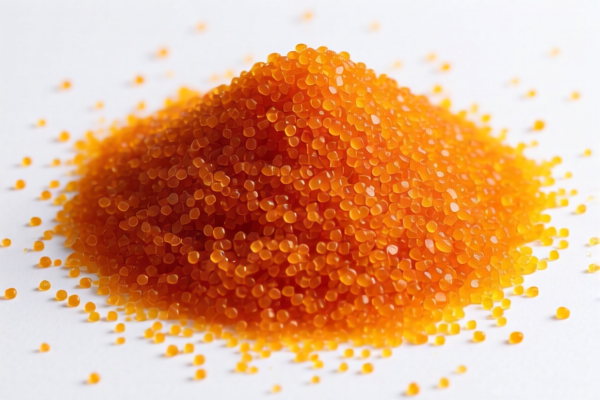

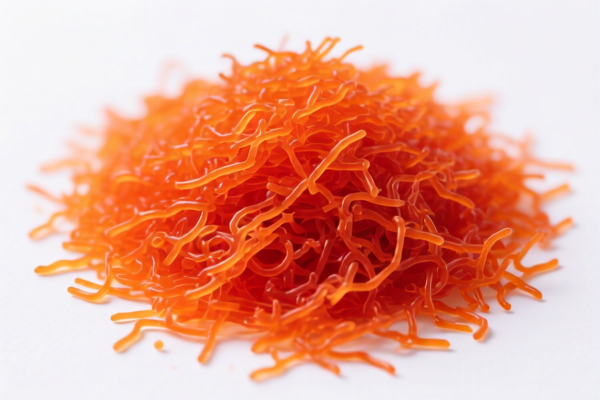
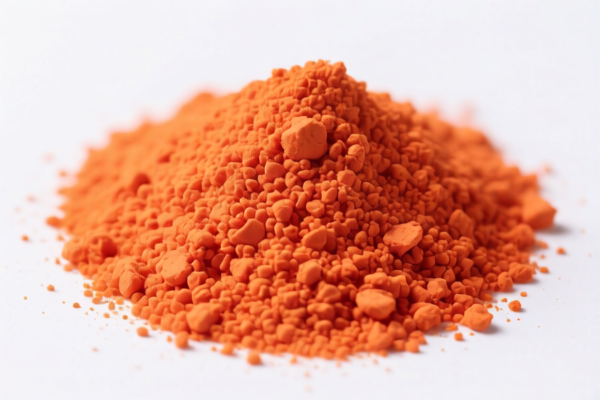
AI Analysis
🔥 Rosin Ester Flame Retardant (松香醛酯/松香溶剂衍生物)
🌐 HS Code Reference & Clearance Guide | 2026 Latest Tariff Analysis | Strategic Compliance Strategy
📌 Part 1: Product Definition & Classification: Do You Really Understand "Rosin Esters"?
Rosin ester flame retardants are specialized chemical additives derived from natural rosin (colophony) and rosin acids, modified through esterification or aldehyde condensation to enhance thermal stability and fire-retardant properties. In international trade, they are primarily classified based on their chemical structure and application:
Organic Compounds (Rosin Derivatives): Chemically modified rosin esters (e.g., rosin aldehyde esters, glycerol rosin esters) that retain core organic molecular structures. These fall under Chapter 29. Chemical Preparations/Mixtures: Industrial blends, solvents, or intermediate chemical preparations derived from rosin/resin acids. These fall under Chapter 38.
⚠️ Key Distinction Point:
- If the product is a pure, defined organic compound (e.g., specific ester or aldehyde derivative) → Classified under Chapter 29 (Organic Chemicals).
- If the product is a mixture, preparation, or industrial resinous substance not specifically named in Chapter 29 → Classified under Chapter 38 (Miscellaneous Chemical Products).
- Critical Note: Many "rosin ester flame retardants" are complex esters or aldehyde-modified rosin, leading to classification disputes between 2942.00 and 3824.99.
📦 Part 2: HS Code Classification Details (2026 Latest Tariff Authority Comparison)
| HS Code | Product Description | Application Scenario | Chemical Nature |
|---|---|---|---|
2942.00.35.00 |
Rosin aldehyde esters, other organic compounds | Modified rosin for flame retardancy, specific organic ester | ✅ Organic Compound |
3824.99.29.00 |
Rosin ester preparations, other chemical products | Industrial mixtures, non-specific rosin derivatives | ✅ Chemical Preparation |
2942.00.50.00 |
Other organic compounds (rosin derivatives) | Generic rosin esters not specifically listed elsewhere | ✅ Organic Compound |
3824.99.41.90 |
Plant-derived resin/fat substances | Natural/synthetic rosin blends, resin-based additives | ✅ Plant Resin Substance |
3806.10.00.10 |
Rosin solvents / Rosin acid derivatives | Solvent-based rosin preparations,松油/松节油 derivatives | ✅ Chemical Derivative |
🔍 Key Reminder:
- "Rosin Aldehyde Esters" (松香醛酯) are explicitly recognized as organic compounds in some interpretations →2942.00.35.00.
- If the product is a mixture or industrial preparation without a specific organic compound definition →3824.99.29.00.
- "Rosin Solvents" (松香溶剂) are often classified under rosin/rocin acid derivatives →3806.10.00.10.
💰 Part 3: 2026 Latest Tariff Rate Breakdown (Including Additional Duties & Policy Surcharges)
✅ Applicable Country: United States (US)
✅ Country of Origin: China (CN)
✅ Effective Date: From November 10, 2025 onwards
🎯 1. 2942.00.35.00 – Rosin Aldehyde Esters (Organic Compounds)
| Item | Content |
|---|---|
| Basic Tariff | 6.5% (ad valorem) |
| Section 301 Additional Duty | +25.0% |
| IEEPA Additional Duty (Section 122) | +10.0% |
| Total Tariff Rate | 41.5% |
| Tax Calculation | CIF Value × 41.5% |
| De Minimis Exemption Eligible? | ❌ No (deny_de_minimis) |
| Legal Basis Path | USITC:2942.00.35.00 → Section 301: 25% → IEEPA:10% |
📌 Explanation:
- 6.5% is the standard Most Favored Nation (MFN) rate for "other organic compounds";
- 25% is the Section 301 tariff on Chinese-origin goods;
- 10% is the IEEPA tariff (often referred to as "Section 122" in trade discussions) on Chinese chemical imports;
- Total 41.5% is extremely high. Must be factored into cost calculations.
🎯 2. 3824.99.29.00 – Rosin Ester Preparations (Other Chemical Products)
| Item | Content |
|---|---|
| Basic Tariff | 6.5% |
| Section 301 Additional Duty | +25.0% |
| IEEPA Additional Duty (Section 122) | +10.0% |
| Total Tariff Rate | 41.5% |
| Tax Calculation | CIF Value × 41.5% |
| De Minimis Exemption Eligible? | ❌ No |
| Legal Basis Path | USITC:3824.99.29.00 → Section 301: 25% → IEEPA:10% |
📌 Note:
- Same tax burden as2942.00.35.00;
- Whether classified as "organic compound" or "chemical preparation," the additional duties remain identical;
- Classification difference may affect customs inspection intensity but not final tariff cost.
🎯 3. 2942.00.50.00 – Other Organic Compounds (Rosin Derivatives)
| Item | Content |
|---|---|
| Basic Tariff | 3.7% |
| Section 301 Additional Duty | +25.0% |
| IEEPA Additional Duty (Section 122) | +10.0% |
| Total Tariff Rate | 38.7% |
| Tax Calculation | CIF Value × 38.7% |
| De Minimis Exemption Eligible? | ❌ No |
| Legal Basis Path | USITC:2942.00.50.00 → Section 301: 25% → IEEPA:10% |
📌 Optimization Tip:
- If your product can be technically justified as "other organic compounds" rather than "specific aldehyde esters," the basic rate drops from 6.5% to 3.7%;
- Savings: 2.8% on CIF value;
- Requires strong chemical evidence that the compound does not fit more specific subheadings.
🎯 4. 3824.99.41.90 – Plant-Derived Resin/Fat Substances
| Item | Content |
|---|---|
| Basic Tariff | 4.6% |
| Section 301 Additional Duty | +25.0% |
| IEEPA Additional Duty (Section 122) | +10.0% |
| Total Tariff Rate | 39.6% |
| Tax Calculation | CIF Value × 39.6% |
| De Minimis Exemption Eligible? | ❌ No |
| Legal Basis Path | USITC:3824.99.41.90 → Section 301: 25% → IEEPA:10% |
📌 Note:
- Suitable for natural/synthetic rosin blends not defined as pure organic compounds;
- Basic rate is higher than2942.00.50.00but lower than2942.00.35.00;
- Requires proof that the product is primarily "plant-derived resinous substance."
🎯 5. 3806.10.00.10 – Rosin Solvents / Rosin Acid Derivatives
| Item | Content |
|---|---|
| Basic Tariff | 5.0% |
| Section 301 Additional Duty | +25.0% |
| IEEPA Additional Duty (Section 122) | +10.0% |
| Total Tariff Rate | 40.0% |
| Tax Calculation | CIF Value × 40.0% |
| De Minimis Exemption Eligible? | ❌ No |
| Legal Basis Path | USITC:3806.10.00.10 → Section 301: 25% → IEEPA:10% |
📌 Note:
- Applicable if the product is a solvent-based preparation or rosin acid derivative (e.g., terpene phenols, hydrogenated rosin);
- Not suitable for pure ester flame retardants unless they are in solvent form.
🛠️ Part 4: Customs Clearance Practical Advice (Anti-Pitfall Guide)
✅ 1. Required Documentation Checklist (Mandatory)
| Document | Required | Description |
|---|---|---|
| ✅ Product Specification Sheet | ✔️ | Detailed chemical composition, CAS number, molecular structure, application (flame retardant) |
| ✅ Technical Data Sheet (TDS) | ✔️ | Physical/chemical properties, safety data (SDS), flame retardancy performance |
| ✅ Product Photos (with Label) | ✔️ | Clear view of packaging, ingredients list, manufacturer info |
| ✅ Third-Party Lab Test Report | ✔️ | COA (Certificate of Analysis) confirming chemical identity and purity |
| ✅ Commercial Invoice | ✔️ | Must clearly state "Rosin Ester Flame Retardant" or specific chemical name |
| ✅ Certificate of Origin (CO) | ✔️ | If not China-origin, claim preferential tariffs where applicable |
| ✅ Packing List | ✔️ | Detail net/gross weight, volume, packaging type |
✅ 2. Declaration Strategies (Key Tips)
🔥 "Chemical Name First, Composition Clear, HS Code Matched, Tariff Minimized!"
| Scenario | Correct Declaration Method | Incorrect Practice |
|---|---|---|
| Pure Rosin Aldehyde Ester | 2942.00.35.00 with specific chemical name |
Vague term "Chemical Additive" → High inspection risk |
| Rosin Ester Mixture/Preparation | 3824.99.29.00 with "Industrial Chemical Preparation" |
Misdeclare as organic compound → Penalty for misclassification |
| Rosin Solvent-Based Product | 3806.10.00.10 with "Rosin Acid Derivative" |
Declare as "Plasticizer" → Wrong classification, high penalty |
| Generic Rosin Derivative | 2942.00.50.00 with "Other Organic Compounds" |
Over-specify → Higher basic rate |
✅ 3. Special Case Handling
| Situation | Handling Advice |
|---|---|
| OEM/Custom Formula | Provide client contract + formula composition to justify specific HS code |
| Hydrogenated Rosin Ester | May qualify for 3824.99.41.90 if primarily plant-resin based |
| Flame Retardant Additive Blend | Must declare as 3824.99.29.00 (preparation), not pure chemical |
| Sample/Small Shipment | Still subject to full tariff; de minimis does not apply to Chinese chemical imports |
🌍 Part 5: Global Market Clearance Comparison (2026 Latest)
| Country/Region | Recommended HS Code | Tariff Rate | Certification Requirements | Remarks |
|---|---|---|---|---|
| 🇺🇸 USA | 2942.00.35.00 / 3824.99.29.00 |
41.5% (CN origin) | TSCA Compliance | High tariff burden |
| 🇨🇳 China | 2942.00.35.00 / 3824.99.29.00 |
6.5% - 38% (export) | No additional duties | Export rebates may apply |
| 🇪🇺 EU | 3824.99.99 / 2942.00 |
0% - 5% (if compliant) | REACH Registration | REACH registration mandatory |
| 🇯🇵 Japan | 3824.99.90 / 2942.00 |
3.2% - 5% | Fiea Compliance | Moderate tariff |
| 🇬🇧 UK | 3824.99.99 / 2942.00 |
0% - 5% | UK REACH | Post-Brexit regulations apply |
📌 Conclusion:
- USA imposes the highest additional tariffs on Chinese-origin rosin derivatives;
- EU and Japan have lower but stricter chemical compliance requirements (REACH, Fiea);
- China origin significantly impacts cost in US market; consider supply chain diversification.
📌 Part 6: Common Errors & Pitfalls (Lessons Learned)
❌ Error 1: Vague declaration like "Chemical Material" or "Industrial Additive"
👉 Consequence: Customs delays, mandatory inspection, potential penalty.
❌ Error 2: Misclassifying "Rosin Ester Mixture" as "Pure Organic Compound" (2942.00)
👉 Consequence: Audit risk, back taxes, fines.
❌ Error 3: Ignoring IEEPA 10% and Section 301 25% surcharges
👉 Consequence: Underpayment, customs demand for additional duties + interest.
❌ Error 4: Failing to provide SDS/COA for chemical imports
👉 Consequence: Entry refusal, return shipment, storage fees.
✅ Correct Practice:
"Rosin Aldehyde Ester, Flame Retardant Additive, Chemical Formula: [Insert], CAS No.: [Insert], Purity: ≥98%, for Industrial Use, HS Code: 2942.00.35.00"
🎯 Part 7: Conclusion: Precision Classification, Cost Control, Efficiency!
🎯 Remember the Mantra:
🔹 "Chemical Name First, Composition Clear"
🔹 "Organic vs. Preparation, HS Code Choice Matters"
🔹 "Section 301 + IEEPA = 35% Extra, Plan Ahead!"
🔹 "Vague Declaration = High Risk, Detailed Info = Smooth Clearance"
📌 Pro Tip:
If your rosin ester flame retardant is originated from Vietnam, Thailand, or India, you may avoid Section 301 and IEEPA tariffs (tariff rate only 3.7% - 6.5%).
Consider supply chain relocation or third-country processing for US-bound shipments.
📣 Immediate Action:
📞 Consult a licensed customs broker + Provide detailed chemical specs + Apply for Advance Ruling if uncertain.
🚀 Ensure Smooth Clearance, Minimize Tariff Burden, Maximize Profit!
✨ Professional Customs Clearance Starts with Accurate Classification!
💼 Every Cent of Tariff Must Be Precisely Calculated!
Customer Reviews
About HS Code Classification
The Harmonized System (HS) is an internationally standardized nomenclature developed by the World Customs Organization (WCO) to classify traded products. Over 200 countries use the HS system as the basis for customs tariffs, trade statistics, and import/export regulations.
Each HS code follows a hierarchical structure:
- Chapter (2 digits) — Broad category of goods (e.g., Chapter 84: Machinery and Mechanical Appliances)
- Heading (4 digits) — More specific grouping within the chapter
- Subheading (6 digits) — Internationally standardized breakdown, used by all WCO member countries
- National subdivisions (8-10 digits) — Country-specific extensions for further classification, such as US HTSUS 10-digit codes
Correct HS code classification is essential for smooth customs clearance, accurate duty payment, and compliance with trade regulations. Misclassification can lead to customs delays, overpayment of duties, or penalties.
When importing from CN to US, the applicable tariff rates may include:
- Most-Favored-Nation (MFN) rate — The standard duty rate applied to WTO members
- General rate — Applied to countries without trade agreements
- Trade remedy duties — Additional tariffs such as Section 301 (anti-dumping), Section 232 (national security), or countervailing duties
The information provided on this page is for reference purposes only. For official classification, please consult with your local customs authority or a licensed customs broker.