Rosin Ester Sheet
CN → US| HS Code | Tariff Rate | Origin | Destination | Doc |
|---|---|---|---|---|
| 3824994140 | 39.6% | CN | US | Official Doc |
| 3824994190 | 39.6% | CN | US | Official Doc |
| 390721 | 0.0% | CN | US | Official Doc |
| 391590 | 0.0% | CN | US | Official Doc |
Product Images
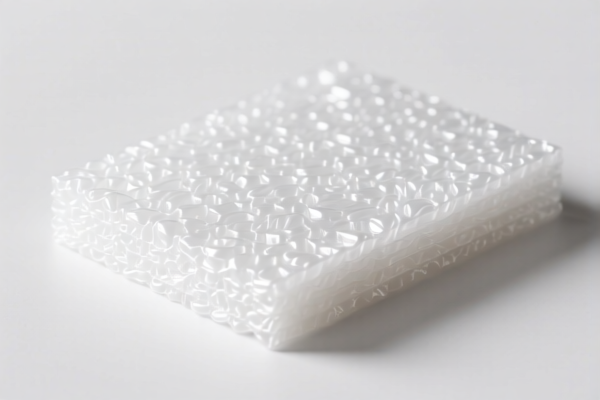
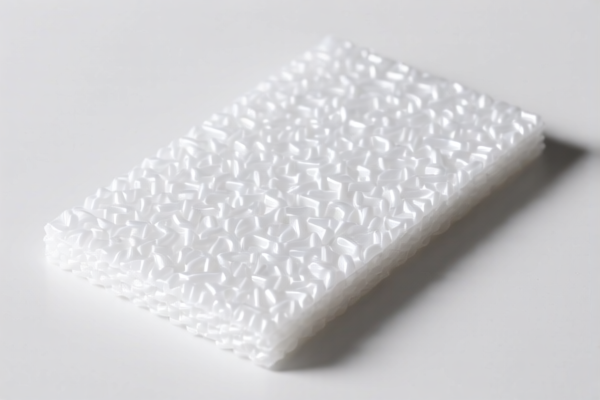

AI Analysis
🧪 Rosin Ester Sheets (Synthetic Resin Derivatives)
🌐 HS Code Reference & Customs Clearance Guide | 2026 Latest Tariff Analysis | Professional Transit Strategy
📌 1. Product Definition & Classification: Do You Really Understand “Rosin Ester Sheets”?
Rosin Ester Sheets are synthetic resin products derived from rosin (a natural product from pine trees). They are primarily used as industrial additives in adhesives, sealants, and coatings. In international trade, the classification depends heavily on the processing stage and final form:
- Chemical Preparation (Pre-mixed/Additives): If the rosin esters are part of a specific chemical preparation for foundry binders or as fatty acid esters, they may fall under Chapter 38.
- Plastic Sheets/Articles: If the rosin ester is processed into sheets for industrial use (not packaging/structural), it may fall under Chapter 39 (Plastics).
⚠️ Key Distinction Point:
- If classified as a chemical preparation/binder additive → 3824.99.41
- If classified as a sheet of synthetic resin → 3907.21 or 3915.90
📦 2. HS Code Classification Details (2026 Latest Tariff Authoritative Comparison)
| HS Code | Product Description | Application Scenario | Tax Status |
|---|---|---|---|
3824.99.41.40 |
Other prepared binders for foundry molds/cores; Mixtures of fatty acid esters | Industrial binders, foundry additives, specific chemical mixtures | ✅ 29.6% (4.6% Basic + 25% Additional) |
3824.99.41.90 |
Other chemical products/preparations; Other fatty substances of animal/vegetable origin | Generic chemical preparations not elsewhere specified | ✅ 29.6% (4.6% Basic + 25% Additional) |
3907.21 |
Rosin ester sheets (Synthetic resin products derived from rosin) | Additives in adhesives, sealants, coatings (industrial use) | ❌ Error (Failed to retrieve tax info) |
3915.90 |
Sheets made from synthetic resins (including rosin esters) | Industrial sheets (non-packaging, non-structural), waste/offcuts | ❌ Error (Failed to retrieve tax info) |
🔍 Key Reminder:
-3824codes are for chemical preparations (often implying a mixture or specific functional use like binding).
-3907/3915codes are for plastic articles/sheets.
- Tax Data Gap: For HS Codes3907.21and3915.90, the system returned an "Error" for tax retrieval. Do not assume 0% or standard rates. You must verify with USITC or a customs broker.
💰 3. 2026 Latest Tariff Rate Details (Including Additional Taxes)
✅ Applicable Country: United States (US)
✅ Country of Origin: China (CN)
⚠️ Note: Tax data for3907.21and3915.90is unavailable/error in current database. The following analysis is based on the available data for3824and general principles for Chapter 39.
🎯 1. 3824.99.41.40 & 3824.99.41.90 —— Chemical Preparations & Fatty Acid Esters
| Item | Content |
|---|---|
| Basic Tariff | 4.6% |
| Section 301 Additional Tariff | +25.0% |
| Total Tariff Rate | 29.6% |
| Tax Calculation | CIF Value × 29.6% |
| De Minimis Exemption | ❌ Not Eligible (Section 301 tariffs generally do not apply to de minimis, but high-value shipments are strictly monitored) |
| Legal Basis | USMCA/USITC Chapter 38; Section 301 Footnotes |
📌 Explanation:
- The 25% additional tariff is applied under Section 301 of the Trade Act of 1974, targeting Chinese imports.
- The 4.6% base rate is the standard Most Favored Nation (MFN) rate for this chemical category.
- Total Cost Impact: Nearly 30% of the product value is tax. This is a high-cost category.
🎯 2. 3907.21 & 3915.90 —— Rosin Ester Sheets (Plastic Category)
| Item | Content |
|---|---|
| Basic Tariff | Unknown/Error (Typically 0-5% for plastics, but varies) |
| Section 301 Additional Tariff | Unknown/Error (Likely 25% if listed in Section 301 exclusions list) |
| Total Tariff Rate | ⚠️ MUST VERIFY |
| Tax Calculation | Dependent on official USITC lookup |
| De Minimis Exemption | ❌ Likely Not Eligible if subject to Section 301 |
| Legal Basis | USITC Chapter 39; Check Section 301 List for specific heading exclusions |
📌 Warning:
- Do NOT guess the tax rate.
- Action Required: Consult the USITC Harmonized Tariff Schedule (HTS) directly for3907.21.00and3915.90.90.
- Potential Risk: If classified as plastic sheets from China, they may still be subject to 25% Section 301 tariffs, even if the base rate is low.
🛠️ 4. Customs Clearance Practical Advice (Avoid Pitfalls)
✅ 1. Required Documentation Checklist
| Document | Must Provide | Notes |
|---|---|---|
| ✅ Product Specification Sheet | ✔️ | Must clearly state: "Rosin Ester," "Synthetic Resin," "For Adhesives/Coatings" |
| ✅ Chemical Composition Report | ✔️ | For 3824 classification, prove it’s a "preparation" or "mixture" |
| ✅ MSDS (Material Safety Data Sheet) | ✔️ | Required for chemical imports; identifies hazards and composition |
| ✅ Commercial Invoice | ✔️ | Detailed description: "Rosin Ester Sheets for Industrial Adhesive Additive" |
| ✅ Bill of Lading | ✔️ | Ensure weight and dimensions match invoice |
| ✅ Section 301 Exclusion Proof | ✔️ | If applicable, provide proof of exclusion application (if any) |
✅ 2. Classification Strategy (Critical Tips)
🔥 “Chemical vs. Plastic: One word changes the tax!”
| Scenario | Correct HS Code | Risk/Note |
|---|---|---|
| Pre-mixed binder for foundry | 3824.99.41.40 |
29.6% Tax - High cost, but clear classification |
| Generic rosin ester chemical prep | 3824.99.41.90 |
29.6% Tax - High cost |
| Pure Rosin Ester Sheets (Industrial Use) | 3907.21 |
⚠️ Tax Error - Must verify USITC |
| Rosin Ester Sheets (Waste/Offcuts) | 3915.90 |
⚠️ Tax Error - Must verify USITC |
📌 Advice:
- If your product is pure sheets with no other additives, do not force it into3824. Use3907or3915.
- If it’s a mixture designed specifically as a binder,3824is more accurate despite the higher explicit tax data availability.
✅ 3. Special Handling
| Situation | Recommendation |
|---|---|
| Customs Query on Tax | If HS Code 3907.21 shows "Error," submit a Binding Ruling Request to CBP before shipment. |
| Section 301 Exclusion | Check if your specific product form (sheets) was excluded from the 25% tariff. Many plastic sheets are not excluded. |
| Origin Marking | Ensure products are clearly marked "Made in China" to avoid forced landing claims. |
🌍 5. Global Customs Comparison (2026)
| Country/Region | Recommended HS Code | Estimated Tariff | Notes |
|---|---|---|---|
| 🇺🇸 USA | 3824.99.41 or 3907.21 |
29.6% (for 3824) / Unknown (for 3907) | Section 301 applies. Verify 3907 rate. |
| 🇨🇳 China | 3824.99 or 3907.21 |
~1-3% | Low base rate, no additional duties |
| 🇪🇺 EU | 3824.99 or 3907.21 |
~4-6% | No Section 301 equivalent, but anti-dumping may apply |
| 🇨🇦 Canada | 3824.99 or 3907.21 |
~5-10% | CUSMA may apply if originating |
📌 Conclusion:
- USA is the highest-cost market due to 25% Section 301 tariff on many chemical/plastic imports from China.
- For3907.21and3915.90, tax data is MISSING. Do not proceed without verification.
📌 6. Common Mistakes & Pitfalls (Lessons Learned)
❌ Mistake 1: Assuming "Rosin Ester Sheets" are duty-free because they are "natural products."
👉 Result: Heavy tariffs (29.6% or 25% + base) due to synthetic processing classification.
❌ Mistake 2: Using 3824 for pure plastic sheets.
👉 Result: Customs reclassification to 3907/3915, potential penalty for misdeclaration, and delayed clearance.
❌ Mistake 3: Ignoring the "Tax Error" for 3907.21.
👉 Result: Unexpected high duties or customs holds. Always verify with USITC.
❌ Mistake 4: Not providing MSDS.
👉 Result: Shipment held at port for chemical safety review.
✅ Correct Action:
"Rosin Ester Sheets, Synthetic Resin Form, for Use in Adhesives, Model XYZ, MSDS Available, Section 301 Tariff Verified."
🎯 7. Conclusion: Precision Classification Saves Money
🎯 Remember:
🔹 "Chemical Prep = 3824 (29.6% Tax)"
🔹 "Plastic Sheet = 3907/3915 (Verify Tax!)"
🔹 "Section 301 is the killer – check exclusions!"
📌 Pro Tip:
If your product is critical for adhesives, consider applying for a Section 301 Exclusion if available, or use Customs Bonded Warehouses to defer duties.
Always consult a licensed customs broker before shipping, especially with tax error codes.
📣 Immediate Action:
📞 Verify HS Code 3907.21/3915.90 with USITC
📄 Prepare MSDS and Chemical Composition Report
🚀 Avoid Customs Holds by Pre-Verifying Tariffs!
✨ Professional Clearance Starts with Accurate Classification!
💼 Every Dollar Saved in Tariffs is Pure Profit!
Customer Reviews
About HS Code Classification
The Harmonized System (HS) is an internationally standardized nomenclature developed by the World Customs Organization (WCO) to classify traded products. Over 200 countries use the HS system as the basis for customs tariffs, trade statistics, and import/export regulations.
Each HS code follows a hierarchical structure:
- Chapter (2 digits) — Broad category of goods (e.g., Chapter 84: Machinery and Mechanical Appliances)
- Heading (4 digits) — More specific grouping within the chapter
- Subheading (6 digits) — Internationally standardized breakdown, used by all WCO member countries
- National subdivisions (8-10 digits) — Country-specific extensions for further classification, such as US HTSUS 10-digit codes
Correct HS code classification is essential for smooth customs clearance, accurate duty payment, and compliance with trade regulations. Misclassification can lead to customs delays, overpayment of duties, or penalties.
When importing from CN to US, the applicable tariff rates may include:
- Most-Favored-Nation (MFN) rate — The standard duty rate applied to WTO members
- General rate — Applied to countries without trade agreements
- Trade remedy duties — Additional tariffs such as Section 301 (anti-dumping), Section 232 (national security), or countervailing duties
The information provided on this page is for reference purposes only. For official classification, please consult with your local customs authority or a licensed customs broker.