Rosin Ether
CN → US| HS Code | Tariff Rate | Origin | Destination | Doc |
|---|---|---|---|---|
| 3806100010 | 40.0% | CN | US | Official Doc |
| 3806100050 | 40.0% | CN | US | Official Doc |
| 1301904000 | 18.8% | CN | US | Official Doc |
| 1301909190 | 17.5% | CN | US | Official Doc |
| 3805100000 | 40.0% | CN | US | Official Doc |
Product Images

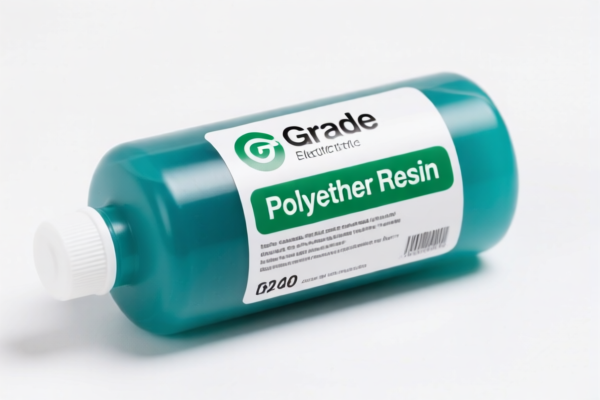


AI Analysis
🌲 Rosin Ether (松香醚/松香衍生物溶剂)
🌐 HS Code Reference & Customs Clearance Guide | 2026 Latest Tariff Analysis | Professional Clearance Strategy
📌 I. Product Definition & Classification: Do You Really Understand "Rosin Ether"?
Rosin Ether, chemically known as resin ethers or modified rosin, is a derivative of natural rosin (colophony) obtained through chemical modification (typically etherification). It is widely used as a solvent, adhesive modifier, or coupling agent in inks, paints, coatings, and adhesives.
In international trade, the classification depends heavily on the chemical structure and processing method: * Chemical Modification Products: If it is a synthetic derivative of rosin (e.g., rosin esters, ethers), it often falls under Chapter 38 (Miscellaneous Chemical Products) or Chapter 13 (Natural Resins). * Key Distinction Point: * If it is clearly a modified chemical product (ester/ether of resin acids) → Often归类 to 3806 (Rosin and chemical derivatives of rosin). * If it is viewed as a natural resin derivative or oleoresin → May fall under 1301 (Natural resins, balsams, resinoids).
⚠️ Critical Classification Note:
- "Rosin Ether" is typically a chemical derivative. The US CBP often classifies such modified rosin products under 3806 if they are specific chemical derivatives.
- However, if the product is described as a "natural resin derivative" or "oleoresin" without distinct synthetic modification markers, it might be classified under 1301.
- Misclassification Risk: Classifying a chemical derivative as a natural resin (1301) when it should be a chemical product (3806) can lead to significant tariff discrepancies due to the 25% Section 301 tariffs.
📦 II. HS Code Classification Details (2026 Latest Tariff Authority Reference)
Based on the provided <DATA>, here are the 5 possible HS Codes for "Rosin Ether" variants:
| HS Code | Product Description (from DATA) | Material Match | Chemical Form |
|---|---|---|---|
3806.10.00.10 |
Rosin solvents, matching rosin & rosin acid materials, conforming to chemical product morphology | Rosin & Rosin Acids | Chemical Derivative |
3806.10.00.50 |
Rosin solvents, matching rosin & its resin acid materials, common form of rosin derivatives | Rosin & Resin Acids | Chemical Derivative |
1301.90.40.00 |
Rosin solvents, matching oleoresin & its derivative material characteristics | Oleoresin | Natural/Partial Derivative |
1301.90.91.90 |
Rosin solvents, matching natural resin material, solvent product under general "other" category | Natural Resin | Natural Resin Derivative |
3805.10.00.00 |
Rosin solvents, matching resin/terpene derived products, conforming to gum resin & distillation product attributes | Resin/Terpene Derivates | Distillation/Processing Product |
🔍 Key Insight:
- 3806.10.00.x codes are for chemical derivatives of rosin (esters, ethers). These carry the highest tariffs.
- 1301.90.x codes are for natural resins or less processed derivatives. These have lower tariffs.
- 3805.10.00.00 is for other resin/terpene products, often used for distillation residues or specific terpene isolates.
💰 III. 2026 Latest Tariff Rate Details (Including Surtaxes & Policy Add-ons)
✅ Applicable Country: USA (US)
✅ Country of Origin: China (CN)
✅ Effective Date: Ongoing (including post-Nov 2025)
🎯 1. 3806.10.00.10 & 3806.10.00.50 —— Rosin Solvents (Chemical Derivatives)
| Item | Content |
|---|---|
| Base Tariff | 5.0% (Ad Valorem) |
| Section 301 Surcharge | +25.0% (USITC Footnote 9903.88.01 / 301 Action) |
| IEEPA Surcharge (122 Clause) | +10.0% (Targeting specific Chinese chemical imports) |
| Total Tariff Rate | 40.0% |
| Tax Calculation | CIF Value × 40% |
| De Minimis Exemption | ❌ Not Eligible (deny_de_minimis) |
| Legal Basis Path | IEEPA:9903.01.25 → USITC:3806.10.00.10 → FOOTNOTE:301 Surcharge |
📌 Explanation:
- These codes classify chemically modified rosin (ethers/esters).
- The 40% total rate is high due to the 25% Section 301 tariff + 10% IEEPA surcharge.
- Critical: Even small shipments of rosin ethers are subject to full taxation; no de minimis exemption applies.
🎯 2. 1301.90.40.00 —— Oleoresin Derivatives
| Item | Content |
|---|---|
| Base Tariff | 1.3% (Ad Valorem) |
| Section 301 Surcharge | +7.5% (Reduced rate for certain natural resin derivatives) |
| IEEPA Surcharge (122 Clause) | +10.0% |
| Total Tariff Rate | 18.8% |
| Tax Calculation | CIF Value × 18.8% |
| De Minimis Exemption | ❌ Not Eligible (deny_de_minimis) |
| Legal Basis Path | IEEPA:9901.25 → USITC:1301.90.40.00 → FOOTNOTE:301 Reduced Rate |
📌 Explanation:
- This code applies if the product is classified as an oleoresin or less processed derivative.
- Lower tariff (18.8%) compared to 3806, but still subject to IEEPA 10% surcharge.
- Risk: Misclassifying a chemical ether (3806) as an oleoresin (1301) to save 21.2% in tariffs is a high-risk audit target.
🎯 3. 1301.90.91.90 —— Other Natural Resin Solvents
| Item | Content |
|---|---|
| Base Tariff | 0.0% (Ad Valorem) |
| Section 301 Surcharge | +7.5% |
| IEEPA Surcharge (122 Clause) | +10.0% |
| Total Tariff Rate | 17.5% |
| Tax Calculation | CIF Value × 17.5% |
| De Minimis Exemption | ❌ Not Eligible (deny_de_minimis) |
| Legal Basis Path | IEEPA:9901.25 → USITC:1301.90.91.90 → FOOTNOTE:301 Reduced Rate |
📌 Explanation:
- This is a "catch-all" for natural resin solvents not elsewhere specified.
- Lowest base rate (0%), but still hit by 17.5% total with surcharges.
- Caution: Only applicable if the product is truly a natural resin derivative with minimal chemical modification.
🎯 4. 3805.10.00.00 —— Resin/Terpene Derived Products
| Item | Content |
|---|---|
| Base Tariff | 5.0% (Ad Valorem) |
| Section 301 Surcharge | +25.0% |
| IEEPA Surcharge (122 Clause) | +10.0% |
| Total Tariff Rate | 40.0% |
| Tax Calculation | CIF Value × 40% |
| De Minimis Exemption | ❌ Not Eligible (deny_de_minimis) |
| Legal Basis Path | IEEPA:9903.01.25 → USITC:3805.10.00.00 → FOOTNOTE:301 Surcharge |
📌 Explanation:
- Applies to gum resins, distillation products, or terpene isolates.
- If your "Rosin Ether" is actually a terpene-rich distillate rather than a chemical ether, this code may apply.
- Same high tariff (40%) as 3806.10.00.x.
🛠️ IV. Customs Clearance Practical Advice (Actionable Guide)
✅ 1. Required Documentation Checklist
| Document | Must Provide | Description |
|---|---|---|
| ✅ Technical Data Sheet (TDS) | ✔️ | Must specify chemical composition, CAS numbers, and processing method (chemical modification vs. natural extraction). |
| ✅ Certificate of Analysis (COA) | ✔️ | Confirms whether the product is a "natural resin," "oleoresin," or "chemical derivative." |
| ✅ Chemical Structure Diagram | ✔️ | Critical for distinguishing between 3806 (chemical derivative) and 1301 (natural resin). |
| ✅ Commercial Invoice | ✔️ | Clearly state: "Rosin Ether, Chemical Derivative of Rosin, CAS No. XXXXX, for use in [Application]." |
| ✅ Bill of Lading | ✔️ | Ensure no conflicting descriptions. |
| ✅ Pre-Clearance Ruling (Optional) | ✔️ | Highly recommended to avoid misclassification audits. |
✅ 2. Declaration Strategy (Key Rules)
🔥 "Chemical Derivative = 3806 (40%), Natural Resin = 1301 (17.5-18.8%)"
🔥 "Do NOT misclassify chemical ethers as natural resins to save tariffs!"
| Scenario | Correct Declaration | Incorrect Declaration |
|---|---|---|
| Chemically Modified Rosin Ether | 3806.10.00.10 or 3806.10.00.50 |
1301.90.91.90 → Audit Risk! |
| Natural Rosin Solvent (Unmodified) | 1301.90.91.90 |
3806.10.00.10 → Overpaying Tariffs |
| Oleoresin Extract | 1301.90.40.00 |
3805.10.00.00 → Ambiguous |
| Terpene Distillate | 3805.10.00.00 |
1301.90.91.90 → Misclassification |
📌 Note:
- "Rosin Ether" is almost always a chemical modification (etherification reaction). Therefore, 3806 is the most scientifically accurate classification.
- Using 1301 codes for "Rosin Ether" without strong evidence of it being a natural resin derivative is risky and may trigger CBP audits.
✅ 3. Special Considerations
| Situation | Handling Advice |
|---|---|
| OEM Custom Rosin Ether | Provide client specifications + chemical synthesis report to prove it’s a derivative (3806) or natural extract (1301). |
| Blended Products | If mixed with solvents, ensure the primary function defines the HS Code. If it’s a solvent blend, it may still fall under 3806. |
| Small Shipments (< $800) | ❌ No De Minimis Exemption! Even small packages are subject to 17.5%-40% tariffs. |
| Pre-Clearance Request | Apply for an Advance Ruling from US CBP to confirm the HS Code before shipment. |
🌍 V. Global Market Customs Comparison (2026)
| Country/Region | Recommended HS Code | Tariff Rate | Certification Requirements | Notes |
|---|---|---|---|---|
| 🇺🇸 USA | 3806.10.00.10 |
40.0% | SDS, TDS, COA | High tariff; No de minimis. |
| 🇨🇳 China | 3806.10.00.10 |
~5-10% | N/A | Lower import duty, but export controls may apply. |
| 🇪🇺 EU | 3806.10.90 |
~4.5% | REACH Registration | No Section 301 tariffs. REACH compliance is key. |
| 🇬🇧 UK | 3806.10.90 |
~4.5% | UK REACH | Post-Brexit rules apply. |
| 🇯🇵 Japan | 3806.10.000 |
~5-8% | Fertilizer Control Law (if applicable) | Lower tariffs than US. |
📌 Conclusion:
- USA has the highest tariffs for Rosin Ether due to Section 301 + IEEPA surcharges.
- EU/UK/Japan offer significantly lower duty rates but require strict chemical compliance (REACH, etc.).
- Strategy: If exporting to the US, ensure accurate classification to avoid penalties. If possible, consider supply chain diversification (e.g., sourcing from non-China origins) to mitigate surcharges.
📌 VI. Common Mistakes & Pitfalls (Lessons Learned)
❌ Mistake 1: Classifying "Rosin Ether" as "Natural Rosin" (1301.90.91.90) to save 22.5% in tariffs.
👉 Consequence: CBP audit → Back taxes + Penalties + Delay.
❌ Mistake 2: Assuming small shipments (< $800) are duty-free.
👉 Consequence: No de minimis exemption for Chinese chemical imports → 17.5%-40% tax on every package.
❌ Mistake 3: Vague description on Invoice ("Rosin Solvent").
👉 Consequence: CBP requests additional info → Delay in clearance.
❌ Mistake 4: Ignoring IEEPA 122 Clause Surcharge.
👉 Consequence: Underpayment of 10% → Additional fines.
✅ Correct Practice:
"Rosin Ether (Chemical Derivative), CAS No. XXXXX, For Use in Adhesives, Origin: China"
🎯 VII. Conclusion: Accurate Classification, Cost Control
🎯 Remember:
🔹 "Chemical Ether = 3806 (40%), Natural Resin = 1301 (17.5%)"
🔹 "De Minimis Does NOT Apply → Every Shipment is Taxed!"
🔹 "Get an Advance Ruling to Avoid Audits!"
📌 Pro Tip:
If your Rosin Ether is chemically modified, declare it under 3806. If it is a natural resin extract, declare it under 1301.
Consult a licensed customs broker for pre-classification verification.
📣 Immediate Action:
📞 Contact a customs broker + Provide TDS/COA + Request Advance Ruling
🚀 Ensure smooth clearance, avoid penalties, and optimize costs!
✨ Professional Clearance Starts with Accurate Classification!
💼 Every cent of cost should be precisely calculated!
Customer Reviews
About HS Code Classification
The Harmonized System (HS) is an internationally standardized nomenclature developed by the World Customs Organization (WCO) to classify traded products. Over 200 countries use the HS system as the basis for customs tariffs, trade statistics, and import/export regulations.
Each HS code follows a hierarchical structure:
- Chapter (2 digits) — Broad category of goods (e.g., Chapter 84: Machinery and Mechanical Appliances)
- Heading (4 digits) — More specific grouping within the chapter
- Subheading (6 digits) — Internationally standardized breakdown, used by all WCO member countries
- National subdivisions (8-10 digits) — Country-specific extensions for further classification, such as US HTSUS 10-digit codes
Correct HS code classification is essential for smooth customs clearance, accurate duty payment, and compliance with trade regulations. Misclassification can lead to customs delays, overpayment of duties, or penalties.
When importing from CN to US, the applicable tariff rates may include:
- Most-Favored-Nation (MFN) rate — The standard duty rate applied to WTO members
- General rate — Applied to countries without trade agreements
- Trade remedy duties — Additional tariffs such as Section 301 (anti-dumping), Section 232 (national security), or countervailing duties
The information provided on this page is for reference purposes only. For official classification, please consult with your local customs authority or a licensed customs broker.