Rosin Modified Resin
CN → US| HS Code | Tariff Rate | Origin | Destination | Doc |
|---|---|---|---|---|
| 3806300000 | 41.5% | CN | US | Official Doc |
| 3806200000 | 38.7% | CN | US | Official Doc |
| 3506915000 | 37.1% | CN | US | Official Doc |
| 3506990000 | 37.1% | CN | US | Official Doc |
| 3911100000 | 41.1% | CN | US | Official Doc |
Product Images
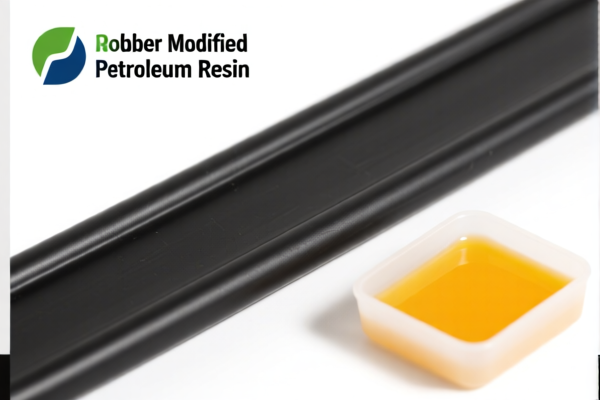
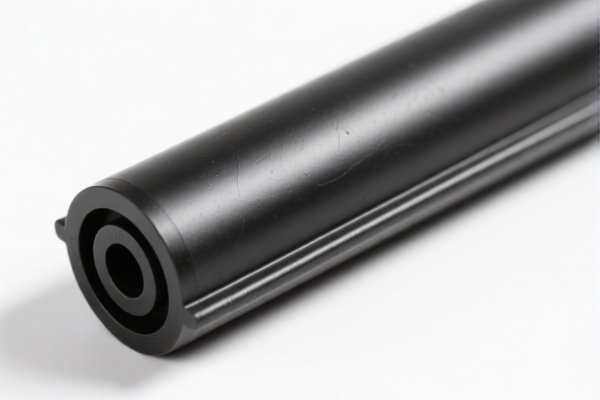

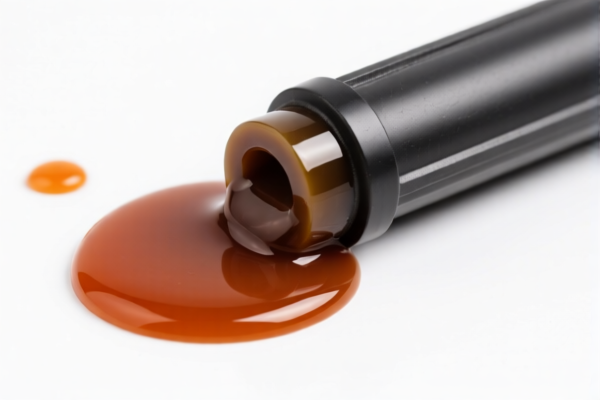
AI Analysis
🧪 Rosin Modified Resin (Modified Rosin Esters & Adhesives)
🌐 HS Code Reference & Customs Clearance Guide | 2024/2025 Latest Tariff Analysis | Professional Transit Strategy
📌 I. Product Definition & Classification: Do You Truly Understand "Rosin Modified Resin"?
Rosin Modified Resin is a complex chemical category. It is not a single substance but a broad class of materials derived from Rosin (Colophony) through chemical modification (such as esterification, hydrogenation, or polymerization) and often blended with other resins or polymers to create adhesive, sealing, or coating products.
In international trade, the classification depends heavily on its chemical nature and end-use: 1. Ester-based: If the primary modification is with glycerin/polyglycerols, forming "Glycerol Rosin Esters" or "Polyglycerol Rosin Esters." 2. Adhesive-based: If it is chemically formulated into a ready-to-use adhesive, possibly mixed with synthetic resins or rubber. 3. Raw Resin: If it is a modified natural resin not falling under specific sub-headings for esters.
⚠️ Key Distinction Point:
- If it is a pure chemical ester derived from rosin acid → Falls under Chapter 38 (Miscellaneous Chemical Products) or Chapter 35 (Albuminoidal Substances/Adhesives) depending on the exact ester structure and purity. - If it is a prepared adhesive (mixed with fillers, solvents, or other binders) → Falls under 3506 (Prepared Glues/Cements). - If it is considered a modified natural resin not specifically listed elsewhere → May fall under 3911 (Resins in Primary Forms).
📦 II. HS Code Classification Details (Based on Provided Data)
According to the specific data provided in your input, here are the applicable HS Codes, summaries, and tax breakdowns. Note: These codes and tax rates are specific to the provided dataset (likely US/China trade context with Section 301 & IEEPA tariffs).
| HS Code | Summary / Classification Logic | Total Tax Rate | Tax Detail Breakdown |
|---|---|---|---|
3806.30.00.00 |
Modified Rosin Esters Belongs to rosin acid derivatives. Form fits the definition of ester glues. |
41.5% | Base: 6.5% Add-on: 25.0% (Sec 301) 122 Clause: 10% |
3806.20.00.00 |
Rosin Esters Belongs to rosin and its derivatives. Fits characteristics of rosin salts, resinates, or their derivatives. |
38.7% | Base: 3.7% Add-on: 25.0% (Sec 301) 122 Clause: 10% |
3506.91.50.00 |
Prepared Adhesive (Polymer/Rubber Based) Based on natural resin chemically modified. Fits attributes of adhesives based on polymers or rubber. |
37.1% | Base: 2.1% Add-on: 25.0% (Sec 301) 122 Clause: 10% |
3506.99.00.00 |
Other Prepared Adhesives Chemically formulated resin product. Fits the chemical composition characteristics of prepared adhesives. |
37.1% | Base: 2.1% Add-on: 25.0% (Sec 301) 122 Clause: 10% |
3911.10.00.00 |
Petroleum Resins & Others Belongs to petroleum resins and related derivatives. Fits characteristics of petroleum resins and other unlisted resins in primary form. |
41.1% | Base: 6.1% Add-on: 25.0% (Sec 301) 122 Clause: 10% |
🔍 Critical Note on Tax Structure:
All codes above include a 25.0% Add-on Tariff (likely Section 301) and a 10% "122 Clause" Tariff (likely referring to specific IEEPA or retaliatory measures). The Base Tariff varies significantly (from 2.1% to 6.5%), which drives the total difference between 37.1% and 41.5%.
💰 III. Detailed Tariff Analysis & Calculation (2024/2025 Context)
✅ Applicable Market: Likely US Imports from China (or similar jurisdiction with "122 Clause" and Section 301 tariffs)
✅ Origin: China (CN) implied by the high add-on tariffs
✅ Product Category: Chemicals/Adhesives/Resins
🎯 1. 3806.30.00.00 – Modified Rosin Esters (Highest Base: 6.5%)
- Logic: This code is chosen when the product is strictly defined as a rosin acid derivative in ester form.
- Tax Calculation:
- Base: 6.5%
- Section 301: 25.0%
- 122 Clause: 10.0%
- Total: 41.5%
- Implication: This is a "chemical product" category with a higher base duty. It is often used for high-purity modified rosin used in inks, varnishes, or specialized coatings.
🎯 2. 3806.20.00.00 – Rosin Esters (Base: 3.7%)
- Logic: Used for standard rosin esters (e.g., glycerol rosin esters) that fit the definition of rosin salts/resinates.
- Tax Calculation:
- Base: 3.7%
- Section 301: 25.0%
- 122 Clause: 10.0%
- Total: 38.7%
- Implication: Slightly lower total tax than 3806.30.00.00. Common for general-purpose rosin esters in adhesives and printing inks.
🎯 3. 3506.91.50.00 – Prepared Adhesives (Polymer/Rubber Based)
- Logic: If the rosin modified resin is mixed with other polymers (like synthetic resins or rubber) to form a ready-to-use adhesive, it may shift from Chapter 38 to Chapter 35.
- Tax Calculation:
- Base: 2.1%
- Section 301: 25.0%
- 122 Clause: 10.0%
- Total: 37.1%
- Implication: Lowest Base Tax (2.1%). However, customs may scrutinize this if the product is not a "preparation" but a raw chemical. Must prove it is a "preparation" (mixed with other ingredients).
🎯 4. 3506.99.00.00 – Other Prepared Adhesives
- Logic: A "catch-all" for prepared adhesives that do not fit the "polymer/rubber based" specific sub-heading.
- Tax Calculation:
- Base: 2.1%
- Section 301: 25.0%
- 122 Clause: 10.0%
- Total: 37.1%
- Implication: Same tax rate as 3506.91.50.00. Used for complex, multi-component adhesive formulations.
🎯 5. 3911.10.00.00 – Petroleum Resins & Others
- Logic: ⚠️ High Risk. This code is for petroleum resins or unlisted resins. Using this for rosin (a natural tree resin) modified with chemicals might be challenged by customs as incorrect, unless the product is predominantly petroleum-based with rosin modifiers.
- Tax Calculation:
- Base: 6.1%
- Section 301: 25.0%
- 122 Clause: 10.0%
- Total: 41.1%
- Implication: High total tax. Only use if the product is legally classified as a "resin in primary form" under Chapter 39, which is rare for pure rosin derivatives.
🛠️ IV. Customs Clearance Practical Advice (Real-World Pitfalls)
✅ 1. Documentation Checklist (Must-Haves)
| Document | Required? | Description |
|---|---|---|
| Product Specification Sheet | ✔️ | Must detail: Chemical name, CAS number, percentage of rosin vs. petroleum/polymer content, physical form (pellets, powder, liquid). |
| Formula/Composition | ✔️ | Critical for distinguishing between Chapter 38 (Chemicals) and Chapter 35 (Adhesives). |
| Safety Data Sheet (SDS) | ✔️ | Helps classify hazardous vs. non-hazardous, and reinforces chemical nature. |
| Commercial Invoice | ✔️ | Must describe item as "Rosin Modified Resin" or "Prepared Adhesive," not vague terms like "Glue." |
| Certificate of Origin | ✔️ | To verify origin and apply any potential exemptions (though unlikely for these specific add-on tariffs). |
✅ 2. Classification Strategy: Chapter 38 vs. Chapter 35
🔥 "Pure Ester Goes to 38, Mixed Adhesive Goes to 35!"
| Scenario | Recommended HS Code | Reason |
|---|---|---|
| Pure Modified Rosin Ester (e.g., Glycerol Rosin Ester) used as a raw material for inks/coatings | 3806.20.00.00 or 3806.30.00.00 |
It is a chemical derivative, not yet a "preparation" with other binders. |
| Rosin + Synthetic Resin + Solvent mixed into a glue | 3506.91.50.00 or 3506.99.00.00 |
It is a "prepared adhesive" (adhesive mixture). Base tax is lower (2.1%). |
| Rosin Modified Petroleum Resin | 3911.10.00.00 |
If the primary component is petroleum resin, it may fall under Chapter 39. |
✅ 3. Common Mistakes & How to Avoid Them
❌ Mistake 1: Declaring "Rosin Esters" as 3506 (Adhesives) without proof of formulation.
👉 Result: Customs may reclassify to 3806, imposing a higher base tariff (3.7-6.5% vs 2.1%).
❌ Mistake 2: Declaring "Prepared Adhesive" as 3806 (Chemicals).
👉 Result: You pay higher base tax unnecessarily. If it’s a ready-to-use glue, it belongs in Chapter 35.
❌ Mistake 3: Using 3911 for natural rosin derivatives.
👉 Result: High risk of misclassification. Chapter 39 is for synthetic or chemically modified natural resins in primary form, but rosin esters have specific headings in 3806. Customs will likely reject this.
🌍 V. Global Market Comparison (2024/2025)
| Country/Region | Likely HS Code | Est. Total Tax (CN Origin) | Key Notes |
|---|---|---|---|
| 🇺🇸 USA | 3806.20 / 3506.99 |
37.1% - 41.5% | Includes 25% Sec 301 + 10% 122 Clause. High cost. |
| 🇨🇳 China | 3806.20 / 3506.99 |
Low/Medium | Depends on import duty. No US-style add-ons. |
| 🇪🇺 EU | 3806.20 / 3506.99 |
6% - 9% | No Section 301. Standard EU duty applies. |
| 🇻🇳 Vietnam | 3806.20 / 3506.99 |
Varies | Check if re-exporting to US qualifies for de minimis or routing rules. |
📌 Conclusion:
- The US market is the most expensive due to layered tariffs (Base + 301 + 122).
- Chapter 35 (3506.xxxx) offers the lowest base tax (2.1%) but requires the product to be a "prepared adhesive."
- Chapter 38 (3806.xxxx) is for pure chemical derivatives with higher base taxes (3.7%-6.5%).
📌 VI. Actionable Recommendations for Importers
-
Determine Formulation:
- If you are selling pure modified rosin (pellets/powder) to manufacturers who mix it themselves → Use
3806.20.00.00or3806.30.00.00. - If you are selling ready-to-use glue (with other binders/solvents) → Use
3506.91.50.00or3506.99.00.00.
- If you are selling pure modified rosin (pellets/powder) to manufacturers who mix it themselves → Use
-
Calculate Cost Impact:
- Savings Potential: Switching from
3806.30(41.5%) to3506.99(37.1%) saves 4.4% on CIF value. Ensure your product formulation justifies this classification.
- Savings Potential: Switching from
-
Prepare for Customs Scrutiny:
- Have Technical Data Sheets ready that highlight the "adhesive properties" if using Chapter 35, or the "chemical structure" if using Chapter 38.
-
Consider Supply Chain Alternatives:
- If tariffs are prohibitive, consider sourcing from countries not subject to Section 301/122 tariffs (e.g., Vietnam, Malaysia) if the resin is produced there.
🎯 VII. Conclusion: Precision in Classification Saves Money!
🎯 Remember:
🔹 "Pure Chemical = Chapter 38 (Higher Base)"
🔹 "Mixed Glue = Chapter 35 (Lower Base)"
🔹 "Check Your Formula First!"
📌 Pro Tip:
If your product is a complex mixture of rosin, petroleum resins, and polymers, consult a customs broker to see if 3911 or 3506 is more appropriate than 3806. Misclassification can lead to back taxes + penalties.
✨ Professional customs clearance starts with accurate classification!
💼 Your bottom line depends on the first 8 digits of the HS Code!
Customer Reviews
About HS Code Classification
The Harmonized System (HS) is an internationally standardized nomenclature developed by the World Customs Organization (WCO) to classify traded products. Over 200 countries use the HS system as the basis for customs tariffs, trade statistics, and import/export regulations.
Each HS code follows a hierarchical structure:
- Chapter (2 digits) — Broad category of goods (e.g., Chapter 84: Machinery and Mechanical Appliances)
- Heading (4 digits) — More specific grouping within the chapter
- Subheading (6 digits) — Internationally standardized breakdown, used by all WCO member countries
- National subdivisions (8-10 digits) — Country-specific extensions for further classification, such as US HTSUS 10-digit codes
Correct HS code classification is essential for smooth customs clearance, accurate duty payment, and compliance with trade regulations. Misclassification can lead to customs delays, overpayment of duties, or penalties.
When importing from CN to US, the applicable tariff rates may include:
- Most-Favored-Nation (MFN) rate — The standard duty rate applied to WTO members
- General rate — Applied to countries without trade agreements
- Trade remedy duties — Additional tariffs such as Section 301 (anti-dumping), Section 232 (national security), or countervailing duties
The information provided on this page is for reference purposes only. For official classification, please consult with your local customs authority or a licensed customs broker.