Rosin Plasticizer
CN → US| HS Code | Tariff Rate | Origin | Destination | Doc |
|---|---|---|---|---|
| 3824992900 | 41.5% | CN | US | Official Doc |
| 3824994190 | 39.6% | CN | US | Official Doc |
| 3506915000 | 37.1% | CN | US | Official Doc |
| 3806100050 | 40.0% | CN | US | Official Doc |
| 3806100010 | 40.0% | CN | US | Official Doc |
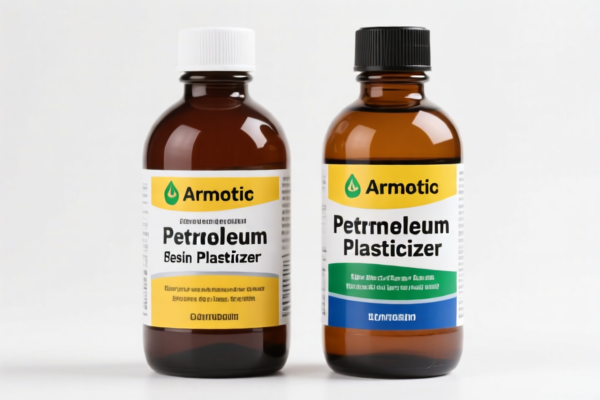
Product Images


AI Analysis
🌲 Rosin Plasticizer (松香增塑剂/增韧剂)
🌐 HS Code Reference & Customs Clearance Guide | 2026 Latest Tariff Analysis | Strategic Import Strategy
📌 Part 1: Product Definition & Classification: Do You Really Understand "Rosin Plasticizers"?
Rosin Plasticizers (often referred to as Rosin Toughening Agents or Modifiers in industrial contexts) are chemical additives derived from rosin (tree resin). They are primarily used to modify the physical properties of plastics, adhesives, and coatings, enhancing flexibility, impact resistance, and thermal stability.
In international trade, the classification of Rosin Plasticizers is complex because they straddle the line between basic chemical products, polymer additives, and natural resin derivatives. The correct HS Code depends heavily on the specific chemical composition and primary function defined by the manufacturer.
⚠️ Key Distinction Points:
- If the product is a generic chemical modifier based on natural/modifed resins → Look at Chapter 38 (Miscellaneous Chemical Products).
- If the product is specifically classified as a toughening agent within chemical preparations → Look at 3824.99.
- If the product is strictly a rosin derivative/resin acid without complex formulation → Look at 3806.10.
- If the product acts primarily as a polymer-based adhesive or prepolymer → Look at 3506.91 or 3824.99.
📦 Part 2: HS Code Classification Details (2026 Latest Tariff Authority Comparison)
Based on the provided data, here are the five possible HS Code classifications for Rosin Plasticizers, along with their specific legal and functional justifications.
| HS Code | Product Description & Logic | Total Tax Rate (US/China Origin) | Tax Breakdown Details |
|---|---|---|---|
3824.99.29.00 |
Rosin Toughening Agent (Chemical Preparation) Classified under Chemical Products & Preparations. Material: Natural/Modified Resin. Fits the functional attribute of a "toughening additive." |
41.5% | Base: 6.5% Add-on (301): 25.0% Section 122: 10% |
3824.99.41.90 |
Plant-Derived Fatty Substance Mixture Classified under Chemical Products related to Chemical Industry. Material: Plant-derived fatty substances & mixtures. Fits usage characteristics. |
39.6% | Base: 4.6% Add-on (301): 25.0% Section 122: 10% |
3506.91.50.00 |
Chemical Modified Adhesive/Preparation Classified under Chemical Modifying Agents. Base material: Polymer or Resin. Fits the logic of polymer-based binders/preparations. |
37.1% | Base: 2.1% Add-on (301): 25.0% Section 122: 10% |
3806.10.00.50 |
Rosin & Resin Acids/Derivatives Classified under Rosin and Resin Acids & Derivatives. Material: Rosin Derivatives. Fits other category characteristics. |
40.0% | Base: 5.0% Add-on (301): 25.0% Section 122: 10% |
3806.10.00.10 |
Colloidal Rosin / Resin Acid Derivatives Material: Rosin & Rosin Acid Derivatives. As a chemical aid, it aligns with the material attributes of colloidal rosin. |
40.0% | Base: 5.0% Add-on (301): 25.0% Section 122: 10% |
🔍 Critical Insight:
- Lowest Tax Option:3506.91.50.00(37.1%) requires the product to be clearly defined as a polymer-based chemical modifying agent/adhesive. - Highest Tax Option:3824.99.29.00(41.5%) applies if classified strictly as a general chemical toughening agent with a higher base rate. - Material-Based Options:3806.10.00.10and.50(40.0%) are suitable if the product is primarily processed rosin derivatives rather than complex polymer blends.
💰 Part 3: 2026 Latest Tariff Rate Detail (Including Surcharges & Policy Add-ons)
✅ Applicable Country: United States (US)
✅ Origin: China (CN)
✅ Effective Time: Current 2026 Tariff Structure
All classifications below include three components: 1. Base Tariff (MFN): Standard import duty. 2. Section 301 Add-on Tariff: +25% for Chinese-origin goods under US Trade Law Section 301. 3. Section 122 Tariff: +10% (Specific policy add-on mentioned in data).
🎯 1. 3824.99.29.00 —— Rosin Toughening Agent (General Chemical Prep)
| Item | Detail |
|---|---|
| Base Tariff | 6.5% |
| Section 301 Surcharge | +25.0% |
| Section 122 Surcharge | +10.0% |
| Total Effective Rate | 41.5% |
| Calculation Basis | CIF Value × 41.5% |
| De Minimis Exemption | ❌ Not Eligible (High risk of audit for chemical additives) |
| Legal Path | HTSUS 3824.99.29 → 301 Footnotes → 122 Policy |
📌 Explanation:
- This code is chosen when the product is marketed broadly as a "toughening agent" for plastics, lacking a specific polymer-adhesive classification. - The 6.5% base rate is the highest among the options, leading to the highest total tax burden.
🎯 2. 3824.99.41.90 —— Plant-Derived Fatty Substance Mixture
| Item | Detail |
|---|---|
| Base Tariff | 4.6% |
| Section 301 Surcharge | +25.0% |
| Section 122 Surcharge | +10.0% |
| Total Effective Rate | 39.6% |
| Calculation Basis | CIF Value × 39.6% |
| De Minimis Exemption | ❌ Not Eligible |
| Legal Path | HTSUS 3824.99.41 → 301 Footnotes → 122 Policy |
📌 Explanation:
- Suitable if the rosin plasticizer is described as a "mixture of fatty substances" derived from plants, emphasizing its natural origin over its chemical modification.
🎯 3. 3506.91.50.00 —— Chemical Modified Adhesive/Polymer Base (Lowest Tax)
| Item | Detail |
|---|---|
| Base Tariff | 2.1% |
| Section 301 Surcharge | +25.0% |
| Section 122 Surcharge | +10.0% |
| Total Effective Rate | 37.1% |
| Calculation Basis | CIF Value × 37.1% |
| De Minimis Exemption | ❌ Not Eligible |
| Legal Path | HTSUS 3506.91.50 → 301 Footnotes → 122 Policy |
📌 Explanation:
- Cost-Saving Opportunity: This code has the lowest base tariff (2.1%). - Condition: The product must be technically described as a polymer-based adhesive or chemical prepolymer. If the product is primarily a simple rosin derivative without polymer modification, this classification may be challenged by customs.
🎯 4. 3806.10.00.50 & 3806.10.00.10 —— Rosin Derivatives (Mid-Range Tax)
| Item | Detail |
|---|---|
| Base Tariff | 5.0% |
| Section 301 Surcharge | +25.0% |
| Section 122 Surcharge | +10.0% |
| Total Effective Rate | 40.0% |
| Calculation Basis | CIF Value × 40.0% |
| De Minimis Exemption | ❌ Not Eligible |
| Legal Path | HTSUS 3806.10 → 301 Footnotes → 122 Policy |
📌 Explanation:
- These codes fall under Chapter 3806 (Rosin and Resin Acids). - Use.10if it is Colloidal Rosin or similar. - Use.50if it is a derivative not elsewhere specified. - These are safe bets if the product is heavily processed rosin but not a complex polymer blend.
🛠️ Part 4: Customs Clearance Practical Advice (Real-World Pitfall Guide)
✅ 1. Documentation Checklist (Mandatory)
| Document | Required | Description |
|---|---|---|
| ✅ Technical Data Sheet (TDS) | ✔️ | Must specify chemical composition (e.g., % rosin acid, polymer content). |
| ✅ Certificate of Origin (CO) | ✔️ | Essential for determining origin-based surcharges. |
| ✅ Commercial Invoice | ✔️ | Must clearly state "Rosin Plasticizer" or "Rosin Toughening Agent." Avoid vague terms like "Chemical Mix." |
| ✅ Product Formula/Composition | ✔️ | Critical for determining if it fits 3506 (polymer) vs. 3806 (rosin derivative). |
| ✅ HS Code Pre-Ruling Request | ✔️ | Highly Recommended due to the 4.4% tax difference between codes. |
| ✅ Safety Data Sheet (SDS) | ✔️ | For hazardous material assessment during customs inspection. |
✅ 2. Declaration Strategy (Key Mnemonics)
🔥 "Composition Defines Code, Polymer Saves Money, Rosin Derivatives Mid-Range!"
| Scenario | Recommended HS Code | Reason |
|---|---|---|
| Product is a polymer-blended adhesive modifier | 3506.91.50.00 |
Lowest base rate (2.1%). Proven polymer logic. |
| Product is pure rosin derivatives or colloidal rosin | 3806.10.00.10 or .50 |
Clear classification under Rosin chapter. Safe, mid-range tax. |
| Product is a general chemical toughening agent | 3824.99.29.00 |
Default if no specific polymer or rosin-derivative status can be proven. Highest tax. |
| Product is a plant-fatty mixture | 3824.99.41.90 |
Niche classification for natural fatty substances. |
✅ 3. Special Circumstances & Risk Management
| Situation | Advice |
|---|---|
| Customs Audit on Composition | If customs questions whether it is a "polymer" (3506) or "rosin" (3806), provide third-party lab analysis showing molecular structure. |
| OEM/White Label Products | Ensure the supplier's technical description matches your declaration. Inconsistencies lead to delays. |
| Mixed Shipments | If shipping multiple chemical types, separate declarations are crucial. Do not lump rosin plasticizers with other chemicals to avoid cross-contamination of tax rates. |
| Section 122 Compliance | Verify if the product qualifies for any exemptions under Section 122. Currently, the data indicates a 10% add-on, so plan for it. |
🌍 Part 5: Global Market Comparison (2026 Overview)
| Region | Likely HS Code | Est. Tariff Impact | Note |
|---|---|---|---|
| 🇺🇸 United States | 3506.91.50.00 to 3824.99.29.00 |
37.1% – 41.5% | High Section 301 + 122 duties. Pre-ruling is critical. |
| 🇨🇳 China (Export) | Varies | Lower/Zero | China may offer export rebates. Check with local tax bureau. |
| 🇪🇺 EU | 3824.99 or 3806.10 | 0% – 6.5% | No Section 301. Lower barriers, but strict REACH compliance required. |
| 🇯🇵 Japan | 3824.99 or 3806.10 | 0% – 3.2% | Generally favorable, but FSC (Forest Stewardship Council) certification may be needed for rosin origin. |
📌 Conclusion:
- The US market presents the highest cost due to Section 301 and Section 122 add-ons. - Strategy: If possible, structure the product as a polymer-based modifier (3506) to save 4.4% in total duties compared to the general chemical classification.
📌 Part 6: Common Errors & Pitfalls (Lessons Learned)
❌ Error 1: Declaring as "General Chemical" (3824.99.29.00) when it is clearly a polymer-based adhesive (3506.91.50.00).
👉 Consequence: Overpaying 4.4% in duties.
👉 Fix: Provide polymer composition data.
❌ Error 2: Declaring as "Rosin Derivative" (3806) when it is a complex mixture.
👉 Consequence: Customs may reclassify to 3824, potentially raising base tax from 5.0% to 6.5%.
👉 Fix: Clarify if it is a pure derivative or a mixture.
❌ Error 3: Ignoring Section 122.
👉 Consequence: Underestimating total cost by 10%.
👉 Fix: Always include the 10% add-on in CIF calculations.
❌ Error 4: Using vague descriptions like "Plasticizer" without HS specificity.
👉 Consequence: Customs inspection delays, potential fines.
👉 Fix: Use precise technical names matching the chosen HS Code.
✅ Correct Approach:
"Rosin-Based Polymer Toughening Agent, Chemical Modification, For Plastics Processing, Model XYZ, Compliant with REACH/CPSC"
🎯 Part 7: Conclusion: Professional Declaration, Cost Optimization!
🎯 Key Takeaways:
🔹 "Polymer = 37.1% | Rosin Derivative = 40.0% | General Chemical = 41.5%"
🔹 "Don't guess the HS Code. Use technical data to justify the lowest tax bracket."
🔹 "Section 122 is a 10% hidden cost. Plan for it."
📌 Pro Tip:
If your rosin plasticizer can be technically classified under 3506.91.50.00 as a polymer-based adhesive/preparation, you save 4.4% compared to the general chemical classification. This is significant for high-volume shipments.
Action: Request a Pre-Ruling from US Customs (CBP) with detailed technical specs to lock in the lower rate.
📣 Immediate Action:
📞 Contact your customs broker with the Technical Data Sheet.
🚀 Request an Advance Ruling for the most favorable HS Code.
💼 Optimize your supply chain costs by choosing the correct classification from the start!
✨ Precise Classification Starts Here!
💼 Every Percentage Point Matters in Chemical Trade!
Customer Reviews
About HS Code Classification
The Harmonized System (HS) is an internationally standardized nomenclature developed by the World Customs Organization (WCO) to classify traded products. Over 200 countries use the HS system as the basis for customs tariffs, trade statistics, and import/export regulations.
Each HS code follows a hierarchical structure:
- Chapter (2 digits) — Broad category of goods (e.g., Chapter 84: Machinery and Mechanical Appliances)
- Heading (4 digits) — More specific grouping within the chapter
- Subheading (6 digits) — Internationally standardized breakdown, used by all WCO member countries
- National subdivisions (8-10 digits) — Country-specific extensions for further classification, such as US HTSUS 10-digit codes
Correct HS code classification is essential for smooth customs clearance, accurate duty payment, and compliance with trade regulations. Misclassification can lead to customs delays, overpayment of duties, or penalties.
When importing from CN to US, the applicable tariff rates may include:
- Most-Favored-Nation (MFN) rate — The standard duty rate applied to WTO members
- General rate — Applied to countries without trade agreements
- Trade remedy duties — Additional tariffs such as Section 301 (anti-dumping), Section 232 (national security), or countervailing duties
The information provided on this page is for reference purposes only. For official classification, please consult with your local customs authority or a licensed customs broker.