Rosin Toughening Agent
CN → US| HS Code | Tariff Rate | Origin | Destination | Doc |
|---|---|---|---|---|
| 3824992900 | 41.5% | CN | US | Official Doc |
| 3824994190 | 39.6% | CN | US | Official Doc |
| 3506915000 | 37.1% | CN | US | Official Doc |
| 3806100050 | 40.0% | CN | US | Official Doc |
| 3806100010 | 40.0% | CN | US | Official Doc |
Product Images
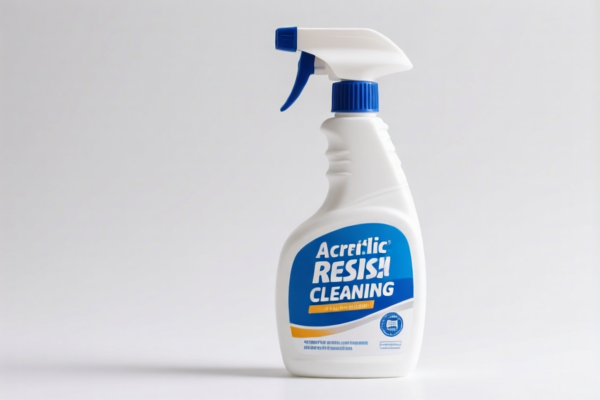



AI Analysis
🧪 Rosin Toughening Agent (松香增韧剂)
🌐 HS Code Reference & Customs Clearance Guide | 2026 Latest Tariff Analysis | Professional Clearance Strategy
📌 I. Product Definition: What Exactly is a "Rosin Toughening Agent"?
A Rosin Toughening Agent is a specialized chemical additive used primarily in the formulation of adhesives, sealants, and polymer blends. It functions by modifying the physical properties of resin systems (such as epoxies or acrylics) to improve flexibility, impact resistance, and adhesion strength.
In international trade, these products are generally classified under two main chapters depending on their chemical composition and primary function: 1. Chapter 35 (Animal Substances; Glues): If classified as a prepared adhesive or a specific type of glue-based modifier. 2. Chapter 38 (Miscellaneous Chemical Products): If classified as a modified natural resin, rosin derivative, or other chemical preparation.
⚠️ Key Distinction Point:
- If the product is a pre-mixed adhesive or a glue-like substance used for bonding → It likely falls under HS 3506.
- If the product is a pure or processed rosin/resin derivative (acid or salt) used as a raw material/additive → It likely falls under HS 3806.
📦 II. HS Code Classification Details (2026 Latest Tariff Reference)
Based on the provided data, here are the four potential HS Codes with their corresponding tax implications.
| HS Code | Product Description | Classification Logic | Total Tax Rate (US Import) |
|---|---|---|---|
3506.91.50.00 |
Adhesives/Preparations based on polymers or rubber | Fits the logic of "toughening agents" if they are polymer/rubber-based formulations. | 37.1% |
3806.10.00.50 |
Rosin and resin acids and their derivatives | Categorized under "Other" rosin products. | 40.0% |
3806.10.00.10 |
Colloidal Rosin | Fits the category of "Rosin and rosin acid derivatives." | 40.0% |
3506.99.00.00 |
Prepared adhesives | Fits the attribute of "Resin/Organic Compound" type adhesives. | 37.1% |
3824.99.29.00 |
Chemical products and preparations | Fits "Natural/Modified Resin" components and functional additives. | 41.5% |
🔍 Important Note:
- HS 3506 Codes: Generally lower base tariffs (2.1%) but subject to the same heavy additional taxes. Suitable if the product is marketed as a "prepared adhesive" or rubber/polymer-based mix.
- HS 3806/3824 Codes: Higher base tariffs (5.0%–6.5%). Suitable if the product is identified as a raw rosin derivative or specific chemical additive rather than a finished adhesive.
- HS 3824.99.29.00 has the highest total tax rate (41.5%) due to a higher base duty (6.5%). Avoid this code unless the product is a complex, non-standard chemical preparation that cannot be classified elsewhere.
💰 III. 2026 Latest Tariff Rate Details (Including Surtaxes & Policy Add-ons)
✅ Applicable Country: United States (US)
✅ Origin: China (CN)
✅ Effective Date: From November 10, 2025 (inclusive of subsequent imports)
🎯 1. 3506.91.50.00 & 3506.99.00.00 — Prepared Adhesives / Polymer-based
| Item | Content |
|---|---|
| Base Tariff | 2.1% (ad valorem) |
| USITC Surcharge (Section 301) | +25.0% |
| IEEPA Surcharge (122 Clause) | +10.0% |
| Total Tax Rate | 37.1% |
| Tax Calculation | CIF Value × 37.1% |
| De Minimis Exemption | ❌ Not Eligible (deny_de_minimis) |
| Legal Basis Path | USITC:3506.91.50.00 → Footnote: Section 301 → IEEPA:122 Clause |
📌 Explanation:
- The 2.1% base duty is relatively low.
- However, the 35% surcharge (25% + 10%) dominates the cost.
- This classification is optimal if your product is legally defined as a "prepared adhesive" or a rubber/polymer-based mix.
🎯 2. 3806.10.00.50 & 3806.10.00.10 — Rosin & Derivatives
| Item | Content |
|---|---|
| Base Tariff | 5.0% (ad valorem) |
| USITC Surcharge (Section 301) | +25.0% |
| IEEPA Surcharge (122 Clause) | +10.0% |
| Total Tax Rate | 40.0% |
| Tax Calculation | CIF Value × 40.0% |
| De Minimis Exemption | ❌ Not Eligible (deny_de_minimis) |
| Legal Basis Path | USITC:3806.10.00.xx → Footnote: Section 301 → IEEPA:122 Clause |
📌 Explanation:
- Colloidal Rosin and Other Rosin Derivatives fall here.
- The base duty is higher (5.0% vs 2.1%), leading to a 2.9% higher total tax compared to the 3506 codes.
- Use this classification only if the product is clearly a raw or semi-processed rosin material, not a finished adhesive.
🎯 3. 3824.99.29.00 — Chemical Products (Miscellaneous)
| Item | Content |
|---|---|
| Base Tariff | 6.5% (ad valorem) |
| USITC Surcharge (Section 301) | +25.0% |
| IEEPA Surcharge (122 Clause) | +10.0% |
| Total Tax Rate | 41.5% |
| Tax Calculation | CIF Value × 41.5% |
| De Minimis Exemption | ❌ Not Eligible (deny_de_minimis) |
| Legal Basis Path | USITC:3824.99.29.00 → Footnote: Section 301 → IEEPA:122 Clause |
📌 Warning:
- This is the most expensive classification.
- Only use this if the product is a complex chemical preparation that does not fit into "adhesives" (3506) or "rosin derivatives" (3806).
- Examples might include certain functional additives or modified resins that are not primarily for bonding.
🛠️ IV. Customs Clearance Practical Advice (Real-World Pitfall Guide)
✅ 1. Preparation Checklist (All Documents Required)
| Document | Must Provide | Notes |
|---|---|---|
| ✅ Product Specification Sheet | ✔️ | Must clearly state composition: % Rosin, % Resin Acids, % Rubber/Polymers. |
| ✅ Material Safety Data Sheet (MSDS) | ✔️ | Critical for chemical classification. |
| ✅ Product Photos | ✔️ | Show packaging, labeling, and physical form (powder, liquid, pellet). |
| ✅ Commercial Invoice | ✔️ | Use precise description: e.g., "Prepared Adhesive based on Rubber," NOT just "Toughener." |
| ✅ Certificate of Origin (CO) | ✔️ | If origin is not China, check for potential exemptions. |
| ✅ Customs Ruling (if applicable) | ✔️ | Pre-classification ruling from US CBP is highly recommended for complex chemical mixes. |
✅ 2. Declaration Tips (Key Mantras)
🔥 “Function Defines Code: Adhesive? Go 3506. Raw Rosin? Go 3806. Complex Mix? Watch Out 3824!”
| Scenario | Correct Declaration | Common Mistake |
|---|---|---|
| Product is a glue or sealant with toughening properties | 3506.91.50.00 or 3506.99.00.00 |
Calling it "Chemical Additive" → May lead to 3824 (41.5%) |
| Product is pure rosin or rosin acid | 3806.10.00.10 or 3806.10.00.50 |
Calling it "Adhesive" → May lead to 3506 (37.1%) |
| Product is a modified resin additive for plastic | 3824.99.29.00 |
Assuming it’s a rosin derivative |
✅ 3. Special Considerations
| Situation | Handling Advice |
|---|---|
| OEM Custom Formulation | Provide the exact formula breakdown. If it’s >50% rosin derivative, lean toward 3806. If it’s a finished adhesive mix, lean toward 3506. |
| Mixed Packaging | Do not split shipments. Declare the entire kit as one item under the primary function. Splitting may lead to misclassification and higher duties. |
| Chemical Testing Reports | Provide third-party lab reports (e.g., SGS, Intertek) to prove the chemical nature. This helps CBP distinguish between "Rosin Derivatives" and "Adhesives." |
🌍 V. Global Market Comparison (2026 Latest)
| Country/Region | Recommended HS Code | Tariff (China Origin) | Notes |
|---|---|---|---|
| 🇺🇸 USA | 3506.91.50.00 / 3806.10.00.xx |
37.1% – 40.0% | High surcharges apply. 3824 is 41.5%. |
| 🇨🇳 China | 3506.91.50.00 / 3806.10.00.xx |
5% – 10% | Low base duties. No US-style surcharges. |
| 🇪🇺 EU | 3506.91 / 3806.10 |
0% – 5% | Generally low duties. No Section 301/IEEPA equivalents. |
| 🇬🇧 UK | 3506.91 / 3806.10 |
0% – 5% | Post-Brexit, tariffs are separate. |
| 🇯🇵 Japan | 3506.91 / 3806.10 |
0% – 3% | Very low duties. |
📌 Conclusion:
- The USA is the most expensive market for these chemical products due to the 35% surcharge (25% Section 301 + 10% IEEPA).
- China, EU, UK, and Japan have significantly lower duties.
- Cost Optimization: If exporting to the US, ensure your product description aligns with the lowest possible base duty (3506at 2.1%) to minimize the absolute tax amount, even though the surcharge percentage is the same.
📌 VI. Common Errors & Pitfalls (Lessons Learned)
❌ Error 1: Calling a "Rosin Derivative" a "Chemical Product"
👉 Consequence: Classified under 3824.99.29.00 → 41.5% Tax instead of 37.1% or 40.0%.
❌ Error 2: Calling a "Finished Adhesive" a "Raw Material"
👉 Consequence: Classified under 3806 → 40.0% Tax instead of 37.1% for 3506.
❌ Error 3: Ignoring the "122 Clause" (IEEPA)
👉 Consequence: Underestimating the 10% surcharge. Total tax is Base + 25% + 10%.
❌ Error 4: Using vague terms like "Toughener" or "Additive" on the Invoice
👉 Consequence: CBP may reclassify based on their interpretation, leading to delays, penalties, or higher duties.
✅ Correct Practice:
Use specific, descriptive names:
- For3506: "Prepared Adhesive Based on Rubber, for Structural Bonding, Model XYZ"
- For3806: "Colloidal Rosin, Processed for Industrial Adhesive Formulation"
- For3824: "Modified Resin Chemical Preparation for Polymer Blending"
🎯 VII. Conclusion: Professional Classification, Lower Costs!
🎯 Remember the Mantra:
🔹 “Adhesive? 37.1%. Rosin? 40.0%. Complex Mix? 41.5%. Pick Right, Save Money!”
🔹 “Base Duty Matters! 2.1% vs 5.0% vs 6.5% adds up on 35% surcharge!”
📌 Pro Tip:
If your Rosin Toughening Agent is originally from Vietnam, Mexico, or Thailand, you may be eligible for IEEPA Exemptions, reducing the total tax to 0% – 5%.
Recommend pre-clearance ruling for complex chemical formulations to avoid disputes.
📣 Take Action Now:
📞 Contact a professional customs broker + Provide product specs + Apply for HS Code Advance Ruling
🚀 Ensure your Rosin Toughening Agent clears customs smoothly, efficiently, and cost-effectively!
✨ Professional Clearance Starts with Accurate Classification!
💼 Every cent of cost deserves precise calculation!
Customer Reviews
About HS Code Classification
The Harmonized System (HS) is an internationally standardized nomenclature developed by the World Customs Organization (WCO) to classify traded products. Over 200 countries use the HS system as the basis for customs tariffs, trade statistics, and import/export regulations.
Each HS code follows a hierarchical structure:
- Chapter (2 digits) — Broad category of goods (e.g., Chapter 84: Machinery and Mechanical Appliances)
- Heading (4 digits) — More specific grouping within the chapter
- Subheading (6 digits) — Internationally standardized breakdown, used by all WCO member countries
- National subdivisions (8-10 digits) — Country-specific extensions for further classification, such as US HTSUS 10-digit codes
Correct HS code classification is essential for smooth customs clearance, accurate duty payment, and compliance with trade regulations. Misclassification can lead to customs delays, overpayment of duties, or penalties.
When importing from CN to US, the applicable tariff rates may include:
- Most-Favored-Nation (MFN) rate — The standard duty rate applied to WTO members
- General rate — Applied to countries without trade agreements
- Trade remedy duties — Additional tariffs such as Section 301 (anti-dumping), Section 232 (national security), or countervailing duties
The information provided on this page is for reference purposes only. For official classification, please consult with your local customs authority or a licensed customs broker.