Rotating Chair
CN → US| HS Code | Tariff Rate | Origin | Destination | Doc |
|---|---|---|---|---|
| 9403708020 | 35.0% | CN | US | Official Doc |
| 9403100040 | 85.0% | CN | US | Official Doc |
| 9401390030 | 35.0% | CN | US | Official Doc |
| 9401696031 | 35.0% | CN | US | Official Doc |
| 9401790050 | 35.0% | CN | US | Official Doc |
Product Images
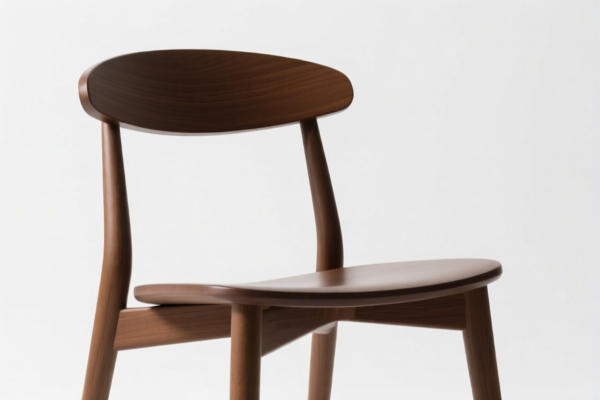
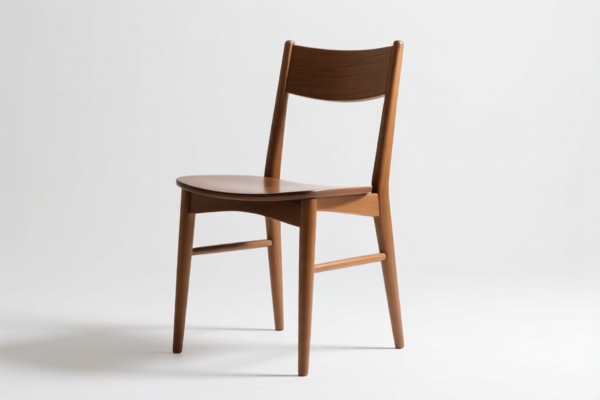
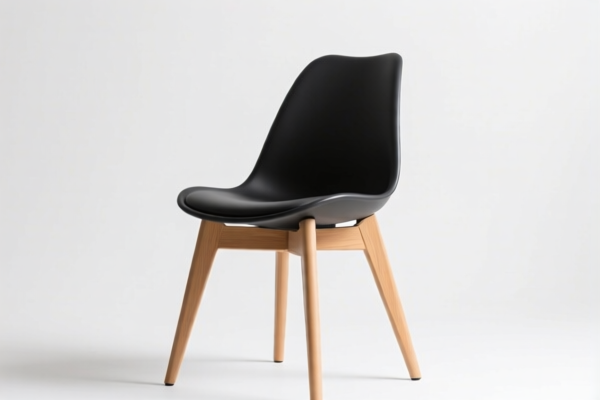
AI Analysis
🪑 Rotating Chair (Office & Household Seating Solutions)
🌐 HS Code Reference & Customs Clearance Guide | 2026 Latest Tariff Analysis | Professional Clearance Strategy
📌 I. Product Definition & Classification: Do You Truly Understand "Rotating Chairs"?
Rotating chairs are essential components of modern office ergonomics and contemporary home interiors. In international trade, their classification depends heavily on their primary function, material composition, and structural features (such as height adjustability). They are generally categorized under Chapter 94 (Furniture), specifically within headings for seats (9401) or other furniture (9403).
⚠️ Key Distinction Points:
- Office-Specific vs. General Purpose: If the chair is explicitly designed for office use (e.g., ergonomic, adjustable height, swivel base), it often falls under 9401 (Seats) or specific sub-headings for office furniture.
- Material Composition:
- Metal Frame: If the primary structure is metal, it may fall under 9403.10 (Metal Furniture) or 9401.79 (Metal-seated chairs).
- Plastic/Composite: If made primarily of plastic components or with a plastic frame, it may fall under 9403.70 (Plastic Furniture).
- General Seating: Simple rotating chairs without specific office ergonomics might fall under 9401.39 (Seats with wooden frames) or 9401.69 (Other seats).
📦 II. HS Code Classification Details (2026 Latest Tariff Authority Comparison)
| HS Code | Product Description | Application Scenario | Primary Material/Structure |
|---|---|---|---|
9403.10.00.40 |
Other furniture of metal | Office chairs with metal frames; robust industrial-grade office seating | ✅ Metal Frame |
9401.39.00.30 |
Seats with wooden frames, other | Rotating chairs with adjustable height; versatile for home or office | ✅ Wood/Composite Frame |
9403.70.80.20 |
Other furniture of plastics | Office chairs made of plastic components or plastic-metal hybrids | ✅ Plastic/Composite |
9401.69.60.31 |
Other seats, with wooden frame | Folding chairs or general seating with wooden or metal-wood hybrid frames | ✅ Wood/Metal Hybrid |
9401.79.00.50 |
Other seats, with metal frame | Rotating or fixed chairs with metal frame structures; general seating | ✅ Metal Frame |
🔍 Key Reminder:
- Office Chairs: Typically classified under 9403.10 (Metal) or 9401.39 (if wood/adjustable) depending on the specific construction.
- Material Conflict: Ensure the declared material matches the HS code. For example, a "Metal Frame Chair" should not be declared as "Plastic Furniture."
- Folding vs. Rotating: If the chair has folding capabilities, it may be scrutinized under 9401.69 or 9401.79 depending on the frame material.
💰 III. 2026 Latest Tariff Rate Breakdown (Including Surtaxes & Policy Add-ons)
✅ Applicable Country: United States (US)
✅ Origin: China (CN)
✅ Effective Date: 2025 onwards (including subsequent imports)
🎯 1. 9403.10.00.40 —— Metal Furniture (Office Chairs)
| Item | Content |
|---|---|
| Base Tariff | 0.0% (ad valorem) |
| Section 301 Surcharge | +25.0% |
| Section 122 Surtax | +10.0% |
| Steel/Aluminum/Copper Surtax | +50.0% |
| Total Tax Rate | 85.0% |
| Tax Calculation | CIF Value × 85.0% |
| De Minimis Exemption | ❌ Not Eligible (deny_de_minimis) |
| Legal Basis Path | Section 301 → Section 122 → Steel/Aluminum Surcharge |
📌 Explanation:
- This is the highest tariff bracket among the listed codes.
- The +50% Steel/Aluminum/Copper Surtax applies if the chair contains significant metal components subject to these specific trade remedies.
- Combined with Section 301 (25%) and Section 122 (10%), the total burden is 85%.
- Critical Impact: This makes importing metal office furniture from China extremely costly. Consider alternative sourcing or supply chain restructuring.
🎯 2. 9401.39.00.30 —— Seats with Wooden Frames (Adjustable Height)
| Item | Content |
|---|---|
| Base Tariff | 0.0% |
| Section 301 Surcharge | +25.0% |
| Section 122 Surtax | +10.0% |
| Total Tax Rate | 35.0% |
| Tax Calculation | CIF Value × 35.0% |
| De Minimis Exemption | ❌ Not Eligible |
| Legal Basis Path | Section 301 → Section 122 |
📌 Note:
- This code is suitable for rotating chairs with height adjustment features but without heavy metal frame surcharges.
- Total Rate: 35% is significantly lower than the 85% for metal furniture.
- Ideal for chairs where the primary frame is wood or where metal components are minimal and not subject to the steel/aluminum surcharge.
🎯 3. 9403.70.80.20 —— Plastic Furniture (Office Chairs)
| Item | Content |
|---|---|
| Base Tariff | 0.0% |
| Section 301 Surcharge | +25.0% |
| Section 122 Surtax | +10.0% |
| Total Tax Rate | 35.0% |
| Tax Calculation | CIF Value × 35.0% |
| De Minimis Exemption | ❌ Not Eligible |
| Legal Basis Path | Section 301 → Section 122 |
📌 Note:
- Applies to chairs made of plastic or plastic-metal combinations where the plastic component is dominant.
- Avoids the high steel/aluminum surcharge, keeping the rate at 35%.
- Ensure the product description emphasizes "Plastic Furniture" or "Plastic Components" to justify this classification.
🎯 4. 9401.69.60.31 —— Other Seats (Wooden Frame)
| Item | Content |
|---|---|
| Base Tariff | 0.0% |
| Section 301 Surcharge | +25.0% |
| Section 122 Surtax | +10.0% |
| Total Tax Rate | 35.0% |
| Tax Calculation | CIF Value × 35.0% |
| De Minimis Exemption | ❌ Not Eligible |
| Legal Basis Path | Section 301 → Section 122 |
📌 Note:
- Suitable for folding chairs or general seating with wooden frames.
- If the chair is primarily marketed as a "folding chair" with wood or wood-metal hybrid frame, this code is appropriate.
- Rate: 35%.
🎯 5. 9401.79.00.50 —— Other Seats (Metal Frame)
| Item | Content |
|---|---|
| Base Tariff | 0.0% |
| Section 301 Surcharge | +25.0% |
| Section 122 Surtax | +10.0% |
| Total Tax Rate | 35.0% |
| Tax Calculation | CIF Value × 35.0% |
| De Minimis Exemption | ❌ Not Eligible |
| Legal Basis Path | Section 301 → Section 122 |
📌 Note:
- Applies to metal frame chairs that do not fall under the specific "Metal Furniture" heading (9403.10) but are classified as "Other Seats."
- Crucial Distinction: Why is this 35% while9403.10.00.40is 85%?
-9403.10is "Other furniture of metal," which often triggers the Steel/Aluminum surcharge (+50%).
-9401.79is "Other seats," which may not trigger the specific steel/aluminum surcharge if the metal frame is not classified as "metal furniture" per se, or if specific exclusions apply.
- Strategy: If possible, classify under 9401.79 instead of 9403.10 to save 50% in tariffs.
🛠️ IV. Customs Clearance Practical Advice (Real-World Pitfall Avoidance Guide)
✅ 1. Document Checklist (Indispensable)
| Document | Required | Description |
|---|---|---|
| ✅ Product Specification Sheet | ✔️ | Dimensions, weight, material breakdown (e.g., "50% Metal, 50% Plastic"), adjustability features |
| ✅ Material Composition Statement | ✔️ | Explicitly state if the frame is steel, aluminum, or plastic. Crucial for Steel/Aluminum surcharge determination. |
| ✅ Product Photos (Including Labels) | ✔️ | Clear images of the chair, base, wheels, and any brand/model labels |
| ✅ Commercial Invoice | ✔️ | Must accurately describe the item as "Rotating Chair" or "Office Chair," not generic "Furniture" |
| ✅ Packing List | ✔️ | Detail contents, especially if assembled or partially assembled |
✅ 2. Declaration Tips (Key Mnemonics)
🔥 "Material Determines Surtax, Frame Type Determines Heading!"
| Scenario | Correct Declaration | Incorrect Practice |
|---|---|---|
| Metal Frame Office Chair | Declare as 9401.79.00.50 (Seat) if possible to avoid 50% surcharge |
Declaring as 9403.10.00.40 (Metal Furniture) → 85% Tax |
| Plastic/Composite Chair | Declare as 9403.70.80.20 (Plastic Furniture) |
Declaring as Metal → Unnecessary surcharge |
| Folding Chair | Declare as 9401.69.60.31 (Wooden Frame) or 9401.79.00.50 (Metal Frame) |
Generic "Chair" → Misclassification risk |
| Adjustable Height Chair | Highlight "Height Adjustable" in description to support 9401.39.00.30 |
Ignoring features → May be classified incorrectly |
✅ 3. Special Circumstances Handling
| Scenario | Handling Advice |
|---|---|
| Mixed Materials | Provide a detailed material breakdown. If the chair is 60% metal and 40% plastic, consult with a customs broker to see if 9401.79 (Seat) is more favorable than 9403.10 (Metal Furniture). |
| OEM Custom Chairs | Provide design blueprints showing frame material. This helps justify the HS code. |
| Steel/Aluminum Content | If the chair contains >5% steel/aluminum by weight, the 50% surcharge under 9403.10 may apply. Ensure the declaration aligns with the actual material. |
| Precedent Rulings | Check for any USCBP (U.S. Customs and Border Protection) precedent rulings on similar chairs. This can support your classification argument. |
🌍 V. Global Market Comparison (2026 Latest)
| Country/Region | Recommended HS Code | Tariff Rate | Certification Requirements | Notes |
|---|---|---|---|---|
| 🇺🇸 United States | 9401.79.00.50 or 9403.10.00.40 |
35% or 85% | None (General) | High tariffs due to Section 301 & 122. |
| 🇨🇳 China | 9401.79.00.50 |
5% (Import) | CCC (if applicable) | Lower import tariffs. |
| 🇪🇺 European Union | 9401.79.00.50 |
0-4% (General) | CE Mark (if applicable) | No Section 301 surcharge. |
| 🇦🇺 Australia | 9401.79.00.50 |
5% | RCM (if applicable) | No additional surcharges. |
| 🇯🇵 Japan | 9401.79.00.50 |
0-6% | PSE (if applicable) | Lower tariffs. |
📌 Conclusion:
- The United States imposes the highest tariffs on Chinese-made chairs due to Section 301 (25%), Section 122 (10%), and potentially the Steel/Aluminum Surtax (50%).
- Total Tax Can Reach 85% for metal furniture (9403.10).
- To mitigate costs, consider classifying under 9401.79 (35%) if structurally possible, or sourcing from non-China countries to avoid Section 301/122 surcharges.
📌 VI. Common Errors & Pitfall Avoidance (Lessons Learned)
❌ Error 1: Declaring a metal chair as 9403.10.00.40 without considering the 50% Steel/Aluminum surcharge.
👉 Consequence: 85% total tax instead of 35%. Cost Increase: 50%!
❌ Error 2: Misclassifying a plastic chair as "Metal Furniture."
👉 Consequence: Incorrect tariff calculation, potential penalties, and delays.
❌ Error 3: Failing to declare material composition clearly.
👉 Consequence: Customs may reclassify the item, leading to higher tariffs or rejection.
✅ Correct Practice:
"Rotating Office Chair, Metal Frame, Height Adjustable, Model XYZ, CE Certified"
HS Code:9401.79.00.50(if possible to avoid steel surcharge) or9403.10.00.40(if explicitly metal furniture).
🎯 VII. Conclusion: Professional Declaration Saves Money!
🎯 Remember the Mnemonic:
🔹 "Seat over Furniture, Plastic over Metal, 35% over 85%!"
🔹 "HS Code is Destiny, Tax Rate is Profit, Declaration Step by Step!"
📌 Pro Tip:
If your rotating chair is originally from Vietnam, Mexico, Thailand, or Malaysia, you may exempt from Section 301/122 surcharges, reducing the rate to 0-5%.
Action:
📞 Contact a professional customs broker + Provide Product Photos + Apply for HS Code Pre-Ruling
🚀 Let your chairs clear smoothly, expedite transit, and maximize profits!
✨ Professional Customs Clearance Starts with Accurate Classification!
💼 Every Cent of Cost Deserves Precise Calculation!
Customer Reviews
About HS Code Classification
The Harmonized System (HS) is an internationally standardized nomenclature developed by the World Customs Organization (WCO) to classify traded products. Over 200 countries use the HS system as the basis for customs tariffs, trade statistics, and import/export regulations.
Each HS code follows a hierarchical structure:
- Chapter (2 digits) — Broad category of goods (e.g., Chapter 84: Machinery and Mechanical Appliances)
- Heading (4 digits) — More specific grouping within the chapter
- Subheading (6 digits) — Internationally standardized breakdown, used by all WCO member countries
- National subdivisions (8-10 digits) — Country-specific extensions for further classification, such as US HTSUS 10-digit codes
Correct HS code classification is essential for smooth customs clearance, accurate duty payment, and compliance with trade regulations. Misclassification can lead to customs delays, overpayment of duties, or penalties.
When importing from CN to US, the applicable tariff rates may include:
- Most-Favored-Nation (MFN) rate — The standard duty rate applied to WTO members
- General rate — Applied to countries without trade agreements
- Trade remedy duties — Additional tariffs such as Section 301 (anti-dumping), Section 232 (national security), or countervailing duties
The information provided on this page is for reference purposes only. For official classification, please consult with your local customs authority or a licensed customs broker.