Rotating Enamel Ring
CN → US| HS Code | Tariff Rate | Origin | Destination | Doc |
|---|---|---|---|---|
| 7113195025 | 23.0% | CN | US | Official Doc |
| 7117909000 | 28.5% | CN | US | Official Doc |
| 7117909000 | 28.5% | CN | US | Official Doc |
| 9503000090 | 10.0% | CN | US | Official Doc |
| 7113195091 | 15.5% | CN | US | Official Doc |
Product Images
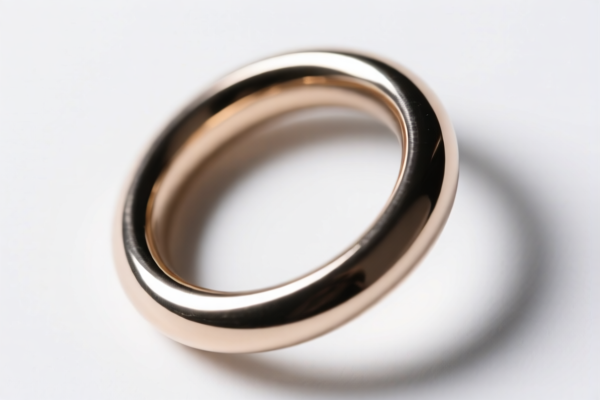
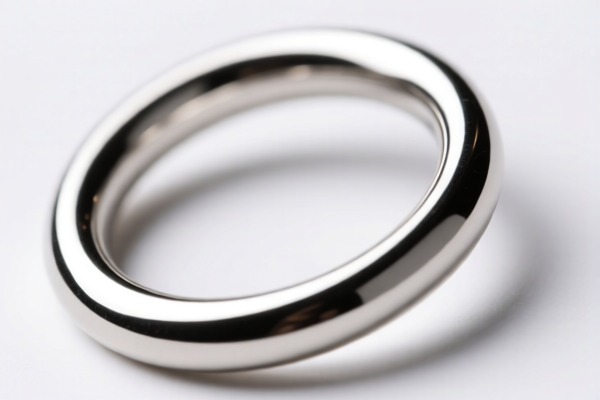
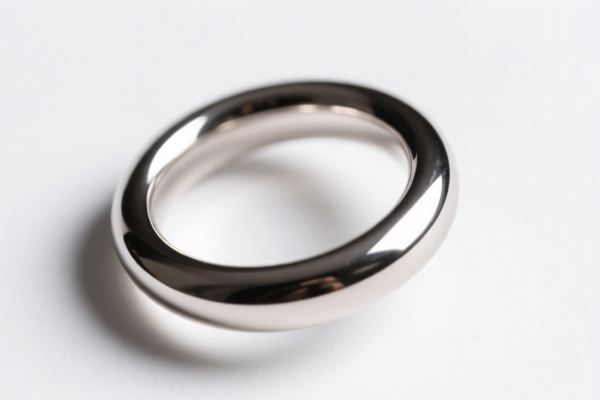
AI Analysis
💍 Rotating Enamel Ring (Rotating Jewelry)
🌐 HS Code Reference & Customs Clearance Guide | 2026 Latest Tariff Analysis | Professional Clearance Strategy
📌 I. Product Definition & Classification: Do You Really Understand "Rotating Enamel Rings"?
The Rotating Enamel Ring is a piece of jewelry featuring a movable component (rotating part) decorated with enamel. In international trade, its classification depends heavily on the precious metal content and the nature of the materials. It can be categorized into three main groups:
- Precious Metal Jewelry: Base material is Gold, Platinum, or other precious metals.
- Imitation Jewelry: Base material is non-precious metal, with enamel as a decorative layer.
- Miscellaneous/Other: If not clearly jewelry, it might fall under general merchandise or toys (though rare for finished rings).
⚠️ Key Distinction Point:
- If the base metal is Gold/Platinum → Belongs to Chapter 71 (Precious Metals).
- If the base metal is Copper/Brass/Alloy → Belongs to 7117 (Imitation Jewelry).
- If the classification is ambiguous or it's treated as a novelty item → Might fall under 9503 (Toys/Models) as a last resort.
📦 II. HS Code Classification Details (2026 Latest Tariff Authority Comparison)
| HS Code | Product Description | Applicable Scenario | Tax Rate (China Origin to US) |
|---|---|---|---|
7113.19.50.91 |
Jewelry of Gold, other than precious stone set | Gold-based ring with enamel, rotating structure | 15.5% |
7113.19.50.25 |
Jewelry of Platinum or other precious metals | Platinum/Precious metal base ring | 23.0% |
7117.90.90.00 |
Imitation jewelry (Other) | Non-precious metal base + Enamel decoration | 28.5% |
9503.00.00.90 |
Other toys, models, accessories | Unclear classification, novelty item, or fallback | 10.0% |
🔍 Key Reminder:
- Gold/Platinum rings fall under 7113. The distinction between50.91and50.25often depends on specific precious metal type (Gold vs. Platinum/Others) and domestic sub-heading rules.
- Imitation rings fall under 7117. This is the most common for fashion jewelry.
- Toy/Model (9503) is a high-risk fallback. Only use if customs authorities do not recognize it as jewelry, which is rare for rings.
💰 III. 2026 Latest Tariff Rate Details (Including Additional Taxes & Policy Add-ons)
✅ Applicable Country: United States (US)
✅ Origin: China (CN)
✅ Effective Time: 2025年11月10日起 (Including subsequent imports)
🎯 1. 7113.19.50.91 —— Gold Jewelry (Rotating Enamel Ring)
| Item | Content |
|---|---|
| Base Tariff | 5.5% |
| Section 301 Tariff | 0.0% |
| IEEPA Tariff (Section 122) | +10.0% |
| Total Tax Rate | 15.5% |
| Tax Calculation | CIF Value × 15.5% |
| De Minimis Exemption | ❌ Not Eligible (Deny De Minimis) |
| Legal Basis Path | IEEPA:9903.01.24 → USITC:7113.19.50.91 |
📌 Explanation:
- Base 5.5%: Standard tariff for gold jewelry.
- Section 122 (IEEPA) 10%: Additional tariff for certain goods from China.
- No Section 301: Gold jewelry may be exempt from the standard 7.5% Section 301 tariff, but still subject to IEEPA.
- Total 15.5%: A moderate-high rate. Cost-effective compared to imitation jewelry.
🎯 2. 7113.19.50.25 —— Platinum/Precious Metal Jewelry
| Item | Content |
|---|---|
| Base Tariff | 5.5% |
| Section 301 Tariff | +7.5% |
| IEEPA Tariff (Section 122) | +10.0% |
| Total Tax Rate | 23.0% |
| Tax Calculation | CIF Value × 23.0% |
| De Minimis Exemption | ❌ Not Eligible |
| Legal Basis Path | IEEPA:9903.01.24 → USITC:7113.19.50.25 → FOOTNOTE:301 |
📌 Explanation:
- Base 5.5%: Standard tariff.
- Section 301 7.5%: Platinum/other precious metals may be subject to Section 301 tariffs.
- IEEPA 10%: Additional tariff.
- Total 23.0%: Highest rate among precious metals. High cost.
🎯 3. 7117.90.90.00 —— Imitation Jewelry (Most Common for Fashion Rings)
| Item | Content |
|---|---|
| Base Tariff | 11.0% |
| Section 301 Tariff | +7.5% |
| IEEPA Tariff (Section 122) | +10.0% |
| Total Tax Rate | 28.5% |
| Tax Calculation | CIF Value × 28.5% |
| De Minimis Exemption | ❌ Not Eligible |
| Legal Basis Path | IEEPA:9903.01.24 → USITC:7117.90.90.00 → FOOTNOTE:301 |
📌 Explanation:
- Base 11.0%: Higher base rate for imitation jewelry.
- Section 301 7.5%: Standard additional tariff.
- IEEPA 10%: Additional tariff.
- Total 28.5%: Very high rate. Not recommended for cost-sensitive shipments.
🎯 4. 9503.00.00.90 —— Other Toys/Models (Fallback/Controversial)
| Item | Content |
|---|---|
| Base Tariff | 0.0% |
| Section 301 Tariff | 0.0% |
| IEEPA Tariff (Section 122) | +10.0% |
| Total Tax Rate | 10.0% |
| Tax Calculation | CIF Value × 10.0% |
| De Minimis Exemption | ❌ Not Eligible |
| Legal Basis Path | IEEPA:9903.01.24 → USITC:9503.00.00.90 |
📌 Explanation:
- Base 0%: No standard tariff.
- IEEPA 10%: Still subject to IEEPA.
- Total 10.0%: Lowest rate.
- ⚠️ Warning: This classification is risky. Customs may reject it if the item is clearly jewelry. Misclassification can lead to penalties, delays, or forced reclassification with back taxes. Only use if you have a strong legal argument that it is a "toy" or "model" and not jewelry.
🛠️ IV. Customs Clearance Practical Advice (Real-World Pitfall Guide)
✅ 1. Preparation Checklist (Missing Items Not Accepted)
| Material | Must Provide | Description |
|---|---|---|
| ✅ Product Specification Sheet | ✔️ | Include material composition (e.g., "Base: Brass, Plating: Gold, Enamel: Yes"), dimensions, weight. |
| ✅ Material Declaration | ✔️ | Clearly state if it contains Gold/Platinum or is "Fashion Jewelry." |
| ✅ Product Photos (With Label) | ✔️ | Show rotating mechanism, enamel detail, and any hallmarks. |
| ✅ Commercial Invoice | ✔️ | Description: "Rotating Enamel Ring, Fashion Jewelry" or "Gold Ring with Enamel." |
| ✅ Packing List | ✔️ | Show item count, net/gross weight. |
| ✅ Pre-Ruling (Optional) | ✔️ | If classifying under 9503, obtain an Advance Ruling to avoid disputes. |
✅ 2. Declaration Tips (Key Mantra)
🔥 "Precious metal needs proof, imitation needs base, toy claim needs care, rate difference is huge!"
| Scenario | Correct Declaration | Wrong Practice |
|---|---|---|
| High-end Gold/Platinum Ring | 7113.19.50.91 or 50.25 |
Misdeclare as imitation → Penalty |
| Fashion Ring (Alloy Base) | 7117.90.90.00 |
Misdeclare as toy → High risk |
| Novelty/Rotating Toy Ring | 9503.00.00.90 |
Declare as jewelry → Missed savings (but risky) |
| Mixed Packaging | Declare as Whole | Split into components → Higher tax |
📌 Advice:
- If the ring is solid gold/platinum, use 7113.
- If it is fashion jewelry, use 7117.
- If you want to try 9503, ensure the product is marketed as a "toy" or "collectible model" and has minimal precious metal content. Be prepared for customs scrutiny.
✅ 3. Special Situation Handling
| Situation | Handling Advice |
|---|---|
| OEM Custom Rings | Provide design drawings and material specs. Avoid vague terms like "Jewelry." |
| Rotating Mechanism | Clarify if it's a functional part or decorative. If decorative, it's jewelry. |
| Enamel Coating | Enamel is considered a decoration, not a base material. Base metal determines classification. |
| High-Value Shipments | Consider Advance Ruling to lock in HS Code and avoid disputes. |
🌍 V. Global Market Customs Clearance Comparison (2026 Latest)
| Country/Region | Recommended HS Code | Tariff (China Origin) | Certification Requirements | Notes |
|---|---|---|---|---|
| 🇺🇸 United States | 7117.90.90.00 |
28.5% | None specific | High tax due to 301 + IEEPA |
| 🇨🇳 China | 7117.90.90.00 |
11.0% | N/A | No additional tariffs |
| 🇪🇺 EU | 7117.90.00 |
0% (if not precious) | REACH, RoHS | Low tax if non-precious |
| 🇦🇺 Australia | 7117.90.90.00 |
5% | ACMA (if electronic) | Moderate tax |
| 🇯🇵 Japan | 7117.90.00 |
0% | PSE (if electronic) | Low tax |
📌 Conclusion:
- US is the most expensive market due to additional tariffs.
- EU and Japan offer lower tariffs for imitation jewelry.
- Strategy: If targeting the US, consider precious metal classification (if applicable) for lower rates, or accept the 28.5% cost for fashion jewelry. Avoid 9503 unless you have a strong legal basis.
📌 VI. Common Mistakes & Pitfalls (Blood-Teaching Lessons)
❌ Mistake 1: Declaring a gold ring as "imitation jewelry" to save tax.
👉 Consequence: Customs inspection reveals gold content → Fines, seizure, and blacklisting.
❌ Mistake 2: Declaring a fashion ring as "toy" to get 10% tax.
👉 Consequence: Customs rejects → Delay, reclassification to 7117 (28.5%) + penalties.
❌ Mistake 3: Not declaring material composition.
👉 Consequence: Customs assumes worst-case scenario (high tariff) or requires testing → Delays.
❌ Mistake 4: Splitting a single ring into "metal" and "enamel" for separate declaration.
👉 Consequence: Total tax exceeds 50% due to component classification.
✅ Correct Approach:
"Rotating Enamel Ring, Fashion Jewelry, Base Metal: Brass, Plating: Rhodium, Description: Rotating Top, Enamel Decorated, HS Code: 7117.90.90.00"
🎯 VII. Conclusion: Professional Classification Saves Money!
🎯 Remember the Mantra:
🔹 "Gold/Platinum: 15-23%, Imitation: 28.5%, Toy: 10% (Risky)"
🔹 "HS Code Determines Cost, Misclassification Costs Thousands!"
📌 Pro Tip:
- If your ring is not made of precious metals, consider reclassifying if it truly functions as a toy (e.g., for children's crafts, not wear).
- For fashion jewelry, the 28.5% rate is unavoidable in the US. Factor this into your pricing.
- Advance Ruling: If shipping high volumes, apply for an Advance Ruling from CBP to confirm the HS Code.
📣 Act Now:
📞 Contact a professional customs broker + Provide product details + Apply for HS Code Pre-ruling
🚀 Ensure smooth clearance, efficient logistics, and maximized profits!
✨ Professional Clearance Starts with Accurate Classification!
💼 Every dollar of cost deserves precise calculation!
Customer Reviews
About HS Code Classification
The Harmonized System (HS) is an internationally standardized nomenclature developed by the World Customs Organization (WCO) to classify traded products. Over 200 countries use the HS system as the basis for customs tariffs, trade statistics, and import/export regulations.
Each HS code follows a hierarchical structure:
- Chapter (2 digits) — Broad category of goods (e.g., Chapter 84: Machinery and Mechanical Appliances)
- Heading (4 digits) — More specific grouping within the chapter
- Subheading (6 digits) — Internationally standardized breakdown, used by all WCO member countries
- National subdivisions (8-10 digits) — Country-specific extensions for further classification, such as US HTSUS 10-digit codes
Correct HS code classification is essential for smooth customs clearance, accurate duty payment, and compliance with trade regulations. Misclassification can lead to customs delays, overpayment of duties, or penalties.
When importing from CN to US, the applicable tariff rates may include:
- Most-Favored-Nation (MFN) rate — The standard duty rate applied to WTO members
- General rate — Applied to countries without trade agreements
- Trade remedy duties — Additional tariffs such as Section 301 (anti-dumping), Section 232 (national security), or countervailing duties
The information provided on this page is for reference purposes only. For official classification, please consult with your local customs authority or a licensed customs broker.