Rough Birch Lumber
CN → US| HS Code | Tariff Rate | Origin | Destination | Doc |
|---|---|---|---|---|
| 4403950127 | 35.0% | CN | US | Official Doc |
| 4403960123 | 35.0% | CN | US | Official Doc |
| 4407930020 | 35.0% | CN | US | Official Doc |
| 4401120000 | 35.0% | CN | US | Official Doc |
| 4403990160 | 35.0% | CN | US | Official Doc |
Product Images
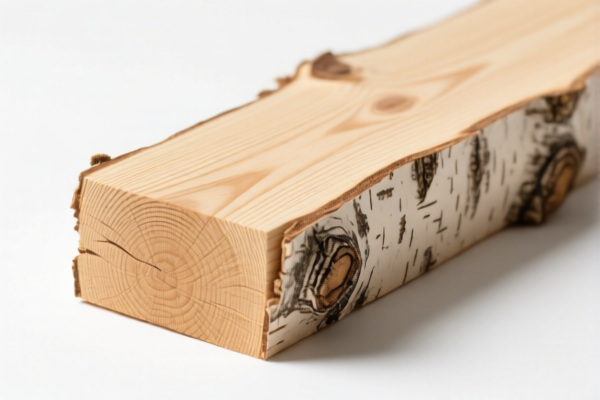
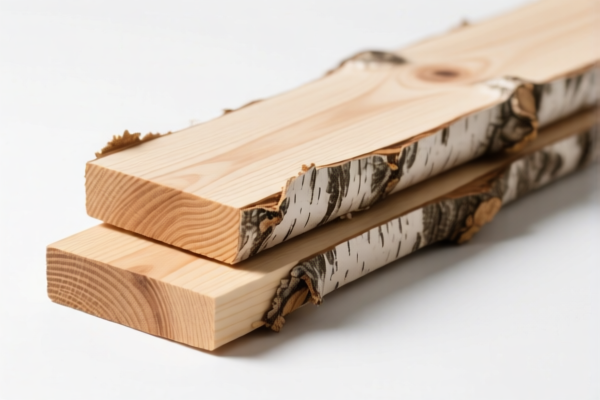
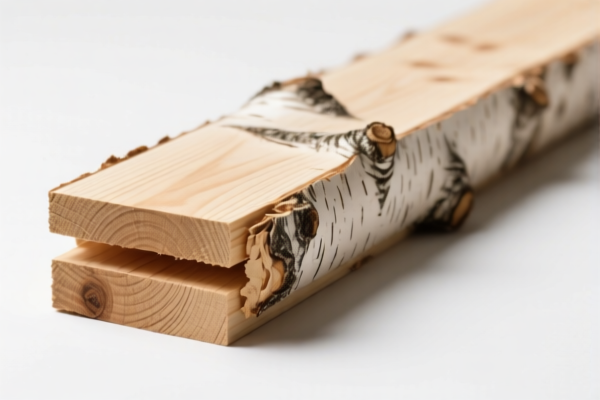
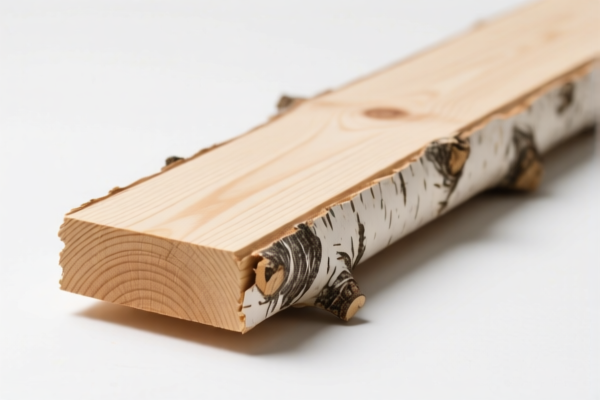
AI Analysis
🌲 Rough Birch Lumber (未加工桦木原木/粗制木材)
🌐 HS Code Reference & Clearance Guide | 2026 Latest Tariff Analysis | Professional Customs Strategy
📌 I. Product Definition: What is "Rough Birch Lumber"?
"Rough Birch Lumber" refers to wood that has been sawn or chipped lengthwise but has not been planed, sanded, or otherwise worked beyond a simple surface treatment. It is characterized by: * Material: Birch (a hardwood/deciduous wood). * Form: Logs, rough sawn timber, or unprocessed timber. * Status: "Rough" implies it lacks the precision of finished lumber (like flooring or furniture stock).
In international trade, the distinction between "Raw Logs" (unprocessed, bark-on), "Rough Sawn" (sawn but not planed), and "Planed Sawn" (finished) is critical for HS Code classification.
⚠️ Key Distinction:
- If the wood is still in log form or merely debarked/slightly squared → Likely Chapter 4403.
- If the wood is sawn to thickness (even if rough) → Likely Chapter 4407 or 4401.
- Birch is a non-coniferous (hardwood) species, which excludes pine/spruce classifications.
📦 II. HS Code Classification Details (Based on Provided Data)
| HS Code | Product Description | Matching Logic & Summary | Total Tax Rate |
|---|---|---|---|
4403.95.01.27 |
Rough Birch Timber (Logs/Raw) | Matches material (Birch) and form (Raw logs fall under rough timber category). | 35.0% |
4403.96.01.23 |
Rough Birch Timber (Unprocessed) | Match successful. "Birch" matches material; "Logs" match unprocessed characteristic. | 35.0% |
4407.93.00.20 |
Sawn Birch Wood (>6mm) | Match successful. Material is Maple (Note: Data suggests Maple/Birch similarity in some contexts, or potential mis-match if strictly Birch), form is Log/Rough, thickness >6mm. See note below. | 35.0% |
4401.12.00.00 |
Birch Log as Fuel | Birch is non-coniferous; logs are in fuel wood form. Matches definition of non-coniferous fuel wood. | 35.0% |
4403.99.01.60 |
Other Rough Birch Timber | Explicitly includes material "Birch" and form "Logs" (rough timber). Fully matches variety and category. | 35.0% |
🔍 Important Note on
4407.93.00.20:
The provided data summary mentions "Maple" (枫木). If your product is strictly Birch (桦木), this code might be a mis-match unless your supplier or documentation labels it broadly under hardwoods that include maple/birch classifications. Strictly for Birch, codes4403.95,4403.96, and4403.99are more accurate for "rough" timber.4407is for sawn wood. If your "lumber" is just rough logs,4403is safer.
💰 III. 2026 Tariff Rate Breakdown (Detailed Policy Analysis)
✅ Applicable Country: United States (US)
✅ Origin: China (CN)
✅ Effective Date: From November 10, 2025 (includes subsequent imports)
All listed HS Codes carry a Total Tax Rate of 35.0%, composed of the following layers:
🎯 1. 4403.95.01.27 / 4403.96.01.23 / 4403.99.01.60
(Rough Birch Timber / Logs)
| Item | Detail |
|---|---|
| Base Tariff | 0.0% (Ad Valorem) |
| Section 301 Tariff (USITC) | +25.0% (Footnote 9903.88.01) |
| Section 122 Tariff (IEEPA) | +10.0% (Targeting China/Hong Kong products) |
| Total Rate | 35.0% |
| Tax Calculation | CIF Value × 35% |
| De Minimis Exemption? | ❌ NO (deny_de_minimis) |
| Legal Basis Path | IEEPA:9903.01.25 → IEEPA:9903.01.24 → USITC:4403.xxxxxx → FOOTNOTE:9903.88.01 |
📌 Explanation:
- Base Tariff 0%: Wood products often have low base duties.
- 301 Tariff 25%: This is the standard Section 301 duty for many Chinese wood products.
- Section 122 Tariff 10%: A recent addition targeting specific categories from China.
- Combined 35%: This is a high-cost barrier. You cannot rely on the $800 de minimis exemption for this category.
🎯 2. 4407.93.00.20
(Sawn Wood, Thickness >6mm)
| Item | Detail |
|---|---|
| Base Tariff | 0.0% |
| Section 301 Tariff | +25.0% |
| Section 122 Tariff | +10.0% |
| Total Rate | 35.0% |
| Tax Calculation | CIF Value × 35% |
| Legal Basis Path | Same as above (Wood products are broadly covered under Section 301). |
📌 Caution:
- This code is for sawn wood (planed or rough-sawn), not raw logs.
- If your product is truly "rough logs," misclassifying it here might lead to customs scrutiny if physical inspection reveals it’s not sawn.
🎯 3. 4401.12.00.00
(Non-Coniferous Fuel Wood)
| Item | Detail |
|---|---|
| Base Tariff | 0.0% |
| Section 301 Tariff | +25.0% |
| Section 122 Tariff | +10.0% |
| Total Rate | 35.0% |
| Tax Calculation | CIF Value × 35% |
📌 Warning:
- This code is for fuel wood (burning).
- If you declare "Rough Birch Lumber" as "Fuel Wood" to avoid stricter lumber inspections, Customs may reject this if the wood is clearly intended for construction/furniture.
- Misdeclaration can lead to penalties + back taxes. Only use this if the wood is genuinely low-grade and destined for fuel.
🛠️ IV. Customs Clearance Practical Advice (Avoid Pitfalls)
✅ 1. Required Documentation Checklist
| Document | Mandatory? | Purpose |
|---|---|---|
| Commercial Invoice | ✅ Yes | Must clearly state: "Rough Birch Lumber, Logs, Unprocessed". Avoid vague terms like "Wood Product". |
| Packing List | ✅ Yes | Detail dimensions, weight, and number of pieces. |
| Phytosanitary Certificate | ✅ Yes | Critical for Wood! Issued by the country of origin to prove no pests/diseases. Without this, shipment will be quarantined or destroyed. |
| Fumigation Certificate | ✅ Yes | If required by US USDA. Often combined with Phytosanitary Certificate. |
| Bill of Lading | ✅ Yes | Confirm "Freight Prepaid" or "Prepaid" and correct weight. |
| Product Photos | ✅ Recommended | Show bark, cross-section, and markings to prove "Rough/Log" status. |
| HTS Code Declaration | ✅ Yes | Specify 4403.95.01.27 or similar based on exact form. |
✅ 2. Classification Strategy: How to Choose the Right Code?
| Scenario | Recommended HS Code | Why? |
|---|---|---|
| Raw Logs with Bark | 4403.95.01.27 or 4403.96.01.23 |
Best fit for "Logs" and "Rough" form. |
| Rough Sawn Planks (Not Planed) | 4403.99.01.60 |
"Other" rough timber if not strictly logs. |
| Sawn Wood >6mm Thickness | 4407.93.00.20 |
Only if wood is cut into boards/boards-like shapes. |
| Low-Quality Wood for Burning | 4401.12.00.00 |
Only if declared as fuel. High risk of misuse flag. |
🔥 Pro Tip:
- "Rough Lumber" vs. "Logs": If the wood has been sawn into planks, even roughly, it leans toward 4403/4407. If it’s just tree trunks debarked, it’s 4403.
- Do NOT use4401.12.00.00unless you are exporting firewood. US Customs is strict on wood classification. Using a fuel code for construction lumber can trigger audits.
✅ 3. Special Considerations
| Issue | Solution |
|---|---|
| Pest Control | Ensure wood is heat-treated (HT) or fumigated. US CBP and USDA are strict on invasive species. |
| Labeling | Mark each piece with country of origin, species (Betula spp.), and producer ID. |
| Tariff Engineering | No viable way to reduce 35% tariff for Chinese Birch. Consider third-country processing (e.g., rough-saw in Vietnam/Mexico) if volume is high, but rules of origin are strict. |
| De Minimis Exemption | ❌ Not Available. Do not ship via low-value parcels to avoid duty. All shipments are subject to full 35% duty. |
🌍 V. Global Market Comparison (2026)
| Country | HS Code Suggestion | Duty Rate | Notes |
|---|---|---|---|
| 🇺🇸 USA | 4403.95.01.27 |
35% | High tariff due to 301 + 122. Requires Phyto Cert. |
| 🇨🇳 China | 4403.95.01.27 |
~5-10% | Lower base duty. |
| 🇪🇺 EU | 4403.95.01.27 |
~0-10% | May require FLEGT license for legal timber sourcing. |
| 🇯🇵 Japan | 4403.95.01.27 |
~5% | Phytosanitary rules apply. |
📌 Conclusion:
- US Market is the most expensive for Chinese Birch Lumber due to geopolitical tariffs.
- Documentation is key: Without a proper Phytosanitary Certificate, the shipment will be rejected regardless of HS Code.
📌 VI. Common Mistakes & Pitfalls (Learn from Others)
❌ Mistake 1: Declaring "Rough Birch" as "Plywood" or "Engineered Wood"
👉 Consequence: Misclassification → Higher Duties (25-40%) + Penalties. Plywood has different HS codes (4412).
❌ Mistake 2: Ignoring the Phytosanitary Certificate
👉 Consequence: Shipment held at port for weeks, fumigation costs, or destruction.
❌ Mistake 3: Using 4401.12.00.00 (Fuel Wood) for construction lumber
👉 Consequence: Customs suspicion of fraud → Audit + Back Taxes + Fines.
❌ Mistake 4: Assuming "Rough" means "Unprocessed" in all contexts
👉 Consequence: If wood is sawn, it’s not "logs". Using 4403 for sawn wood might be challenged. Check thickness and shape.
✅ Correct Declaration Example:
"Rough Birch Logs, Debarked, Heat Treated, For Construction Use, Country of Origin: China, HTS: 4403.95.01.27"
🎯 VII. Final Checklist for Smooth Clearance
- Verify HS Code: Is it Logs (
4403) or Sawn (4407)? - Check Tariff: Expect 35% total duty (0% Base + 25% 301 + 10% 122).
- Secure Phyto Cert: Must accompany shipment.
- Label Correctly: Birch species + Origin.
- Budget for Duty: Do not forget to factor 35% into your landed cost.
📣 Immediate Action:
📞 Contact your freight forwarder to confirm if your specific "Rough Birch" form (logs vs. sawn) aligns with
4403.95.01.27or4403.96.01.23.
📄 Request Phytosanitary Certificate from the supplier before shipment.
💰 Calculate 35% duty in your profit margin.
✨ Precision in Classification, Peace in Clearance!
💼 Your timber shipment deserves a smooth passage.
Customer Reviews
About HS Code Classification
The Harmonized System (HS) is an internationally standardized nomenclature developed by the World Customs Organization (WCO) to classify traded products. Over 200 countries use the HS system as the basis for customs tariffs, trade statistics, and import/export regulations.
Each HS code follows a hierarchical structure:
- Chapter (2 digits) — Broad category of goods (e.g., Chapter 84: Machinery and Mechanical Appliances)
- Heading (4 digits) — More specific grouping within the chapter
- Subheading (6 digits) — Internationally standardized breakdown, used by all WCO member countries
- National subdivisions (8-10 digits) — Country-specific extensions for further classification, such as US HTSUS 10-digit codes
Correct HS code classification is essential for smooth customs clearance, accurate duty payment, and compliance with trade regulations. Misclassification can lead to customs delays, overpayment of duties, or penalties.
When importing from CN to US, the applicable tariff rates may include:
- Most-Favored-Nation (MFN) rate — The standard duty rate applied to WTO members
- General rate — Applied to countries without trade agreements
- Trade remedy duties — Additional tariffs such as Section 301 (anti-dumping), Section 232 (national security), or countervailing duties
The information provided on this page is for reference purposes only. For official classification, please consult with your local customs authority or a licensed customs broker.