Rough Birch Wood
CN → US| HS Code | Tariff Rate | Origin | Destination | Doc |
|---|---|---|---|---|
| 4403950127 | 35.0% | CN | US | Official Doc |
| 4403960123 | 35.0% | CN | US | Official Doc |
| 4403960123 | 35.0% | CN | US | Official Doc |
| 4403960130 | 35.0% | CN | US | Official Doc |
Product Images
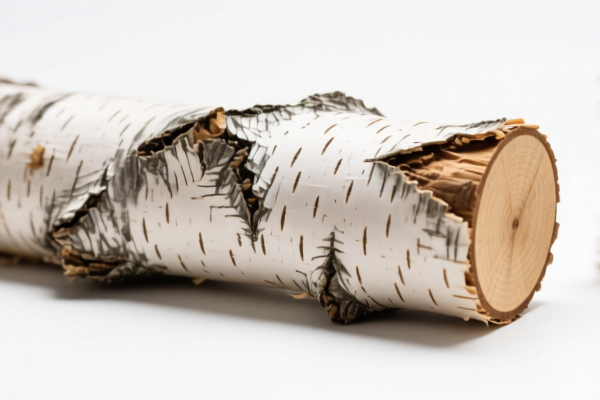
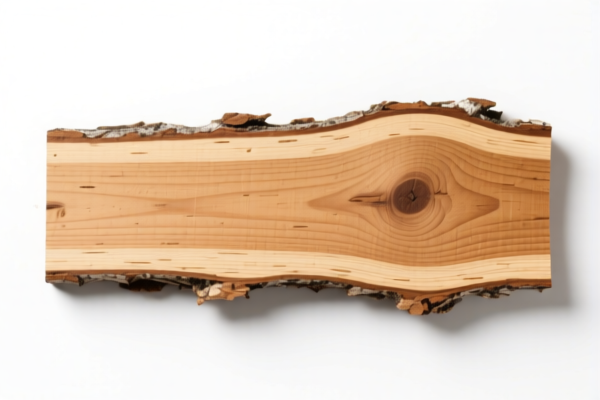
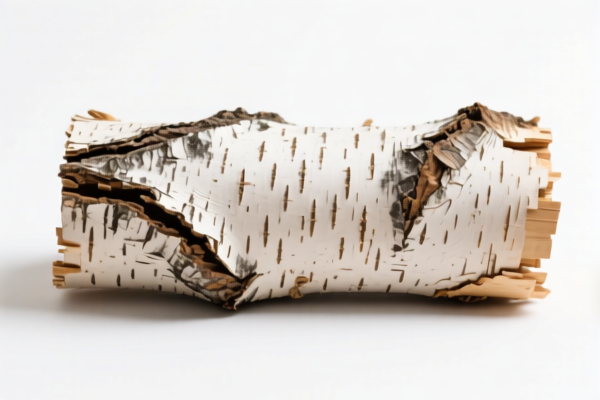
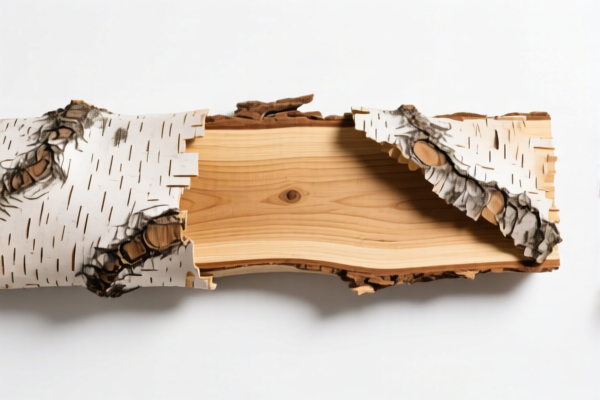
AI Analysis
🌲 Rough Birch Wood (Unprocessed Timber)
🌐 HS Code Reference & Customs Clearance Guide | 2026 Latest Tariff Analysis | Professional Entry Strategy
📌 I. Product Definition & Classification: Do You Truly Understand "Birch Wood"?
Rough Birch Wood refers to birch timber that has been sawn, chipped, or roughly worked but not transformed into planks, veneers, or finished furniture. In international trade, it is classified based on its state of processing (raw, rough-sawn, or rounded logs) and species (Birch).
- Primary Category: Non-coniferous wood (Hardwood).
- Processing State: "Rough" implies it is not planed, polished, or joined. It includes logs, rounded timber, or roughly squared timber.
- Key Distinction: If the wood is planed, sanded, or made into specific shapes (like flooring or moldings), it falls under different codes (e.g., 4407 or 4421). This guide strictly covers the "Rough/Unprocessed" state as per the provided data.
⚠️ Critical Classification Point:
- If the wood is in log form (cylindrical, stripped of bark, or slightly shaped) →归入 4403.95.01.27 or 4403.96.01.23 (depending on specific shape definitions).
- If the wood is roughly squared or chipped (but not planed) →归入 4403.96.01.23 or 4403.96.01.30.
- Do NOT confuse with "Birch Veneer Sheets" (4408) or "Birch Plywood" (4412).
📦 II. HS Code Classification Details (2026 Latest Tariff Alignment)
Based on the provided data, there are three specific HS Codes relevant to Rough Birch Wood. All share the same tariff structure but differ in the precise physical description of the "rough" state.
| HS Code | Product Description | Application Scenario | Physical State |
|---|---|---|---|
4403.95.01.27 |
Matches Birch material & Log/Original Form | Round logs, unprocessed birch trunks, raw timber ready for sawmills | ✅ Logs/Raw |
4403.96.01.23 |
Matches Birch material & Rough Log/Timber | Roughly sawn birch, chipped timber, non-coniferous rough wood | ✅ Rough/Chipped |
4403.96.01.30 |
Matches Birch material & Rough Timber (No Conflict) | Standard rough-sawn birch planks or beams, no conflicting sub-categories | ✅ Rough-Sawn |
🔍 Note:
-4403.95.01.27is specifically for Birch in a Log/Raw state.
-4403.96.01.23and4403.96.01.30are for Birch in a Rough Timber state (more processed than logs, but less than finished wood).
- The code4403.96.01.23appears twice in the data with slight description variations ("Rough Log" vs. "Other Category Fallback"). In practice, this indicates a catch-all for rough birch timber that doesn't fit the exact "Log" definition but is still rough.
💰 III. 2026 Latest Tariff Rate Breakdown (Including Surtaxes & Policy Add-ons)
✅ Applicable Country: United States (US)
✅ Country of Origin: China (CN)
✅ Effective Date: From November 10, 2025 (and subsequent imports)
All three HS Codes (4403.95.01.27, 4403.96.01.23, 4403.96.01.30) have the identical tax structure for Chinese-origin Rough Birch Wood.
🎯 1. 4403.95.01.27 – Rough Birch Logs
| Item | Content |
|---|---|
| Base Tariff | 0% (ad valorem) |
| Section 301 Surtax | +25% (USITC Footnote 9903.88.01) |
| IEEPA Surtax | +10% (Targeting China/Hong Kong products, effective Nov 10, 2025) |
| Total Tax Rate | 35.0% |
| Tax Calculation | CIF Value × 35% |
| De Minimis Eligibility | ❌ No (deny_de_minimis) |
| Legal Basis Path | IEEPA:9903.01.25 → IEEPA:9903.01.24 → USITC:4403.95.01.27 → FOOTNOTE:9903.88.01 |
📌 Explanation:
- Base 0%: The standard MFN (Most Favored Nation) rate for hardwood logs/timber is often low or zero.
- Section 301 (25%): Applied to "Wood and Wood Articles" from China.
- IEEPA (10%): Additional emergency surcharge on Chinese wood products.
- Total 35%: This is a high tariff that significantly impacts profitability.
🎯 2. 4403.96.01.23 – Rough Birch Timber (General/Rough Log)
| Item | Content |
|---|---|
| Base Tariff | 0% |
| Section 301 Surtax | +25% |
| IEEPA Surtax | +10% |
| Total Tax Rate | 35.0% |
| Tax Calculation | CIF × 35% |
| De Minimis Eligibility | ❌ No |
| Legal Basis Path | IEEPA:9901.25 → IEEPA:9903.01.24 → USITC:4403.96.01.23 → FOOTNOTE:9903.88.01 |
📌 Note:
- Whether classified as "Rough Log" or "Rough Timber," the tax burden is identical.
- Ensure your description matches the physical state to avoid customs reclassification penalties.
🎯 3. 4403.96.01.30 – Rough Birch Timber (No Conflict)
| Item | Content |
|---|---|
| Base Tariff | 0% |
| Section 301 Surtax | +25% |
| IEEPA Surtax | +10% |
| Total Tax Rate | 35.0% |
| Tax Calculation | CIF × 35% |
| De Minimis Eligibility | ❌ No |
| Legal Basis Path | IEEPA:9903.01.25 → IEEPA:9903.01.24 → USITC:4403.96.01.30 → FOOTNOTE:9903.88.01 |
📌 Note:
- This code is used when there is no conflict with other sub-categories. It is a "clean" classification for standard rough birch.
🛠️ IV. Customs Clearance Practical Advice (Field Pitfall Avoidance Guide)
✅ 1. Required Documentation Checklist (All or Nothing)
| Document | Required | Explanation |
|---|---|---|
| ✅ Phytosanitary Certificate | ✔️ | Mandatory. Proves wood is free from pests. Issued by origin country's plant protection agency. |
| ✅ Fumigation Certificate | ✔️ | Proof of treatment (Methyl Bromide or Heat Treatment). Must match ISPM 15 standards. |
| ✅ Commercial Invoice | ✔️ | Clearly state: "Rough Birch Wood, Species: Betula, State: Raw/Rough Sawn, Origin: CN" |
| ✅ Packing List | ✔️ | Detail gross/net weight, dimensions, and container number. |
| ✅ Bill of Lading (B/L) | ✔️ | Consignee/Notify Party details must match invoice. |
| ✅ Wood Declaration Form | ✔️ | Specific to US CBP for wood products, declaring compliance with Lacey Act. |
✅ 2. Declaration Tips (Key Mantras)
🔥 "Log vs. Timber: Describe Shape, Not Just 'Wood'!"
| Scenario | Correct Declaration | Wrong Practice |
|---|---|---|
| Round, cylindrical birch | 4403.95.01.27 - "Birch Logs" |
Calling it "Birch Planks" → Wrong HS, delays |
| Roughly squared, not planed | 4403.96.01.23 or .30 - "Rough Birch Timber" |
Calling it "Sawn Timber" (implies planed) |
| Bark still on | Specify "Unbarked Birch" or "Barked Birch" | Omitting bark status → Phytosanitary risk |
| Treated wood | Mention "Fumigated per ISPM 15" | Ignoring treatment → Rejection/Deportation |
✅ 3. Special Handling
| Scenario | Handling Advice |
|---|---|
| Lacey Act Compliance | Provide Scientific Name (Betula spp.) and Country of Harvest. Failure to declare can lead to severe fines. |
| Pest Inspection | US CBP & USDA may inspect at port. Ensure wood is clean, dry, and free of soil/insects. |
| Mixed Containers | If mixing birch with other woods, declare each species separately with its own HS code. |
| Value Declaration | Declaring low value to reduce 35% tax is high risk. US CBP cross-references global pricing. |
🌍 V. Global Main Market Customs Comparison (2026 Latest)
| Country/Region | Recommended HS Code | Tariff (China Origin) | Certification Required | Notes |
|---|---|---|---|---|
| 🇺🇸 USA | 4403.95.01.27 / 4403.96.01.23 |
35% | ISPM 15, Lacey Act Declaration | High tax burden. Strict pest control. |
| 🇨🇳 China | 4403.99 |
5-10% | Phytosanitary | Lower tariff, but import quotas may apply. |
| 🇪🇺 EU | 4403.95 / 4403.96 |
0-10% | ISPM 15, EUTR | No additional surtaxes, but strict deforestation regulations (EUDR). |
| 🇯🇵 Japan | 4403.95 |
5% | ISPM 15 | Moderate tariff. Focus on moisture content. |
| 🇰🇷 Korea | 4403.95 |
0-5% | ISPM 15 | Free Trade Agreement (FTA) benefits may apply if processed in Korea. |
📌 Conclusion:
- The US market is the most costly for Rough Birch Wood due to the 35% combined tariff.
- Europe and Japan are more affordable but have strict environmental/deforestation compliance requirements.
📌 VI. Common Mistakes & Pitfall Guide (Blood & Tears Lessons)
❌ Mistake 1: Declaring "Birch Wood" without specifying "Rough" or "Log"
👉 Consequence: Customs may reclassify as finished wood (4407) with different tax treatment → Delays & Fines.
❌ Mistake 2: Providing a generic "Phytosanitary Certificate" without ISPM 15 Marking
👉 Consequence: Rejected at port. Wood is burned or returned at exporter's cost.
❌ Mistake 3: Ignoring the Lacey Act (for US imports)
👉 Consequence: Seizure of goods and civil/criminal penalties for non-compliance.
❌ Mistake 4: Under-declaring value to save on the 35% tax
👉 Consequence: Audit, penalty, and blacklisting. The 35% is unavoidable if declared truthfully.
✅ Correct Practice:
"Rough Birch Timber, Species: Betula papyrifera, State: Rough-sawn, Fumigated (ISPM 15), Origin: China, CIF Value: $XXX"
🎯 VII. Conclusion: Precise Classification Saves Money & Time!
🎯 Remember the Mantra:
🔹 "Logs, Rough, or Sawn? Specify Clearly!"
🔹 "35% Tax is Inevitable for US; Focus on Compliance!"
🔹 "Phytosanitary + Lacey Act = Smooth Entry!"
📌 Pro Tip:
If your Rough Birch Wood is destined for processing in a Free Trade Zone (FTZ) or exported to a non-US market, consider transshipment to avoid the 35% US tariff initially, then re-export. However, this requires strict documentation to prove non-US consumption.
📣 Immediate Action:
📞 Contact a licensed customs broker + Provide Phytosanitary Certificate + Apply for Pre-Ruling on HS Code
🚀 Let your Birch Wood clear smoothly, avoid delays, and protect your margin!
✨ Professional Customs Clearance Starts with Precise Classification!
💼 Every dollar of cost deserves precise calculation!
Customer Reviews
About HS Code Classification
The Harmonized System (HS) is an internationally standardized nomenclature developed by the World Customs Organization (WCO) to classify traded products. Over 200 countries use the HS system as the basis for customs tariffs, trade statistics, and import/export regulations.
Each HS code follows a hierarchical structure:
- Chapter (2 digits) — Broad category of goods (e.g., Chapter 84: Machinery and Mechanical Appliances)
- Heading (4 digits) — More specific grouping within the chapter
- Subheading (6 digits) — Internationally standardized breakdown, used by all WCO member countries
- National subdivisions (8-10 digits) — Country-specific extensions for further classification, such as US HTSUS 10-digit codes
Correct HS code classification is essential for smooth customs clearance, accurate duty payment, and compliance with trade regulations. Misclassification can lead to customs delays, overpayment of duties, or penalties.
When importing from CN to US, the applicable tariff rates may include:
- Most-Favored-Nation (MFN) rate — The standard duty rate applied to WTO members
- General rate — Applied to countries without trade agreements
- Trade remedy duties — Additional tariffs such as Section 301 (anti-dumping), Section 232 (national security), or countervailing duties
The information provided on this page is for reference purposes only. For official classification, please consult with your local customs authority or a licensed customs broker.