Rough Birch Wood for Furniture
CN → US| HS Code | Tariff Rate | Origin | Destination | Doc |
|---|---|---|---|---|
| 4407960011 | 35.0% | CN | US | Official Doc |
| 4407960013 | 35.0% | CN | US | Official Doc |
| 4403960130 | 35.0% | CN | US | Official Doc |
| 4403960123 | 35.0% | CN | US | Official Doc |
| 4407960011 | 35.0% | CN | US | Official Doc |
Product Images
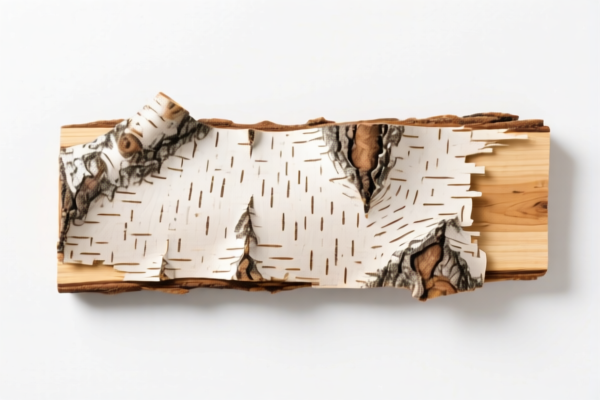
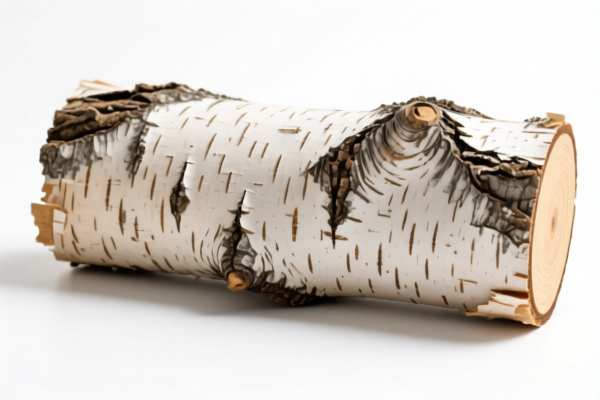
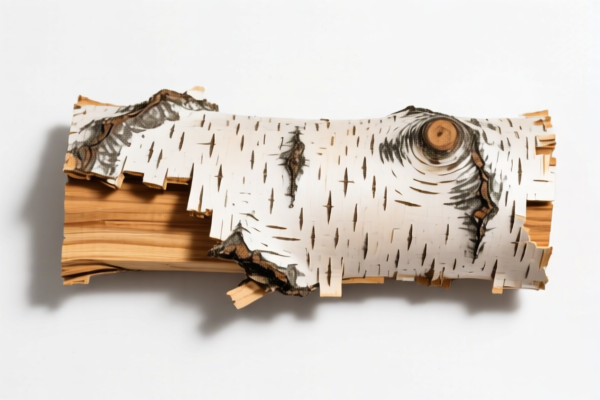
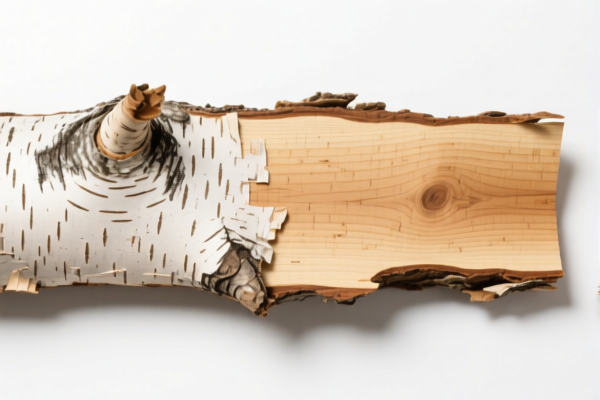
AI Analysis
🌲 Rough Birch Wood for Furniture (Raw Timber & Wood Planks)
🌐 HS Code Reference & Customs Clearance Guide | 2026 Latest Tariff Analysis | Professional Clearance Strategy
📌 I. Product Definition & Classification: Do You Really Understand "Birch Wood"?
Rough Birch Wood is a primary raw material widely used in furniture manufacturing, veneer production, and paper making. In international trade, it is categorized based on its processing state (raw vs. planed) and end-use intent (general vs. specific furniture components). The classification is critical because the distinction between "unworked timber" (Chapter 44.03) and "sawn wood" (Chapter 44.07) determines the applicable HS Code and tariff liability.
Key Distinction:
- Unprocessed/Raw Logs/Squaring: Fits 4403.96 series (Wood not seasoned/planed).
- Sawed/Sliced Primary Processing: Fits 4407.96 series (Wood sawed lengthwise).
⚠️ Critical Note:
- If the wood is merely peeled, debarked, or roughly squared without being sawn to specific thicknesses, it falls under 4403.
- If the wood has been longitudinally sawn or sliced, even if "rough," it falls under 4407.
- All codes listed below carry a high tax burden due to US trade policies against Chinese-origin wood products.
📦 II. HS Code Classification Details (2026 Latest Tariff Authority)
Based on the provided data, here is the breakdown of the applicable HS Codes for "Rough Birch Wood for Furniture":
| HS Code | Product Description | Applicability Scenario | Tax Rate (Total) |
|---|---|---|---|
4403.96.01.30 |
Rough Birch Wood | Unprocessed logs/wood; specifically describes "Birch material" and "Rough form" matching unprocessed timber. | 35.0% |
4403.96.01.23 |
Rough Birch Wood | Unprocessed logs/wood; Birch material, in rough, unpeeled, or debarked state, or roughly squared. | 35.0% |
4407.96.00.11 |
Rough Birch Wood for Furniture | Sawn/Sliced wood; Birch material, rough form, specifically designated for furniture use. | 35.0% |
4407.96.00.13 |
Rough Birch Wood for Furniture | Sawn/Sliced wood; Birch material, rough form, meeting general furniture use requirements. | 35.0% |
4407.96.00.11 |
Rough Birch Wood (Alternative) | Sawn/Sliced wood; Birch material, longitudinally sawn or sliced (primary processing), classified as wood raw material. | 35.0% |
🔍 Important Reminder:
-4403codes apply to wood that has not been sawn lengthwise to the extent of Chapter 44. It includes logs, squaring, or rough slabs.
-4407codes apply to wood that has been sawn, chipped, or sliced lengthwise. Even if the surface is "rough," if it has been sawn to dimensions, it belongs here.
- All listed codes carry a 35% total tax rate for Chinese-origin goods imported into the US.
💰 III. 2026 Latest Tariff Rate Details (Including Surcharges & Policy Add-ons)
✅ Applicable Country: United States (US)
✅ Origin: China (CN)
✅ Effective Time: 2025 Nov 10 onwards (including subsequent imports)
🎯 1. 4403.96.01.30 & 4403.96.01.23 —— Unprocessed Rough Birch Wood
| Item | Content |
|---|---|
| Base Tariff | 0% (ad valorem) |
| USITC Surcharge | +25% (Under USITC Footnote 9903.88.01 / Section 301) |
| IEEPA Surcharge | +10% (Against China/HK products, effective Nov 10, 2025) |
| Total Tax Rate | 35.0% |
| Tax Calculation | CIF Value × 35% |
| De Minimis Exemption | ❌ Not Eligible (deny_de_minimis) |
| Legal Basis Path | IEEPA:9903.01.25 → IEEPA:9903.01.24 → USITC:4403.96.01.30 → FOOTNOTE:9903.88.01 |
📌 Explanation:
- The 25% USITC surcharge is part of the Section 301 tariffs on Chinese wood products.
- The 10% IEEPA surcharge is an additional levy under the International Emergency Economic Powers Act.
- Total 35% is a significant cost that must be factored into your pricing strategy.
🎯 2. 4407.96.00.11 & 4407.96.00.13 —— Sawn Rough Birch Wood for Furniture
| Item | Content |
|---|---|
| Base Tariff | 0% |
| USITC Surcharge | +25% |
| IEEPA Surcharge | +10% |
| Total Tax Rate | 35.0% |
| Tax Calculation | CIF × 35% |
| De Minimis Exemption | ❌ Not Eligible |
| Legal Basis Path | IEEPA:9901.25 → IEEPA:9903.01.24 → USITC:4407.96.00.11 → FOOTNOTE:9903.88.01 |
📌 Note:
- Even if the wood is "for furniture," the raw material nature keeps it under Chapter 44.
- The tax rate is identical to unprocessed wood because the 301 and IEEPA surcharges apply to all Chinese-origin wood products in this category.
🛠️ IV. Customs Clearance Practical Advice (Battle-Tested Pitfall Avoidance)
✅ 1. Required Documentation Checklist (All Mandatory)
| Document | Mandatory? | Description |
|---|---|---|
| ✅ Product Specification Sheet | ✔️ | Must specify: Species (Birch), Processing State (Rough/Sawn/Unprocessed), Dimensions, Moisture Content. |
| ✅ Commercial Invoice | ✔️ | Must clearly state: "Rough Birch Wood" or "Birch Wood Planks," not vague terms like "Wood Parts." |
| ✅ Packing List | ✔️ | Detailed breakdown of weight, volume, and number of bundles. |
| ✅ Phytosanitary Certificate | ✔️ | Critical for Wood! Issued by origin country to prove freedom from pests/diseases. |
| ✅ Fumigation Certificate | ✔️ | Proof of treatment (ISPM 15 standard) if wood is non-manufactured. |
| ✅ Bill of Lading/Air Waybill | ✔️ | Standard shipping documents. |
✅ 2. Declaration Techniques (Key Mantras)
🔥 “Define State, Specify Species, Cite ISPM15, Avoid Vague Labels!”
| Scenario | Correct Declaration | Wrong Practice |
|---|---|---|
| Raw Logs/Rough Sides | 4403.96.01.30 / 4403.96.01.23 |
Misdeclaring as "Furniture Parts" → Wrong HS, High Penalty |
| Sawn Planks (Rough Surface) | 4407.96.00.11 / 4407.96.00.13 |
Calling it "Furniture" directly → Incorrect Classification |
| Wood for Furniture Use | Clearly state "For Furniture Manufacturing" in description | Hiding end-use → Customs may audit for proper classification |
| Vague Name "Wood" | ❌ Never Use | Use "Rough Birch Wood, Sawn" or "Unprocessed Birch Timber" |
✅ 3. Special Situation Handling
| Situation | Handling Advice |
|---|---|
| Mixed Shipments (Birch + Oak) | Declare separately by species. Birch and Oak may have different specific sub-codes, though tax rate is same here. |
| Moisture Content > 20% | Ensure Phytosanitary Certificate reflects current treatment. High moisture may attract pest concerns. |
| Treatment (Fumigation) | Must comply with ISPM 15. Mark the wood with the IPPC logo. No mark = Rejection/Destruction. |
| Value Declaration | Declared value must include CIF (Cost, Insurance, Freight). Under-declaration leads to heavy fines. |
🌍 V. Global Market Comparison (2026 Latest)
| Country/Region | Recommended HS Code | Tariff (China Origin) | Certification Required | Notes |
|---|---|---|---|---|
| 🇺🇸 USA | 4403.96.01.30 / 4407.96.00.11 |
35% | ISPM 15, Phytosanitary | Highest barrier due to 301 + IEEPA tariffs. |
| 🇨🇳 China | 4403.96.01.30 / 4407.96.00.11 |
~5-10% | N/A (Import Duty) | Lower tariffs for domestic or free-trade partners. |
| 🇪🇺 EU | 4403.96 / 4407.96 |
0% (if FSC certified) | FSC/PEFC, EUTR | No Section 301 equivalent, but strict EUTR due diligence. |
| 🇬🇧 UK | 4403.96 / 4407.96 |
0-5% | UKCA, UK EUTR | Post-Brexit rules apply. |
📌 Conclusion:
- The US market is the most expensive for Chinese birch wood due to the 35% total tax rate.
- EU/UK are more favorable if you can provide FSC/PEFC certification and comply with EUTR (European Union Timber Regulation).
- Strategy Consideration: If exporting to the US, calculate if the profit margin can absorb the 35% tariff. Consider transshipment (risky) or sourcing from non-China origins (e.g., Canada, Russia, Europe).
📌 VI. Common Errors & Pitfall Avoidance (Lessons Learned)
❌ Error 1: Declaring "Birch Wood" without specifying "Rough" or "Sawn"
👉 Consequence: Customs may classify under a higher-duty or restricted code → Delay + Inspection.
❌ Error 2: Forgetting ISPM 15 Marking on Pallets/Wood Packaging
👉 Consequence: Rejection at port! Cost of fumigation + storage + re-export.
❌ Error 3: Misclassifying Sawn Wood as "Furniture Parts" (44.07 vs 94.03)
👉 Consequence: If classified as furniture parts incorrectly, it triggers different regulatory requirements. However, raw wood is rarely classified as furniture. Stick to 44.03 or 44.07.
❌ Error 4: Under-declaring Value to Save on 35% Tax
👉 Consequence: Severe penalties, seizure of goods, and loss of import privileges.
✅ Correct Practice:
"Rough Birch Wood, Sawn, for Furniture Manufacturing, ISPM 15 Treated, CBM: 10, Weight: 5 Tons, Origin: China"
🎯 VII. Conclusion: Precise Classification Saves Money!
🎯 Remember the Mantra:
🔹 “Define State: Raw (4403) or Sawn (4407)?”
🔹 “Tax is 35%: Don’t Hope for Exemption!”
🔹 “ISPM 15 is Non-Negotiable!”
📌 Pro Tip:
If your birch wood is originating from Canada, Russia, or EU, you can avoid the 35% US Surcharge.
✅ Recommendation:
📞 Contact a Customs Broker + Provide Product Photos + Apply for Pre-Ruling (Advance Ruling) to confirm HS Code.
🚀 Ensure Compliance: Your birch wood, Smooth Clearance, Efficient Export, Profit Protected!
✨ Professional Clearance Starts with Accurate Classification!
💼 Every Cent of Tax, Worth Calculating Precisely!
Customer Reviews
About HS Code Classification
The Harmonized System (HS) is an internationally standardized nomenclature developed by the World Customs Organization (WCO) to classify traded products. Over 200 countries use the HS system as the basis for customs tariffs, trade statistics, and import/export regulations.
Each HS code follows a hierarchical structure:
- Chapter (2 digits) — Broad category of goods (e.g., Chapter 84: Machinery and Mechanical Appliances)
- Heading (4 digits) — More specific grouping within the chapter
- Subheading (6 digits) — Internationally standardized breakdown, used by all WCO member countries
- National subdivisions (8-10 digits) — Country-specific extensions for further classification, such as US HTSUS 10-digit codes
Correct HS code classification is essential for smooth customs clearance, accurate duty payment, and compliance with trade regulations. Misclassification can lead to customs delays, overpayment of duties, or penalties.
When importing from CN to US, the applicable tariff rates may include:
- Most-Favored-Nation (MFN) rate — The standard duty rate applied to WTO members
- General rate — Applied to countries without trade agreements
- Trade remedy duties — Additional tariffs such as Section 301 (anti-dumping), Section 232 (national security), or countervailing duties
The information provided on this page is for reference purposes only. For official classification, please consult with your local customs authority or a licensed customs broker.