Rough Coniferous Logs (For Flooring)
CN → US| HS Code | Tariff Rate | Origin | Destination | Doc |
|---|---|---|---|---|
| 4418790100 | 38.2% | CN | US | Official Doc |
| 4418999105 | 38.2% | CN | US | Official Doc |
| 4403210130 | 35.0% | CN | US | Official Doc |
| 4403240135 | 35.0% | CN | US | Official Doc |
| 4407130000 | 35.0% | CN | US | Official Doc |
Product Images
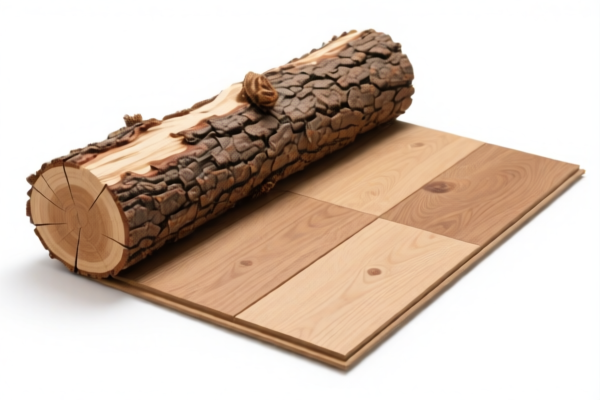
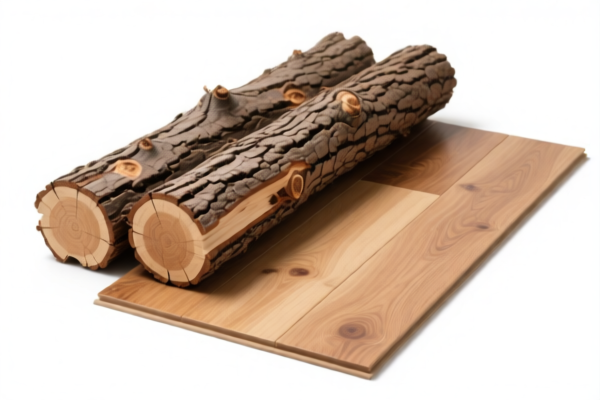
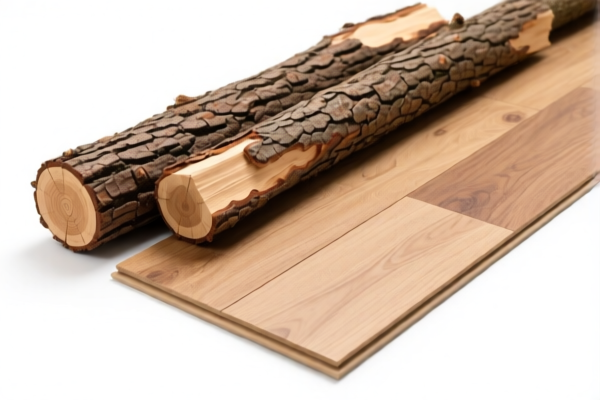

AI Analysis
🌲 Rough Coniferous Logs (For Flooring)
🌐 HS Code Reference & Customs Clearance Guide | 2026 Latest Tariff Analysis | Professional Clearance Strategy for Wood Products
📌 Part 1: Product Definition & Classification: Do You Really Understand "Coniferous Logs"?
Rough Coniferous Logs, even when destined for flooring, are classified based on their processing state and material form at the time of entry. In international trade, they are often mistaken for finished wood products, but customs authorities strictly distinguish between:
- Raw Material (Logs/Sawn Timber): Unprocessed or minimally processed wood, retaining its natural shape or simple cuts.
- Finished Goods (Flooring): Processed, fitted, and ready-to-install wood planks.
⚠️ Critical Distinction:
- If the wood is in log form (bark on, round) or rough-sawn → It is classified under Chapter 44 Section I (Wood) as raw material (e.g.,4403or4407).
- If the wood is milled, shaped, and ready for installation → It is classified as Flooring (e.g.,4418).
- Misclassification Risk: Declaring rough logs as "flooring" to avoid higher tariffs is a major red flag. Conversely, declaring finished flooring as "logs" may trigger anti-dumping duties or inspection delays.
📦 Part 2: HS Code Classification Details (2026 Latest Tariff Authority Match)
Based on the provided data, here are the precise HS Codes for Rough Coniferous Logs intended for flooring production. Note that the form determines the code, not the final intended use.
| HS Code | Product Description | Applicability | Processing State |
|---|---|---|---|
4403.21.01.30 |
Coniferous wood, roughly hewn or simply squared, of Spruce/Pine species | Raw logs, suitable for flooring processing | ✅ Raw Log/Rough |
4403.24.01.35 |
Coniferous wood (e.g., Spruce/Fir), roughly hewn or simply squared | Raw logs, specific to Spruce-family timber | ✅ Raw Log/Rough |
4407.13.00.00 |
Coniferous wood, sawn or chipped lengthwise, sliced or peeled | Sawn timber/planks, still unfinished | ✅ Sawn Timber |
4418.79.01.00 |
Assembled wood flooring, of coniferous wood | Finished Flooring (Note: Data says "Coniferous," "Flooring Use") | ✅ Finished Assembly |
4418.99.91.05 |
Other wood construction works; Assembled wood flooring | Finished Flooring, fully fitting | ✅ Finished Assembly |
🔍 Key Insight:
- Codes4403and4407apply to unprocessed or semi-processed wood.
- Codes4418apply only if the product is already assembled or fitted as flooring.
- If you import "Rough Logs," you MUST use4403or4407. Using4418for rough logs will result in customs rejection or reclassification.
💰 Part 3: 2026 Latest Tariff Rate Breakdown (Including Surcharge & Policy Add-ons)
✅ Applicable Country: United States (US)
✅ Country of Origin: China (CN)
✅ Effective Date: 2025+ (Current Regulations)
🎯 1. 4403.21.01.30 & 4403.24.01.35 — Coniferous Logs (Spruce/Pine Family)
| Item | Details |
|---|---|
| Base Tariff | 0.0% (General Duty for raw timber) |
| Section 301 Surcharge | +25.0% (USITC Footnote for Chinese goods) |
| Section 122 Tariff | +10.0% (Additional levy on certain Chinese imports) |
| Total Tax Rate | 35.0% |
| Calculation Basis | CIF Value × 35% |
| De Minimis Exemption? | ❌ No (Denied for wood products from China) |
| Legal Basis Path | USITC:4403.21.01.30 → Section301:35% → Section122:10% |
📌 Explanation:
- Even though the base duty is 0%, the 25% Section 301 tariff applies to most Chinese timber products.
- The 10% Section 122 tariff is an additional layer for specific strategic goods.
- Total burden: 35%. This is significantly lower than finished goods in some cases, but still high.
🎯 2. 4407.13.00.00 — Sawn Coniferous Wood (Spruce/Pine)
| Item | Details |
|---|---|
| Base Tariff | 0.0% |
| Section 301 Surcharge | +25.0% |
| Section 122 Tariff | +10.0% |
| Total Tax Rate | 35.0% |
| Calculation Basis | CIF Value × 35% |
| De Minimis Exemption? | ❌ No |
| Legal Basis Path | USITC:4407.13.00.00 → Section301:35% → Section122:10% |
📌 Note:
- Sawn timber faces the same 35% total tax as rough logs.
- Ensure the "sawing" process is documented; if over-processed, it may shift to4418.
🎯 3. 4418.79.01.00 & 4418.99.91.05 — Assembled Wood Flooring (Coniferous)
| Item | Details |
|---|---|
| Base Tariff | 3.2% (Standard MFN rate for flooring) |
| Section 301 Surcharge | +25.0% |
| Section 122 Tariff | +10.0% |
| Total Tax Rate | 38.2% |
| Calculation Basis | CIF Value × 38.2% |
| De Minimis Exemption? | ❌ No |
| Legal Basis Path | USITC:4418.79.01.00 → Section301:35% → Section122:10% |
📌 Explanation:
- Finished flooring has a higher base rate (3.2%) compared to raw logs (0%).
- Thus, the total tax is 38.2%, which is 3.2% higher than raw logs.
- Strategy Tip: Importing as raw logs/sawn timber (4403/4407) saves 3.2% in base duty, but you must have local milling capabilities.
🛠️ Part 4: Customs Clearance Practical Advice (Avoid Pitfalls)
✅ 1. Documentation Checklist (Mandatory)
| Document | Required | Notes |
|---|---|---|
| ✅ Phytosanitary Certificate | ✔️ | Critical. Must be issued by the country of origin. Without it, entry is denied. |
| ✅ Commercial Invoice | ✔️ | Must clearly state "Rough Coniferous Logs" or "Sawn Timber," NOT "Flooring." |
| ✅ Packing List | ✔️ | Detail wood species (e.g., Spruce, Pine), dimensions, and treatment (fumigation). |
| ✅ ISF Filing | ✔️ | Submit 24 hours before loading. Include HS Code and supplier info. |
| ✅ Fumigation Label | ✔️ | Visible on pallets/logs. Must comply with ISPM 15 standards. |
✅ 2. Classification Strategy (Key Mantra)
🔥 "Form Dictates Code, Not Future Use! Logs are Logs, Flooring is Flooring!"
| Scenario | Correct HS Code | Wrong Code | Risk |
|---|---|---|---|
| Importing round logs with bark | 4403.21.01.30 |
4418.79.01.00 |
Misclassification penalty + 3.2% base duty overcharge |
| Importing rough-sawn planks | 4407.13.00.00 |
4418.99.91.05 |
Delayed clearance for "unfinished" goods |
| Importing tongue-and-groove planks | 4418.79.01.00 |
4403 |
Customs may reject as "finished" if declared as "raw" |
📌 Warning:
- Do not declare rough logs as "flooring components" to simplify description.
- If the wood is not yet milled to flooring thickness, it must be declared as timber.
✅ 3. Special Considerations
| Issue | Recommendation |
|---|---|
| Species Identification | Provide detailed botanical name (e.g., Picea abies for Spruce). Customs may require lab testing if species is unclear. |
| Moisture Content | Logs must be dry enough to prevent mold during transit. Provide moisture content certificate. |
| Treatment Proof | Ensure Heat Treatment (HT) or Methyl Bromide (MB) treatment is marked on logs. Untreated wood will be rejected. |
🌍 Part 5: Global Market Comparison (2026)
| Country/Region | Recommended HS Code | Tariff (China Origin) | Key Requirement |
|---|---|---|---|
| 🇺🇸 USA | 4403.21.01.30 / 4407.13.00.00 |
35.0% | Phytosanitary Cert + ISPM 15 Marking |
| 🇨🇳 China | 4403 / 4407 |
Varies (0-10%) | Import License for Wood Products |
| 🇪🇺 EU | 4403 / 4407 |
0% (if FLEGT compliant) | FLEGT License or Timber Regulation Compliance |
| 🇨🇦 Canada | 4403 / 4407 |
0% | Phytosanitary Certificate Required |
| 🇦🇺 Australia | 4403 / 4407 |
5% | Biosecurity Permit + Treatment Proof |
📌 Conclusion:
- The US has the highest effective tax rate (35%) due to Section 301 and 122 tariffs.
- The EU and Canada are more tariff-friendly, but have strict biosecurity and legality (FLEGT) requirements.
- For US imports, minimizing processing at origin (importing logs, not flooring) can save the 3.2% base duty.
📌 Part 6: Common Mistakes & Pitfalls (Lessons Learned)
❌ Mistake 1: Declaring "Flooring" when importing rough logs
👉 Consequence: Customs reclassifies, imposes 3.2% base duty backpay, and delays shipment for inspection.
❌ Mistake 2: Missing Phytosanitary Certificate
👉 Consequence: Immediate rejection or destruction of cargo. Wood is a high-risk biosecurity item.
❌ Mistake 3: Using "Flooring" in the Commercial Invoice for rough timber
👉 Consequence: Triggers suspicion of misclassification. Customs may audit the entire batch.
❌ Mistake 4: Ignoring ISPM 15 Marking
👉 Consequence: Re-export or fumigation at your cost. No entry allowed without proper treatment marks.
✅ Correct Practice:
“Rough Sawn Coniferous Logs (Spruce), Heat-Treated, ISPM 15 Marked, For Further Processing Into Flooring”
🎯 Part 7: Conclusion: Precision in Classification, Savings in Tariffs
🎯 Remember the Mantra:
🔹 "Logs are 35%, Flooring is 38.2%. Process locally to save the 3.2% base duty!"
🔹 "Phytosanitary Certificate is King. No Cert, No Entry!"
📌 Pro Tip:
If you are importing from non-Chinese origins (e.g., Canada, Russia, Baltic States), the Section 301 and 122 tariffs do NOT apply. You may qualify for 0-5% tariffs in the US.
- Strategy: Consider sourcing from FLEGT-compliant countries (EU) or NAFTA/USMCA partners (Canada/Mexico) to avoid the 35% US burden.
📣 Immediate Action:
📞 Engage a licensed customs broker BEFORE shipping.
📄 Request Phytosanitary Certificate and ISPM 15 Treatment Proof from supplier.
🔍 Apply for Advance Ruling if unsure about "rough-sawn" vs. "sawmilled" status.
✨ Professional Clearance Starts with Accurate Classification!
💼 Every percentage point counts in the wood trade!
Customer Reviews
About HS Code Classification
The Harmonized System (HS) is an internationally standardized nomenclature developed by the World Customs Organization (WCO) to classify traded products. Over 200 countries use the HS system as the basis for customs tariffs, trade statistics, and import/export regulations.
Each HS code follows a hierarchical structure:
- Chapter (2 digits) — Broad category of goods (e.g., Chapter 84: Machinery and Mechanical Appliances)
- Heading (4 digits) — More specific grouping within the chapter
- Subheading (6 digits) — Internationally standardized breakdown, used by all WCO member countries
- National subdivisions (8-10 digits) — Country-specific extensions for further classification, such as US HTSUS 10-digit codes
Correct HS code classification is essential for smooth customs clearance, accurate duty payment, and compliance with trade regulations. Misclassification can lead to customs delays, overpayment of duties, or penalties.
When importing from CN to US, the applicable tariff rates may include:
- Most-Favored-Nation (MFN) rate — The standard duty rate applied to WTO members
- General rate — Applied to countries without trade agreements
- Trade remedy duties — Additional tariffs such as Section 301 (anti-dumping), Section 232 (national security), or countervailing duties
The information provided on this page is for reference purposes only. For official classification, please consult with your local customs authority or a licensed customs broker.