Rough Coniferous Poles
CN → US| HS Code | Tariff Rate | Origin | Destination | Doc |
|---|---|---|---|---|
| 4404100080 | 35.0% | CN | US | Official Doc |
| 4404100090 | 35.0% | CN | US | Official Doc |
| 4403250116 | 35.0% | CN | US | Official Doc |
| 4401110000 | 35.0% | CN | US | Official Doc |
| 4401210000 | 35.0% | CN | US | Official Doc |
| 4403260116 | 35.0% | CN | US | Official Doc |
Product Images



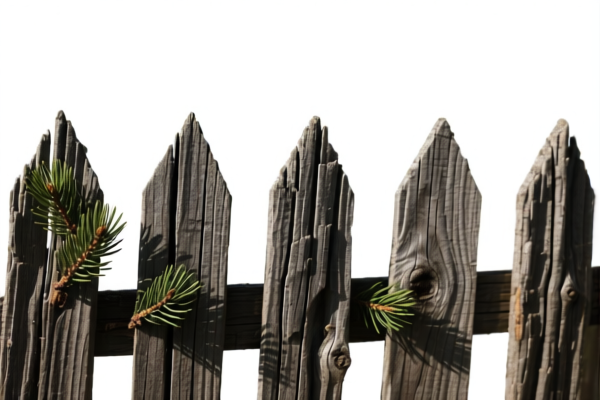
AI Analysis
🌲 Rough Coniferous Poles (Unworked Wood Logs/Poles)
🌐 HS Code Reference & Customs Clearance Guide | 2026 Latest Tariff Analysis | Professional Clearance Strategy
📌 I. Product Definition & Classification: What are "Rough Coniferous Poles"?
Rough Coniferous Poles refer to wood that has been roughly shaped or treated but remains in its natural or primary raw state. In international trade, these are typically unprocessed or minimally processed logs/poles made from coniferous trees (such as pine, spruce, fir). The classification depends heavily on the exact form (log, pole, lath, etc.) and usage (fuel, construction material, chemical pulp).
⚠️ Key Distinction:
- If the wood is shaped into a pole for construction or industrial use → It generally falls under Chapter 44 (Wood and Articles of Wood).
- If the wood is intended primarily as fuel or is in a very rough, unshaped state → It may fall under Chapter 44 (Fuel Wood) or Chapter 44 (Wood in Chip Form) depending on specific dimensions and treatment.
- Crucial Note: The term "Pole" usually implies a cylindrical shape with some length, but "Rough" implies no planing, sawing to specific dimensions, or chemical treatment.
📦 II. HS Code Classification Details (2026 Latest Tariff Authority Comparison)
Based on the provided data, here are the applicable HS Codes for "Rough Coniferous Poles":
| HS Code | Product Description | Application Scenario | Tax Rate (Total) |
|---|---|---|---|
4404.10.00.80 |
Unworked coniferous wood poles, material is coniferous, form is pole. | Primary classification for rough coniferous poles. | 35.0% |
4404.10.00.90 |
Unworked coniferous wood poles, material is coniferous, form is pole, falls under 4404.10.00 category. | Alternative sub-category for similar rough poles. | 35.0% |
4403.25.01.16 |
Unworked coniferous wood poles, material is coniferous timber, form is unworked pole, fits other category features. | For poles that might be considered "other" coniferous timber under Chapter 44.03. | 35.0% |
4401.11.00.00 |
Unworked coniferous wood poles, material is coniferous, form fits fuel wood characteristics. | If the poles are destined for use as fuel (e.g., firewood, biomass). | 35.0% |
4401.21.00.00 |
Unworked coniferous wood poles, material is coniferous, extension of fuel wood and wood chip categories. | For poles classified under fuel wood extensions or specific chip/biomass regulations. | 35.0% |
4403.26.01.16 |
Unworked coniferous wood poles, material is coniferous, form is pole, fully meets classification requirements. | Another specific sub-category for unworked coniferous poles under 4403.26. | 35.0% |
🔍 Important Reminder:
- All listed HS Codes carry the same total tariff rate of 35.0% due to current trade policies.
- The distinction between these codes lies in technical classification details (e.g., whether it's treated as "fuel wood" vs. "construction material") and specific sub-heading nuances.
- Misclassification can lead to customs delays, even if the rate is the same, because the description must match the physical product.
💰 III. 2026 Latest Tariff Rate Detailed Explanation (Including Surtaxes & Policy Surcharges)
✅ Applicable Country: United States (US)
✅ Origin: China (CN)
✅ Effective Date: Applies to imports subject to current trade measures.
🎯 1. General Tariff Structure for Coniferous Poles (All HS Codes Listed)
| Item | Content |
|---|---|
| Base Tariff | 0.0% (Ad Valorem) |
| Section 301 Surtax | +25.0% (Additional duty under USITC Footnote for Chinese goods) |
| Section 122 Tariff | +10.0% (Specific additional duty for certain Chinese products) |
| Total Tariff Rate | 35.0% |
| Tax Calculation | CIF Value × 35% |
| De Minimis Exemption Available? | ❌ No (deny_de_minimis) |
| Legal Basis Path | USITC:4404.10.00.80 → FOOTNOTE:301 → IEEPA:122 |
📌 Explanation:
- "Base Tariff 0%": Coniferous wood products often have a low or zero base Most Favored Nation (MFN) rate.
- "Section 301 Surtax 25%": This is the primary trade war tariff applied to a wide range of Chinese goods, including wood products.
- "Section 122 Tariff 10%": This is a specific additional duty, often related to national security or specific trade agreements, applied to certain Chinese imports.
- Total 35%: This is the final landed cost multiplier before any other duties (like anti-dumping or countervailing duties, which may apply separately depending on the specific wood type and origin).
- No De Minimis: These goods are not eligible for the $800 de minimis exemption for small packages. Every shipment is subject to full tariff assessment.
🛠️ IV. Customs Clearance Practical Advice (Battle-Tested Pitfall Avoidance)
✅ 1. Required Documentation Checklist (All are Mandatory)
| Document | Mandatory | Description |
|---|---|---|
| ✅ Commercial Invoice | ✔️ | Must clearly state "Rough Coniferous Wood Poles," HS Code, CIF value, and origin. |
| ✅ Packing List | ✔️ | Details weight, dimensions, and quantity. Must match invoice. |
| ✅ Bill of Lading/Air Waybill | ✔️ | Standard shipping document. |
| ✅ Phytosanitary Certificate | ✔️ | Critical for wood products. Issued by the country of origin's plant quarantine agency. Must confirm no pests/diseases. |
| ✅ ISPM 15 Compliance Proof | ✔️ | If packaged in wood, packaging must be heat-treated or fumigated and marked. |
| ✅ Product Specification Sheet | ✔️ | Details tree species (e.g., Pine, Spruce), dimensions, treatment status (untreated). |
| ✅ Certificate of Origin (CO) | ✔️ | To prove origin is China (if applicable for tariff calculation). |
✅ 2. Declaration Tips (Key Mantra)
🔥 "Species Specific, ISPM 15 Clear, HS Code Precise, No Missing Docs!"
| Scenario | Correct Declaration | Wrong Practice |
|---|---|---|
| General Poles | 4404.10.00.80 or 4404.10.00.90 with description "Rough Coniferous Poles, Untreated" |
Vague description like "Wood Logs" → Leads to inspection. |
| Fuel Wood | 4401.11.00.00 with description "Coniferous Fuel Wood, Unshaped" |
Declaring as "Construction Poles" when intended for fuel → Misclassification. |
| Packaging | Ensure all wood packaging has IPPC Mark | Using untreated wood pallets → Shipment detained/destroyed. |
| Phytosanitary Cert | Provide original or electronic phytosanitary cert | Forgetting this cert → Immediate rejection at US port. |
✅ 3. Special Circumstances Handling
| Situation | Handling Advice |
|---|---|
| Mixed Species | If the shipment contains both coniferous and non-coniferous wood, split the shipment or declare separately. Non-coniferous may have different HS codes. |
| Treated Wood | If the poles are chemically treated (e.g., creosote), additional EPA regulations may apply. Declare as "Treated Wood." |
| Small Quantity (Under $800) | Still subject to 35% tariff. Do not rely on de minimis exemption. |
| Anti-Dumping (AD)/Countervailing Duty (CVD) | Check if specific coniferous wood products from China are subject to AD/CVD. If yes, additional duties may apply on top of 35%. |
🌍 V. Global Market Clearance Comparison (2026 Latest)
| Country/Region | Recommended HS Code | Tariff (China Origin) | Certification Requirements | Notes |
|---|---|---|---|---|
| 🇺🇸 USA | 4404.10.00.80 |
35% (Base 0% + 25% + 10%) | Phytosanitary Cert + ISPM 15 | High scrutiny on wood pests. |
| 🇨🇳 China | 4404.10.00.80 |
Varies (Import Duty) | Phytosanitary Cert | Import regulations for wood are strict. |
| 🇪🇺 EU | 4404.10.00 |
0-5% (Standard) | FLEGT/Voluntary Partnership Agreement | EU has strict EUDR (Deforestation Regulation) coming in 2025/2026. |
| 🇯🇵 Japan | 4404.10.00 |
0-5% | Phytosanitary Cert | Strict rules on wood pest control. |
| 🇲🇽 Mexico | 4404.10.00 |
0% (under USMCA if processed) | Phytosanitary Cert | Check for USMCA eligibility if processed in North America. |
📌 Conclusion:
- The US is the primary market with high tariffs (35%) for Chinese coniferous wood products.
- Phytosanitary certification is non-negotiable in all major markets.
- EUDR (EU Deforestation Regulation): If exporting to the EU, ensure proof of deforestation-free origin. This is a major new compliance hurdle.
📌 VI. Common Mistakes & Pitfall Avoidance (Blood-Tested Lessons)
❌ Mistake 1: Forgetting the Phytosanitary Certificate
👉 Consequence: Shipment rejected at port, destroyed, or returned. Cost: High.
❌ Mistake 2: Vague Description ("Wood Logs" instead of "Rough Coniferous Poles")
👉 Consequence: Customs detention for inspection, potential misclassification penalties.
❌ Mistake 3: Using Untreated Wood Packaging
👉 Consequence: ISPM 15 violation. Entire shipment may be held until packaging is replaced.
❌ Mistake 4: Assuming De Minimis Exemption Applies
👉 Consequence: Unexpected 35% tariff bill for every small shipment.
✅ Correct Practice:
"Rough Coniferous Wood Poles, Untreated, Species: Pinus sylvestris, Length: 2-3m, Diameter: 10-15cm, HS Code: 4404.10.00.80, Phytosanitary Cert Attached, ISPM 15 Packaged"
🎯 VII. Conclusion: Precise Classification Saves Money and Time
🎯 Remember the Mantra:
🔹 "Phytosanitary First, ISPM 15 Clear, HS Code Precise, 35% Tariff Real."
🔹 "Wood is not just wood. Species, Treatment, and Origin matter."
🔹 "No De Minimis for Wood from China. Plan for 35% Cost."
📌 Tips:
- If your poles are treated with preservatives, ensure they meet EPA/REACH standards for the destination country.
- Consider pre-classification rulings from US Customs (CBP) if the product is borderline between 4404 (Wood) and 4403 (Timber).
- Monitor EUDR updates if exporting to Europe.
📣 Immediate Action:
📞 Contact a licensed customs broker + Provide Phytosanitary Cert + Verify ISPM 15 Packaging
🚀 Ensure compliance first, then ship. Avoid costly delays and penalties.
✨ Professional Clearance Starts with Accurate Classification!
💼 Every Piece of Wood Counts. Get It Right.
Customer Reviews
About HS Code Classification
The Harmonized System (HS) is an internationally standardized nomenclature developed by the World Customs Organization (WCO) to classify traded products. Over 200 countries use the HS system as the basis for customs tariffs, trade statistics, and import/export regulations.
Each HS code follows a hierarchical structure:
- Chapter (2 digits) — Broad category of goods (e.g., Chapter 84: Machinery and Mechanical Appliances)
- Heading (4 digits) — More specific grouping within the chapter
- Subheading (6 digits) — Internationally standardized breakdown, used by all WCO member countries
- National subdivisions (8-10 digits) — Country-specific extensions for further classification, such as US HTSUS 10-digit codes
Correct HS code classification is essential for smooth customs clearance, accurate duty payment, and compliance with trade regulations. Misclassification can lead to customs delays, overpayment of duties, or penalties.
When importing from CN to US, the applicable tariff rates may include:
- Most-Favored-Nation (MFN) rate — The standard duty rate applied to WTO members
- General rate — Applied to countries without trade agreements
- Trade remedy duties — Additional tariffs such as Section 301 (anti-dumping), Section 232 (national security), or countervailing duties
The information provided on this page is for reference purposes only. For official classification, please consult with your local customs authority or a licensed customs broker.