Rough Coniferous Timber for Construction
CN → US| HS Code | Tariff Rate | Origin | Destination | Doc |
|---|---|---|---|---|
| 4407190092 | 35.0% | CN | US | Official Doc |
Product Images
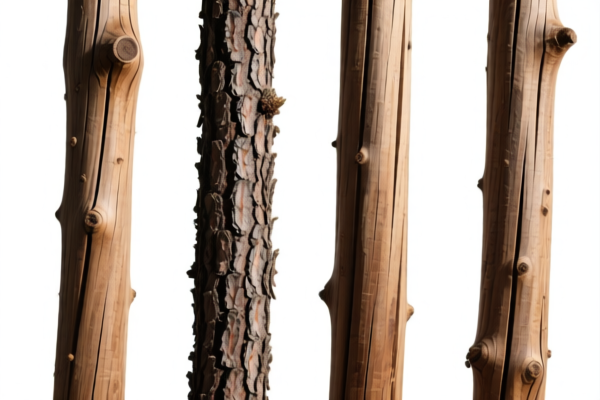
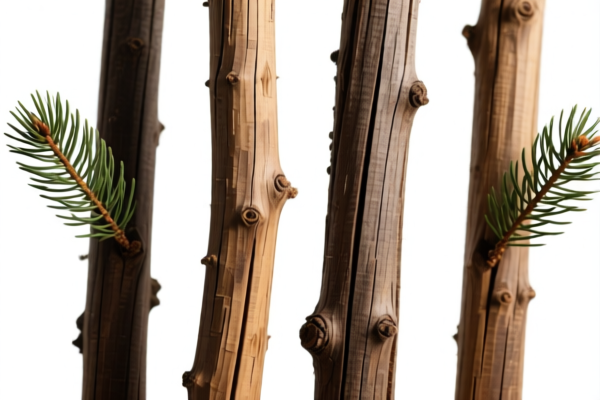
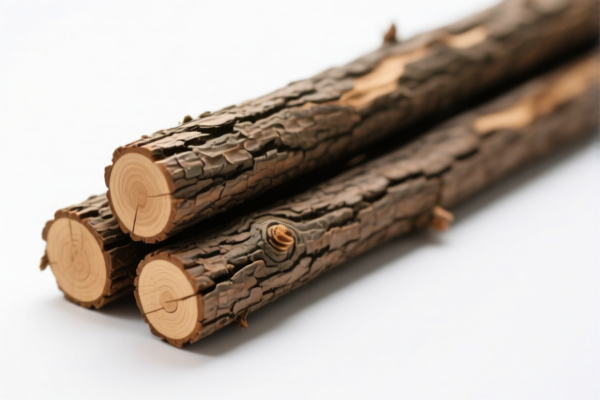
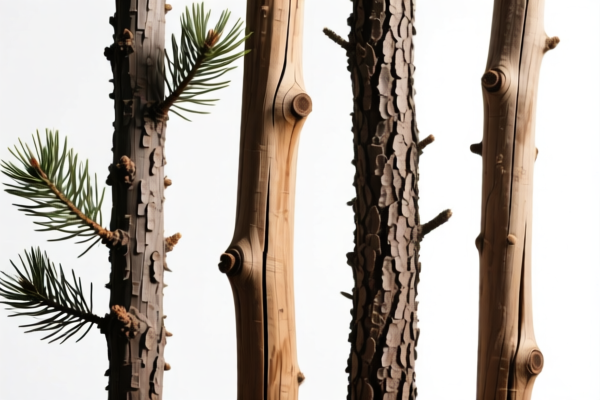
AI Analysis
🌲 Rough Coniferous Timber for Construction (Sawn, Chipped, Sliced, or Peeled)
🌐 HS Code Reference & Customs Clearance Guide | 2026 Latest Tariff Analysis | Professional Entry Strategy
📌 I. Product Definition & Classification: What Exactly Is "Rough Coniferous Timber"?
Rough coniferous timber refers to wood that has been processed longitudinally (sawn, chipped, sliced, or peeled) but remains in its primary, unfinished state. It serves as the fundamental raw material for construction, furniture manufacturing, and packaging. In international trade, it is strictly categorized by species (Coniferous) and processing level (Rough/Unfinished).
Key Characteristics: * Processing: Sawn, chipped, sliced, or peeled. * Surface Treatment: May be planed, sanded, or end-jointed, but primarily "Rough" (unprocessed surface). * Thickness: Must exceed 6 mm. * Species: Coniferous (e.g., Pine, Spruce, Fir, Larch). * Treatment: Not treated (unpreserved, unbrowned, etc.).
⚠️ Critical Distinction:
- If the wood is treated with preservatives or paints → It may fall under 4403 (Wood treated) or 4406/4407 depending on specific processing.
- If the wood is finished (e.g., molded into beams, laminated, or coated) → It may fall under 4421 (Miscellaneous wood) or 4409 (Wood continuously shaped).
- This Guide focuses on "Rough, Unfinished, Un-treated Coniferous Sawn Wood".
📦 II. HS Code Classification Details (2026 Latest Tariff Reference)
| HS Code | Product Description | Application Scenario | Treatment Status |
|---|---|---|---|
4407.19.00.92 |
Sawn or chipped wood lengthwise, sliced or peeled, of a thickness exceeding 6 mm: Coniferous: Other: Other: Not treated: Rough | Raw lumber for construction, pallets, general carpentry | ✅ Not Treated |
4407.10.00.00 |
Pine (Pinus spp.) and Larch (Larix spp.) | Specific coniferous species (Pine/Larch) | ✅ Not Treated |
4407.22.00.00 |
Spruce (Picea spp.) | Specific coniferous species (Spruce) | ✅ Not Treated |
4407.23.00.00 |
Fir (Abies spp.) | Specific coniferous species (Fir) | ✅ Not Treated |
🔍 Key Insight:
- The code4407.19.00.92is a catch-all for other coniferous species (non-Pine, non-Larch, non-Spruce, non-Fir) or general classifications where specific species codes don't apply.
- Crucial: The wood must be "Not Treated". Any chemical treatment, browning, or painting changes the HS Code to 4403 or another category.
- Thickness: Must be > 6 mm. If ≤ 6 mm, it may be classified as 4401.30 (Wood chips/particles) or 4401.31/4401.39 (Firewood).
💰 III. 2026 Latest Tariff Rate Details (Including Surtaxes)
✅ Applicable Country: United States (US)
✅ Origin: China (CN)
✅ Effective Date: 2025/2026 (Current Policy)
🎯 1. 4407.19.00.92 —— Rough Coniferous Timber (Not Treated)
| Item | Content |
|---|---|
| Basic Tariff | 0.0% (ad valorem) |
| Section 301 Surcharge | +25.0% |
| Total Tax Rate | 25.0% |
| Tax Calculation | CIF Value × 25% |
| De Minimis Exemption | ❌ Not Eligible (High value/raw material) |
| Legal Basis | USITC:4407.19.00.92 → Section 301: Footnote 9903.88.01 |
📌 Explanation:
- The 0% basic tariff applies to most unprocessed wood imports under normal trade relations.
- However, due to Section 301 tariffs, an additional 25% is levied on Chinese-origin coniferous timber.
- Total Effective Rate: 25%. This is a significant cost factor for raw lumber imports.
- No De Minimis: Low-value shipments do not qualify for exemption due to the high tariff rate and regulatory scrutiny on wood products.
🛠️ IV. Customs Clearance Practical Advice (实战避坑指南)
✅ 1. Required Documentation Checklist
| Document | Required? | Notes |
|---|---|---|
| ✅ Commercial Invoice | ✔️ | Must clearly state "Coniferous Timber, Rough, Not Treated" |
| ✅ Packing List | ✔️ | Include volume (cubic meters), weight, and number of bundles |
| ✅ Phytosanitary Certificate | ✔️ | Mandatory to prove wood is free from pests/diseases |
| ✅ ISPM 15 Mark | ✔️ | If packed in wood pallets/crates, they must be heat-treated/fumigated and marked |
| ✅ Fumigation Certificate | ✔️ | Some US states require specific fumigation proof |
| ✅ Bill of Lading/Air Waybill | ✔️ | Standard shipping document |
| ✅ Product Description | ✔️ | Specify species (e.g., Pine, Spruce), dimensions, and moisture content |
📌 Critical Note:
- Phytosanitary Certificate is non-negotiable. Without it, shipment will be rejected or destroyed.
- Ensure the HS Code description matches the actual product. Misdeclaration (e.g., claiming "Furniture" instead of "Raw Timber") leads to severe penalties.
✅ 2. Declaration Tips (Key Rules)
🔥 "Rough, Not Treated, >6mm, Coniferous = 4407.19.00.92"
| Scenario | Correct Declaration | Common Mistake |
|---|---|---|
| Raw lumber for construction | 4407.19.00.92 |
Misclassifying as 4403 (Treated) → Higher tariff |
| Wood < 6mm thick | 4401.30 (Wood chips/particles) |
Misclassifying as 4407 → Wrong tariff |
| Treated/Painted timber | 4403 (Wood treated) |
Misclassifying as 4407 → Penalty |
| Plywood/Laminated wood | 4412 (Plywood) |
Misclassifying as 4407 → Wrong tariff |
📌 Important:
- "Rough" means the surface is not planed, sanded, or finished for aesthetic purposes. If it's planed but not treated, it may still be4407, but ensure the description is accurate.
- "Not Treated" means no chemical preservatives, paints, or stains. Any treatment changes the HS Code.
✅ 3. Special Cases
| Scenario | Advice |
|---|---|
| Mixed Species | Declare the majority species or split into separate lines if required. |
| Moisture Content | High moisture content may affect weight/volume calculations. Declare accurately. |
| Destination State Rules | Some US states (e.g., California, Washington) have stricter phytosanitary rules. Check local regulations. |
| Wood Packaging Material | Ensure all pallets/crates are ISPM 15 compliant. Non-compliant packaging can lead to rejection. |
🌍 V. Global Market Comparison (2026 Latest)
| Country/Region | Recommended HS Code | Tariff (CN Origin) | Certification Requirements | Notes |
|---|---|---|---|---|
| 🇺🇸 USA | 4407.19.00.92 |
25.0% (Section 301) | Phytosanitary + ISPM 15 | High tariff; strict phytosanitary |
| 🇨🇳 China | 4407.19.00.92 |
0% - 5% (varies) | Fumigation Certificate | Low tariff; standard phytosanitary |
| 🇪🇺 EU | 4407.19.00.92 |
0% (if FSC certified) | FSC/PEFC + Phytosanitary | Preferential tariffs for certified wood |
| 🇬🇧 UK | 4407.19.00.92 |
0% | FSC/PEFC + Phytosanitary | Post-Brexit rules apply |
| 🇦🇺 Australia | 4407.19.00.92 |
5% - 10% | IPPC Mark + Phytosanitary | Very strict biosecurity |
📌 Conclusion:
- USA imposes a 25% surcharge on Chinese coniferous timber, making it expensive.
- EU/UK offer 0% tariffs for sustainably sourced (FSC/PEFC) wood, incentivizing certification.
- Phytosanitary compliance is critical globally; failure leads to shipment rejection.
📌 VI. Common Errors & Pitfalls (Lessons Learned)
❌ Error 1: Claiming "Finished Wood" when it's "Rough"
👉 Consequence: Misclassification → Penalty + Back Taxes
❌ Error 2: Ignoring Phytosanitary Certificate
👉 Consequence: Shipment Rejected or Destroyed
❌ Error 3: Non-compliant Wood Packaging (ISPM 15)
👉 Consequence: Fines + Delays + Repacking Costs
❌ Error 4: Misdeclaring Thickness (≤ 6mm)
👉 Consequence: Wrong HS Code (4401 vs 4407) → Tariff Discrepancy
✅ Correct Practice:
"Coniferous Timber, Sawn, Rough, Not Treated, >6mm Thick, Species: Spruce, Phytosanitary Certificate Attached, ISPM 15 Pallets"
🎯 VII. Conclusion: Professional Clearance for Smooth Transit
🎯 Remember:
🔹 "Rough, Not Treated, >6mm, Coniferous = 4407.19.00.92"
🔹 "25% Tariff in USA, Phytosanitary is Key"
🔹 "ISPM 15 for Pallets, Fumigation for Wood"
📌 Pro Tip:
- If importing to the EU/UK, consider FSC/PEFC Certification to benefit from 0% tariffs.
- For USA, factor in the 25% surcharge in your cost calculation.
- Always verify Phytosanitary Requirements for the specific US state of entry.
📣 Immediate Action:
📞 Contact a Licensed Customs Broker
📄 Ensure Phytosanitary Certificate + ISPM 15 Compliance
🚀 Avoid Delays, Penalties, and Rejections!
✨ Professional Clearance Starts with Accurate Classification!
💼 Your Logistics Costs Are Worth Optimizing!
Customer Reviews
About HS Code Classification
The Harmonized System (HS) is an internationally standardized nomenclature developed by the World Customs Organization (WCO) to classify traded products. Over 200 countries use the HS system as the basis for customs tariffs, trade statistics, and import/export regulations.
Each HS code follows a hierarchical structure:
- Chapter (2 digits) — Broad category of goods (e.g., Chapter 84: Machinery and Mechanical Appliances)
- Heading (4 digits) — More specific grouping within the chapter
- Subheading (6 digits) — Internationally standardized breakdown, used by all WCO member countries
- National subdivisions (8-10 digits) — Country-specific extensions for further classification, such as US HTSUS 10-digit codes
Correct HS code classification is essential for smooth customs clearance, accurate duty payment, and compliance with trade regulations. Misclassification can lead to customs delays, overpayment of duties, or penalties.
When importing from CN to US, the applicable tariff rates may include:
- Most-Favored-Nation (MFN) rate — The standard duty rate applied to WTO members
- General rate — Applied to countries without trade agreements
- Trade remedy duties — Additional tariffs such as Section 301 (anti-dumping), Section 232 (national security), or countervailing duties
The information provided on this page is for reference purposes only. For official classification, please consult with your local customs authority or a licensed customs broker.