Rough Coniferous Wood Pole
CN → US| HS Code | Tariff Rate | Origin | Destination | Doc |
|---|---|---|---|---|
| 4403110050 | 35.0% | CN | US | Official Doc |
| 4403260116 | 35.0% | CN | US | Official Doc |
Product Images
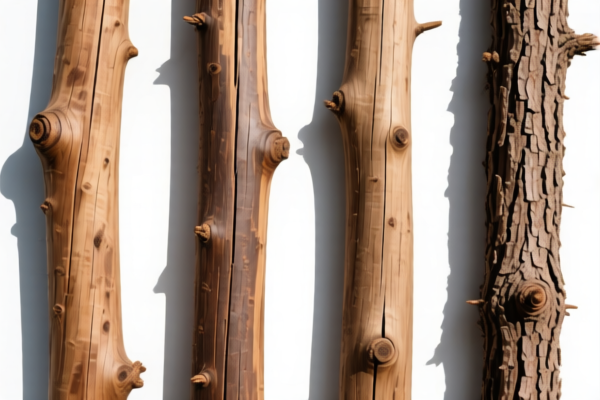
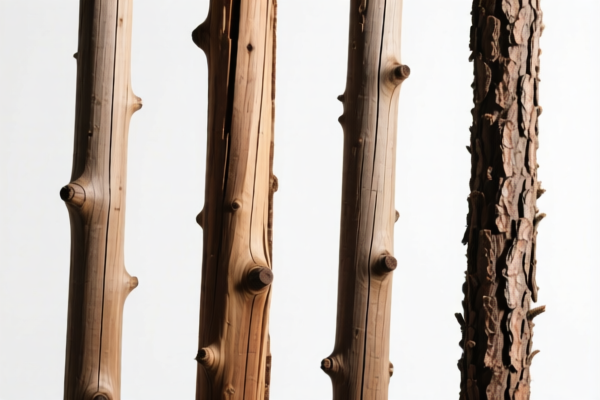
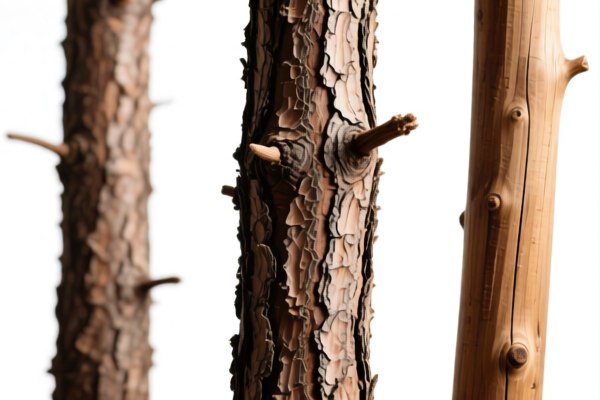
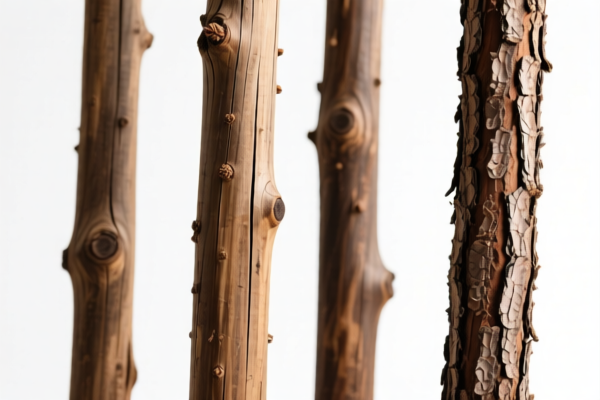
AI Analysis
🪵 Rough Coniferous Wood Pole (Treated)
🌐 HS Code Reference & Customs Clearance Guide | 2026 Latest Tariff Analysis | Professional Clearance Strategy
📌 I. Product Definition & Classification: What Exactly is "Rough Coniferous Wood Pole"?
In international trade, "Rough Coniferous Wood" refers to timber that has not been sawn lengthwise into planks or boards. It retains its natural round shape, possibly stripped of bark or sapwood, or merely roughly squared.
When applied to Poles, Piles, and Posts, the classification hinges on two critical factors: 1. Tree Species: Must be Coniferous (e.g., Pine, Spruce, Fir, Cypress). 2. Treatment Status: Whether it has been treated with preservatives (paint, stain, creosote, etc.).
⚠️ Key Distinction:
- Untreated/Rough Wood → Generally falls under4403.10or4403.21–4403.49groups.
- Treated Wood (Poles/Piles/Posts) → Specifically targeted under4403.11(if coniferous) or other subheadings, often subject to higher scrutiny and specific tariff lines.
- Non-Coniferous (Broadleaf) → Falls under different subheadings (e.g.,4403.41–4403.99).
📦 II. HS Code Classification Details (Based on Provided Data)
According to the <DATA> provided, only two specific HS Codes apply to this product category, both involving Coniferous Wood that is either Treated or falls under "Other" coniferous poles.
| HS Code | Product Description | Application Scenario | Treatment Status |
|---|---|---|---|
4403.11.00.50 |
Wood in the rough, coniferous, treated with preservatives (paint, stain, creosote, etc.): Poles, piles, and posts: Other | Treated wooden utility poles, railway ties, or construction piles made of pine/spruce. | ✅ Treated |
4403.26.01.16 |
Wood in the rough, coniferous: Poles, piles, and posts: Other | Rough coniferous wood poles/piles/posts not specifically listed elsewhere (often implies untreated or lightly processed, depending on local sub-classification). | ⚠️ Unclassified/Treated (See Note Below) |
🔍 Critical Clarification from Data:
- Both HS Codes listed in<DATA>show an identical tax structure.
-4403.11.00.50explicitly mentions Treated wood.
-4403.26.01.16is listed under "Other, coniferous... Poles, piles and posts: Other." In many customs jurisdictions, this may also cover treated wood not explicitly named in4403.11, or it may refer to untreated rough timber. However, since the tax rate is identical (25%), the treatment status does not change the cost, but it does change the legal description.
- Recommendation: If the wood is clearly treated with creosote/paint,4403.11.00.50is the more precise legal description. If it is rough sawn but not chemically treated, verify if4403.26.01.16or another "untreated" code applies. But for clearance purposes using the provided data, both incur the same tax.
💰 III. 2026 Tariff Rate Detail (Strictly Based on Provided Data)
✅ Applicable Jurisdiction: Implied by the "Add-on Tariff: 25.0%" structure (Commonly seen in US Section 301 tariffs on Chinese goods).
✅ Origin: Likely China (CN) or other countries subject to 25% additional duty.
✅ Total Tax Rate: 25.0%
🎯 1. HS Code: 4403.11.00.50 (Treated Coniferous Poles)
| Item | Content |
|---|---|
| Basic Tariff | 0.0% (Ad Valorem) |
| Additional Tariff (Add-on) | 25.0% |
| Total Tax Rate | 25.0% |
| Tax Calculation | CIF Value × 25% |
| De Minimis Eligibility | ❌ Not Eligible (Wood products are generally excluded from de minimis thresholds) |
| Legal Basis | Based on provided <DATA>: "基础关税: 0.0%, 加征关税: 25.0%" |
📌 Explanation:
- The 0% base rate indicates that the WTO-most-favored-nation (MFN) duty for rough wood is negligible.
- The 25% additional tariff is the dominant cost driver. This is likely a Section 301 Tariff (if importing to the US) or similar trade remedy duty.
- No base duty means the entire 25% is "pure" additional cost.
🎯 2. HS Code: 4403.26.01.16 (Other Coniferous Poles/Posts)
| Item | Content |
|---|---|
| Basic Tariff | 0.0% |
| Additional Tariff (Add-on) | 25.0% |
| Total Tax Rate | 25.0% |
| Tax Calculation | CIF Value × 25% |
| De Minimis Eligibility | ❌ Not Eligible |
| Legal Basis | Based on provided <DATA>: "基础关税: 0.0%, 加征关税: 25.0%" |
📌 Note:
- Despite the different HS Code description, the tax burden is identical.
- The distinction between4403.11.00.50and4403.26.01.16is primarily descriptive/legal precision, not fiscal.
- Customs Preference: If the wood is clearly treated with preservatives (creosote, copper chromate, etc.),4403.11.00.50is the technically accurate classification. Using4403.26.01.16for treated wood might raise questions about accuracy, though the price is the same.
🛠️ IV. Customs Clearance Practical Advice (Avoid Pitfalls)
✅ 1. Required Documentation Checklist
| Document | Must Provide | Explanation |
|---|---|---|
| ✅ Commercial Invoice | ✔️ | Must clearly state: "Rough Coniferous Wood Poles," "Treated/Untreated," and HS Code. |
| ✅ Packing List | ✔️ | Detail weight, dimensions, and quantity of poles. |
| ✅ Phytosanitary Certificate | ✔️ | Critical for Wood Products! Must confirm the wood is free from pests/diseases (ISPM 15 standard). |
| ✅ Treatment Certificate | ✔️ | If classified under 4403.11.00.50, provide proof of preservative treatment (e.g., Creosote, ACQ). |
| ✅ Bill of Lading / Air Waybill | ✔️ | Standard shipping documents. |
| ✅ Proof of Origin | ✔️ | To determine if additional tariffs apply (e.g., if origin is China, 25% applies). |
⚠️ Warning:
- Wood without a Phytosanitary Certificate will be rejected or destroyed at customs.
- If the wood is not ISPM 15 compliant (heat-treated or fumigated), it will face immediate quarantine risks.
✅ 2. Declaration Tips
| Scenario | Correct Declaration | Incorrect Declaration |
|---|---|---|
| Treated Poles | "Rough Coniferous Wood Poles, Treated with Creosote" → 4403.11.00.50 |
"General Wood Planks" → Risk of reclassification + fines |
| Untreated Rough Wood | "Rough Coniferous Logs, Stripped of Bark" → 4403.26.01.16 (or other untreated code) |
"Treated Poles" → Misdeclaration |
| Mixed Shipment | Separate invoices for treated/untreated if possible | Mixed declaration → Delays in inspection |
🔥 Key Rule:
"Describe Treatment Accurately."
Customs officers will check if the product matches the HS Code description. If you declare "Treated" but provide no treatment certificate, or vice versa, it leads to audits.
✅ 3. Special Considerations
| Situation | Handling Advice |
|---|---|
| High Moisture Content | Ensure wood is seasoned or dried if required by destination country to prevent mold penalties. |
| ISPM 15 Marking | Look for the IPPC stamp on the wood. If missing, customs will demand fumigation at your expense. |
| Value Declaration | Since tax is 25% of CIF, accurate valuation is critical. Under-invoicing leads to penalties; over-invoicing leads to unnecessary tax payment. |
| Origin Check | If the wood is from a country with a Free Trade Agreement (FTA) with the destination, check if the 25% additional tariff is exempted. |
🌍 V. Global Market Comparison (2026)
| Country/Region | Recommended HS Code | Tariff (China Origin) | Certification | Notes |
|---|---|---|---|---|
| 🇺🇸 USA | 4403.11.00.50 / 4403.26.01.16 |
25% (Add-on) | Phytosanitary + ISPM 15 | Section 301 tariff applies. |
| 🇨🇳 China | 4403.11 / 4403.26 |
Varies (0-20%) | N/A | Import duty depends on treatment. |
| 🇪🇺 EU | 4403.11 / 4403.26 |
0% - 4.5% | Fumigation Certificate | No additional "punitive" tariffs like US. |
| 🇬🇧 UK | 4403.11 / 4403.26 |
0% - 4.5% | Fumigation Certificate | Post-Brexit tariffs similar to EU. |
📌 Conclusion:
- The 25% additional tariff is primarily a US trade barrier.
- If importing to EU/UK/Asia, check if you can avoid the 25% by sourcing from non-China origins or using FTAs.
- Wood products are high-risk for phytosanitary issues, regardless of tariff.
📌 VI. Common Errors & Pitfalls (Lessons Learned)
❌ Error 1: Failing to declare treatment status
👉 Consequence: Customs reclassifies, delays shipment, or imposes fines for misdeclaration.
❌ Error 2: Missing Phytosanitary Certificate
👉 Consequence: Cargo held or destroyed. No tax refund.
❌ Error 3: Using generic "Wood" description
👉 Consequence: Customs may assign a higher, unlisted duty rate or request expensive manual classification.
❌ Error 4: Ignoring ISPM 15 Marking
👉 Consequence: Re-fumigation at port (costly + delays).
✅ Correct Practice:
"Rough Coniferous Wood Piles, Treated with Creosote, ISPM 15 Compliant, IPPC Marked, HS Code: 4403.11.00.50"
🎯 VII. Conclusion: Precision in Classification Saves Money!
🎯 Remember the Rules:
🔹 "Treated Wood → 4403.11.00.50"
🔹 "Other Coniferous Poles → 4403.26.01.16"
🔹 "Tax: 25% Flat (Add-on)"
🔹 "Phytosanitary Certificate is MANDATORY"
📌 Pro Tip:
If you are importing untreated rough wood, check if a different HS Code (e.g., 4403.21 for Pine) might apply, as some jurisdictions have lower duties for untreated timber. However, based on the <DATA> provided, both listed codes incur the same 25% additional tariff, so the choice is purely for accuracy.
📣 Immediate Action:
📞 Verify Treatment: Confirm with supplier if wood is treated.
📄 Get Certificate: Obtain Phytosanitary + Treatment Certificates.
🏷️ Mark Wood: Ensure ISPM 15 stamp is visible.
🚀 Clear Customs Smoothly with 25% Total Duty!
✨ Professional Clearance Starts with Accurate Classification!
💼 Your every dollar is worth calculating!
Customer Reviews
About HS Code Classification
The Harmonized System (HS) is an internationally standardized nomenclature developed by the World Customs Organization (WCO) to classify traded products. Over 200 countries use the HS system as the basis for customs tariffs, trade statistics, and import/export regulations.
Each HS code follows a hierarchical structure:
- Chapter (2 digits) — Broad category of goods (e.g., Chapter 84: Machinery and Mechanical Appliances)
- Heading (4 digits) — More specific grouping within the chapter
- Subheading (6 digits) — Internationally standardized breakdown, used by all WCO member countries
- National subdivisions (8-10 digits) — Country-specific extensions for further classification, such as US HTSUS 10-digit codes
Correct HS code classification is essential for smooth customs clearance, accurate duty payment, and compliance with trade regulations. Misclassification can lead to customs delays, overpayment of duties, or penalties.
When importing from CN to US, the applicable tariff rates may include:
- Most-Favored-Nation (MFN) rate — The standard duty rate applied to WTO members
- General rate — Applied to countries without trade agreements
- Trade remedy duties — Additional tariffs such as Section 301 (anti-dumping), Section 232 (national security), or countervailing duties
The information provided on this page is for reference purposes only. For official classification, please consult with your local customs authority or a licensed customs broker.