Rough Cotton Wood for Flooring
CN → US| HS Code | Tariff Rate | Origin | Destination | Doc |
|---|---|---|---|---|
| 4407970079 | 35.0% | CN | US | Official Doc |
| 4407970072 | 35.0% | CN | US | Official Doc |
Product Images
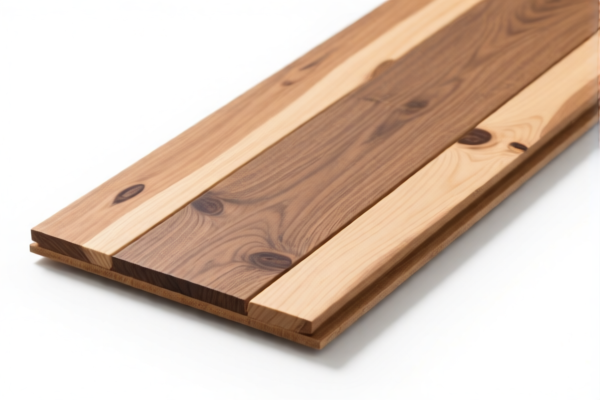
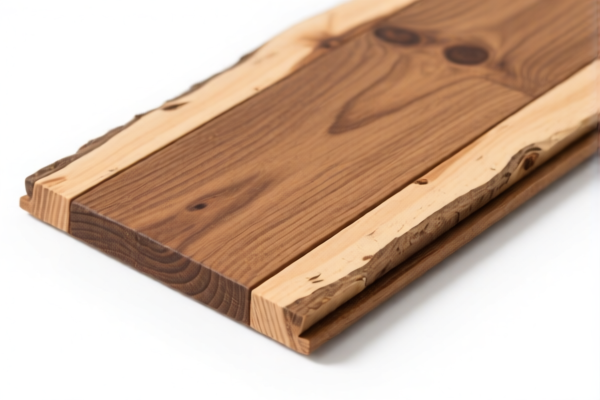
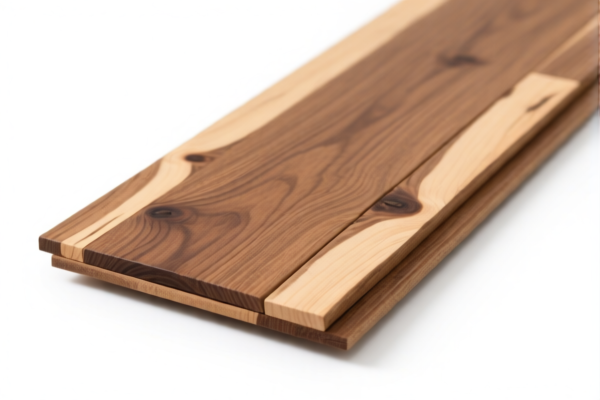
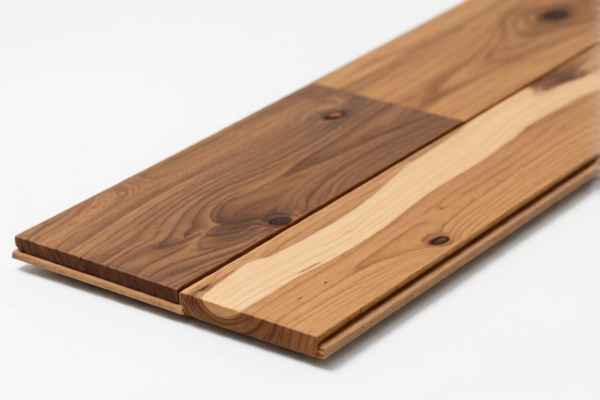
AI Analysis
🪵 Rough Cotton Wood for Flooring (Poplar/Aspen)
🌐 HS Code Reference & Customs Clearance Guide | 2026 Latest Tariff Analysis | Professional Clearance Strategy
📌 One, Product Definition & Classification: Do You Really Understand "Rough Cotton Wood"?
"Cotton Wood" (often referring to Poplar and Aspen species, genus Populus) is a softwood widely used in furniture, cabinetry, and flooring (usually as engineered wood cores or subflooring). In international trade, its classification depends strictly on its processing state and thickness.
The data provided highlights two specific scenarios for wood of a thickness exceeding 6 mm: 1. General Poplar/Aspen: Includes common poplar, aspen, and cottonwood. 2. Yellow Poplar: Specifically Liriodendron tulipifera (often grouped with poplars in trade data but botanically distinct; however, HS Code 4407.97 often captures specific sub-species or is treated under "Other" if not specified, but here we have a specific code for it).
⚠️ Key Distinction Point:
- If the wood is planed, sanded, or end-jointed (finished for direct flooring use), it might still fall under 4407 if >6mm, but often finished flooring goes to 4409.
- However, the provided HS Codes are for "Sawn or chipped... planed, sanded... thickness > 6 mm". This implies semi-processed lumber or rough-sawn planks thicker than 6mm, ready for further machining (like tongue-and-groove creation) or used as thick substrates.
- Crucial Note: "Cottonwood" here is categorized under Populus spp. (Poplar/Aspen) for the general code, while "Yellow Poplar" (Liriodendron tulipifera) has its own specific sub-code.
📦 Two, HS Code Classification Details (2026 Latest Tariff Authority Comparison)
Based on the provided data, there are two relevant HS Codes for Rough Cotton Wood/Poplar/Aspen > 6mm thickness.
| HS Code | Product Description | Applicable Scenario | Tax Rate (Total) |
|---|---|---|---|
| 4407.97.00.79 | Wood of Poplar and Aspen (Populus spp.) - Other (Includes Common Poplar, Aspen, Cottonwood) | General poplar planks, aspen logs cut to >6mm, standard cottonwood lumber | 25.0% |
| 4407.97.00.72 | Wood of Poplar and Aspen - Yellow Poplar (Liriodendron tulipifera) | Yellow Poplar (Tulip Poplar) planks/logs cut to >6mm | 25.0% |
🔍 Important Clarification:
- Botanical vs. Trade Name: In the US HTS, "Poplar" (4407.97) often includes Populus species. Liriodendron tulipifera (Yellow Poplar/Tulipwood) is often classified separately or specifically under 4407.97.00.72 in the provided data.
- Thickness Matters: If the wood is ≤ 6 mm, it would likely fall under a different heading (e.g., 4408 for veneer sheets or 4409 for continuous moled edges). The provided data only covers > 6 mm.
- Processing State: "Rough" in the user query aligns with "Sawn or chipped... whether or not planed, sanded". The HS Code 4407 covers wood that has been sawn lengthwise. If it is just "rough" (unplaned), it still falls here. If it is finished flooring with tongue-and-groove (4409), a different code would apply, but we are restricted to the provided data which implies 4407 applicability for the described items.
💰 Three, 2026 Latest Tariff Rate Detailed Breakdown
✅ Applicable Country: United States (US)
✅ Origin: China (CN) (Implied by the 25% "Additional Tariff" which is typical for Section 301 tariffs on Chinese goods)
✅ Effective Time: Current rates apply (Section 301 tariffs)
🎯 1. 4407.97.00.79 —— Other Poplar/Aspen/Cottonwood (>6mm)
| Item | Content |
|---|---|
| Basic Tariff | 0.0% (ad valorem) |
| Section 301 Additional Tariff | +25.0% |
| Total Tax Rate | 25.0% |
| Tax Calculation | CIF Value × 25% |
| De Minimis Exemption | ❌ Not Applicable (Wood products generally do not qualify for $800 de minimis if classified here, or are subject to higher scrutiny; however, strictly based on provided data, tax is 25%) |
| Legal Basis | HTSUS 4407.97.00.79 + Section 301 Footnote 9903.88.01 |
📌 Explanation:
- The 0% base rate reflects the standard MFN (Most Favored Nation) tariff for non-specialty wood.
- The 25% additional tariff is due to Section 301 of the Trade Act of 1974, targeting Chinese-origin goods.
- Total Cost Impact: For every $10,000 of CIF value, you pay $2,500 in additional duty.
🎯 2. 4407.97.00.72 —— Yellow Poplar / Liriodendron tulipifera (>6mm)
| Item | Content |
|---|---|
| Basic Tariff | 0.0% (ad valorem) |
| Section 301 Additional Tariff | +25.0% |
| Total Tax Rate | 25.0% |
| Tax Calculation | CIF Value × 25% |
| De Minimis Exemption | ❌ Not Applicable |
| Legal Basis | HTSUS 4407.97.00.72 + Section 301 Footnote 9903.88.01 |
📌 Note:
- Despite being a different species (Liriodendron vs. Populus), the tariff burden is identical (25%).
- Yellow Poplar is often preferred for flooring cores due to its stability, but it incurs the same penalty as standard poplar if from China.
🛠️ Four, Customs Clearance Practical Advice (Avoid Pitfalls)
✅ 1. Preparation Checklist (Must-Have Documents)
| Document | Required | Notes |
|---|---|---|
| ✅ Species Declaration | ✔️ | Must explicitly state Genus/Species (e.g., Populus deltoides or Liriodendron tulipifera). Vague terms like "Cottonwood" may be rejected without scientific names. |
| ✅ Thickness Certificate | ✔️ | Proof that thickness exceeds 6 mm. If ≤ 6 mm, HS Code is wrong. |
| ✅ Processing Description | ✔️ | Clarify if planed, sanded, or end-joined. This affects classification between 4407 (sawn) and 4409 (molded). |
| ✅ Phyto-Quarantine Certificate | ✔️ | Mandatory for all raw wood to prevent pests (e.g., emerald ash borer, Asian longhorned beetle). |
| ✅ Commercial Invoice | ✔️ | Must match the HS Code description exactly. |
| ✅ Packing List | ✔️ | Detail dimensions (L x W x H) to verify volume and weight. |
✅ 2. Declaration Tips (Key Mantras)
🔥 "Species Clear, Thickness Above 6mm, No Mold, No Pest!"
| Scenario | Correct Declaration | Error to Avoid |
|---|---|---|
| Standard Poplar Planks | 4407.97.00.79, Populus spp. |
Using "Cottonwood" without scientific name |
| Yellow Poplar Flooring Core | 4407.97.00.72, Liriodendron tulipifera |
Grouping with general poplar if specific code is available |
| Rough Sawn > 6mm | 4407 (Sawn) | Misdeclaring as 4409 (Molded/Tongue-and-Groove) if not yet edged |
| Thin Veneer (≤ 6mm) | NOT 4407 | Declaring thin sheets as 4407 → Classification Error |
✅ 3. Special Considerations for "Rough" Wood
- "Rough" vs. "Sanded": If the wood is only rough-sawn (no sanding), it is still 4407. If it is sanded smooth, it is still 4407 (as per description: "whether or not planed, sanded"). The key is not being molded into final flooring shape (4409).
- Flooring Context: If the "Rough Cotton Wood" is already cut with tongue-and-groove profiles, it should be classified under 4409.29.00.00 (Wood continuously molded...). Do not use 4407 for finished-profiled flooring. Check the product shape!
- ISPM 15 Compliance: If the wood is solid (not processed to remove pest risk), it must be heat-treated (HT) or fumigated (MB) and marked with the IPPC logo. Failure results in rejection or destruction.
🌍 Five, Global Market Clearance Comparison (2026 Latest)
| Country/Region | Recommended HS Code | Tariff (China Origin) | Certification | Notes |
|---|---|---|---|---|
| 🇺🇸 USA | 4407.97.00.79 / .72 |
25% (Additional) + 0% Base | ISPM 15, FSC (Optional) | High tariff. Check if non-China origin applies (e.g., Vietnam, Thailand → 0% Section 301). |
| 🇨🇳 China | 4407.97.00 |
~5-8% | N/A | Domestic trade. |
| 🇪🇺 EU | 4407.97 |
~0-2% | FSC, PEFC (Market driven) | Lower base tariffs, but strict EUDR (Deforestation Regulation) compliance required from 2024/2025. |
| 🇦🇺 Australia | 4407.97 |
~5% | N/A | Biosecurity laws strictly enforce ISPM 15. |
📌 Conclusion:
- USA is the most expensive market due to the 25% Section 301 tariff.
- Supply Chain Strategy: If importing to the US, consider third-country processing (e.g., raw wood from US/Canada, processed in Mexico/Vietnam) to avoid the 25% tax, provided substantial transformation occurs.
📌 Six, Common Errors & Pitfall Guide (Lessons Learned)
❌ Error 1: Declaring "Cottonwood" without specifying Populus or Liriodendron.
👉 Consequence: Customs may assign a generic "Other Wood" code with higher duties or hold shipment for verification.
❌ Error 2: Ignoring Thickness. Declaring 5mm sheets as 4407.
👉 Consequence: Misclassification. 4407 requires >6mm. 5mm falls under 4408 (Veneer) or 4411. Penalty applies.
❌ Error 3: Assuming "Rough" means "Unprocessed" and skipping ISPM 15.
👉 Consequence: Quarantine Rejection. Wood must be treated.
❌ Error 4: Confusing "Rough Sawn" (4407) with "Finished Flooring" (4409).
👉 Consequence: If the wood is already molded (T&G), using 4407 is incorrect. While both may have similar tariffs, accurate description is required for compliance.
✅ Correct Declaration Example:
"Rough-Sawn Yellow Poplar Lumber, Liriodendron tulipifera, 20mm Thickness, Heat-Treated (HT), ISPM 15 Marked, for Flooring Core Use"
🎯 Seven, Conclusion: Precision Matters for Wood Products
🎯 Remember the Mantra:
🔹 "Species Specific, Thickness >6mm, HT Marked, Section 301 Applies!"
🔹 "Rough Sawn is 4407, Molded is 4409. Don't mix them up!"
🔹 "25% Tax in USA, Check Origin Carefully!"
📌 Tips:
- If your wood is not from China, verify the Country of Origin carefully. Wood from Vietnam, Thailand, Malaysia, or Mexico may avoid the 25% Section 301 tariff (subject to recent US rulings on circumvention).
- Pre-Import Consultation: Engage a customs broker to confirm the exact morphology (planed, sanded, rough) to ensure correct HS Code.
📣 Immediate Action:
📞 Contact your supplier for Scientific Names and Thickness Certificates.
🚀 Apply for Section 301 Exclusions if applicable (check USTR website).
✈️ Ensure ISPM 15 Heat Treatment is visible on all pallets.
✨ Professional Clearance Starts with Accurate Classification!
💼 Your Profit Margin Depends on Precise Tariff Calculation!
Customer Reviews
About HS Code Classification
The Harmonized System (HS) is an internationally standardized nomenclature developed by the World Customs Organization (WCO) to classify traded products. Over 200 countries use the HS system as the basis for customs tariffs, trade statistics, and import/export regulations.
Each HS code follows a hierarchical structure:
- Chapter (2 digits) — Broad category of goods (e.g., Chapter 84: Machinery and Mechanical Appliances)
- Heading (4 digits) — More specific grouping within the chapter
- Subheading (6 digits) — Internationally standardized breakdown, used by all WCO member countries
- National subdivisions (8-10 digits) — Country-specific extensions for further classification, such as US HTSUS 10-digit codes
Correct HS code classification is essential for smooth customs clearance, accurate duty payment, and compliance with trade regulations. Misclassification can lead to customs delays, overpayment of duties, or penalties.
When importing from CN to US, the applicable tariff rates may include:
- Most-Favored-Nation (MFN) rate — The standard duty rate applied to WTO members
- General rate — Applied to countries without trade agreements
- Trade remedy duties — Additional tariffs such as Section 301 (anti-dumping), Section 232 (national security), or countervailing duties
The information provided on this page is for reference purposes only. For official classification, please consult with your local customs authority or a licensed customs broker.