Rough Cotton Wood for Packaging Boxes
CN → US| HS Code | Tariff Rate | Origin | Destination | Doc |
|---|---|---|---|---|
| 4403990140 | 35.0% | CN | US | Official Doc |
| 4407950000 | 35.0% | CN | US | Official Doc |
| 4401120000 | 35.0% | CN | US | Official Doc |
Product Images
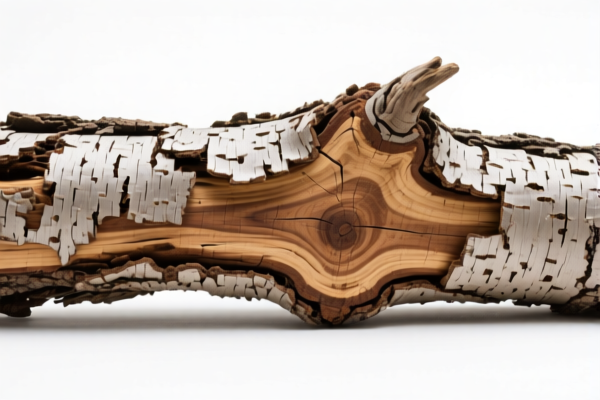
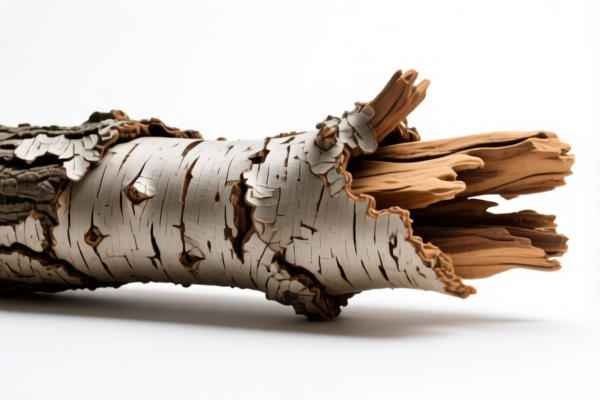
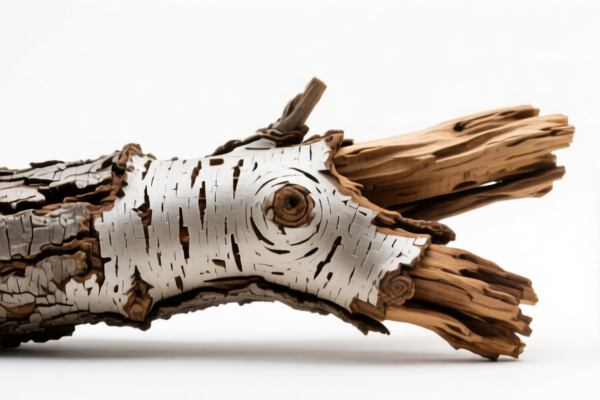
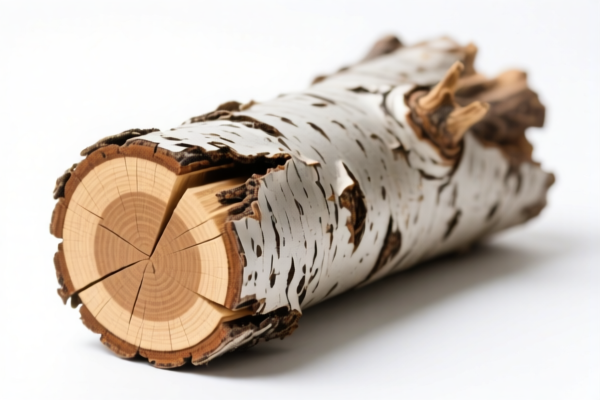
AI Analysis
🪵 Rough Cotton Wood for Packaging Boxes (Ash/Alder Type)
🌐 HS Code Reference & Customs Clearance Guide | 2026 Latest Tariff Analysis | Professional Clearance Strategy
📌 I. Product Definition & Classification: Do You Understand "Rough Wood" for Packaging?
"Rough Cotton Wood" in the context of packaging typically refers to Ash wood (Fraxinus) or sometimes broadly categorized hardwoods like Alder, processed in a raw state. In international trade, rough timber is classified based on its processing level (sawn vs. fuel) and end-use (construction vs. fuel).
Key Distinction Point:
- If the wood is sawn or chipped merely for structural packaging (crates, pallets, boxes) → It falls under Chapter 44 (Wood and Articles of Wood).
- If it is roughly processed but intended for fuel or extremely raw biomass → It may fall under Chapter 44 (Heading 44.01) as fuel wood, but for packaging, the standard is usually 4403 (preserved/rough sawn) or 4407 (sawn/chipped).
⚠️ Critical Clarification:
Although "Cottonwood" is a specific tree (Populus), in many customs declarations for packaging, Ash wood (Fraxinus) is frequently referred to or mislabeled as "Cotton wood" in loose translations. The provided data specifies "White Ash" (Fraxinus americana), which is the primary material here.
- Preserved/Rough Sawnt (4403): For heavy-duty crates where the wood is roughly squared but not fine-sawn.
- Sawn/Chipped (4407): For standard lumber used in lighter packaging boxes.
- Fuel Wood (4401): If the "rough wood" is low-grade scrap or offcuts intended for burning (incorrect if for packaging, but sometimes declared erroneously to lower duties).
📦 II. HS Code Classification Details (2026 Latest Tariff Alignment)
| HS Code | Product Description | Application Scenario | Processing Level |
|---|---|---|---|
4403.99.01.40 |
Rough Ash Wood for Packaging Boxes | Heavy-duty crates, pallets, industrial packaging | Roughly shaped, not fine-sawn |
4407.95.00.00 |
Sawn/Chipped Ash Wood (Fraxinus) | Standard packaging boxes, light crates | Sawn, planed, or chipped for further processing |
4401.12.00.00 |
Fuel Wood: Non-coniferous (Rough Ash) | Incorrect for packaging; usually for biomass fuel | Rough, unprocessed, low grade |
🔍 Key Reminder:
- 4403.99.01.40 is the most accurate for "Rough" wood used in robust packaging where the surface is not smooth.
- 4407.95.00.00 applies if the wood has been sawn or chipped into usable dimensions for box manufacturing.
- 4401.12.00.00 is a trap. While it lists "Rough Ash," it classifies it as Fuel Wood. Using this for packaging is incorrect unless the wood is literally waste/biomass. Customs may reject this if the invoice says "Packaging Boxes."
💰 III. 2026 Latest Tariff Rate Detail (Including Additional Taxes & Policies)
✅ Applicable Country: United States (US)
✅ Origin: China (CN)
✅ Effective Date: November 10, 2025 (and onwards)
🎯 1. 4403.99.01.40 —— Rough Ash Wood for Packaging (Heavy Duty)
| Item | Content |
|---|---|
| Base Tariff | 0.0% (ad valorem) |
| Section 301 Additional Tariff | +25.0% |
| Section 122 Tariff (IEEPA) | +10.0% |
| Total Tax Rate | 35.0% |
| Tax Calculation | CIF Value × 35% |
| De Minimis Exemption? | ❌ No (deny_de_minimis) |
| Legal Basis Path | USITC:4403.99.01.40 → FOOTNOTE:301.4403.99 → IEEPA:9903.01.25 |
📌 Explanation:
- Base 0%: Wood products often have low base duties.
- 301 Tariff (25%): Standard additional tariff on Chinese wood products.
- Section 122 (10%): New 2025/2026 specific tariff on certain forestry products from China under IEEPA.
- Total 35% is a high cost driver for raw wood imports.
🎯 2. 4407.95.00.00 —— Sawn/Chipped Ash Wood (Standard Packaging Lumber)
| Item | Content |
|---|---|
| Base Tariff | 0.0% |
| Section 301 Additional Tariff | +25.0% |
| Section 122 Tariff (IEEPA) | +10.0% |
| Total Tax Rate | 35.0% |
| Tax Calculation | CIF Value × 35% |
| De Minimis Exemption? | ❌ No |
| Legal Basis Path | USITC:4407.95.00.00 → FOOTNOTE:301.4407.95 → IEEPA:9903.01.25 |
📌 Note:
- Same tax burden as4403.
- Used when wood is sawn to size for box making.
- Ensure the description explicitly states "Sawn Ash Wood" to match this code.
🎯 3. 4401.12.00.00 —— Rough Wood (Non-coniferous) / Fuel Wood Category
| Item | Content |
|---|---|
| Base Tariff | 0.0% |
| Section 301 Additional Tariff | +25.0% |
| Section 122 Tariff (IEEPA) | +10.0% |
| Total Tax Rate | 35.0% |
| Tax Calculation | CIF Value × 35% |
| De Minimis Exemption? | ❌ No |
| Legal Basis Path | USITC:4401.12.00.00 → FOOTNOTE:301.4401.12 → IEEPA:9903.01.25 |
📌 Caution:
- Although the rate is also 35%, the classification risk is higher.
- If you declare "Packaging Boxes" but use HS4401.12.00.00(Fuel Wood), Customs may flag misdeclaration.
- Recommendation: Avoid4401for packaging unless it is truly scrap fuel. Use4403or4407.
🛠️ IV. Customs Clearance Practical Advice (Real-World Pitfall Guide)
✅ 1. Preparation Checklist (Non-Negotiable)
| Document | Required | Notes |
|---|---|---|
| ✅ Phytosanitary Certificate | ✔️ | Mandatory for all wood. Must state treatment (MB - Methyl Bromide or HT - Heat Treatment). |
| ✅ ISPM 15 Mark | ✔️ | Wood packaging MUST have the IPPC mark indicating treatment. |
| ✅ Commercial Invoice | ✔️ | Clearly state "Rough Ash Wood for Packaging". Avoid generic "Wood". |
| ✅ Packing List | ✔️ | Detail dimensions, weight, and volume. |
| ✅ Material Composition | ✔️ | Confirm species is Ash (Fraxinus). Misidentifying as Pine (conifer) changes HS code. |
| ✅ Bill of Lading | ✔️ | Ensure freight terms (CIF/FOB) are clear for tax base. |
✅ 2. Declaration Tips (Key Mantra)
🔥 "ISPM 15 is Key, Species Matters, 35% is Fixed!"
| Scenario | Correct Declaration | Wrong Action |
|---|---|---|
| Rough, heavy-duty crate wood | HS 4403.99.01.40 |
Use 4407 → May cause delay in inspection |
| Sawn, box-making lumber | HS 4407.95.00.00 |
Use 4403 → Might be rejected if too smooth |
| Low-grade scrap/offcuts | HS 4401.12.00.00 (Only if fuel) |
Use 4401 for packaging → Customs Penalty Risk |
| Untreated Wood | STOP! | Do not import without ISPM 15 treatment → Rejection/Return |
✅ 3. Special Circumstances Handling
| Situation | Advice |
|---|---|
| Mixed Wood Species | If Ash is mixed with Pine (conifer), the whole batch may be downgraded or reclassified. Keep species pure. |
| Wood Chips vs. Planks | Chips go to 4401 or 4407 depending on size. Planks go to 4403 or 4407. Clarify in invoice. |
| Value Declaration | Do not undervalue. US Customs audits wood imports heavily due to high tariffs (35%). |
| Treatment Proof | Keep treatment certificates for 5 years. Customs can request proof of ISPM 15 compliance post-clearance. |
🌍 V. Global Market Comparison (2026 Update)
| Country/Region | Recommended HS Code | Tariff (China Origin) | Certification | Notes |
|---|---|---|---|---|
| 🇺🇸 USA | 4403.99.01.40 / 4407.95.00.00 |
35% (25% + 10%) | ISPM 15 + Fumigation | High tariff; strict phytosanitary rules |
| 🇨🇳 China | 4403 / 4407 |
0%~5% | ISPM 15 | Low duty; main consumer of raw wood |
| 🇪🇺 EU | 4403 / 4407 |
0% (if FLEGT) | FLEGT / EUTR | Requires legal timber proof |
| 🇯🇵 Japan | 4403 / 4407 |
0%~3% | ISPM 15 | Strict pest control |
📌 Conclusion:
- USA is the most costly market due to Section 301 + Section 122 tariffs (35%).
- Phytosanitary compliance (ISPM 15) is the single biggest risk factor for all markets.
- Species identification is critical: Ash is non-coniferous. Mislabeling as Conifer (Pine) can lead to fines.
📌 VI. Common Mistakes & Pitfall Guide (Lessons Learned)
❌ Mistake 1: Declaring "Rough Wood" without specifying species.
👉 Consequence: Customs may reject or reclassify, leading to 100% duty assessment + penalty.
❌ Mistake 2: Using 4401.12.00.00 (Fuel Wood) for Packaging Boxes.
👉 Consequence: Misdeclaration. Even if tax is same, it violates trade intent. Customs may seize goods.
❌ Mistake 3: Ignoring ISPM 15 Marks.
👉 Consequence: Rejection at port. Wood without treatment mark is banned from entry in US/EU.
❌ Mistake 4: Under-declaring value to avoid 35% tax.
👉 Consequence: Heavy fines. Wood values are easily verifiable via market indices.
✅ Correct Approach:
"Rough Ash Wood (Fraxinus spp.), Heat Treated (HT), ISPM 15 Marked, for Packaging Crates"
HS Code:4403.99.01.40
Duty: 35%
🎯 VII. Conclusion: Professional Declaration, Cost Control, Risk Mitigation!
🎯 Remember the Mantra:
🔹 "ISPM 15 is Life, Species is Key, 35% Tax is Fixed!"
🔹 "HS Code Defines Duty, Misdeclaration Costs 3x!"
📌 Pro Tip:
- If importing large volumes, consider Advance Ruling from US Customs to lock in the HS Code interpretation.
- Ensure your supplier provides original Phytosanitary Certificates signed by the National Plant Protection Organization (NPPO) of the exporting country.
- Budget for 35% tariff in your landed cost calculation. Do not underestimate this burden.
📣 Immediate Action:
📞 Consult with a licensed customs broker.
📄 Verify ISPM 15 treatment with your supplier.
🚀 Ensure your invoice clearly states "Ash Wood" and "Rough/Sawn" to match4403or4407.
✨ Professional clearance starts with precise classification!
💼 Every percentage point counts in wood trade!
Customer Reviews
About HS Code Classification
The Harmonized System (HS) is an internationally standardized nomenclature developed by the World Customs Organization (WCO) to classify traded products. Over 200 countries use the HS system as the basis for customs tariffs, trade statistics, and import/export regulations.
Each HS code follows a hierarchical structure:
- Chapter (2 digits) — Broad category of goods (e.g., Chapter 84: Machinery and Mechanical Appliances)
- Heading (4 digits) — More specific grouping within the chapter
- Subheading (6 digits) — Internationally standardized breakdown, used by all WCO member countries
- National subdivisions (8-10 digits) — Country-specific extensions for further classification, such as US HTSUS 10-digit codes
Correct HS code classification is essential for smooth customs clearance, accurate duty payment, and compliance with trade regulations. Misclassification can lead to customs delays, overpayment of duties, or penalties.
When importing from CN to US, the applicable tariff rates may include:
- Most-Favored-Nation (MFN) rate — The standard duty rate applied to WTO members
- General rate — Applied to countries without trade agreements
- Trade remedy duties — Additional tariffs such as Section 301 (anti-dumping), Section 232 (national security), or countervailing duties
The information provided on this page is for reference purposes only. For official classification, please consult with your local customs authority or a licensed customs broker.