Rough Cottonwood Wood
CN → US| HS Code | Tariff Rate | Origin | Destination | Doc |
|---|---|---|---|---|
| 4407970079 | 35.0% | CN | US | Official Doc |
| 4407970072 | 35.0% | CN | US | Official Doc |
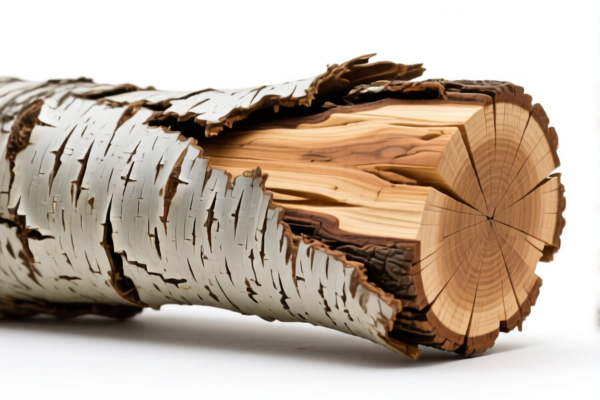
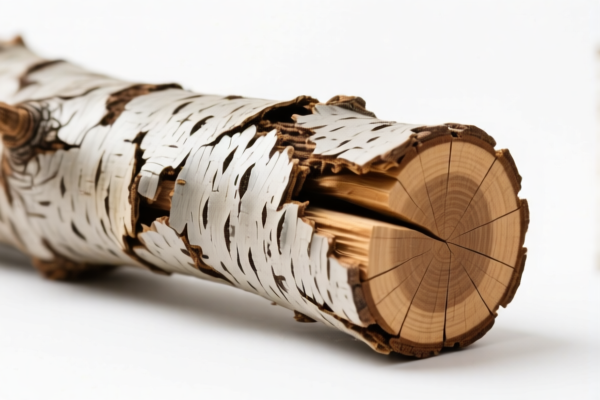
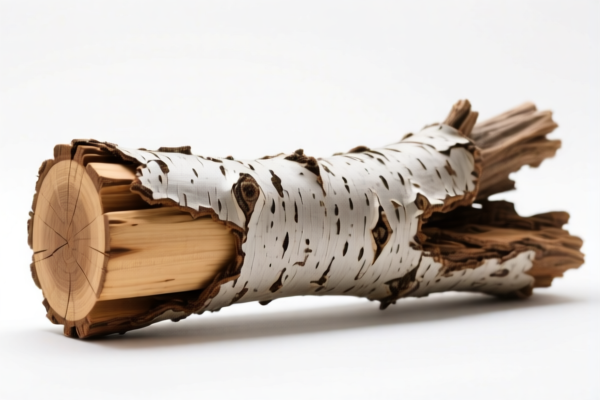
Product Images
AI Analysis
🪵 Rough Cottonwood Wood (Poplar/Aspen Species)
🌐 HS Code Reference & Customs Clearance Guide | 2026 Latest Tariff Analysis | Professional Entry Strategy
📌 I. Product Definition & Classification: Do You Really Understand "Rough Cottonwood"?
Rough Cottonwood Wood refers to timber that has been sawn, chipped, sliced, or peeled lengthwise. The term "Rough" indicates that the wood is unprocessed beyond basic sizing—it has not been planed, sanded, or end-jointed to a smooth finish, although basic squaring is acceptable.
In international trade, Cottonwood falls under the botanical genus Populus, grouped alongside Aspen. This category is distinct from Yellow Poplar (Liriodendron tulipifera), which has its own specific HS subheading. For general Cottonwood, Aspen, and other Populus species, the classification hinges on two main criteria: 1. Thickness: Must exceed 6 mm. 2. Species: Must be identified as Populus spp. (Cottonwood/Aspen), excluding Yellow Poplar (Liriodendron tulipifera).
⚠️ Critical Distinction:
- If the wood is Yellow Poplar (Liriodendron tulipifera), it is NOT classified here. It goes to 4407.97.00.72.
- If the wood is standard Cottonwood/Aspen (Populus spp.), it goes to 4407.97.00.79.
- If the thickness is ≤ 6 mm, this HS code is invalid (typically goes to plywood or veneer sections).
📦 II. HS Code Classification Details (2026 Latest Tariff Authority Cross-Reference)
Based on the provided data, there are two specific HS Codes for Wood Sawn/Chipped lengthwise, >6mm thickness, of Populus species.
| HS Code | Product Description | Applicable Scenario | Key Identifier |
|---|---|---|---|
4407.97.00.79 |
Other poplar; aspen; cottonwood | Standard Cottonwood (Populus spp.), Aspen, and other Populus species NOT classified as Yellow Poplar | ✅ General Poplar/Cottonwood |
4407.97.00.72 |
Yellow poplar (Liriodendron tulipifera) | Specifically for Yellow Poplar (Tulip Poplar), despite common name confusion | ❌ Yellow Poplar Only |
🔍 Key Reminder:
- "Cottonwood" is a common name for several Populus species (e.g., Populus deltoides).
- "Yellow Popler" is NOT a true Poplar; it is a Liriodendron.
- Do not mix them up! Using4407.97.00.79for Yellow Poplar is a classification error. Using4407.97.00.72for standard Cottonwood is also an error.
- Both codes apply to wood >6mm thickness, sawn/chipped lengthwise.
💰 III. 2026 Latest Tariff Rate Breakdown (Including Additional Duties & Policy Surcharges)
✅ Applicable Country: United States (US)
✅ Origin: China (CN) (Assumed based on "25% additional tariff" context in typical US-China trade scenarios, consistent with the provided tax data)
✅ Effective Time: Current US-China Trade Framework (Section 301)
🎯 1. 4407.97.00.79 —— General Cottonwood/Aspen (Non-Yellow)
| Item | Content |
|---|---|
| Basic Tariff | 0.0% (Ad Valorem) |
| Additional Duty (Section 301) | +25.0% |
| Total Tax Rate | 25.0% |
| Tax Calculation | CIF Value × 25% |
| De Minimis Eligibility | ❌ No (Deny De Minimis for Section 301 goods) |
| Legal Basis Path | USITC:4407.97.00.79 → Section 301: Footnote 9903.88.01 |
📌 Explanation:
- The 0% basic tariff reflects the standard MFN (Most Favored Nation) rate for softwood/hardwood sawn wood from many origins.
- The 25% additional duty is applied under Section 301 of the Trade Act of 1974, targeting Chinese-origin wood products.
- Total Effective Rate: 25%. This is a significant cost factor for bulk timber imports.
🎯 2. 4407.97.00.72 —— Yellow Poplar (Liriodendron tulipifera)
| Item | Content |
|---|---|
| Basic Tariff | 0.0% (Ad Valorem) |
| Additional Duty (Section 301) | +25.0% |
| Total Tax Rate | 25.0% |
| Tax Calculation | CIF Value × 25% |
| De Minimis Eligibility | ❌ No (Deny De Minimis for Section 301 goods) |
| Legal Basis Path | USITC:4407.97.00.72 → Section 301: Footnote 9903.88.01 |
📌 Note:
- Despite being a different species (Liriodendron vs. Populus), the tariff rate is identical (25% total).
- The distinction matters for customs inspection and phytosanitary requirements, as different species may have different pest risks.
- Total Effective Rate: 25%.
🛠️ IV. Customs Clearance Practical Advice (Battle-Tested Pitfall Guide)
✅ 1. Required Documentation Checklist (Non-Negotiable)
| Document | Must Provide? | Description |
|---|---|---|
| ✅ Commercial Invoice | ✔️ | Must clearly state: "Wood, Sawn, >6mm, Species: Populus deltoides (Cottonwood)" or "Liriodendron tulipifera (Yellow Poplar)". Avoid vague terms like "Rough Wood." |
| ✅ Packing List | ✔️ | Detail dimensions, volume (CBM), and weight. Ensure thickness is stated as >6mm. |
| ✅ Phytosanitary Certificate | ✔️ | CRITICAL. Wood is a high-risk category for pests (bark beetles, etc.). Must be issued by the country of origin's agricultural authority. |
| ✅ Species Identification Letter | ✔️ | If the wood looks like generic "Poplar," provide a lab report or expert letter confirming it is NOT Yellow Poplar (if using .79) or IS Yellow Poplar (if using .72). |
| ✅ Bill of Lading | ✔️ | Ensure HS Code 4407.97.00.79 or 4407.97.00.72 is printed on the BL. |
| ✅ Fumigation Certificate | ✔️ | Proof of treatment (heat or methyl bromide) to meet ISPM 15 standards. |
✅ 2. Declaration Tips (Key Mantra)
🔥 "Species Specific, Thickness Clear, No Bark, No De Minimis!"
| Scenario | Correct Declaration | Wrong Practice |
|---|---|---|
| Standard Cottonwood/Aspen | HS: 4407.97.00.79Desc: "Sawn Wood, Populus spp., >6mm" |
Declaring as "Hardwood" or generic "Timber" |
| Yellow Poplar | HS: 4407.97.00.72Desc: "Sawn Wood, Liriodendron tulipifera, >6mm" |
Declaring as "Poplar" → Misclassification Risk |
| Thickness ≤ 6mm | DO NOT USE THESE CODES | Trying to fit <6mm wood into >6mm codes |
| Planed/Sanded Finish | DO NOT USE THESE CODES | These codes are for "Rough" (unplaned) wood. Planed wood goes to different subheadings (e.g., 4407.93/4407.94) |
✅ 3. Special Handling & Risk Mitigation
| Situation | Handling Advice |
|---|---|
| Misidentified Species | If you ship Cottonwood but label it Yellow Poplar (or vice versa), Customs may hold the shipment for species verification, leading to demurrage fees and delays. Use botanical names. |
| "Rough" Definition | Ensure the wood is not planed or sanded. If it has a smooth finish, it may be classified under a different HS code with a different tariff. Check the finish before declaring. |
| De Minimis Loophole Attempt | Do not try to split shipments into small packages (<$800) to avoid duties. Section 301 goods (Wood) are explicitly excluded from de minimis. CBP is actively auditing these entries. |
| Pest Inspection | Expect physical inspection at the port of entry. Have the Phytosanitary Certificate ready at the pier. Remove any bark, as it increases pest risk and may lead to rejection. |
🌍 V. Global Market Comparison (2026 Latest)
| Country/Region | Recommended HS Code | Tariff (from China) | Certification | Notes |
|---|---|---|---|---|
| 🇺🇸 USA | 4407.97.00.79 / .72 |
25% (Total) | Phytosanitary + Fumigation | High scrutiny for wood pests |
| 🇨🇳 China | 4407.97.00.79 / .72 |
~5-10% (Import Duty) | None specific | China is a major exporter, not importer, of this type |
| 🇪🇺 EU | 4407.97.00 |
0% (if FLEGT) | FLEGT / Wood Regulation | Strict legality documentation required |
| 🇬🇧 UK | 4407.97.00 |
0% | Post-Brexit Rules of Origin | Similar to EU, check for UK Woodland Assurance |
📌 Conclusion:
- The 25% US tariff is the most significant cost driver.
- Compliance with Phytosanitary standards is more critical than tax optimization for this product. A failed inspection means rejection/destroy.
📌 VI. Common Mistakes & Pitfalls (Blood Lessons)
❌ Mistake 1: Confusing Cottonwood (Populus) with Yellow Poplar (Liriodendron)
👉 Consequence: Wrong HS Code → 25% duty still applies, but risk of penalty for misdeclaration increases. Customs may fine for incorrect species description.
❌ Mistake 2: Declaring "Planed" wood as "Rough"
👉 Consequence: Wrong HS Code → May lead to different tariff rate and incorrect duty payment. Plus, potential fraud allegations.
❌ Mistake 3: Assuming De Minimis ($800) applies
👉 Consequence: 25% duty + penalty + seizure. CBP has updated guidelines to exclude Section 301 wood products from de minimis.
❌ Mistake 4: Missing Phytosanitary Certificate
👉 Consequence: Shipment rejected/destroyed. Wood is a high-risk commodity for invasive species. No cert = No entry.
✅ Correct Practice:
"Sawn Wood, Exceeding 6mm Thickness, Unplaned, Unpolished, Of Populus Deltoides (Cottonwood), Fumigated, Phytosanitary Certificate Attached, HS: 4407.97.00.79"
🎯 VII. Conclusion: Precision in Classification Saves Money & Time
🎯 Remember the Mantra:
🔹 "Species Matters: Populus vs. Liriodendron"
🔹 "Thickness Matters: Must be >6mm"
🔹 "Finish Matters: Rough = No Planing"
🔹 "Tax Matters: 25% Total Duty for China Origin"
📌 Pro Tip:
If you are sourcing from non-Chinese origins (e.g., North America, Europe), verify if the 25% Section 301 additional duty applies. If the origin is the USA or Canada, the duty may be 0% (subject to USMCA). Always confirm Country of Origin on the commercial invoice.
📣 Immediate Action:
📞 Consult a licensed customs broker before shipping.
📄 Provide botanical species name and finish description.
🛡️ Ensure Phytosanitary Certificate is in order.
🚀 Avoid detention fees, delays, and penalties.
✨ Professional customs clearance starts with precise classification!
💼 Every dollar of duty saved counts—get the HS Code right!
Customer Reviews
About HS Code Classification
The Harmonized System (HS) is an internationally standardized nomenclature developed by the World Customs Organization (WCO) to classify traded products. Over 200 countries use the HS system as the basis for customs tariffs, trade statistics, and import/export regulations.
Each HS code follows a hierarchical structure:
- Chapter (2 digits) — Broad category of goods (e.g., Chapter 84: Machinery and Mechanical Appliances)
- Heading (4 digits) — More specific grouping within the chapter
- Subheading (6 digits) — Internationally standardized breakdown, used by all WCO member countries
- National subdivisions (8-10 digits) — Country-specific extensions for further classification, such as US HTSUS 10-digit codes
Correct HS code classification is essential for smooth customs clearance, accurate duty payment, and compliance with trade regulations. Misclassification can lead to customs delays, overpayment of duties, or penalties.
When importing from CN to US, the applicable tariff rates may include:
- Most-Favored-Nation (MFN) rate — The standard duty rate applied to WTO members
- General rate — Applied to countries without trade agreements
- Trade remedy duties — Additional tariffs such as Section 301 (anti-dumping), Section 232 (national security), or countervailing duties
The information provided on this page is for reference purposes only. For official classification, please consult with your local customs authority or a licensed customs broker.