Rough Fir Logs
CN → US| HS Code | Tariff Rate | Origin | Destination | Doc |
|---|---|---|---|---|
| 4401110000 | 35.0% | CN | US | Official Doc |
| 4403220165 | 35.0% | CN | US | Official Doc |
| 4403210130 | 35.0% | CN | US | Official Doc |
| 4401120000 | 35.0% | CN | US | Official Doc |
Product Images
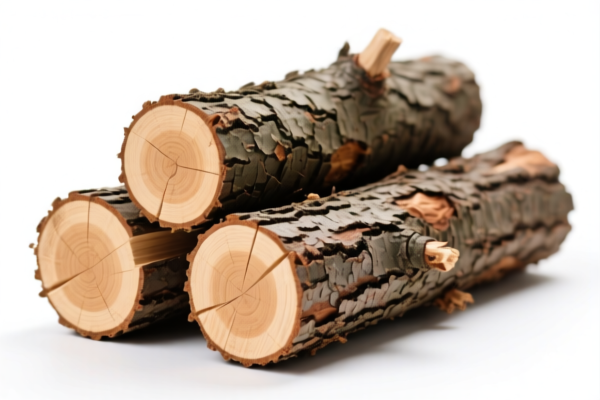
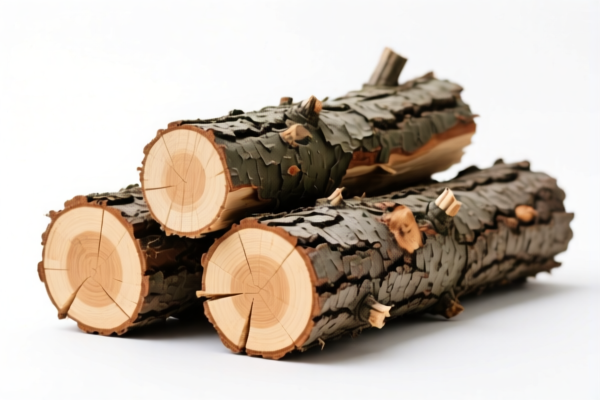
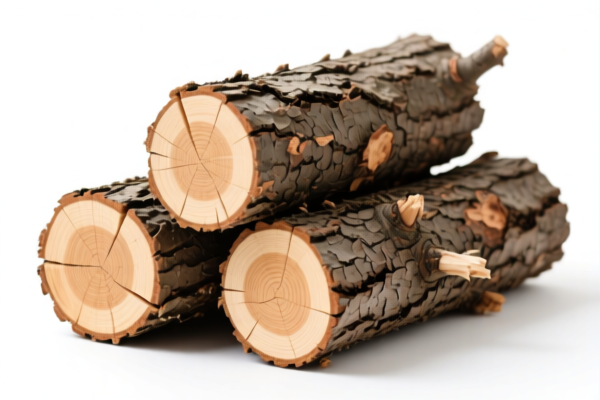
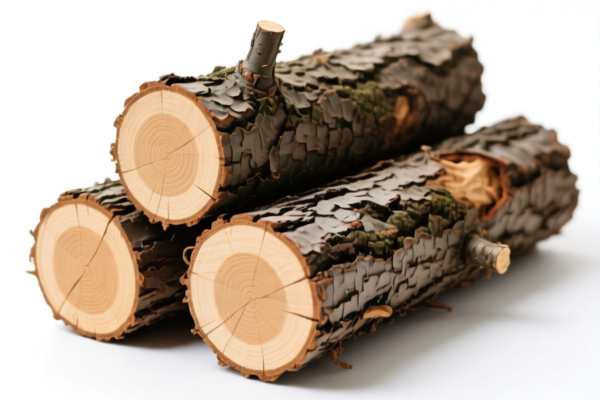
AI Analysis
🌲 Rough Fir Logs (未加工冷杉原木)
🌐 HS Code Reference & Customs Clearance Guide | 2026 Latest Tariff Analysis | Professional Strategy for Raw Wood Imports
📌 I. Product Definition & Classification: What Exactly Are "Rough Fir Logs"?
Rough Fir Logs refer to unprocessed or slightly processed timber derived from the Abies genus (Fir tree). In international trade, these are categorized not as finished lumber, but as raw timber products. They are typically in their natural cylindrical shape, possibly stripped of bark (debarked) or left with bark, and are used as raw materials for downstream processing (such as plywood, paper pulp, or further sawing).
⚠️ Key Distinction:
- If the wood is simply felled, trimmed of branches, and debarked (but not yet cut into planks/beams) → It is classified as "Logs" (Chapter 44 Heading 4403).
- If the wood is fuel wood (chipped, chopped, or in logs specifically for burning) → It falls under "Fuel Wood" (Chapter 44 Heading 4401).
- If the wood is primary wood in the rough (not yet sawn, merely trimmed) → It may fall under 4401.11.
📦 II. HS Code Classification Details (2026 Latest Tariff Alignment)
Based on the provided data, the following HS Codes are relevant to Rough Fir Logs and related raw timber forms. Note that "Fir" is a coniferous wood, but the specific classification depends on the exact form and usage intent.
| HS Code | Product Description | Application Scenario | Tax Rate (Total) | Key Tax Components |
|---|---|---|---|---|
4401.11.00.00 |
Primary Wood in the Rough (原木粗材) Matches: Wood material & Log morphology |
Unprocessed logs, tree trunks stripped of bark but not yet sawn. Suitable for general raw material supply. | 35.0% | Base: 0% Section 301: 25% Section 122: 10% |
4403.22.01.65 |
Coniferous Wood, Specifically Fir/Pine Type (松木类原木) Matches: Log material & Rough form |
Specific coniferous logs (including Fir/Abies) that are debarked or sawn lengthwise. Often used for specific lumber production. | 35.0% | Base: 0% Section 301: 25% Section 122: 10% |
4403.21.01.30 |
Logs and Timber, Rough Sawn Characteristics (原木和木材,匹配原木形态及粗锯特征) Matches: Log morphology & Rough sawn features |
Logs that may have minor rough-sawing marks or are in a transitional state between raw logs and processed lumber. | 35.0% | Base: 0% Section 301: 25% Section 122: 10% |
4401.12.00.00 |
Fuel Wood (燃料木材) Matches: Log material & Rough form |
Logs specifically intended for combustion/fuel. Even if they are Fir logs, if the primary purpose is fuel, they fall here. | 35.0% | Base: 0% Section 301: 25% Section 122: 10% |
🔍 Critical Note:
- All listed HS Codes carry a Total Tax Rate of 35.0% for imports from China to the US (assuming standard trade context).
- The composition is Uniform: No Base Tariff, but significant punitive tariffs apply.
- Fir Logs specifically often map to4403.22(Coniferous) or4403.21depending on the precise botanical classification and processing level.
💰 III. 2026 Tariff Rate Breakdown (Including Surtaxes & Policy Add-ons)
✅ Applicable Country: United States (US)
✅ Origin: China (CN)
✅ Effective Date: Ongoing (Section 301 & 122 measures active)
🎯 1. The 35% "Perfect Storm" Tariff Structure
For all the HS Codes listed above (4401.11, 4403.22, 4403.21, 4401.12), the tax structure is identical:
| Component | Rate | Legal Basis & Explanation |
|---|---|---|
| Base Tariff (MFN) | 0.0% | Most Favored Nation (MFN) rate for raw timber is often 0% or low, reducing the "base" burden. |
| Section 301 Surtax | +25.0% | USITC Footnote 9903.88.01: Imposed under the Trade Act of 1974, Section 301, targeting specific Chinese wood products. |
| Section 122 Surtax | +10.0% | IEEPA Section 122: Additional duties applied under international emergency economic powers, often applied to strategic raw materials. |
| Total Effective Rate | 35.0% | Sum of Base + 301 + 122. This is a high-cost category for importers. |
📌 Why 35%?
- The 0% base might tempt importers, but the 35% total makes importing rough Fir Logs from China extremely expensive.
- Section 122 (10%) is particularly critical and often overlooked in basic calculations. It is applied on top of the 301 duty.
- No De Minimis Exemption: These goods cannot be shipped via small parcels to avoid taxes. They are subject to full declaration.
🛠️ IV. Customs Clearance Practical Advice (Avoiding Pitfalls)
✅ 1. Essential Documentation Checklist
| Document | Required? | Purpose |
|---|---|---|
| ✅ Botanical Classification Certificate | ✔️ | Must prove the species is Abies (Fir) and not a prohibited or regulated species. |
| ✅ Phytosanitary Certificate | ✔️ | Issued by the country of origin. Confirms no pests, diseases, or fungi (ISPM 15 compliance). |
| ✅ Bill of Lading / Air Waybill | ✔️ | Must clearly state "Rough Fir Logs" and not vague terms like "Wood Parts." |
| ✅ Commercial Invoice | ✔️ | Must detail CIF value, as tax is calculated on this. |
| ✅ Packing List | ✔️ | Specify volume (CBM) and weight. Logs are often measured by volume. |
| ✅ Fumigation Certificate | ✔️ | Mandatory for raw wood to prevent bio-security risks. |
✅ 2. Declaration Best Practices (Pro Tips)
🔥 "Be Specific, Be Accurate, Avoid 'Other Wood'"
| Scenario | Correct Declaration | Incorrect Declaration | Consequence |
|---|---|---|---|
| Raw Fir Logs (Debarked) | 4403.22.01.65 - Rough Fir Logs |
"Wood" or "Timber" | High risk of misclassification penalty (up to 40% of duty value). |
| Logs for Fuel | 4401.12.00.00 - Fuel Wood |
"Lumber" | Wrong HS Code → Customs holds shipment for re-evaluation. |
| Mixed Conifer Logs | 4403.21.01.30 - Mixed Coniferous Logs |
"Fir Logs" (if mixed) | Under-declaration risk. Must declare all species if mixed. |
| Sawn but Rough | 4403.21.01.30 |
4403.22 (Log) |
If it's sawn, it's not a log. Misclassification → Delay. |
📌 Key Tip:
- Do not use generic terms like "Wood" or "Lumber" if the goods are logs.
- Clearly state "Rough Sawn" or "Debarked Logs" to match the HS Code description.
- Ensure the Phytosanitary Certificate matches the Invoice Description exactly.
✅ 3. Special Considerations
| Issue | Advice |
|---|---|
| Pest Control | Fir logs are prone to bark beetles. Ensure fumigation is documented. Failure → Quarantine/Destruction. |
| Volume Measurement | Logs are often sold by volume (CBM). Ensure your invoice converts this to a value accurately. Discrepancies → Audit. |
| Transshipment | If shipped via a third country (e.g., Canada), ensure Certificate of Origin is correctly issued from China to avoid disputes. |
| Duty Mitigation | 35% is high. Consider if duty drawback applies if the logs are re-exported after processing. |
🌍 V. Global Market Comparison (2026 Outlook)
| Market | Recommended HS Code | Estimated Total Duty | Key Requirement | Notes |
|---|---|---|---|---|
| 🇺🇸 USA | 4403.22.01.65 / 4401.11.00.00 |
35.0% | Phytosanitary + 301/122 | High barrier. Competitiveness is low. |
| 🇨🇳 China | 4403.22.01.65 |
0-5% | CITES (if applicable) | Low duty for domestic processing. |
| 🇪🇺 EU | 4403.22.01 |
0% - 1.7% | EUTR (Timber Regulation) | No punitive tariffs, but strict legality verification. |
| 🇯🇵 Japan | 4403.22.01 |
2.0% - 3.2% | IPPC Mark | Moderate duty, high quality standards. |
📌 Conclusion:
- The US market is the most expensive due to the 35% combined tariff.
- Importers should strongly consider sourcing from non-China origins (e.g., Canada, Russia, Europe) to avoid the 301/122 duties, unless the cost savings from lower FOB prices outweigh the 35% tax.
- EU and Japan are more favorable for tariff-wise, but have strict legality verification (EUTR in EU).
📌 VI. Common Mistakes & Pitfalls (Lessons Learned)
❌ Mistake 1: Declaring "Fir Logs" as "Processed Lumber" (4407)
👉 Result: If customs inspects and finds raw logs, they will reclassify to 4403, assess the 35% duty + penalties.
❌ Mistake 2: Ignoring the Section 122 (10%) tariff
👉 Result: Underpayment. Customs will demand the missing 10% + interest.
❌ Mistake 3: Using vague descriptions like "Wood" on the invoice
👉 Result: Customs holds the shipment for manual classification, causing demurrage charges and delays.
❌ Mistake 4: Missing Phytosanitary Certificate
👉 Result: Rejection/Quarantine. The entire shipment could be destroyed or re-exported at the importer's cost.
✅ Correct Approach:
"Rough Fir Logs, Debarked, ISPM 15 Fumigated, CIF Value $X, HS Code 4403.22.01.65"
🎯 VII. Conclusion: Strategic Import Advice
🎯 Key Takeaway:
🔹 Rough Fir Logs imported from China to the US face a 35% total tariff.
🔹 This includes 25% (Section 301) + 10% (Section 122).
🔹 No base duty, but punitive duties dominate.
📌 Recommendation:
1. Evaluate Alternatives: Can you source Fir Logs from Canada, Europe, or Russia to avoid the 35%?
2. Pre-Declare: Submit a Binding Ruling request to US Customs if unsure about the exact HS Code (4403.22 vs 4401.11).
3. Documentation: Ensure Phytosanitary and Fumigation certificates are flawless.
4. Cost Analysis: Factor in the 35% duty + insurance + freight + demurrage risk when pricing.
📣 Immediate Action:
📞 Consult a Licensed Customs Broker to verify the exact HS Code based on your specific log dimensions and processing level.
🚀 Optimize Your Supply Chain to mitigate the high tariff burden.
✨ Precision in Classification, Savings in Duties!
💼 Every Log Counted, Every Dollar Saved!
Customer Reviews
About HS Code Classification
The Harmonized System (HS) is an internationally standardized nomenclature developed by the World Customs Organization (WCO) to classify traded products. Over 200 countries use the HS system as the basis for customs tariffs, trade statistics, and import/export regulations.
Each HS code follows a hierarchical structure:
- Chapter (2 digits) — Broad category of goods (e.g., Chapter 84: Machinery and Mechanical Appliances)
- Heading (4 digits) — More specific grouping within the chapter
- Subheading (6 digits) — Internationally standardized breakdown, used by all WCO member countries
- National subdivisions (8-10 digits) — Country-specific extensions for further classification, such as US HTSUS 10-digit codes
Correct HS code classification is essential for smooth customs clearance, accurate duty payment, and compliance with trade regulations. Misclassification can lead to customs delays, overpayment of duties, or penalties.
When importing from CN to US, the applicable tariff rates may include:
- Most-Favored-Nation (MFN) rate — The standard duty rate applied to WTO members
- General rate — Applied to countries without trade agreements
- Trade remedy duties — Additional tariffs such as Section 301 (anti-dumping), Section 232 (national security), or countervailing duties
The information provided on this page is for reference purposes only. For official classification, please consult with your local customs authority or a licensed customs broker.