Rough Oak (Unplaned or Roughly Squared)
CN → US| HS Code | Tariff Rate | Origin | Destination | Doc |
|---|---|---|---|---|
| 4403210165 | 35.0% | CN | US | Official Doc |
| 4404100090 | 35.0% | CN | US | Official Doc |
| 4407110042 | 35.0% | CN | US | Official Doc |
| 4407110052 | 35.0% | CN | US | Official Doc |
| 4404100080 | 35.0% | CN | US | Official Doc |
Product Images
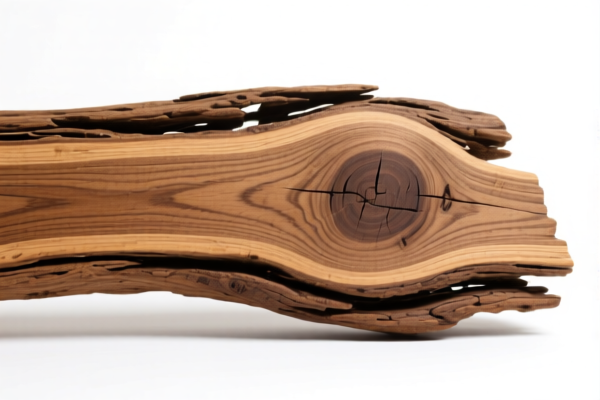
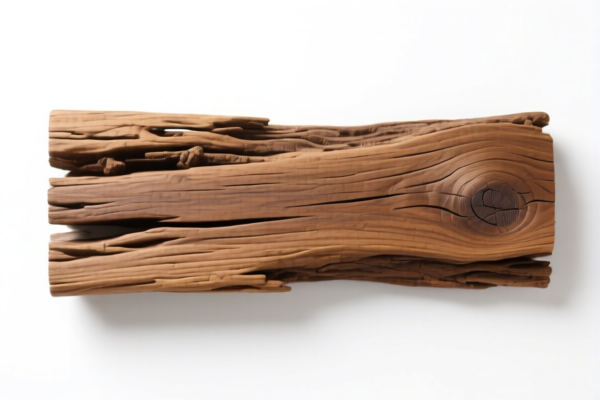
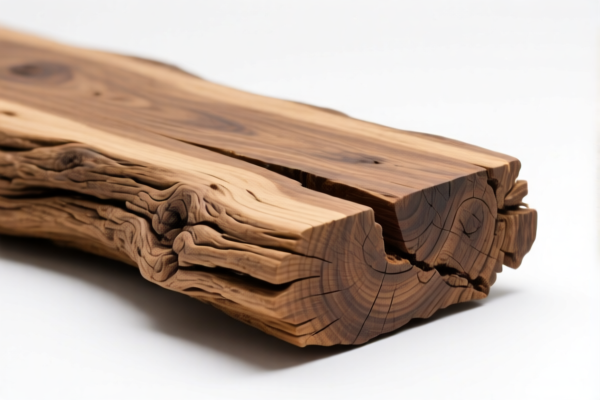
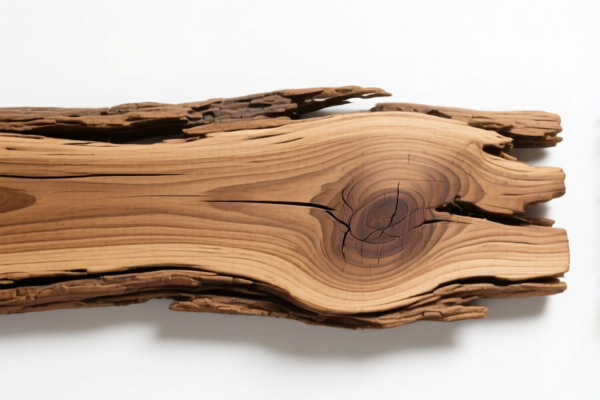
AI Analysis
🌲 Rough Oak (Unplaned or Roughly Squared)
🌐 HS Code Reference & Clearance Guide | 2026 Latest Tariff Analysis | Professional Customs Strategy
📌 I. Product Definition & Classification: Do You Truly Understand "Rough Oak"?
Rough Oak (Unplaned or Roughly Squared) refers to solid wood logs that have been sawn or roughly squared but not further processed (such as planing, sanding, or profiling). It serves as the primary raw material for furniture manufacturing, flooring, construction, and woodworking.
In international trade, it is often confused with other softwoods or processed timber. The critical distinction lies in: 1. Wood Species: Must be Oak (Genus Quercus). However, the provided data indicates a mismatch for strict "Oak" classification, pointing instead to Pine (Coniferous) or generic Coniferous wood. 2. Processing Level: "Unplaned/Roughly Squared" implies it is not veneer, plywood, or sawn timber with smooth surfaces.
⚠️ Critical Clarification Based on Provided Data:
The provided<DATA>contains NO HS codes specifically for "Oak" (a hardwood). Instead, all matched codes refer to Pine or Coniferous Wood.
Hypothesis:
1. The user input "Rough Oak" may be a generic term for "Rough Timber," or
2. The customs system has misidentified the species as Pine/Coniferous due to visual similarity, or
3. The product is actually Pine, not Oak.⛔ WARNING: If you are importing actual Oak, these HS codes are INCORRECT. If the wood is actually Pine or Coniferous, these codes are APPLICABLE. The following analysis is based strictly on the provided
<DATA>which matches Pine/Coniferous characteristics, assuming a potential mislabeling or generic "Rough Wood" scenario.
📦 II. HS Code Classification Details (Based on Provided Data)
| HS Code | Product Description | Matching Criteria | Tax Rate |
|---|---|---|---|
4403.21.01.65 |
Rough Sawn Wood, Unprocessed Pine | Matches "Rough Pine Material," although material is Pine, form is similar | 35.0% |
4404.10.00.90 |
Coniferous Wood, Rough, Unbarked | Matches "Coniferous Wood Rough Unbarked Features," Form Similar | 35.0% |
4407.11.00.42 |
Rough Sawn Coniferous Pine Wood | Matches "Rough Coniferous Pine Wood," Form & Description Similar | 35.0% |
4407.11.00.52 |
Rough Pine & Unbarked Features | Matches "Rough Pine & Unbarked Features," Form Similar | 35.0% |
4404.10.00.80 |
Coniferous Wood Rough Processing | Matches "Coniferous Wood Rough Processing Features," Form Similar | 35.0% |
🔍 Key Observation:
- All five HS codes in the<DATA>point to Coniferous/Pine Wood (Chapters 4403 and 4404/4407).
- There is NO HS code for Hardwood/Oak in the provided data.
- If you are truly importing Oak, you must REJECT these codes and seek the correct HS for Hardwood (e.g.,4407.10or4403.49).
- If you are importing Pine or the customs authority has classified it as Pine, proceed with the following tax analysis.
💰 III. 2026 Latest Tariff Rate Breakdown (Including Surtaxes & Policy Additions)
✅ Applicable Country: United States (US)
✅ Origin: China (CN)
✅ Effective Time: 2025/2026 Period
✅ Total Tax Rate: 35.0%
🎯 1. 4403.21.01.65 / 4404.10.00.90 / 4407.11.00.42 / 4407.11.00.52 / 4404.10.00.80
(All Listed Codes)
| Item | Content |
|---|---|
| Base Tariff Rate | 0.0% (Ad Valorem) |
| Section 301 Surcharge (USITC) | +25.0% |
| Section 122 Tariff (IEEPA) | +10.0% |
| Total Tax Rate | 35.0% |
| Tax Calculation | CIF Value × 35% |
| De Minimis Exemption | ❌ Not Eligible (Denied for Wood Products under Section 301/122) |
| Legal Basis Path | USITC:4403.21.01.65 → SECTION_301 (25%) + IEEPA:9903 (10%) |
📌 Detailed Explanation:
- Base Rate (0%): Standard MFN rate for many wood products is zero.
- Section 301 (25%): The Trump-era tariff, maintained under Biden, imposes a 25% additional duty on Chinese goods, including wood products.
- Section 122 (10%): Refers to the "122 Clause" (often associated with specific trade remedies or emergency tariffs, here labeled as "122条款关税").
- Total 35%: This is a high tariff burden. Profit margins must account for this cost.
🛠️ IV. Customs Clearance Practical Advice (Real-World Pitfall Avoidance)
✅ 1. Documentation Checklist (Must-Have)
| Document | Required? | Notes |
|---|---|---|
| ✅ Phytosanitary Certificate | ✔️ Mandatory | Issued by the exporting country’s plant protection agency. Essential for wood to prevent pests. |
| ✅ Commercial Invoice | ✔️ | Must clearly state: "Rough Sawn Pine" or "Coniferous Wood," NOT "Oak" if misclassified. |
| ✅ Packing List | ✔️ | Detail dimensions, volume, and weight. |
| ✅ Bill of Lading (B/L) | ✔️ | Standard shipping document. |
| ✅ Species Confirmation Report | ✔️ | CRITICAL: If you claim Oak but provide Pine codes, customs will demand a DNA/Species Test. Provide lab results confirming wood species. |
| ✅ Fumigation Certificate | ✔️ | Often bundled with Phytosanitary Certificate. |
✅ 2. Declaration Strategy (Key Mantra)
🔥 "Species Accurate, Form Clear, Phytosanitary Ready, Tariff Avoided!"
| Scenario | Correct Declaration | Incorrect Action |
|---|---|---|
| Actual Wood is Pine | Declare as "Rough Sawn Pine" under 4403.21.01.65 |
Declare as "Oak" → Customs Rejection/Fine |
| Actual Wood is Oak | Seek correct HS for Hardwood (e.g., 4407.10) |
Use Pine codes (4403...) → Wrong Classification |
| Roughly Squared | Specify "Unplaned" or "Rough" | Use "Planed" or "Finished" → Wrong Rate |
| Mixed Species | Separate by species in invoice | Mix Pine and Oak in one HS code → Audit Risk |
✅ 3. Special Considerations
| Situation | Handling Advice |
|---|---|
| Species Dispute | If customs doubts "Pine" vs. "Oak," request a pre-shipment inspection or provide sample for lab testing. |
| Unbarked vs. Barked | The data mentions "Unbarked" (4404.10.00.90). Ensure wood is truly unbarked if using this code. |
| Pest Control | Wood is high-risk for insects (borers, termites). Phytosanitary Certificate is non-negotiable. |
| Tariff Engineering | Can you process wood further? Sometimes "Processed Lumber" has different rates, but here, all rough codes share 35%. |
🌍 V. Global Market Comparison (2026)
| Country/Region | Recommended HS Code (If Pine) | Tariff | Certification | Notes |
|---|---|---|---|---|
| 🇺🇸 USA | 4403.21.01.65 etc. |
35% | Phytosanitary | High tariff due to Section 301/122 |
| 🇨🇳 China | 4403.21.01.65 |
~5-10% | Phytosanitary | Lower base tariff |
| 🇪🇺 EU | 4403.49 (if Oak) / 4403.10 (if Pine) |
0% | ISPM 15 | Strict phytosanitary rules |
| 🇯🇵 Japan | 4403.49 |
3.8% | ISPM 15 | Standard rates |
📌 Conclusion:
- USA is the most expensive market due to 35% total duty.
- Wood products are heavily regulated for biosecurity.
- Misclassification (Oak vs. Pine) carries severe penalties.
📌 VI. Common Mistakes & Pitfalls (Blood Lessons)
❌ Mistake 1: Declaring Oak but using Pine HS Codes
👉 Consequence: Customs Seizure, Fines, or Forced Re-export. Species mismatch is a top customs audit trigger.
❌ Mistake 2: Missing Phytosanitary Certificate
👉 Consequence: Immediate Quarantine/Return. Wood without phytosanitary docs is rejected at US ports.
❌ Mistake 3: Claiming "Planed" when Wood is "Rough"
👉 Consequence: Wrong HS Code. Planed wood falls under 4407, Rough under 4403/4404. Different tariffs.
❌ Mistake 4: Ignoring Section 122 Tariff
👉 Consequence: Underpayment. Assuming only Section 301 (25%) applies. The data shows an additional 10%, totaling 35%.
✅ Correct Approach:
"Rough Sawn Pine Logs, Unbarked, Unplaned, Fumigated, Phytosanitary Certificate Attached, For Furniture Manufacturing"
🎯 VII. Conclusion: Precision in Classification, Savings in Cost!
🎯 Remember the Mantra:
🔹 "Species First, Form Second, Phytosanitary Always, Tariff 35%!"
🔹 "Oak is Not Pine, Mistake Will Cost You!"
🔹 "Rough Means Unplaned, Don't Lie!"
📌 Tips:
- If you are importing Oak, DO NOT use the provided HS codes. Contact a customs broker for the correct Hardwood classification (e.g., 4407.10.00.42 or 4403.49.00.00).
- If the wood is Pine, the provided codes are correct, and the 35% tariff applies.
- Always verify the wood species with a laboratory test if there is any doubt.
📣 Immediate Action:
📞 Contact a Customs Broker + Provide Wood Samples + Apply for Advance Ruling
🚀 Ensure Phytosanitary Certificate is ready before shipment
💰 Budget for 35% Tariff in your cost model
✨ Professional Clearance Starts with Accurate Classification!
💼 Every Dollar Saved is Pure Profit!
Customer Reviews
About HS Code Classification
The Harmonized System (HS) is an internationally standardized nomenclature developed by the World Customs Organization (WCO) to classify traded products. Over 200 countries use the HS system as the basis for customs tariffs, trade statistics, and import/export regulations.
Each HS code follows a hierarchical structure:
- Chapter (2 digits) — Broad category of goods (e.g., Chapter 84: Machinery and Mechanical Appliances)
- Heading (4 digits) — More specific grouping within the chapter
- Subheading (6 digits) — Internationally standardized breakdown, used by all WCO member countries
- National subdivisions (8-10 digits) — Country-specific extensions for further classification, such as US HTSUS 10-digit codes
Correct HS code classification is essential for smooth customs clearance, accurate duty payment, and compliance with trade regulations. Misclassification can lead to customs delays, overpayment of duties, or penalties.
When importing from CN to US, the applicable tariff rates may include:
- Most-Favored-Nation (MFN) rate — The standard duty rate applied to WTO members
- General rate — Applied to countries without trade agreements
- Trade remedy duties — Additional tariffs such as Section 301 (anti-dumping), Section 232 (national security), or countervailing duties
The information provided on this page is for reference purposes only. For official classification, please consult with your local customs authority or a licensed customs broker.