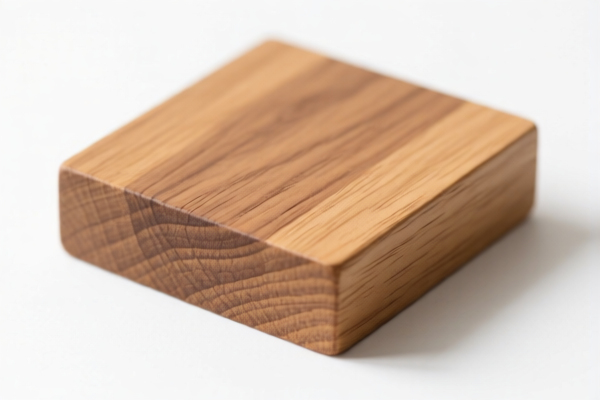
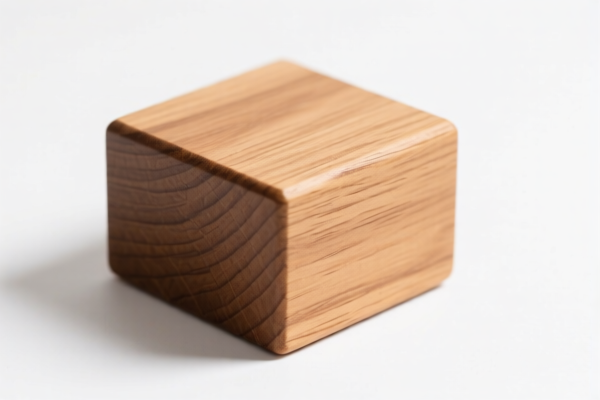
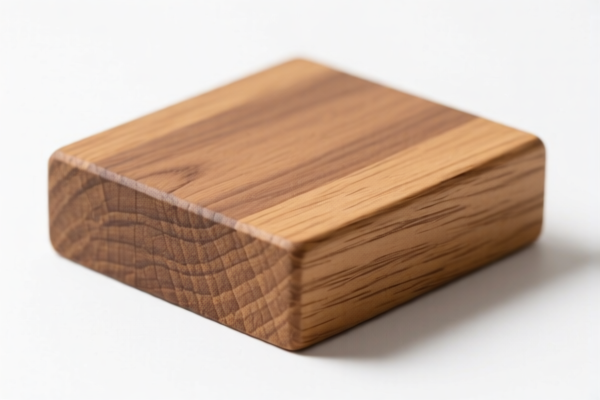
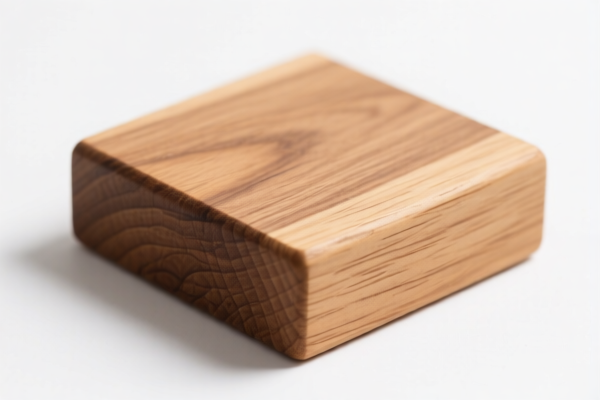
Rough Oak Square Furniture Grade
CN → US| HS Code | Tariff Rate | Origin | Destination | Doc |
|---|---|---|---|---|
| 4407910022 | 35.0% | CN | US | Official Doc |
| 4407910063 | 35.0% | CN | US | Official Doc |
Product Images
AI Analysis
🪵 Rough Oak Square Furniture Grade Timber
🌐 HS Code Reference & Customs Clearance Guide | 2026 Latest Tariff Analysis | Professional Clearance Strategy
📌 I. Product Definition & Classification: Do You Really Know "Rough Oak"?
"Rough Oak Square Furniture Grade" refers to solid oak timber (specifically Quercus spp.) that has been sawn, chipped, sliced, or peeled to a thickness exceeding 6 mm. It is processed lengthwise but remains in its "rough" state, meaning it may be planed, sanded, or end-jointed, but it has not been further processed into finished furniture parts or specialized engineered wood. In international trade, this falls under Chapter 44 (Wood and articles of wood; wood charcoal).
The classification hinges on two key factors: 1. Species: The description explicitly states "Oak." The data distinguishes between Red Oak and Other Oak. 2. Processing Level: It is "sawn or chipped lengthwise... thickness exceeding 6 mm." This places it firmly in heading 4407.
⚠️ Key Distinction Point:
- If the oak is specifically Red Oak (Quercus rubra, Quercus palustris, etc.), it falls under subheading 4407.91.00.22.
- If the oak is any other type of Oak (e.g., White Oak, European Oak, etc.), it falls under subheading 4407.91.00.63.
- Both categories are subject to the same tariff structure in the provided data.
📦 II. HS Code Classification Details (2026 Latest Tariff Authority Comparison)
| HS Code | Product Description | Applicable Scenario | Tax Rate (China to US) |
|---|---|---|---|
4407.91.00.22 |
Wood, sawn/chipped lengthwise, thickness > 6mm: Other: Of Oak (Quercus spp.) Red Oak | Red oak lumber, rough-sawn red oak squares, furniture-grade red oak planks | 25.0% |
4407.91.00.63 |
Wood, sawn/chipped lengthwise, thickness > 6mm: Other: Of Oak (Quercus spp.) Other | White oak, European oak, or other non-red oak species, rough-sawn squares | 25.0% |
🔍 Critical Reminder:
- Both codes fall under "Other" wood of oak, meaning they are not pre-cut furniture parts (which would be Chapter 94) or plywood (Chapter 44, heading 4412).
- "Furniture Grade" is a quality designation, not a tariff classification. The tariff is determined by the species (Red vs. Other) and physical form (sawn/chipped, >6mm).
- "Rough" implies minimal processing. If the wood is planed or sanded, it still fits under 4407 as long as it exceeds 6mm thickness.
💰 III. 2026 Latest Tariff Rate Details (Including Additional Duties & Policy Surcharges)
✅ Applicable Country: United States (US)
✅ Origin: China (CN) (Implied by the tax structure in the data: Base 0% + Additional 25%)
✅ Effective Time: Current applicable rates as per the provided data
🎯 1. 4407.91.00.22 —— Red Oak Lumber (Sawn/Chipped, >6mm)
| Item | Content |
|---|---|
| Base Tariff | 0.0% (ad valorem) |
| Additional Duty (Section 301) | +25.0% |
| Total Tariff Rate | 25.0% |
| Tax Calculation | CIF Value × 25% |
| De Minimis Exemption | ❌ Not Applicable (Section 301 duties generally apply to all imports regardless of value for these goods) |
| Legal Basis Path | HTSUS:4407.91.00.22 → Section 301 Footnote |
📌 Explanation:
- The 0% base rate is the standard Most Favored Nation (MFN) rate for oak wood products under normal trade relations.
- The 25% additional duty is imposed under Section 301 of the Trade Act of 1974, targeting specific Chinese-origin goods, including wood products like this.
- Total 25% is the final duty burden for importers. No other IEEPA surcharges are indicated in the provided data for this specific HS code.
🎯 2. 4407.91.00.63 —— Other Oak Lumber (Sawn/Chipped, >6mm)
| Item | Content |
|---|---|
| Base Tariff | 0.0% (ad valorem) |
| Additional Duty (Section 301) | +25.0% |
| Total Tariff Rate | 25.0% |
| Tax Calculation | CIF Value × 25% |
| De Minimis Exemption | ❌ Not Applicable |
| Legal Basis Path | HTSUS:4407.91.00.63 → Section 301 Footnote |
📌 Note:
- Identical tax treatment to Red Oak.
- Whether it is White Oak, Pin Oak, or Sessile Oak, as long as it is Quercus spp. and not classified as "Red Oak" under the specific USITC definitions, it falls under "Other."
- Key for Importers: Correctly identifying the oak species is crucial for administrative accuracy, but the cost impact is identical.
🛠️ IV. Customs Clearance Practical Advice (Battle-Tested Pitfall Avoidance Guide)
✅ 1. Required Documentation Checklist (Nothing Missing)
| Document | Mandatory? | Description |
|---|---|---|
| ✅ Commercial Invoice | ✔️ | Must clearly state: "Rough Oak Squares, Furniture Grade, Species: Quercus spp. (Red/Other)," Quantity, Weight, Value. |
| ✅ Packing List | ✔️ | Detail package dimensions, gross/net weight. Ensure "Rough" status is noted if inspection is required. |
| ✅ Phytosanitary Certificate | ✔️ | Crucial for wood. Issued by the exporting country’s plant protection organization to prove freedom from pests/diseases. |
| ✅ Fumigation Certificate | ✔️ | Often required alongside the Phytosanitary Certificate, especially for untreated wood. |
| ✅ Species Declaration | ✔️ | While HS code differs for Red vs. Other, a declaration helps avoid disputes. Use scientific names if possible. |
| ✅ Bill of Lading/Air Waybill | ✔️ | Standard shipping document. |
✅ 2. Declaration Tips (Key Mnemonic)
🔥 "Rough is Sawn, Not Finished; 6mm is the Line; Oak is Quercus; 25% is the Price!"
| Scenario | Correct Declaration | Incorrect Practice |
|---|---|---|
| Rough Square Lumber | HS 4407.91.00.22 or .63 |
Misdeclaring as "Furniture Parts" (Ch. 94) → Wrong classification, potential penalties |
| Planed/Sanded Wood | Still HS 4407.91.xxxx (if >6mm) |
Misdeclaring as "Semi-finished" (no such tariff) → Confusion, delays |
| Wood < 6mm | Different HS Code (e.g., 4407.99) |
Declaring as 4407.91 → Rejection, reclassification |
| Veneer (Thin Sheets) | HS 4408 |
Declaring as 4407 → Major classification error |
✅ 3. Special Case Handling
| Situation | Handling Advice |
|---|---|
| Mixed Species | If a shipment contains both Red and Other Oak, declare the predominant species or split the entry. If mixed, customs may apply the higher-risk classification or require detailed breakdown. |
| End-Jointed Wood | End-jointing is allowed under 4407 as long as it is still considered "wood sawn... whether or not... end-jointed." Do not declare as "engineered wood" or "blockboard" unless further processed. |
| Furniture Grade Claim | "Furniture Grade" is a commercial quality term. Customs cares about physical specs. Ensure the invoice reflects the commercial value accurately, not just the "grade" label. |
| US Customs Valuation | Ensure CIF value includes cost of the wood, freight, and insurance. The 25% duty is calculated on this total value. |
🌍 V. Global Market Comparison (2026 Latest)
| Country/Region | Recommended HS Code | Tariff (China Origin) | Certification/Note |
|---|---|---|---|
| 🇺🇸 USA | 4407.91.00.22 / .63 |
25% | Phytosanitary Cert required. Section 301 applies. |
| 🇨🇳 China | 4407.91.00 |
~5-10% | Varies by exact subheading. Import duty for foreign oak. |
| 🇪🇺 EU | 4407.91 |
0% (Under GSP/TARIC) | FLEGT license may be required for certain origins. No US-style 301 tariff. |
| 🇬🇧 UK | 4407.91 |
0% | Post-Brexit trade agreements may offer zero tariffs. |
| 🇯🇵 Japan | 4407.91 |
0-5% | Depends on specific oak type and origin. Generally favorable. |
📌 Conclusion:
- The USA is the most expensive market for Chinese-origin oak lumber due to the 25% Section 301 surcharge.
- For other major markets (EU, UK, Japan), tariffs are significantly lower or zero, making them more cost-effective if supply chains allow diversification.
📌 VI. Common Errors & Pitfall Guide (Blood & Tears Lessons)
❌ Error 1: Declaring "Rough Oak" as "Furniture"
👉 Consequence: Wrong HS Code (Chapter 94 vs. 44). Penalties + Back Duties + Re-inspection.
❌ Error 2: Ignoring the Phytosanitary Certificate
👉 Consequence: Hold at US Port. Wood products are heavily inspected for pests. No cert = No entry.
❌ Error 3: Misidentifying Red Oak vs. Other Oak
👉 Consequence: Administrative delay. While the tax is the same (25%), incorrect data can lead to audits or disputes over origin verification.
❌ Error 4: Assuming "Furniture Grade" reduces tax
👉 Consequence: "Furniture Grade" has no tariff benefit. It is a quality label, not a tariff classification. Duty remains 25%.
✅ Correct Action:
"Rough Oak Squares, Quercus spp., Red Oak (or Other), Sawn, Thickness > 6mm, Furniture Grade, Fumigated, CIF Value $X"
🎯 VII. Conclusion: Professional Declaration, Save Time, Cut Costs!
🎯 Remember the Mnemonic:
🔹 "Rough is Sawn, Not Finished; 25% is the Price; Cert is Key, Don't Miss!"
🔹 "HS Code 4407, Species Matters, Tax is Flat, 25% for All!"
📌 Pro Tip:
If you are importing large volumes, consider Advanced Ruling (IS Ruling) from US Customs and Border Protection (CBP) to confirm the specific HS code classification for your unique "square furniture grade" product. This provides legal certainty and prevents surprises at the border.
📣 Immediate Action:
📞 Contact your freight forwarder to verify Phytosanitary Certificate requirements.
📄 Ensure your commercial invoice clearly states "Rough Sawn," "Thickness > 6mm," and "Oak (Quercus spp.)".
🚀 Smooth clearance, lower risk, and predictable costs!
✨ Professional clearance starts with accurate classification!
💼 Every dollar of duty should be accounted for!
Customer Reviews
About HS Code Classification
The Harmonized System (HS) is an internationally standardized nomenclature developed by the World Customs Organization (WCO) to classify traded products. Over 200 countries use the HS system as the basis for customs tariffs, trade statistics, and import/export regulations.
Each HS code follows a hierarchical structure:
- Chapter (2 digits) — Broad category of goods (e.g., Chapter 84: Machinery and Mechanical Appliances)
- Heading (4 digits) — More specific grouping within the chapter
- Subheading (6 digits) — Internationally standardized breakdown, used by all WCO member countries
- National subdivisions (8-10 digits) — Country-specific extensions for further classification, such as US HTSUS 10-digit codes
Correct HS code classification is essential for smooth customs clearance, accurate duty payment, and compliance with trade regulations. Misclassification can lead to customs delays, overpayment of duties, or penalties.
When importing from CN to US, the applicable tariff rates may include:
- Most-Favored-Nation (MFN) rate — The standard duty rate applied to WTO members
- General rate — Applied to countries without trade agreements
- Trade remedy duties — Additional tariffs such as Section 301 (anti-dumping), Section 232 (national security), or countervailing duties
The information provided on this page is for reference purposes only. For official classification, please consult with your local customs authority or a licensed customs broker.