Rough Oak Unplaned or Roughly Squared
CN → US| HS Code | Tariff Rate | Origin | Destination | Doc |
|---|---|---|---|---|
| 4407910022 | 35.0% | CN | US | Official Doc |
| 4407910063 | 35.0% | CN | US | Official Doc |
| 4403910040 | 35.0% | CN | US | Official Doc |
| 4403910020 | 35.0% | CN | US | Official Doc |
| 4403910040 | 35.0% | CN | US | Official Doc |
Product Images
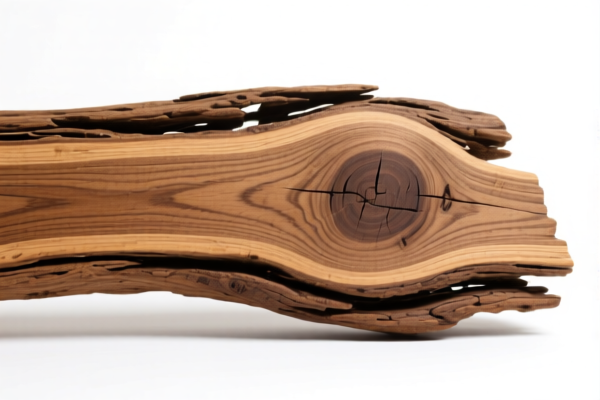
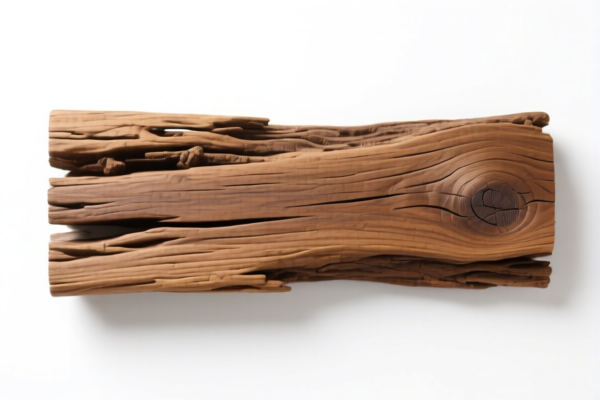
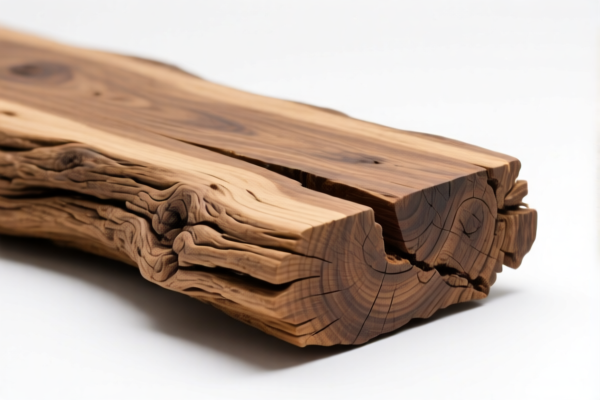
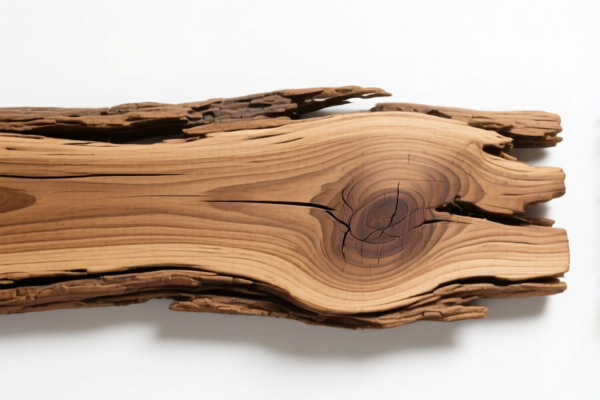
AI Analysis
🌲 Rough Oak Unplaned or Roughly Squared (Wood Products)
🌐 HS Code Reference & Customs Clearance Guide | 2026 Tariff Full Analysis | Professional Clearance Strategy
📌 I. Product Definition & Classification: Do You Really Understand "Rough Oak"?
Rough oak, whether unplaned or roughly squared, is a primary raw material in the woodworking, furniture, and construction industries. In international trade, it is categorized based on its state of processing (form) and species (material). The key distinction lies in whether it is in its log form or has been sawn into beams/planks.
⚠️ Key Distinction Point:
- If it is a raw tree trunk with or without bark → Classified under Chapter 4403 (Wood in the rough);
- If it has been sawed longitudinally into rectangular shapes (squared timber) → Classified under Chapter 4407 (Wood sawn lengthwise).
📦 II. HS Code Classification Details (2026 Latest Tariff Authority对照)
| HS Code | Product Description | Application Scenario | Processing State |
|---|---|---|---|
4403.91.00.40 |
Rough oak logs, unpeeled, shape: Log | Raw timber for export, initial processing stage | ❌ Not Sawn (Log Form) |
4403.91.00.20 |
Rough oak logs, unpeeled, shape: Rough Sawn Timber | Semi-processed oak, red oak variety | ⚠️ Partially Sawn |
4407.91.00.22 |
Roughly squared oak (unpeeled), longitudinal sawn | Oak beams for construction/furniture | ✅ Longitudinally Sawn (Squared) |
4407.91.00.63 |
Rough oak, sawn wood form | General sawn oak wood products | ✅ Longitudinally Sawn |
🔍 Key Reminder:
- All items above are subject to high tariffs due to trade measures;
- Misclassification between 4403 (Logs) and 4407 (Sawn Wood) can lead to clearance delays, as customs may require different documentation (e.g., Fumigation Certificate vs. Wood Processing Declaration).
💰 III. 2026 Latest Tariff Rate Details (Including Surtaxes & Policy Add-ons)
✅ Applicable Country: United States (US)
✅ Origin: China (CN)
✅ Effective Date: November 10, 2025 onwards
🎯 1. 4403.91.00.40 —— Rough Oak Logs, Unpeeled (Log Form)
| Item | Content |
|---|---|
| Base Tariff | 0.0% |
| Section 301 Surtax | +25.0% |
| Section 122 Tariff | +10.0% |
| Total Tariff Rate | 35.0% |
| Tax Calculation | CIF Value × 35% |
| De Minimis Eligibility | ❌ Not Eligible (deny_de_minimis) |
| Legal Basis Path | Section 301: 4403.91.00.40 → Section 122: 4403.91.00.40 |
📌 Explanation:
- "Base Tariff 0%": Wood logs generally have low base rates;
- "Section 301 Surtax 25%": Imposed under the US Trade Act, targeting Chinese imports;
- "Section 122 Tariff 10%": Additional tariff under International Emergency Economic Powers Act (IEEPA) or similar trade remedies for specific timber products;
- Total 35%: A high cost that must be factored into pricing strategies.
🎯 2. 4403.91.00.20 —— Rough Oak Logs, Unpeeled (Rough Sawn)
| Item | Content |
|---|---|
| Base Tariff | 0.0% |
| Section 301 Surtax | +25.0% |
| Section 122 Tariff | +10.0% |
| Total Tariff Rate | 35.0% |
| Tax Calculation | CIF Value × 35% |
| De Minimis Eligibility | ❌ Not Eligible |
| Legal Basis Path | Section 301: 4403.91.00.20 → Section 122: 4403.91.00.20 |
📌 Note:
- Same tariff structure as raw logs;
- Even if "roughly sawn," if it retains log-like characteristics, it may still fall under 4403. Clarify with customs if the degree of sawing is ambiguous.
🎯 3. 4407.91.00.22 —— Roughly Squared Oak, Longitudinally Sawn
| Item | Content |
|---|---|
| Base Tariff | 0.0% |
| Section 301 Surtax | +25.0% |
| Section 122 Tariff | +10.0% |
| Total Tariff Rate | 35.0% |
| Tax Calculation | CIF Value × 35% |
| De Minimis Eligibility | ❌ Not Eligible |
| Legal Basis Path | Section 301: 4407.91.00.22 → Section 122: 4407.91.00.22 |
📌 Explanation:
- This code specifically targets squared timber (rectangular cross-section);
- The 10% Section 122 tariff applies equally to processed wood forms;
- Total 35% remains consistent across all rough oak variants.
🎯 4. 4407.91.00.63 —— Rough Oak, Sawn Wood Form
| Item | Content |
|---|---|
| Base Tariff | 0.0% |
| Section 301 Surtax | +25.0% |
| Section 122 Tariff | +10.0% |
| Total Tariff Rate | 35.0% |
| Tax Calculation | CIF Value × 35% |
| De Minimis Eligibility | ❌ Not Eligible |
| Legal Basis Path | Section 301: 4407.91.00.63 → Section 122: 4407.91.00.63 |
📌 Note:
- Covers general sawn oak wood;
- All variants share the same 35% total tariff, emphasizing the importance of accurate classification for documentation, not just cost.
🛠️ IV. Customs Clearance Practical Advice (Battle-Tested Pitfall Avoidance Guide)
✅ 1. Preparation Checklist (Missing Items = Delays)
| Document | Must Provide | Description |
|---|---|---|
| ✅ Wood Species Certificate | ✔️ | Must specify "Quercus" genus (Oak), e.g., Red Oak, White Oak |
| ✅ Fumigation/Heat Treatment Certificate | ✔️ | Required for all wood products entering the US (ISPM 15 standard) |
| ✅ Photos of Goods | ✔️ | Clearly show "roughly squared" cross-section or log form, bark status |
| ✅ Commercial Invoice | ✔️ | Detailed description: "Rough Oak, Unplaned, Longitudinally Sawn" |
| ✅ Packing List | ✔️ | Indicate dimensions (length, width, thickness) to support HS Code |
| ✅ Bill of Lading | ✔️ | Match invoice details exactly |
✅ 2. Declaration Tips (Key Mantras)
🔥 "Shape Determines Code, Species Determines Chapter, Documentation Ensures Speed!"
| Scenario | Correct Declaration | Wrong Approach |
|---|---|---|
| Raw Logs (Cylindrical) | 4403.91.00.40 |
Misdeclare as 4407 → Delay for species verification |
| Squared Beams (Rectangular) | 4407.91.00.22 or 63 |
Misdeclare as 4403 → Risk of "processed vs. raw" dispute |
| Red Oak vs. White Oak | Specify in invoice | Vague "Oak" → Customs may classify under higher-risk general wood |
| Unpeeled vs. Peeled | State "Unpeeled" | If peeled, may change HS code (not in this list, but important) |
✅ 3. Special Cases Handling
| Situation | Handling Advice |
|---|---|
| Mixed Shipments (Logs + Sawn) | Declare separately per HS Code to avoid confusion; do not combine |
| Artisanal Rough Oak | If for handcraft, still use 4403.91.00.40 or 4407.91.00.22; no special tariff exemption |
| Transshipment via Third Country | Ensure Certificate of Origin shows China to avoid misclassification as non-China origin |
| Partially Processed | If edge-planed, it may fall under different codes; stay strictly "unplaned/rough" for these codes |
🌍 V. Global Market Customs Comparison (2026 Latest)
| Country/Region | Recommended HS Code | Tariff | Certification Requirements | Remarks |
|---|---|---|---|---|
| 🇺🇸 USA | 4403.91.00.40 / 4407.91.00.xx |
35% (25% + 10%) | Phytosanitary Cert + Fumigation | High tariff barrier |
| 🇨🇳 China | 4403.91.00.40 |
0-5% (Import) | Phytosanitary Cert | Low import tax, strict inspection |
| 🇪🇺 EU | 4403.91.00 |
0% (if EUTR compliant) | EUTR Due Diligence | No surtax, but strict legality proof |
| 🇬🇧 UK | 4403.91.00 |
0-5% | UK Forestry Standard | Post-Brexit rules apply |
📌 Conclusion:
- USA imposes the highest effective tariff (35%) on Chinese rough oak;
- EU and UK do not impose Section 301/122 tariffs, but require strict legality documentation;
- Cost Optimization: Consider sourcing from non-China origins (e.g., Europe, Canada) for US market if volume is high.
📌 VI. Common Mistakes & Pitfall Avoidance (Blood-Stained Lessons)
❌ Mistake 1: Declaring "Roughly Squared" wood as "Logs" (4403)
👉 Consequence: Customs may reject due to mismatch in physical form → Detention + Re-inspection
❌ Mistake 2: Omitting "Unplaned" or "Unpeeled" in description
👉 Consequence: Ambiguity leads to misclassification → Potential penalty or higher tariff
❌ Mistake 3: Failing to provide Fumigation Certificate
👉 Consequence: Goods returned or destroyed at US port → Total loss of cargo
❌ Mistake 4: Combining different oak types (Red/White) without specification
👉 Consequence: Customs may classify under worst-case scenario → Delays
✅ Correct Practice:
"Roughly Squared Oak Logs, Unpeeled, Longitudinally Sawn, Species: Quercus Rubra (Red Oak), Heat-Treated per ISPM 15, HS Code: 4407.91.00.22"
🎯 VII. Conclusion: Precise Classification Saves Money & Time
🎯 Remember the Mantra:
🔹 "Raw vs. Sawn Dictates Chapter 4403/4407; Shape Dictates Subcode; Tariff is 35% Flat; Documentation is Key!"
🔹 "35% Tariff is Fixed; Avoid Misclassification to Save Time and Avoid Penalties!"
📌 Pro Tip:
If your rough oak is sourced from Europe, Canada, or the US, apply for preferential tariff rates (0-5%) by providing valid Certificate of Origin.
Pre-clearance ruling is highly recommended for large shipments.
📣 Immediate Action:
📞 Contact a licensed customs broker + Provide product photos + Apply for Phytosanitary Certificate
🚀 Ensure your rough oak clears smoothly, complies with ISPM 15, and manages 35% tariff expectations!
✨ Professional clearance starts with accurate classification!
💼 Every percentage point of tariff impacts your bottom line!
Customer Reviews
About HS Code Classification
The Harmonized System (HS) is an internationally standardized nomenclature developed by the World Customs Organization (WCO) to classify traded products. Over 200 countries use the HS system as the basis for customs tariffs, trade statistics, and import/export regulations.
Each HS code follows a hierarchical structure:
- Chapter (2 digits) — Broad category of goods (e.g., Chapter 84: Machinery and Mechanical Appliances)
- Heading (4 digits) — More specific grouping within the chapter
- Subheading (6 digits) — Internationally standardized breakdown, used by all WCO member countries
- National subdivisions (8-10 digits) — Country-specific extensions for further classification, such as US HTSUS 10-digit codes
Correct HS code classification is essential for smooth customs clearance, accurate duty payment, and compliance with trade regulations. Misclassification can lead to customs delays, overpayment of duties, or penalties.
When importing from CN to US, the applicable tariff rates may include:
- Most-Favored-Nation (MFN) rate — The standard duty rate applied to WTO members
- General rate — Applied to countries without trade agreements
- Trade remedy duties — Additional tariffs such as Section 301 (anti-dumping), Section 232 (national security), or countervailing duties
The information provided on this page is for reference purposes only. For official classification, please consult with your local customs authority or a licensed customs broker.