Rough Oak Wood
CN → US| HS Code | Tariff Rate | Origin | Destination | Doc |
|---|---|---|---|---|
| 4404200090 | 35.0% | CN | US | Official Doc |
| 4404200080 | 35.0% | CN | US | Official Doc |
| 4407910063 | 35.0% | CN | US | Official Doc |
| 4403910040 | 35.0% | CN | US | Official Doc |
| 4403910020 | 35.0% | CN | US | Official Doc |
| 4407910022 | 35.0% | CN | US | Official Doc |
Product Images
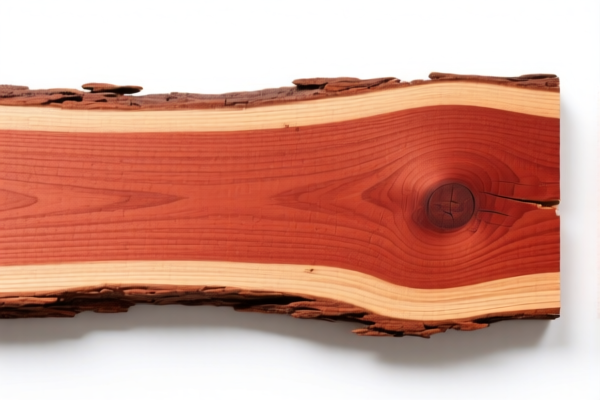
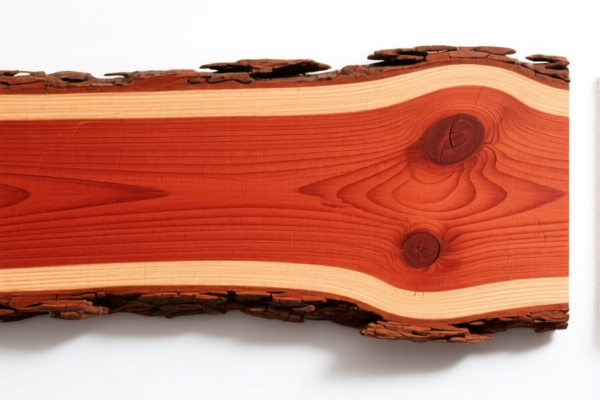
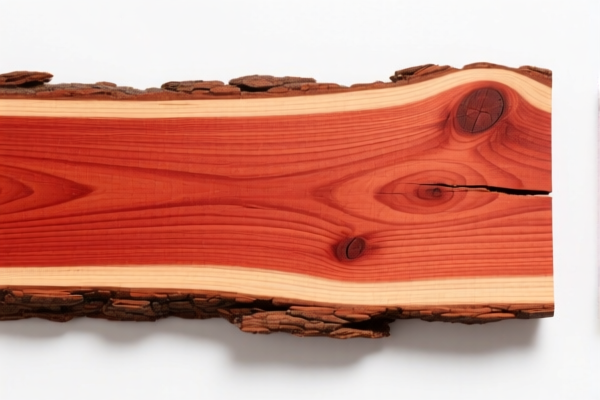
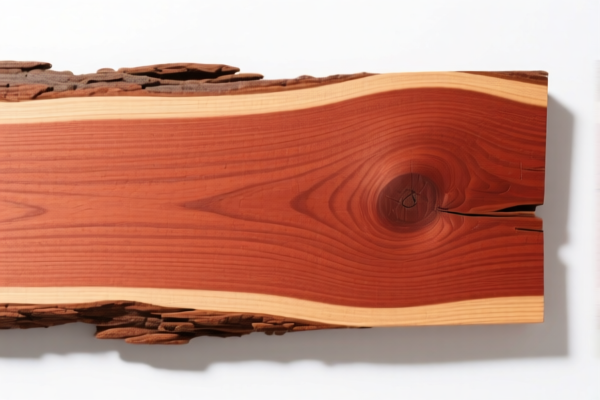
AI Analysis
🌲 Rough Oak Wood (Unworked Wood for Crafts)
🌐 HS Code Reference & Customs Clearance Guide | 2026 Latest Tariff Analysis | Professional Entry Strategy
📌 I. Product Definition & Classification: Do You Really Know "Rough Oak"?
Rough Oak Wood refers to solid oak timber that has not been sawn to precise dimensions or planed smooth. In international trade, specifically under US Customs regulations, it is categorized based on its physical form and processing level. Oak is a hardwood (non-coniferous), and its classification depends on whether it is considered "logs," "sawn wood," or "coarse shapes."
⚠️ Key Distinction:
- If the wood is merely unpeeled, roughly squared, or chunky, it falls under Chapter 4403 (Wood prepared for preservation) or 4404 (Charcoal/Wood of a kind used for basketry or faggots).
- If the wood is sawn longitudinally (even roughly), it falls under Chapter 4407 (Wood sawn or chipped lengthwise).
- Crucial Note: For rough oak, misclassification between "log-like" (4403) and "sawn" (4407) or "coarse shape" (4404) can lead to severe penalties, though in this specific dataset, the total duty remains consistent.
📦 II. HS Code Classification Details (2026 Latest Tariff Authority Comparison)
| HS Code | Product Description | Applicable Scenario | Processing Level |
|---|---|---|---|
4404.20.00.90 |
Rough oak wood, non-coniferous, in a coarse form (not sawn to specific lengths/shapes) | Crafts, rustic decorations, unprocessed raw material | ✅ Coarse/Non-sawn |
4404.20.00.80 |
Rough oak wood, poles, piles, pickets, etc. (rod-like shapes) | Construction supports, rustic fencing, manual craft bases | ✅ Pole/Pile Form |
4407.91.00.63 |
Oak wood, sawn or chipped lengthwise, thickness > 6mm, other (non-deciduous except oak) | General rough lumber for furniture, flooring blanks | ✅ Sawn/Chipped |
4403.91.00.40 |
Wood prepared for preservation (e.g., heat-treated), rough, non-coniferous | Preserved rough logs, untreated or simply stripped logs | ✅ Prespared/Rough Log |
4403.91.00.20 |
Rough sawn wood, red oak classification | Basic rough timber for manual crafts, untreated red oak | ✅ Rough Sawn |
4407.91.00.22 |
Oak wood, sawn/chipped lengthwise, other specific oak category | Specialized rough oak planks, specific oak varieties under 4407 | ✅ Sawn/Special Oak |
🔍 Key Reminder:
- All listed HS codes in this context apply to "Rough Oak" used for handicrafts.
- Despite different physical descriptions (sawn vs. pole vs. coarse), the tax structure is identical for Chinese-origin goods under current US tariffs.
- Do not split shipments: Sending mixed forms (e.g., poles + sawn planks) in one container may require split declarations if documentation is unclear, but the duty rate remains the same.
💰 III. 2026 Latest Tariff Rate Breakdown (Including Surcharge & Policy Add-ons)
✅ Applicable Country: USA (US)
✅ Origin: China (CN)
✅ Effective Date: 2025/2026 (Current Policy)
🎯 1. All Listed HS Codes (4404.20.00.90, 4404.20.00.80, 4407.91.00.63, 4403.91.00.40, 4403.91.00.20, 4407.91.00.22)
| Item | Content |
|---|---|
| Base Duty Rate | 0.0% (Ad Valorem) |
| Section 301 Surcharge (USITC) | +25.0% |
| Section 122 / IEEPA Add-on | +10.0% |
| Total Duty Rate | 35.0% |
| Tax Calculation | CIF Value × 35% |
| De Minimis Exemption | ❌ Not Eligible (High-risk commodity for small packages) |
| Legal Basis Path | USITC:4404/4407/4403 → Footnote 9903.88.01 (301 Tariff) → IEEPA:9903.01.24/25 (122/301 Add-on) |
📌 Explanation:
- 0% Base Rate: Wood products often have low base tariffs under MFN (Most Favored Nation) status.
- 25% Section 301: This is the standard retaliatory tariff on Chinese wood products.
- 10% Additional Surcharge: Refers to specific trade measures (often cited as "122 Clause" in some databases, referring to additional levies under executive orders).
- Total 35%: This is a heavy duty burden. Importers must calculate costs accurately. Even small parcels are subject to this if declared as commercial goods.
🛠️ IV. Customs Clearance Practical Advice (Real-World Pitfall Avoidance)
✅ 1. Required Documentation Checklist (Non-negotiable)
| Document | Must Provide | Description |
|---|---|---|
| ✅ Product Description | ✔️ | Must specify "Rough Oak," "Hardwood," "For Crafts." Avoid vague terms like "Wood." |
| ✅ HS Code Declaration | ✔️ | Declare the specific 10-digit HS code from the table above. |
| ✅ Certificate of Origin | ✔️ | Must prove origin is China (CN) to apply the 35% rate accurately (avoid misdeclaration). |
| ✅ ISPM 15 Phytosanitary Certificate | ✔️ | Critical for Wood! Wood entering the US must be treated and marked to prevent pest invasion. |
| ✅ Commercial Invoice | ✔️ | Clearly state CIF value. Do not undervalue. |
| ✅ Packing List | ✔️ | Detail weight, dimensions, and packaging type (pallets, crates). |
✅ 2. Declaration Tips (Key Mantras)
🔥 "ISPM 15 Mark, Rough Form Clear, 35% Duty Ready!"
| Scenario | Correct Declaration | Wrong Practice |
|---|---|---|
| Rough Oak Logs/Chunks | 4403.91.00.40 or 4404.20.00.90 |
Declaring as "Furniture Parts" → Higher scrutiny |
| Rough Oak Poles/Stakes | 4404.20.00.80 |
Declaring as "Construction Material" without ISPM 15 |
| Rough Sawnt Planks | 4407.91.00.63 or 4407.91.00.22 |
Declaring as "Finished Wood" → Rejection for lack of treatment |
| Mixed Forms | Split declaration by HS code | Mixed declaration → Customs holds shipment for inspection |
✅ 3. Special Handling Notes
| Situation | Handling Advice |
|---|---|
| ISPM 15 Compliance | Ensure all wood packaging (pallets, crates) has the IPPC mark. Unmarked wood will be destroyed or returned. |
| Handicraft Declaration | If declaring for "handicrafts," ensure the wood is not listed under prohibited species (e.g., protected oak varieties). |
| Undervaluation Risk | Customs is vigilant on Chinese wood products. Ensure CIF value reflects real market price. |
| Pre-Entry Processing | For large shipments, consider filing an Entry Type 01/06 with accurate classification to avoid post-audit penalties. |
🌍 V. Global Market Comparison (2026 Latest)
| Country/Region | Recommended HS Code | Tariff (China Origin) | Certification Requirement | Notes |
|---|---|---|---|---|
| 🇺🇸 USA | 4403/4404/4407 |
35% (25% + 10%) | ISPM 15 + CBP Declaration | High duty, strict phytosanitary rules |
| 🇨🇳 China | 4403/4404/4407 |
0% (Export) | N/A (Domestic) | No tariff for export |
| 🇪🇺 EU | 4407.91 |
0% - 2.5% | FLEGT / Timber Regulation | Lower duty, strict legality proof |
| 🇬🇧 UK | 4407.91 |
0% - 2.5% | FLEGT / Timber Regulation | Post-Brexit rules apply |
| 🇯🇵 Japan | 4407.91 |
2.3% - 3.5% | Phytosanitary Certificate | Moderate duty, strict inspection |
📌 Conclusion:
- The USA imposes the highest barrier (35% total) due to trade tensions.
- European and Japanese markets are more cost-effective but require rigorous legality/phytosanitary documentation.
- Risk Management: For US imports, factor in the 35% duty into your pricing strategy. Consider sourcing from non-China origins if possible, though oak is globally sourced.
📌 VI. Common Errors & Pitfalls (Lessons Learned)
❌ Error 1: No ISPM 15 Mark on Pallets
👉 Consequence: Shipment detained, wood destroyed, or returned at importer's expense.
❌ Error 2: Declaring "Rough Oak" as "Finished Furniture"
👉 Consequence: HS Code mismatch, duty evasion suspicion, fines.
❌ Error 3: Ignoring the 122/Section 301 Add-on
👉 Consequence: Underpayment of duty (expecting 0% base) → Back taxes + Penalties.
❌ Error 4: Misclassifying "Sawn" Wood as "Logs" to avoid 301 Tariff
👉 Consequence: Both are subject to similar surcharges under current rules, but misdeclaration leads to audits.
✅ Correct Approach:
"Rough Sawn Oak Wood, Non-Coniferous, For Handicraft Use, ISPM 15 Treated, CIF Value $X, HS Code 4407.91.00.63"
🎯 VII. Conclusion: Professional Classification, Cost Control & Compliance!
🎯 Remember the Mantra:
🔹 "ISPM 15 First, Rough Form Clear, 35% Duty is Due, Don't Guess the Code!"
🔹 "Base 0%, 301 25%, Add-on 10%, Total 35% – Plan Your Budget!"
📌 Pro Tip:
If your rough oak is pre-treated or milled to specific dimensions, the HS code might shift slightly, but the 35% total duty for Chinese origin remains consistent under current US trade policy.
Recommendation: Always file a Customs Ruling (Pre-Import) if dealing with large volumes to confirm the specific 10-digit subheading.
📣 Immediate Action:
📞 Contact your customs broker + Verify ISPM 15 Mark + Calculate 35% Duty in Your Budget
🚀 Ensure smooth clearance, avoid destruction, and protect your margins!
✨ Professional Clearance Starts with Precise Classification!
💼 Every penny of duty saved is a profit earned!
Customer Reviews
About HS Code Classification
The Harmonized System (HS) is an internationally standardized nomenclature developed by the World Customs Organization (WCO) to classify traded products. Over 200 countries use the HS system as the basis for customs tariffs, trade statistics, and import/export regulations.
Each HS code follows a hierarchical structure:
- Chapter (2 digits) — Broad category of goods (e.g., Chapter 84: Machinery and Mechanical Appliances)
- Heading (4 digits) — More specific grouping within the chapter
- Subheading (6 digits) — Internationally standardized breakdown, used by all WCO member countries
- National subdivisions (8-10 digits) — Country-specific extensions for further classification, such as US HTSUS 10-digit codes
Correct HS code classification is essential for smooth customs clearance, accurate duty payment, and compliance with trade regulations. Misclassification can lead to customs delays, overpayment of duties, or penalties.
When importing from CN to US, the applicable tariff rates may include:
- Most-Favored-Nation (MFN) rate — The standard duty rate applied to WTO members
- General rate — Applied to countries without trade agreements
- Trade remedy duties — Additional tariffs such as Section 301 (anti-dumping), Section 232 (national security), or countervailing duties
The information provided on this page is for reference purposes only. For official classification, please consult with your local customs authority or a licensed customs broker.