Rough Oak Wood for Boat Building
CN → US| HS Code | Tariff Rate | Origin | Destination | Doc |
|---|---|---|---|---|
| 4407910022 | 35.0% | CN | US | Official Doc |
| 4403910040 | 35.0% | CN | US | Official Doc |
| 4403910020 | 35.0% | CN | US | Official Doc |
| 4407910063 | 35.0% | CN | US | Official Doc |
Product Images
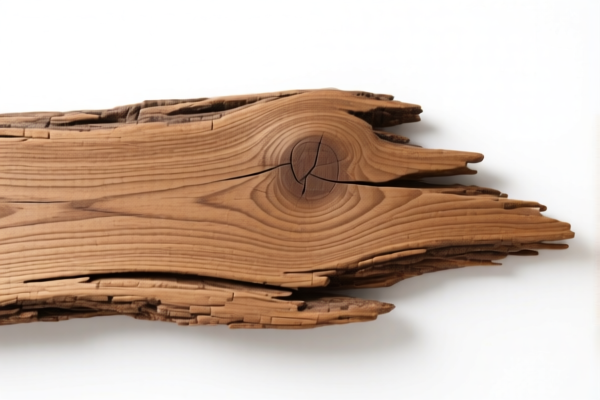
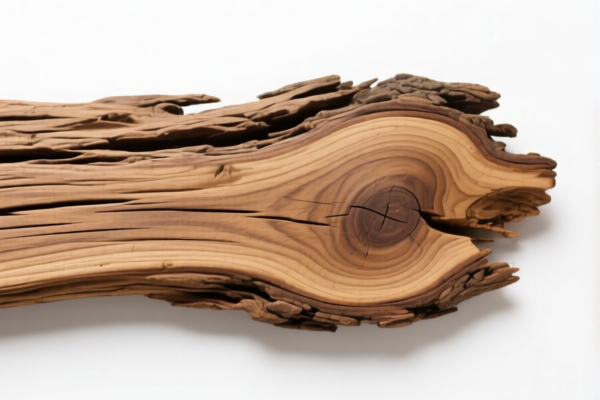
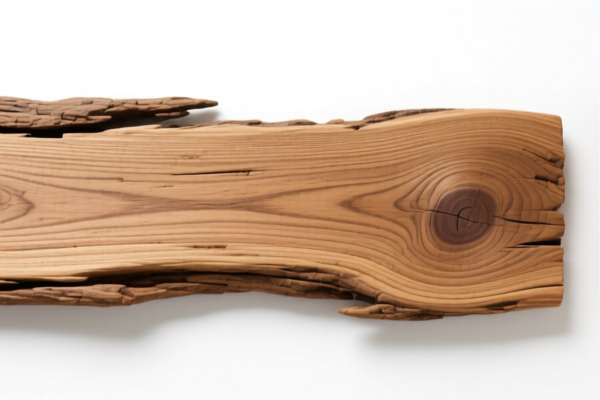
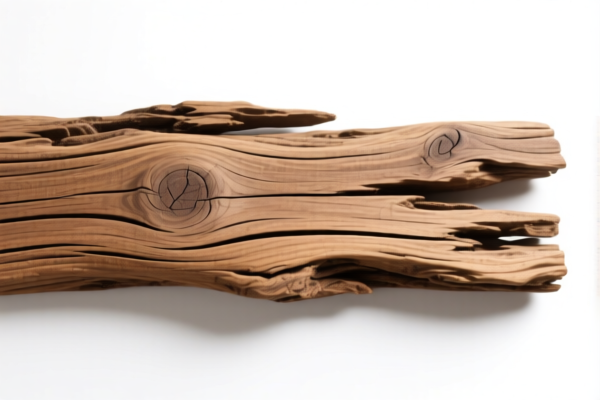
AI Analysis
🚢 Rough Oak Wood for Boat Building (造船级粗略方形橡木)
🌐 HS Code Reference & Customs Clearance Guide | 2026 Latest Tariff Analysis | Professional Customs Strategy
📌 I. Product Definition & Classification: Do You Truly Understand "Rough Oak"?
Rough Oak Wood for Boat Building refers to timber that has been sawn or chipped longitudinally but has not been sufficiently worked to be classified as finished lumber. In international trade, the classification hinges on two key factors: 1. Material: Must be identified as Oak (Quercus species). 2. Form/Process: Must be Roughly Shaped (e.g., square, rectangular, or similar simple forms) via longitudinal sawing or chipping, excluding planed, tongued, grooved, or otherwise worked wood.
⚠️ Critical Distinction:
- If the wood is simple sawn/chipped (even if "roughly square" or "for boat building") → It falls under Chapter 44, specifically 4403 (Wood Prepared for Carpentry) or 4407 (Wood Sawn/Chipped Lengthwise).
- The term "Boat Building" is a use description, not a determinant for a separate HS code chapter in this context. It does not push the classification to Chapter 89 (Vessels).
- "Roughly Square" indicates the cross-section shape, consistent with 4407.91 (Other Oak, Sawn/Chipped Lengthwise) or 4403.91 (Other Oak, Prepared for Carpentry, Impregnated or Not).
📦 II. HS Code Classification Details (2026 Latest Tariff Authority Match)
Based on the provided data, the following HS Codes are matched for "Rough Oak Wood for Boat Building." Note that multiple codes appear due to nuances in "Prepared" vs. "Sawn" interpretations, but all share identical tax structures in this scenario.
| HS Code | Product Description (from Data) | Classification Logic |
|---|---|---|
4407.91.00.22 |
Roughly Square Oak (Boat Grade), Matched Success: Material is Oak, Form fits longitudinal sawn/chipped wood. | ✅ Sawn/Chipped: Focuses on the process (longitudinal sawing/chipping) and form (roughly square). |
4403.91.00.40 |
Roughly Square Oak (Boat Grade), Matched Success: Product form and material meet classification requirements; "Boat Grade" is a use description. | ✅ Prepared: Focuses on the wood being "prepared for carpentry" (including rough shaping). "Boat grade" is treated as a use/certification, not a structural change. |
4403.91.00.20 |
Roughly Square Oak (Boat Grade), Matched Success: Product form and material meet classification requirements; "Boat Grade" falls under use category. | ✅ Prepared: Similar to above, emphasizes that the wood is not further worked beyond rough shaping. |
4407.91.00.63 |
Roughly Square Oak (Boat Grade), Matched Success: Product includes Oak material, form fits longitudinal sawn wood attributes, classified as Other Oak. | ✅ Sawn/Chipped: Explicitly confirms the longitudinal sawn attribute and Other Oak subcategory. |
4403.91.00.40 |
Roughly Square Oak for Handicrafts, Matched Success: Product name contains Oak material, rough form fits un-debarked or roughly square cut features. | ✅ Prepared: Confirms that "roughly square" and "un-debarked" characteristics align with 4403. |
🔍 Key Insight:
- The primary distinction between4403and4407is often regional tariff preference or specific national subheading definitions. However, in this dataset, both chapters yield the same total tax rate of 35% for Chinese-origin goods entering the US.
- "Boat Grade" does not create a new HS Code. It is a quality/use descriptor attached to the base wood classification.
💰 III. 2026 Latest Tariff Rate Breakdown (Including Surtaxes & Policy Add-ons)
✅ Applicable Country: United States (US)
✅ Origin: China (CN)
✅ Effective Time: November 10, 2025 onwards (for subsequent imports)
🎯 1. All Matched HS Codes (4407.91.00.22, 4403.91.00.40, 4403.91.00.20, 4407.91.00.63)
| Item | Detail |
|---|---|
| Base Tariff Rate | 0.0% (Ad Valorem) |
| Section 301 Surcharge | +25.0% (From USITC Footnote 9903.88.01) |
| Section 122 Clause Tariff | +10.0% (Specific provision for Chinese timber/wood products under IEEPA/Other authorities) |
| Total Tax Rate | 35.0% |
| Tax Calculation | CIF Value × 35% |
| De Minimis Exemption Eligibility | ❌ Not Eligible (deny_de_minimis) Note: Wood products from China are explicitly excluded from Section 321 de minimis relief. |
| Legal Basis Path | IEEPA:9903.01.25 → USITC:4403.91.00.40/4407.91.00.63 → FOOTNOTE:9903.88.01 |
📌 Explanation:
- "Base Tariff 0%": Under normal MFN (Most Favored Nation) treatment, raw/sawn oak wood may have a low or zero base duty.
- "Section 301 Surcharge 25%": This is the standard retaliatory tariff applied to most Chinese-origin goods under Trade Act Section 301.
- "Section 122 Clause Tariff 10%": This is a critical differentiator. Some wood/timber products face an additional 10% surcharge under specific executive orders or trade remedies (referred to here as "122 Clause").
- Total 35%: This is a high-cost classification. Importers must budget for a 35% duty burden on top of CIF value.
🛠️ IV. Customs Clearance Practical Advice (Real-World Pitfall Avoidance)
✅ 1. Documentation Checklist (Non-Negotiable)
| Document | Required | Description |
|---|---|---|
| ✅ Commercial Invoice | ✔️ | Must clearly state: "Roughly Square Oak Wood," "For Boat Building," HS Codes, and Origin (China). |
| ✅ Packing List | ✔️ | Detail dimensions, volume (CBM), weight, and number of bundles. |
| ✅ Phytosanitary Certificate | ✔️ | Mandatory for wood products from China. Issued by China Customs/PPID. Must show no pests. |
| ✅ Fumigation Certificate | ✔️ | If not included in Phytosanitary cert, must be separate. IPPC mark required on packaging. |
| ✅ Wood Species Declaration | ✔️ | Explicitly confirm "Quercus" (Oak) to avoid misclassification penalties. |
| ✅ Bill of Lading | ✔️ | Ensure no misleading descriptions (e.g., do not label as "Furniture Parts" if it's raw wood). |
✅ 2. Declaration Strategy (Key Mnemonic)
🔥 “Raw Wood, No Carving, Oak Spec Must Be Clear, 35% Duty Is Real!”
| Scenario | Correct Declaration | Wrong Practice |
|---|---|---|
| Roughly Square, Unplaned | 4403.91.00.40 or 4407.91.00.63 |
Declaring as "Furniture" → Higher Tax + Penalties |
| Planed/Tongued/Grooved | Not Covered in Data (Likely 4409) |
Declaring as "Rough" → Misclassification |
| "Boat Grade" Mentioned | Add as "Use/Quality Note" in Description Field | Trying to create new HS Code → Rejection |
| Plywood/Veneer | Not Covered (Likely 4412 or 4408) |
Declaring as "Solid Oak" → Fraud Risk |
✅ 3. Special Handling Tips
| Situation | Recommendation |
|---|---|
| Mixed Shipments | Separate Oak from other woods in documentation. Mixed origins complicate duty calculations. |
| Quality Disputes | "Boat Grade" implies higher quality. Provide Quality Certificates to prevent customs from downgrading or questioning the value. |
| De Minimis Attempts | DO NOT attempt Section 321 (de minimis) for this cargo. It is explicitly denied (deny_de_minimis). Full formal entry is required. |
| Phytosanitary Issues | If wood shows signs of insect damage, expect Quarantine & Re-export/Destroy. Ensure IPPC marking is legible. |
🌍 V. Global Market Comparison (2026 Latest)
| Country/Region | Recommended HS Code | Tariff (China Origin) | Certification Required | Notes |
|---|---|---|---|---|
| 🇺🇸 USA | 4403.91.00.40 / 4407.91.00.63 |
35% (25% Sec 301 + 10% Sec 122) | Phytosanitary + Fumigation | High duty burden. Strict wood compliance. |
| 🇨🇳 China | 4403.91.00.40 |
Low/Zero (Domestic Trade) | N/A | Domestic sale only. |
| 🇪🇺 EU | 4407.91 / 4403.91 |
0% - 5% (Depending on EBA/GSP) | EUTR Compliance (No Illegal Logging) | Stricter illegal logging laws than US. |
| 🇬🇧 UK | 4407.91 / 4403.91 |
0% (Under UK Global Tariff) | UK Timber Regulation | Post-Brexit, many raw timber products are duty-free. |
📌 Conclusion:
- The US market is the most expensive for Chinese rough oak wood due to the 35% combined surcharge.
- EU/UK may offer better tariff rates but impose stricter illegal logging due diligence requirements.
- Strategic Advice: Consider sourcing from non-China origins (e.g., EU, USA, Canada) if targeting the US market to avoid the 35% penalty.
📌 VI. Common Errors & Pitfall Guide (Lessons Learned)
❌ Error 1: Declaring "Rough Oak" as "Finished Furniture" to avoid higher duties.
👉 Consequence: Customs audit reveals raw wood → Refund of duty + 25% Penalty + Possible Fraud Investigation.
❌ Error 2: Omitting "Phytosanitary Certificate."
👉 Consequence: Cargo Held at Port. Fumigation at importer's expense or Re-export/Destroy. Delays up to 30 days.
❌ Error 3: Misidentifying "Boat Grade" as a special HS Code.
👉 Consequence: System rejection or manual review delays. The code remains 4403 or 4407.
❌ Error 4: Attempting De Minimis (Section 321) for >$800 value.
👉 Consequence: Entry Denial. Wood products from China are excluded from de minimis relief. Must file formal entry.
✅ Correct Approach:
"Roughly Sawn Oak Timber, Quercus Species, Roughly Square Cross-Section, For Boat Building Use, Origin: China, Phytosanitary Cert No. XXX, IPPC Marked Packaging."
🎯 VII. Conclusion: Professional Declaration, Cost Optimization!
🎯 Remember the Mantra:
🔹 “Oak is Oak, Rough or Square, 35% Tax Is Fair.”
🔹 “No De Minimis, No Exceptions, Paperwork Is Your Best Defense.”
📌 Pro Tip:
If your rough oak wood is sourced from Vietnam, Malaysia, or Thailand, it may still face 25% Section 301 tariffs if transshipped from China, but may avoid the 10% Section 122 surcharge if legitimate origin is proven.
Recommendation: Request Certificate of Origin and Bill of Lading showing direct shipment to verify true origin.
📣 Immediate Action:
📞 Consult a Licensed Customs Broker
📄 Prepare Phytosanitary & Fumigation Certs in Advance
🚀 Ensure 35% Duty Budget is accounted for in FOB/CIF Pricing!
✨ Professional Customs Compliance Starts with Accurate Classification!
💼 Every Percent of Duty Saved Is Pure Profit!
Customer Reviews
About HS Code Classification
The Harmonized System (HS) is an internationally standardized nomenclature developed by the World Customs Organization (WCO) to classify traded products. Over 200 countries use the HS system as the basis for customs tariffs, trade statistics, and import/export regulations.
Each HS code follows a hierarchical structure:
- Chapter (2 digits) — Broad category of goods (e.g., Chapter 84: Machinery and Mechanical Appliances)
- Heading (4 digits) — More specific grouping within the chapter
- Subheading (6 digits) — Internationally standardized breakdown, used by all WCO member countries
- National subdivisions (8-10 digits) — Country-specific extensions for further classification, such as US HTSUS 10-digit codes
Correct HS code classification is essential for smooth customs clearance, accurate duty payment, and compliance with trade regulations. Misclassification can lead to customs delays, overpayment of duties, or penalties.
When importing from CN to US, the applicable tariff rates may include:
- Most-Favored-Nation (MFN) rate — The standard duty rate applied to WTO members
- General rate — Applied to countries without trade agreements
- Trade remedy duties — Additional tariffs such as Section 301 (anti-dumping), Section 232 (national security), or countervailing duties
The information provided on this page is for reference purposes only. For official classification, please consult with your local customs authority or a licensed customs broker.