Rough Pine Fence Posts
CN → US| HS Code | Tariff Rate | Origin | Destination | Doc |
|---|---|---|---|---|
| 4407190056 | 35.0% | CN | US | Official Doc |
| 4407190055 | 35.0% | CN | US | Official Doc |
| 4421997040 | 35.0% | CN | US | Official Doc |
| 4403220115 | 35.0% | CN | US | Official Doc |
| 4403210115 | 35.0% | CN | US | Official Doc |
Product Images
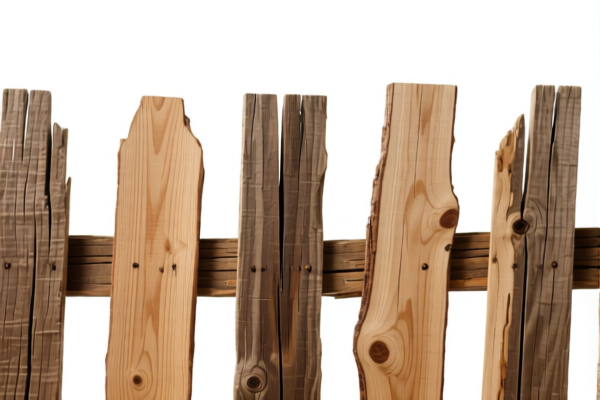
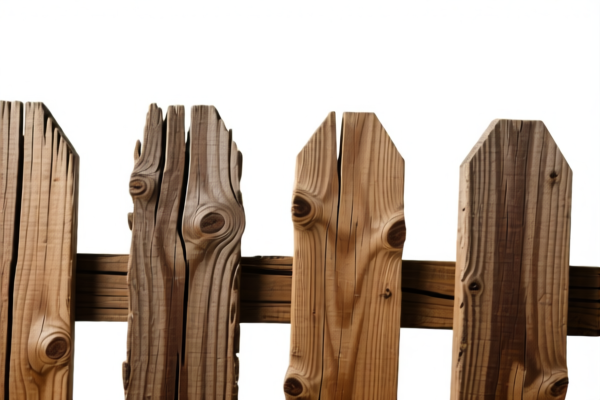

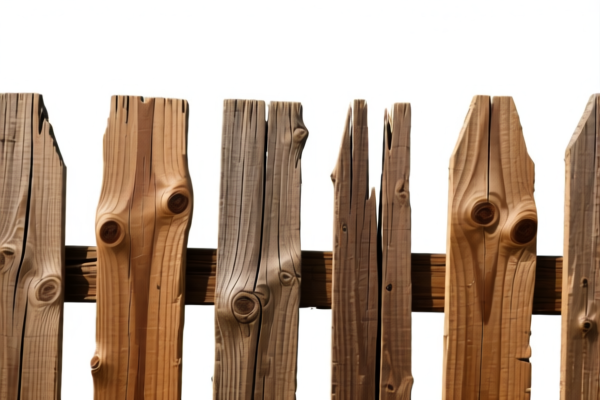
AI Analysis
🌲 Rough Pine Fence Posts (Rough-Sawn Timber)
🌐 HS Code Reference & Clearance Guide | 2026 Tariff Analysis for US-China Trade | Professional Customization Strategy
📌 I. Product Definition & Classification: What Are "Rough Pine Fence Posts"?
Rough pine fence posts are structural timber elements used primarily for boundary marking, landscaping, and agricultural fencing. In international trade, their classification hinges on two critical factors: 1. Processing Level: "Rough" implies the wood has been sawn or mechanically chopped but not planed, sanded, or otherwise smoothed (i.e., not dressed/surfaced). 2. Shape & End-Use: They are typically shaped into posts, poles, piles, pickets, or rails.
⚠️ Critical Distinction:
- Raw/Rough Timber (Sawn but not planed) → Generally falls under Chapter 4403 (Wood prepared for joinery or other uses) or 4407 (Wood sawn lengthwise, sliced or peeled).
- Processed/Dressed Timber (Planed/Sanded) → Falls under 4407 with different subheadings or specific finished goods chapters.
- Specific End-Use Classification: If specifically shaped for fences/piles and not further worked, 4403 is often the primary category for "Wood prepared for joinery... other than sawn".
📦 II. HS Code Classification Details (2026 Latest Tariff Matrix)
| HS Code | Product Description | Applicable Scenario | Key Characteristics | Total Tax Rate |
|---|---|---|---|---|
4403.22.01.15 |
Pine Fence Posts (Prepared for Joinery) | Rough-sawn pine posts, specifically shaped for fencing/piles | ✅ Rough/Sawn, not planed; Pine species; Shaped as post/pile | 35.0% |
4403.21.01.15 |
Pine Fence Posts (Other Pine) | Similar to above, but falls under different pine sub-category | ✅ Rough/Sawn, not planed; Pine species; Shaped as post | 35.0% |
4407.19.00.55 |
Rough Square Pine Posts (Longitudinal Sawn) | Posts that are longitudinally sawn but not further dressed | ✅ Longitudinal Sawn, square shape, rough surface | 35.0% |
4407.19.00.56 |
Rough Square Pine Posts (Other Pine) | Similar to above, different sub-subheading for pine types | ✅ Longitudinal Sawn, square shape, rough surface | 35.0% |
4421.99.70.40 |
Pine Fence Posts (As Piles/Pickets) | Classified as "Other wood articles" specifically for fences/piles | ✅ Sawn/Piled, specifically for fencing/picket use | 35.0% |
🔍 Key Insight:
- All listed HS codes for Rough Pine Fence Posts carry the same total tariff rate of 35.0% due to the 301 Tariffs and Section 122 Measures on Chinese-origin wood products.
- The difference lies in the specific processing description (e.g., "prepared for joinery" vs. "sawn lengthwise" vs. "other wood articles").
- Misclassification Risk: Declaring "fence posts" as "lumber" (4407) vs. "prepared wood" (4403) or "articles" (4421) can trigger customs audits if the physical shape doesn't match the generic description.
💰 III. 2026 Tariff Rate Breakdown (Including Additional Duties)
✅ Applicable Country: United States (US)
✅ Origin: China (CN)
✅ Effective Date: 2025-11-10 onwards (plus any ongoing Section 301/122 measures)
🎯 1. 4403.22.01.15 & 4403.21.01.15 —— Pine Fence Posts (Prepared for Joinery)
| Item | Detail |
|---|---|
| Base Tariff | 0% (ad valorem) |
| USITC Additional Duty (Section 301) | +25% |
| Section 122 Duty | +10% |
| Total Tariff Rate | 35.0% |
| Tax Calculation | CIF Value × 35% |
| De Minimis Exemption | ❌ Not Eligible (Deny de minimis for timber products under specific provisions) |
| Legal Basis Path | USITC:4403.22.01.15 → FOOTNOTE:9903.88.01 (Section 301) + IEEPA:9903.01.24 (Section 122) |
📌 Explanation:
- Base 0%: Standard MFN rate for certain wood products is low or zero.
- 25% Section 301: Applies to wood products from China.
- 10% Section 122: Additional duty on specific wood articles (including fence posts/piles).
- Total 35%: This is a high-cost category. Importers must budget for this significant duty burden.
🎯 2. 4407.19.00.55 & 4407.19.00.56 —— Rough Square Pine Posts (Sawn Lengthwise)
| Item | Detail |
|---|---|
| Base Tariff | 0% |
| USITC Additional Duty (Section 301) | +25% |
| Section 122 Duty | +10% |
| Total Tariff Rate | 35.0% |
| Tax Calculation | CIF Value × 35% |
| De Minimis Exemption | ❌ Not Eligible |
| Legal Basis Path | USITC:4407.19.00.55 → FOOTNOTE:9903.88.01 + IEEPA:9903.01.24 |
📌 Note:
- Even if classified as "sawn wood" (4407), the additional duties remain the same.
- Ensure the description matches the physical state (e.g., "Square," "Rough," "Pine") to avoid reclassification penalties.
🎯 3. 4421.99.70.40 —— Pine Fence Posts (Other Wood Articles)
| Item | Detail |
|---|---|
| Base Tariff | 0% |
| USITC Additional Duty (Section 301) | +25% |
| Section 122 Duty | +10% |
| Total Tariff Rate | 35.0% |
| Tax Calculation | CIF Value × 35% |
| De Minimis Exemption | ❌ Not Eligible |
| Legal Basis Path | USITC:4421.99.70.40 → FOOTNOTE:9903.88.01 + IEEPA:9903.01.24 |
📌 Note:
- This code is for wood articles not elsewhere specified.
- Use this only if the posts are not considered "preparation for joinery" (4403) or "sawn wood" (4407) due to specific shaping.
- Same tax impact: No savings in duty rate.
🛠️ IV. Customs Clearance Practical Advice (Real-World Pitfall Guide)
✅ 1. Required Documentation Checklist (Mandatory)
| Document | Mandatory? | Purpose |
|---|---|---|
| ✅ Product Specification Sheet | ✔️ | Confirm species (Pine), dimensions, and "Rough" status (no planing). |
| ✅ Commercial Invoice | ✔️ | Must clearly state "Rough Pine Fence Posts" and HS Code. |
| ✅ Packing List | ✔️ | Detail quantity, weight, and packaging type (e.g., bundled, palletized). |
| ✅ Certificate of Origin (CO) | ✔️ | Essential for verifying Chinese origin to apply correct 301/122 duties. |
| ✅ ISPM 15 Phytosanitary Certificate | ✔️ | Critical for wood products. Must show heat treatment (HT) or fumigation (MB). |
| ✅ Customs Declaration Form | ✔️ | Accurate description matching the HS code chosen. |
📌 Warning:
- No ISPM 15 Certificate? → Goods will be rejected or destroyed at US ports.
- "Rough" vs. "Planed": If customs inspectors find planed/sanded posts but you declared "Rough," you risk penalties for misdeclaration.
✅ 2. Declaration Tips (Key Mnemonics)
🔥 "Rough vs. Planed, Pine Species, Shape Defined, 35% is the Price!"
| Scenario | Correct Declaration | Wrong Practice |
|---|---|---|
| Rough-Sawn Posts | "Rough Pine Fence Posts, Sawn, Not Planed" | "Pine Lumber" (Too vague) |
| Square Posts | "Square Rough Pine Posts, HS 4407.19.00.55" | "Wood Planks" (Incorrect shape) |
| Treated vs. Untreated | Specify if preservative-treated | Fail to mention treatment → Customs hold |
| Bundled Goods | Declare as "Fence Posts in Bundles" | Split into "Wood" + "Packaging" |
✅ 3. Special Cases & Handling
| Situation | Handling Advice |
|---|---|
| Preservative-Treated Posts | Must declare treatment type (e.g., ACQ, CCA). May require additional environmental compliance docs. |
| Mixed Species | If not 100% Pine, use "Mixed Hardwood/Softwood" and verify if pine content meets "Pine" classification thresholds. |
| Small Quantity (De Minimis) | ❌ Not Eligible. Even small shipments are subject to 35% duty. |
| Re-export | If transshipped, ensure proper bonding and avoid US origin determination. |
🌍 V. Global Market Comparison (2026 Latest)
| Country/Region | Recommended HS Code | Tariff Rate | Certification Required | Notes |
|---|---|---|---|---|
| 🇺🇸 USA | 4403.22.01.15 / 4407.19.00.55 |
35.0% | ISPM 15, CO | High Duty. Strict wood rules. |
| 🇨🇳 China | 4403.22.01.15 |
0-5% | Phytosanitary | Low entry barrier. |
| 🇪🇺 EU | 4407.99.90 |
~0-20% | FLEGT, ISPM 15 | Varies by species. |
| 🇬🇧 UK | 4407.99.90 |
~0-20% | ISPM 15 | Post-Brexit rules apply. |
| 🇨🇦 Canada | 4403.22.00 |
0% | ISPM 15 | Free trade under CUSMA. |
📌 Conclusion:
- USA is the most expensive market for Chinese pine fence posts due to 35% combined duties.
- Canada offers zero tariffs under CUSMA, making it a preferred alternative for North American distribution.
📌 VI. Common Mistakes & Pitfalls (Lessons Learned)
❌ Mistake 1: Ignoring ISPM 15 requirements
👉 Consequence: Cargo seizure or destruction at US port.
✅ Solution: Ensure all wood packaging and products are HT-marked or fumigated.
❌ Mistake 2: Declaring "Lumber" instead of "Fence Posts"
👉 Consequence: Misclassification penalty + potential duty adjustment.
✅ Solution: Use specific descriptions like "Rough Pine Fence Posts" in the commercial invoice.
❌ Mistake 3: Assuming De Minimis applies
👉 Consequence: Unexpected 35% duty bill on small shipments.
✅ Solution: Plan for full duty payment regardless of shipment size.
❌ Mistake 4: Using Generic Names (e.g., "Wood Posts")
👉 Consequence: Customs delays for clarification.
✅ Solution: Provide detailed specs: Species, Shape, Rough/Planed, Treatment.
🎯 VII. Conclusion: Precise Classification Saves Costs!
🎯 Remember the Rule:
🔹 "Rough vs. Planed, HS Code Changes, 35% is the Charge."
🔹 "ISPM 15 is Mandatory, No Exemption for Wood Products."
📌 Pro Tip:
If you are importing into the US, budget for 35% duty upfront. Consider sourcing from Canada or Mexico (where applicable) to avoid these duties, or explore duty drawback programs if re-exporting.
📣 Immediate Action:
📞 Consult a customs broker for Pre-Ruling on HS Code.
📋 Ensure ISPM 15 compliance before shipment.
📊 Calculate Landed Cost including 35% duty + freight + insurance.
✨ Professional clearance starts with accurate classification!
💼 Your margin depends on duty optimization!
Customer Reviews
About HS Code Classification
The Harmonized System (HS) is an internationally standardized nomenclature developed by the World Customs Organization (WCO) to classify traded products. Over 200 countries use the HS system as the basis for customs tariffs, trade statistics, and import/export regulations.
Each HS code follows a hierarchical structure:
- Chapter (2 digits) — Broad category of goods (e.g., Chapter 84: Machinery and Mechanical Appliances)
- Heading (4 digits) — More specific grouping within the chapter
- Subheading (6 digits) — Internationally standardized breakdown, used by all WCO member countries
- National subdivisions (8-10 digits) — Country-specific extensions for further classification, such as US HTSUS 10-digit codes
Correct HS code classification is essential for smooth customs clearance, accurate duty payment, and compliance with trade regulations. Misclassification can lead to customs delays, overpayment of duties, or penalties.
When importing from CN to US, the applicable tariff rates may include:
- Most-Favored-Nation (MFN) rate — The standard duty rate applied to WTO members
- General rate — Applied to countries without trade agreements
- Trade remedy duties — Additional tariffs such as Section 301 (anti-dumping), Section 232 (national security), or countervailing duties
The information provided on this page is for reference purposes only. For official classification, please consult with your local customs authority or a licensed customs broker.