Rough Pine Poles with Bark
CN → US| HS Code | Tariff Rate | Origin | Destination | Doc |
|---|---|---|---|---|
| 4401110000 | 35.0% | CN | US | Official Doc |
| 4403220165 | 35.0% | CN | US | Official Doc |
| 4403210165 | 35.0% | CN | US | Official Doc |
| 4401210000 | 35.0% | CN | US | Official Doc |
| 4407110052 | 35.0% | CN | US | Official Doc |
Product Images
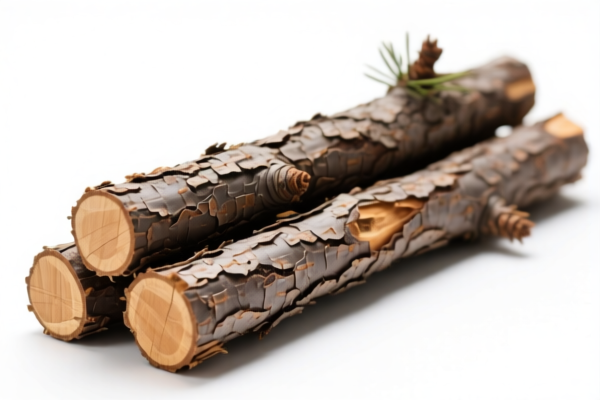
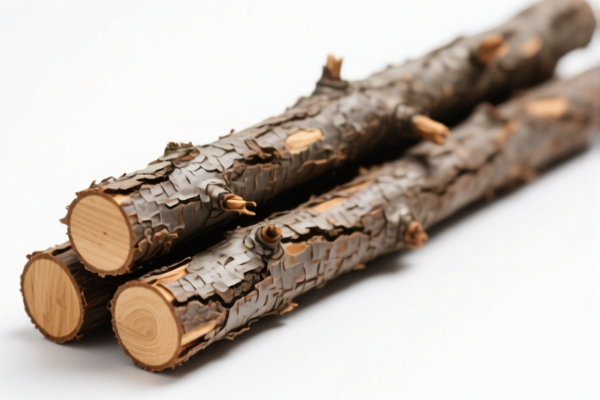
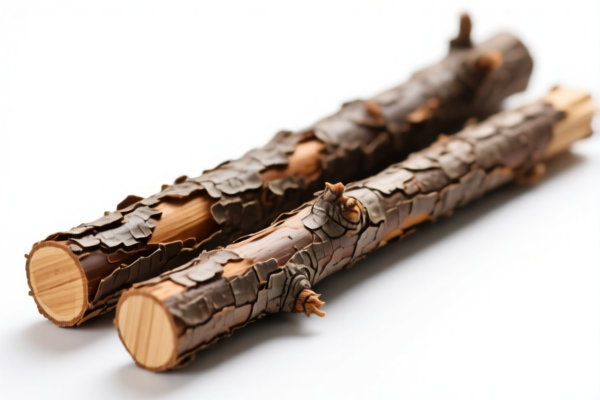
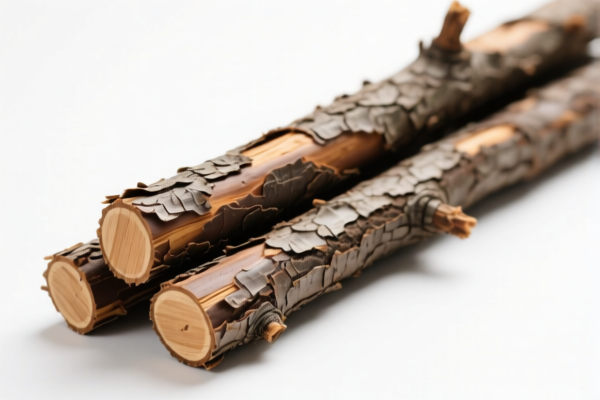
AI Analysis
🌲 Rough Pine Poles with Bark (Bark-on Pine Logs/Rough Timber)
🌐 HS Code Reference & Customs Clearance Guide | 2026 Latest Tariff Analysis | Professional Clearance Strategy
📌 I. Product Definition & Classification: Do You Really Understand "Rough Pine Poles"?
"Rough Pine Poles with Bark" refers to pine timber that has undergone minimal processing. In international trade, the specific HS Code depends heavily on the degree of processing (whether it is a raw log, a rough square, or a fuel wood) and the botanical classification (Coniferous/Spruce-Pine-Fir vs. specific Pine species).
Key Distinctions: * Raw Logs (Unworked/Just debarked): Often falls under Chapter 4401 (Fuel Wood) or 4403 (Wood in the rough). * Rough Squares (Sawn but not further worked): Falls under 4403 or 4407 depending on dimensions. * Fuel Wood Logs: Specific to Chapter 4401 if intended for burning.
⚠️ Critical Identification Point:
- If the wood is straight, cylindrical, or slightly squared, and intended for fuel → 4401.11.00.00 or 4401.21.00.00.
- If the wood is roughly squared (rough planks/bolts) for construction or processing → 4403.21.01.65, 4403.22.01.65, or 4407.11.00.52.
- Bark Status: "With bark" generally keeps the product in "in the rough" categories (4401/4403) rather than planed/sawn finished wood (4407/4408), unless it is specifically defined as "rough squares."
📦 II. HS Code Classification Details (2026 Latest Tariff Authority Comparison)
Based on the provided data for Rough Pine Poles with Bark, here are the specific classifications:
| HS Code | Product Description | Summary of Classification Logic | Tax Rate |
|---|---|---|---|
4401.11.00.00 |
Fuel Wood Logs | Rough pine, classified as Coniferous (Pinus genus), in the form of logs for fuel. | 35% |
4403.22.01.65 |
Pine Logs (Bark-on) | Rough pine, classified as Pine (Pinus), in the form of logs (whether or not stripped of bark). | 35% |
4403.21.01.65 |
Pine Rough Squares | Rough pine, classified as Pine (Pinus), in the form of logs or roughly squared timber. | 35% |
4401.21.00.00 |
Fuel Wood (Coniferous) | Rough pine, classified as Coniferous (Pinus genus), in primary wood form (fuel). | 35% |
4407.11.00.52 |
Rough Pine Planks/Squares | Rough pine, classified as Coniferous Pine (Pinus), in roughly worked form (e.g., roughly squared beams/bolts). | 35% |
🔍 Important Note:
- All listed HS Codes for Chinese-origin Rough Pine Poles carry a total tax rate of 35%.
- The difference lies in the physical form (Log vs. Rough Square) and end-use intent (Fuel vs. Timber processing).
- 4401 series is primarily for fuel wood.
- 4403/4407 series is for timber/loggers intended for further manufacturing (furniture, construction, etc.).
💰 III. 2026 Latest Tariff Rate Breakdown (Including Surcharges & Policy Levies)
✅ Applicable Country: United States (US)
✅ Origin: China (CN)
✅ Effective Time: Current rates apply (2025-2026 period)
🎯 Universal Tax Structure for All Listed HS Codes
| Item | Content |
|---|---|
| Basic Tariff | 0% (Ad valorem base rate for wood products) |
| Section 301 Surcharge | +25% (USITC Footnote under 301 Tariffs) |
| Section 122 Levy | +10% (Specific additional levy for certain wood products) |
| Total Tax Rate | 35% |
| Tax Calculation | CIF Value × 35% |
| De Minimis Eligibility | ❌ NOT Eligible (Wood products are generally excluded from $800 de minimis exemption for China) |
| Legal Basis Path | USITC:4401/4403/4407 → SECTION_301:9903.01.24 → SECTION_122:Special Levy |
📌 Explanation:
- "Basic Tariff 0%": Under normal MFN (Most Favored Nation) treatment, these wood products have a low base duty.
- "Section 301 Surcharge 25%": This is the primary penalty imposed under the US Trade Act of 1974 against Chinese imports. It applies to most Chinese wood products.
- "Section 122 Levy 10%": An additional specific tariff layer often applied to raw or semi-processed timber to protect domestic forestry industries.
- Total 35%: This is a high-cost barrier. Importers must factor this fully into the landed cost.
🛠️ IV. Customs Clearance Practical Advice (Battle-Tested Pitfall Avoidance)
✅ 1. Preparation Checklist (Must-Have Documents)
| Document | Required? | Explanation |
|---|---|---|
| ✅ Species Declaration | ✔️ | Must specify Pinus (Pine) species (e.g., Pinus sylvestris, Pinus radiata). "Pine" is too vague for some agents; use scientific name if possible. |
| ✅ Moisture Content Certificate | ✔️ | Critical for ISPM 15 compliance. If wood is treated, provide fumigation/heat treatment certificate. |
| ✅ Phytosanitary Certificate | ✔️ | Mandatory from origin country to prove no pests/diseases. |
| ✅ Commercial Invoice | ✔️ | Must clearly state "Rough Pine Poles with Bark", dimensions, volume (CBM), and value. |
| ✅ Packing List | ✔️ | Detail bundle sizes, weight, and packaging type (e.g., banded bundles). |
| ✅ Bill of Lading | ✔️ | Match description with Invoice. |
✅ 2. Declaration Strategy (Key Mantras)
🔥 "Bark On? Log Form? Fuel or Timber? Declare Precise!"
| Scenario | Correct HS Code | Wrong Practice |
|---|---|---|
| Round logs, straight, for burning | 4401.11.00.00 or 4401.21.00.00 |
Declaring as construction timber → Risk of re-classification. |
| Roughly squared poles, for construction | 4403.21.01.65 or 4403.22.01.65 |
Declaring as "Fuel wood" to avoid scrutiny → Audit risk. |
| Rough beams/planks, not yet planed | 4407.11.00.52 |
Declaring as "Finished lumber" → Misdeclaration penalty. |
| Stripped bark (Debarked) | 4403.22.01.65 (if logs) |
Incorrectly claiming "with bark" when stripped → Discrepancy with physical inspection. |
📌 Crucial Tip:
- If the wood is roughly squared (i.e., has flat sides but is not planed), it is NOT "logs" (4401) but rather "wood in the rough" (4403/4407).
- 4407 is for sawn/chipped wood that is not further worked than sawn/veneer-cut.
- 4403 is for wood in the rough, whether or not stripped of bark.
- 4401 is for fuel wood, charcoal, or industrial waste.
✅ 3. Special Circumstances Handling
| Situation | Handling Advice |
|---|---|
| ISPM 15 Compliance | Ensure all wood packaging (pallets/crates) is marked HT (Heat Treated) or MB (Methyl Bromide). Wood poles themselves may need phytosanitary cert. |
| Bark Presence | "With bark" is allowed but must be declared. Excessive bark may trigger stricter phytosanitary checks for pests. |
| Volume vs. Weight | Wood is often valued by volume (CBM) or tonnage. Ensure invoice matches the Bill of Lading volume exactly to avoid ad valorem calculation errors. |
| Pre-Ruling Application | Given the 35% rate, consider applying for an Advance Ruling to confirm the HS Code (4403 vs. 4407 vs. 4401) before shipment to avoid delays. |
🌍 V. Global Market Clearance Comparison (2026 Latest)
| Country/Region | Recommended HS Code | Tariff (China Origin) | Certification Requirements | Notes |
|---|---|---|---|---|
| 🇺🇸 USA | 4403.22.01.65 / 4401.11.00.00 |
35% (25% Sec301 + 10% Sec122) | ISPM 15, Phytosanitary | High tariff barrier. |
| 🇨🇳 China | 4403.22.00.00 |
0-5% (Import Duty) | N/A | China is a major wood consumer. |
| 🇪🇺 EU | 4403.49 / 4401.21 |
0-5% (Duty) + Carbon Border? | ISPM 15, EUTR (Due Diligence) | Strict legality proof required. |
| 🇬🇧 UK | 4403.49 |
0-5% | ISPM 15 | Post-Brexit rules align with EU largely. |
| 🇯🇵 Japan | 4403.41 |
3.2% | ISPM 15 | Low base duty, but strict inspection. |
📌 Conclusion:
- USA is the most expensive market for rough pine due to Section 301 and Section 122 tariffs.
- Europe and Japan focus more on phytosanitary compliance (pest control) and legality (EUTR/JFTT) than high tariffs.
- Profit Margin Warning: For US imports, a 35% tariff significantly eats into margins. Ensure FOB price is negotiated accordingly.
📌 VI. Common Errors & Pitfall Guide (Lessons from Blood and Tears)
❌ Mistake 1: Declaring "Rough Squares" as "Fuel Wood" (4401) to avoid higher duties.
👉 Consequence: Customs inspection reveals the wood is unsuitable for fuel (e.g., high-quality pine for furniture). Penalty + Re-classification.
❌ Mistake 2: Ignoring Bark Status.
👉 Consequence: If declared "with bark" but bark is missing, or vice versa, it causes data mismatch during physical inspection, leading to delays.
❌ Mistake 3: Failure to Provide ISPM 15 Marking on Wood Packaging.
👉 Consequence: Quarantine hold. Whole shipment may be fumigated or returned at importer's cost.
❌ Mistake 4: Vague Description "Pine Wood".
👉 Consequence: Customs cannot determine if it is Pinus sylvestris or Pinus radiata. Request for further information → Clearance delay.
✅ Correct Practice:
"Rough Pine Logs, Bark On, Species: Pinus Radiata, Moisture Content: 20%, Volume: 50 CBM, HS Code: 4403.22.01.65, Origin: China"
🎯 VII. Conclusion: Professional Declaration, Save Time, Reduce Costs!
🎯 Remember the Mantra:
🔹 "Bark on, Log form? 4401/4403.
Rough Squares? 4407.
China Origin? 35% Total.
ISPM 15? Must Have!"
🔹 "HS Code determines tax, 35% is steep. Declare accurately, or pay the price!"
📌 Pro Tip:
If your pine poles are sourced from Vietnam, Malaysia, or Thailand, check for Free Trade Agreement (FTA) benefits (e.g., ASEAN-US, RCEP). However, note that the provided data specifically lists Chinese-origin tax rates. If trans-shipped, ensure Rules of Origin are strictly met to avoid Section 301 tariffs.
📣 Immediate Action:
📞 Contact a licensed customs broker
📄 Prepare Phytosanitary Certificate + ISPM 15 Proof
📝 Apply for Advance Ruling for HS Code confirmation
🚀 Let your pine poles clear customs smoothly, legally, and efficiently!
✨ Professional Clearance Starts with Precise Classification!
💼 Your every cent of cost deserves accurate calculation!
Customer Reviews
About HS Code Classification
The Harmonized System (HS) is an internationally standardized nomenclature developed by the World Customs Organization (WCO) to classify traded products. Over 200 countries use the HS system as the basis for customs tariffs, trade statistics, and import/export regulations.
Each HS code follows a hierarchical structure:
- Chapter (2 digits) — Broad category of goods (e.g., Chapter 84: Machinery and Mechanical Appliances)
- Heading (4 digits) — More specific grouping within the chapter
- Subheading (6 digits) — Internationally standardized breakdown, used by all WCO member countries
- National subdivisions (8-10 digits) — Country-specific extensions for further classification, such as US HTSUS 10-digit codes
Correct HS code classification is essential for smooth customs clearance, accurate duty payment, and compliance with trade regulations. Misclassification can lead to customs delays, overpayment of duties, or penalties.
When importing from CN to US, the applicable tariff rates may include:
- Most-Favored-Nation (MFN) rate — The standard duty rate applied to WTO members
- General rate — Applied to countries without trade agreements
- Trade remedy duties — Additional tariffs such as Section 301 (anti-dumping), Section 232 (national security), or countervailing duties
The information provided on this page is for reference purposes only. For official classification, please consult with your local customs authority or a licensed customs broker.