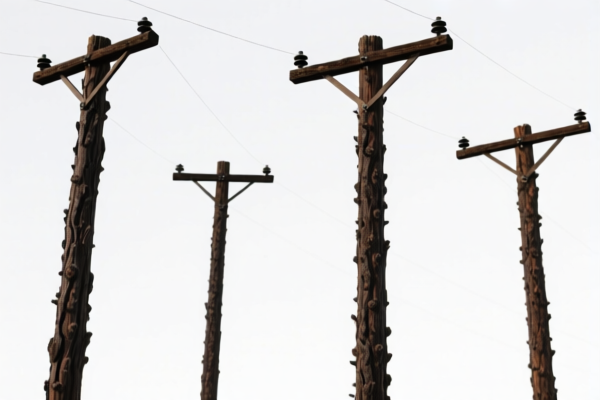
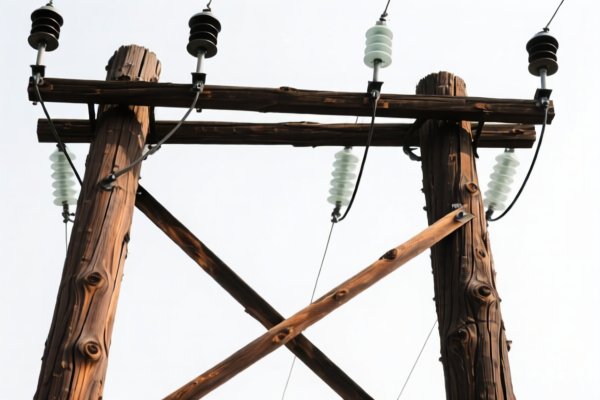
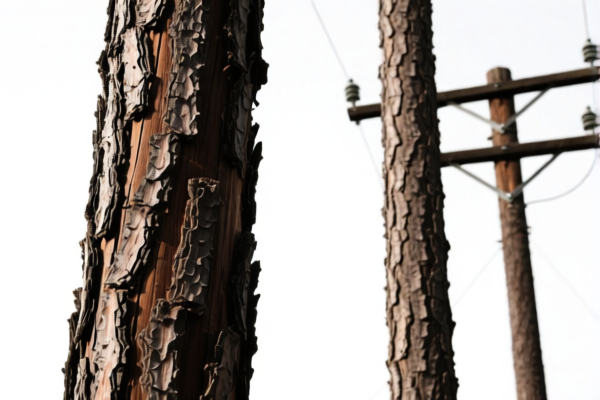
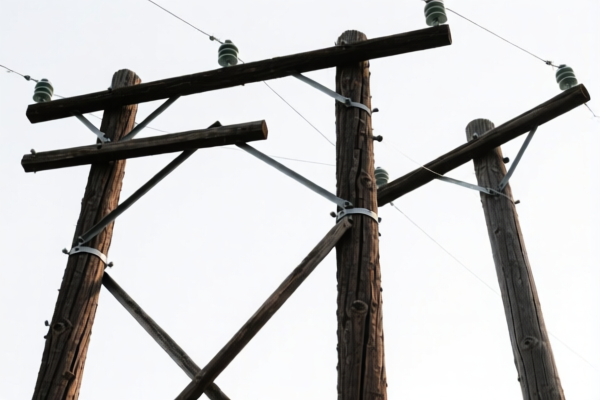
Rough Pine Telegraph Poles
CN → US| HS Code | Tariff Rate | Origin | Destination | Doc |
|---|---|---|---|---|
| 4403220112 | 35.0% | CN | US | Official Doc |
| 4404100080 | 35.0% | CN | US | Official Doc |
| 4404100090 | 35.0% | CN | US | Official Doc |
| 4403210112 | 35.0% | CN | US | Official Doc |
Product Images
AI Analysis
🌲 Rough Pine Telegraph Poles (Unprocessed Wood Utility Poles)
🌐 HS Code Reference & Customs Clearance Guide | 2026 Latest Tariff Analysis | Professional Entry Strategy
📌 I. Product Definition & Classification: What Are “Rough Pine Telegraph Poles”?
Rough pine telegraph poles are large-diameter wooden poles, primarily made from pine wood (a type of softwood/coniferous timber). They are used for power transmission, telecommunications, and utility infrastructure.
In international trade, these products fall under Chapter 44 (Wood and articles of wood). The key classification depends on the degree of processing: - Roughly shaped/unprocessed: Merely peeled, split, or roughly squared, but not planed, tongued, grooved, or sanded. → Heading 44.03 or 44.04 - Specifically for electric poles: Some customs administrations allow specific subheadings for "poles and piles" used in construction or utilities.
⚠️ Key Distinction:
- If the pole is roughly processed (just cut to length, bark removed or not, no precise shaping), it may fall under 44.03.22 (Treated) or 44.04.10 (Wood continuously produced by machining along its entire length). - If it is treated (preservative applied), it falls under 44.03. - If it is untreated but shaped continuously (e.g., tapered by milling), it may fall under 44.04.
📦 II. HS Code Classification Details (2026 Latest Tariff Authority对照)
| HS Code | Product Description | Application Scenario | Processing Level |
|---|---|---|---|
4403.22.01.12 |
Roughly shaped pine poles for electricity – Pine wood, shaped for electric poles, coniferous wood | Utility poles for power lines, telegraph poles, treated or untreated | ✅ Roughly shaped, specific use as "pole" |
4404.10.00.80 |
Pine wood continuously shaped poles/piles – Pine, tapered/machined, not further worked | Poles that are machined along length but not treated as "wood in primary forms" | ✅ Continuously machined, not planed/sanded |
4404.10.00.90 |
Other pine wood poles/piles – Coniferous, other than those specified | General wooden poles, not meeting specific utility pole criteria | ✅ Other coniferous wood poles |
4403.21.01.12 |
Roughly shaped pine wood – Pine, other than sleepers, roughly shaped | Non-utility wooden products, or poles not classified as "electric poles" | ✅ Roughly shaped, general use |
🔍 Important Note:
- "Rough" (粗糙) means the wood has not been planed, tongued, grooved, or sanded. It may be peeled, split, or roughly squared. - "Electric Pole" (电杆) is a specific functional classification. If the pole is clearly intended for electrical/telegraph use, customs may prioritize 4403.22.01.12. - If the pole is untreated, it may still fall under 44.03 if it is "otherwise preserved" (e.g., fire-retardant), but often untreated poles are classified under 44.04 if shaped.
💰 III. 2026 Latest Tariff Rate Breakdown (Including Additional Duties)
✅ Applicable Country: USA
✅ Origin: China (CN)
✅ Effective Date: From November 10, 2025 (and subsequent imports)
🎯 1. HS Code 4403.22.01.12 – Rough Pine Electric Poles
| Item | Details |
|---|---|
| Base Tariff | 0.0% (ad valorem) |
| Section 301 Additional Tariff | +25.0% (From USITC Footnote for Chinese wood products) |
| Section 122 Tariff | +10.0% (Specific to certain wood products under IEEPA) |
| Total Tariff Rate | 35.0% |
| Tax Calculation | CIF Value × 35% |
| De Minimis Eligibility | ❌ Not Eligible (deny_de_minimis) |
| Legal Basis Path | IEEPA:9903.01.25 → IEEPA:9903.01.24 → USITC:4403.22.01.12 → FOOTNOTE:301_Wood |
📌 Explanation:
- Base Tariff 0%: Standard MFN rate for wood poles. - Section 301 Tariff +25%: Applied to Chinese-origin wood products under US trade law. - Section 122 Tariff +10%: Additional surcharge on certain wood items for national security/economic reasons. - Total 35%: This is a high tariff for wooden poles. Importers must factor this into cost.
🎯 2. HS Code 4404.10.00.80 – Pine Wood Continuously Shaped Poles
| Item | Details |
|---|---|
| Base Tariff | 0.0% |
| Section 301 Additional Tariff | +25.0% |
| Section 122 Tariff | +10.0% |
| Total Tariff Rate | 35.0% |
| Tax Calculation | CIF Value × 35% |
| De Minimis Eligibility | ❌ Not Eligible |
| Legal Basis Path | IEEPA:9901.25 → IEEPA:9903.01.24 → USITC:4404.10.00.80 → FOOTNOTE:301_Wood |
📌 Note:
- Same tariff structure as4403.22.01.12. - Applies if the pole is continuously machined (e.g., tapered) but not considered "treated wood" under 44.03.
🎯 3. HS Code 4404.10.00.90 – Other Pine Wood Poles
| Item | Details |
|---|---|
| Base Tariff | 0.0% |
| Section 301 Additional Tariff | +25.0% |
| Section 122 Tariff | +10.0% |
| Total Tariff Rate | 35.0% |
| Tax Calculation | CIF Value × 35% |
| De Minimis Eligibility | ❌ Not Eligible |
| Legal Basis Path | IEEPA:9901.25 → IEEPA:9903.01.24 → USITC:4404.10.00.90 → FOOTNOTE:301_Wood |
📌 Note:
- Applies to pine poles that do not meet the specific criteria of the other subheadings. - Still subject to the 35% total tariff.
🎯 4. HS Code 4403.21.01.12 – Roughly Shaped Pine Wood (General)
| Item | Details |
|---|---|
| Base Tariff | 0.0% |
| Section 301 Additional Tariff | +25.0% |
| Section 122 Tariff | +10.0% |
| Total Tariff Rate | 35.0% |
| Tax Calculation | CIF Value × 35% |
| De Minimis Eligibility | ❌ Not Eligible |
| Legal Basis Path | IEEPA:9903.01.25 → IEEPA:9903.01.24 → USITC:4403.21.01.12 → FOOTNOTE:301_Wood |
📌 Note:
- This is a catch-all for roughly shaped pine wood not specifically classified as electric poles. - Same 35% tariff. Do not attempt to misclassify to avoid duties.
🛠️ IV. Customs Clearance Practical Advice (Field Pitfall Avoidance Guide)
✅ 1. Required Documentation Checklist (Mandatory)
| Document | Required | Notes |
|---|---|---|
| ✅ Product Specification Sheet | ✔️ | Must include: Wood species (Pine), dimensions, length, diameter, treatment status |
| ✅ Photos of Poles | ✔️ | Show cross-section, surface texture, any markings/treatment labels |
| ✅ Bill of Lading / Packing List | ✔️ | Clearly state "Rough Pine Telegraph Poles" or "Wooden Utility Poles" |
| ✅ Commercial Invoice | ✔️ | Must specify HS Code and country of origin (China) |
| ✅ Certificate of Origin | ✔️ | Required to prove Chinese origin for tariff calculation |
| ✅ Treatment Certificate (if applicable) | ✔️ | If treated with preservatives, provide chemical treatment details |
| ✅ Import License | ✔️ | Check if any specific wood import restrictions apply |
✅ 2. Declaration Tips (Critical Mantras)
🔥 "Declare as Wood, Not Furniture; Specify 'Pine' and 'Rough'; Avoid 'Furniture' Misclassification!"
| Scenario | Correct Declaration | Wrong Practice |
|---|---|---|
| Untreated, roughly shaped poles | 4403.22.01.12 or 4404.10.00.80 |
Misdeclare as "furniture parts" → Higher duties + penalties |
| Treated poles | 4403.22.01.12 |
Declare as "untreated" → Fraud penalty |
| Poles with bark removed | 4403.22.01.12 |
Declare as "logs" → Incorrect classification |
| Poles with taper | 4404.10.00.80 |
Declare as "rough logs" → May trigger additional inspection |
✅ 3. Special Situation Handling
| Situation | Recommendation |
|---|---|
| OEM Custom Poles | Provide customer orders and design specs to prove "utility pole" use |
| Mixed Shipments (Poles + Hardware) | Declare poles and hardware separately; do not bundle |
| Treated Poles | Must provide treatment certificate; failure may lead to rejection |
| Uncertainty on HS Code | Apply for Advance Ruling from CBP before shipment |
🌍 V. Global Market Comparison (2026 Latest)
| Country/Region | Recommended HS Code | Tariff | Certification | Notes |
|---|---|---|---|---|
| 🇺🇸 USA | 4403.22.01.12 / 4404.10.00.80 |
35% | No special certs | High tariff due to Section 301 & 122 |
| 🇨🇳 China | 4403.22.01.12 |
5% | No special certs | Low import duty |
| 🇪🇺 EU | 4403.22.01.12 |
0-5% | FSC/PEFC certification | Eco-certification preferred |
| 🇬🇧 UK | 4403.22.01.12 |
0-5% | FSC/PEFC | Post-Brexit rules apply |
| 🇯🇵 Japan | 4403.22.01.12 |
0-3% | ISPM 15 (if packaging) | Low tariff |
📌 Conclusion:
- USA imposes the highest tariffs (35%) on Chinese-origin pine poles. - EU and UK prefer certified sustainable wood (FSC/PEFC). - Asia (China, Japan) has lower tariffs but may have phytosanitary requirements.
📌 VI. Common Mistakes & Pitfalls (Lessons Learned)
❌ Mistake 1: Declaring "Telegraph Poles" as "Furniture Parts"
👉 Consequence: Higher duties + potential fraud penalties
❌ Mistake 2: Not specifying "Pine" as wood species
👉 Consequence: Customs may apply higher default rates for unspecified wood
❌ Mistake 3: Ignoring Section 122 Tariff
👉 Consequence: Unexpected 10% additional charge at customs
❌ Mistake 4: Treating "Rough" poles as "Processed Wood"
👉 Consequence: Misclassification, delays, and possible fines
✅ Correct Practice:
"Rough Pine Telegraph Poles, Untreated, Cut to Length, Pine Species, HS Code 4403.22.01.12"
🎯 VII. Conclusion: Precision Classification, Cost Savings, Smooth Clearance!
🎯 Remember the Mantra:
🔹 "Declare 'Rough Pine', Not 'Furniture'; Specify 'Electric Pole' Use; Expect 35% Total Duty; Avoid Misclassification Penalties!"
🔹 "HS Code Determines Fate; 35% is High; Declare Accurately; Save Thousands!"
📌 Tips:
- If poles are originally from Vietnam, Canada, or Russia, Section 301 Tariff may not apply → Lower duties.
- Consider Advance Ruling from CBP to confirm HS Code before shipment.
- Keep treatment certificates handy if poles are treated.
📣 Take Action Now:
📞 Contact a licensed customs broker + Provide product photos + Apply for HS Code Advance Ruling
🚀 Ensure your pine poles clear customs smoothly, reduce costs, and boost profitability!
✨ Professional Clearance Starts with Accurate Classification!
💼 Every cent of your cost deserves precise calculation!
Customer Reviews
About HS Code Classification
The Harmonized System (HS) is an internationally standardized nomenclature developed by the World Customs Organization (WCO) to classify traded products. Over 200 countries use the HS system as the basis for customs tariffs, trade statistics, and import/export regulations.
Each HS code follows a hierarchical structure:
- Chapter (2 digits) — Broad category of goods (e.g., Chapter 84: Machinery and Mechanical Appliances)
- Heading (4 digits) — More specific grouping within the chapter
- Subheading (6 digits) — Internationally standardized breakdown, used by all WCO member countries
- National subdivisions (8-10 digits) — Country-specific extensions for further classification, such as US HTSUS 10-digit codes
Correct HS code classification is essential for smooth customs clearance, accurate duty payment, and compliance with trade regulations. Misclassification can lead to customs delays, overpayment of duties, or penalties.
When importing from CN to US, the applicable tariff rates may include:
- Most-Favored-Nation (MFN) rate — The standard duty rate applied to WTO members
- General rate — Applied to countries without trade agreements
- Trade remedy duties — Additional tariffs such as Section 301 (anti-dumping), Section 232 (national security), or countervailing duties
The information provided on this page is for reference purposes only. For official classification, please consult with your local customs authority or a licensed customs broker.