Rough Pine Utility Pole
CN → US| HS Code | Tariff Rate | Origin | Destination | Doc |
|---|---|---|---|---|
| 4403220112 | 35.0% | CN | US | Official Doc |
| 4404100080 | 35.0% | CN | US | Official Doc |
| 4404100090 | 35.0% | CN | US | Official Doc |
| 4403210112 | 35.0% | CN | US | Official Doc |
| 4401210000 | 35.0% | CN | US | Official Doc |
| 4407110052 | 35.0% | CN | US | Official Doc |
Product Images
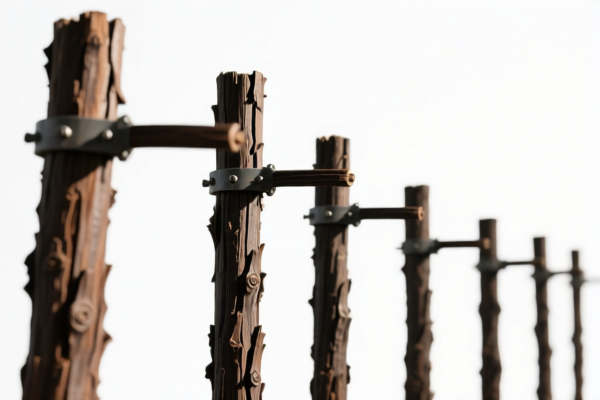
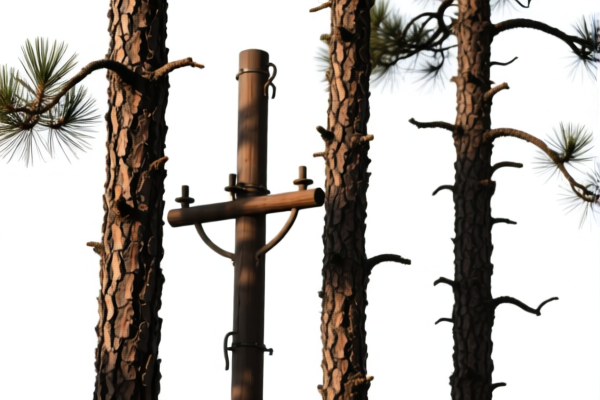
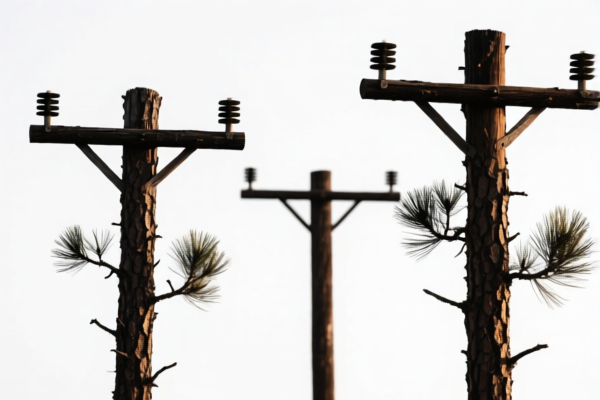
AI Analysis
🌲 Rough Pine Utility Pole (Wooden Poles for Electrical/Grid Use)
🌐 HS Code Reference & Clearance Guide | 2026 Latest Tariff Breakdown | Professional Compliance Strategy
📌 I. Product Definition & Classification: Do You Really Understand "Rough Pine Utility Poles"?
Rough pine utility poles are the backbone of electrical transmission, telecommunications, and distribution networks. In international trade, they are classified based on their processing level (rough/unfinished), wood type (softwood/pine), and specific shape (pole/stake/post).
Key Classification Paths: 1. As Finished Electrical Poles: Classified specifically under heading 4403 (Wood prepared for use as electrical poles/towers). 2. As General Wood Structures: Classified under heading 4404 (Wooden stakes, pales, faggots, etc.). 3. As Raw/Rough Timber: Classified under heading 4407 (Wood sawn or chipped lengthwise, if not further processed into specific shapes).
⚠️ Critical Distinction:
- If the wood is shaped into a conical pole and treated/prepared specifically for electrical use →归入 4403.22.01.12
- If it is a simple rough stick/peg used as a stake or general support → 归入 4404.10.00.80 / 4404.10.00.90
- If it is generic rough sawn timber without specific pole shaping → 归入 4407.11.00.52
📦 II. HS Code Classification Details (2026 Latest Tariff Authority Comparison)
| HS Code | Product Description | Application Scenario | Processing Level |
|---|---|---|---|
4403.22.01.12 |
Rough Pine Utility Pole | Pine wood, conical pole shape, prepared for electrical grid use | ✅ Specific Shape (Pole) |
4404.10.00.80 |
Rough Pine Stakes/Pales | Pine wood, simple cylindrical shape, used as stakes/posts | ✅ Generic Shape (Stake) |
4404.10.00.90 |
Other Rough Pine Wood (Stakes/Pales) | Pine wood, other generic support structures | ✅ Generic Shape (Other) |
4403.21.01.12 |
Rough Pine Wood (Pine Species) | Generic rough pine wood, potentially for poles but lacking specific pole classification details | ✅ Generic Species (Pine) |
4407.11.00.52 |
Rough Pine Wood (Sawn/Chipped) | Pine wood in rough sawn form, not yet shaped into poles or stakes | ❌ Raw/Rough Timber |
🔍 Key Reminder:
- 4403 is the most specific category for "Electrical Poles." If your product is clearly a utility pole (tapered, treated, standardized length/diameter), this is the primary classification. - 4404 covers "stakes and pales." If the item is a simple, unshaped wooden stick used for fencing or temporary support, use this. - 4407 is for raw timber. If the wood is just sawn logs without any pole-specific shaping, it falls here. However, for "Utility Poles," customs often prefer 4403 if the intent is clear.
💰 III. 2026 Latest Tariff Rate Details (Including Surcharges & Policy Add-ons)
✅ Applicable Country: United States (US)
✅ Origin: China (CN)
✅ Effective Date: 2025+ (Current Status)
All products in the <DATA> list share the same total tariff structure due to US-China trade policies.
🎯 1. 4403.22.01.12 — Rough Pine Utility Pole (Specific Classification)
| Item | Content |
|---|---|
| Base Duty Rate | 0% (Ad Valorem) |
| Section 301 Duty | +25% (USITC Footnote: 9903.88.01) |
| Section 122 Duty | +10% (IEEPA/Specific Wood Product Clause) |
| Total Duty Rate | 35% |
| Tax Calculation | CIF Value × 35% |
| De Minimis Exemption | ❌ Not Applicable (Deny De Minimis) |
| Legal Basis Path | USITC:4403.22.01.12 → SECTION301:9903.88.01 → SECTION122:10% |
📌 Explanation:
- Base Rate 0%: Standard MFN rate for wood products. - 301 Duty 25%: Imposed on Chinese-origin wood products under Section 301. - Section 122 Duty 10%: A specific additional duty on certain wood products (including poles and stakes) under Section 122 of the Trade Expansion Act. - Total 35%: High tariff burden. Must be factored into landed cost immediately.
🎯 2. 4404.10.00.80 & 4404.10.00.90 — Rough Pine Stakes/Pales
| Item | Content |
|---|---|
| Base Duty Rate | 0% |
| Section 301 Duty | +25% |
| Section 122 Duty | +10% |
| Total Duty Rate | 35% |
| Tax Calculation | CIF Value × 35% |
| De Minimis Exemption | ❌ Not Applicable |
| Legal Basis Path | USITC:4404.10.00.xx → SECTION301:9903.88.01 → SECTION122:10% |
📌 Note:
- These codes are often used if the poles are not "treated" or "shaped" enough to qualify for 4403. - Same 35% tariff as 4403. Misclassification here does not save money.
🎯 3. 4403.21.01.12 — Rough Pine Wood (Generic)
| Item | Content |
|---|---|
| Base Duty Rate | 0% |
| Section 301 Duty | +25% |
| Section 122 Duty | +10% |
| Total Duty Rate | 35% |
| Tax Calculation | CIF Value × 35% |
| De Minimis Exemption | ❌ Not Applicable |
📌 Note:
- This code is less specific than 4403.22.01.12. Use only if the product doesn't meet the strict definition of "utility pole" under 4403.22.
🎯 4. 4407.11.00.52 — Rough Pine Sawn Wood
| Item | Content |
|---|---|
| Base Duty Rate | 0% |
| Section 301 Duty | +25% |
| Section 122 Duty | +10% |
| Total Duty Rate | 35% |
| Tax Calculation | CIF Value × 35% |
| De Minimis Exemption | ❌ Not Applicable |
📌 Note:
- If the wood is just rough logs/sawn planks and not yet shaped into poles, it falls here. - Still 35% tariff. No advantage.
🛠️ IV. Customs Clearance Practical Advice (Real-World Pitfall Guide)
✅ 1. Documentation Checklist (Essential)
| Document | Required | Purpose |
|---|---|---|
| ✅ Product Specification Sheet | ✔️ | Confirm wood type (Pine/Spruce), dimensions, taper, treatment (preservative), and intended use (Electrical Pole). |
| ✅ Commercial Invoice | ✔️ | Must state "Rough Pine Utility Pole" or "Wooden Stakes." Avoid vague terms like "Wood." |
| ✅ Packing List | ✔️ | Detail weight, volume, and number of poles per bundle. |
| ✅ Certificate of Origin (CO) | ✔️ | Prove CN origin to apply correct Section 301/122 rates. |
| ✅ Treatment Certificate | ✔️ | If treated with chemicals, ensure compliance with EPA/FIFA regulations for import. |
| ✅ ISPM 15 Phytosanitary Certificate | ✔️ | Mandatory for raw wood products to prevent pest introduction. |
| ✅ Photos of Product | ✔️ | Show end grain, treatment labels, and overall shape to confirm classification. |
✅ 2. Declaration Tips (Key Mantras)
🔥 "Be Specific: Pole vs. Stake vs. Timber"
| Scenario | Correct Declaration | Consequence of Error |
|---|---|---|
| Tapered, Treated, Standard Length | "Rough Pine Utility Pole for Electrical Grid" → 4403.22.01.12 |
Accurate 35% tax |
| Straight, Untreated, Short Stick | "Rough Pine Stakes/Pales" → 4404.10.00.80 |
Accurate 35% tax |
| Raw Sawn Logs/Planks | "Rough Pine Lumber" → 4407.11.00.52 |
Accurate 35% tax |
| Misclassified as "Furniture Parts" | "Wooden Parts" → 4421.99 |
Huge Risk: Wrong code, potential penalty, delay |
| Misclassified as "Other Wood" | "Wood" → 4407.99 |
Higher Risk: May incur higher duties if 4403/4404 is deemed more appropriate |
✅ 3. Special Handling
| Scenario | Handling Advice |
|---|---|
| Treated vs. Untreated | If untreated, ensure ISPM 15 compliance. If treated, provide chemical safety data sheets (SDS). |
| Bundle Packaging | Declare as "Bundles of Poles." Ensure weight/volume matches invoice. |
| Origin Labeling | Clearly mark "Made in China" on packaging to avoid origin disputes. |
| Pre-Ruling | Given the high tariff (35%), consider applying for a Binding Tariff Information (BTI) or pre-ruling from US Customs if the product is borderline between 4403 and 4404. |
🌍 V. Global Market Clearance Comparison (2026 Latest)
| Country/Region | Recommended HS Code | Total Duty (CN Origin) | Key Requirements | Notes |
|---|---|---|---|---|
| 🇺🇸 USA | 4403.22.01.12 / 4404.10.00.80 |
35% (25% + 10%) | ISPM 15, CO, SDS (if treated) | High tariff. No de minimis. |
| 🇨🇳 China | 4403 / 4404 |
~5-10% | Phytosanitary Certificate | Import duty lower than US. |
| 🇪🇺 EU | 4403.21 / 4404.10 |
~0-6% (varies by treaty) | ISPM 15, FSC/PEFC (if eco-labeled) | No Section 301/122. Lower cost. |
| 🇦🇺 Australia | 4403 / 4404 |
~5% | ISPM 15, Biosecurity Permit | Strict biosecurity. |
| 🇯🇵 Japan | 4403 / 4404 |
~0-5% | ISPM 15 | No major trade barriers for wood. |
📌 Conclusion:
- USA is the most expensive market for Chinese rough pine poles due to Section 301 (25%) + Section 122 (10%). - Alternative Markets: Consider exporting to EU, Australia, or Japan where duties are significantly lower (0-6%). - Supply Chain Strategy: If targeting the US, ensure ISPM 15 compliance is flawless to avoid delays.
📌 VI. Common Errors & Pitfalls (Lessons Learned)
❌ Error 1: Declaring "Utility Poles" as "Furniture Parts"
👉 Consequence: Wrong HS code, potential 30-50% tariff increase, or seizure.
❌ Error 2: Missing ISPM 15 Phytosanitary Certificate
👉 Consequence: Cargo rejection/destroyed by USDA APHIS. No entry allowed.
❌ Error 3: Vague Description "Wooden Sticks"
👉 Consequence: Customs may downgrade to worst-case scenario or demand detailed documentation, causing delays.
❌ Error 4: Ignoring Section 122 Duty
👉 Consequence: Underpayment of 10%. CBP will issue liquidation notices with penalties and interest.
✅ Correct Practice:
"Rough Treated Pine Utility Poles, 30ft Length, 8in Base Diameter, Conical, ISPM 15 Compliant, Made in China"
🎯 VII. Conclusion: Precision Classification Saves Money!
🎯 Key Takeaways:
🔹 "35% is the Reality" for US imports of Chinese rough pine poles.
🔹 "ISPM 15 is Non-Negotiable" for raw wood products.
🔹 "Be Specific in Description" to avoid misclassification penalties.
📌 Pro Tip:
If your poles are treated, ensure the treatment meets US EPA standards. If they are untreated, ensure they are debarked and heat-treated to ISPM 15 standards to prevent pest quarantine issues.
📣 Immediate Action:
📞 Consult a Licensed Customs Broker for pre-shipment classification review.
🚀 Verify ISPM 15 Certification with your supplier before loading.
💡 Calculate Landed Cost including the 35% total duty to ensure profitability.
✨ Professional Clearance Starts with Accurate Classification!
💼 Your Cost Efficiency Depends on Precision!
Customer Reviews
About HS Code Classification
The Harmonized System (HS) is an internationally standardized nomenclature developed by the World Customs Organization (WCO) to classify traded products. Over 200 countries use the HS system as the basis for customs tariffs, trade statistics, and import/export regulations.
Each HS code follows a hierarchical structure:
- Chapter (2 digits) — Broad category of goods (e.g., Chapter 84: Machinery and Mechanical Appliances)
- Heading (4 digits) — More specific grouping within the chapter
- Subheading (6 digits) — Internationally standardized breakdown, used by all WCO member countries
- National subdivisions (8-10 digits) — Country-specific extensions for further classification, such as US HTSUS 10-digit codes
Correct HS code classification is essential for smooth customs clearance, accurate duty payment, and compliance with trade regulations. Misclassification can lead to customs delays, overpayment of duties, or penalties.
When importing from CN to US, the applicable tariff rates may include:
- Most-Favored-Nation (MFN) rate — The standard duty rate applied to WTO members
- General rate — Applied to countries without trade agreements
- Trade remedy duties — Additional tariffs such as Section 301 (anti-dumping), Section 232 (national security), or countervailing duties
The information provided on this page is for reference purposes only. For official classification, please consult with your local customs authority or a licensed customs broker.