Rough Pine Wood
CN → US| HS Code | Tariff Rate | Origin | Destination | Doc |
|---|---|---|---|---|
| 4403220165 | 35.0% | CN | US | Official Doc |
| 4403210165 | 35.0% | CN | US | Official Doc |
| 4407110052 | 35.0% | CN | US | Official Doc |
| 4407110042 | 35.0% | CN | US | Official Doc |
| 4401110000 | 35.0% | CN | US | Official Doc |
| 4401210000 | 35.0% | CN | US | Official Doc |
Product Images
AI Analysis
🌲 Rough Pine Wood: The Ultimate Classification & Clearance Guide (2026)
🌐 HS Code Reference & Clearance Strategy | 2026 Tax Regime Breakdown | Professional Customs Protocol
📌 Section 1: Product Definition & The "Rough" Distinction
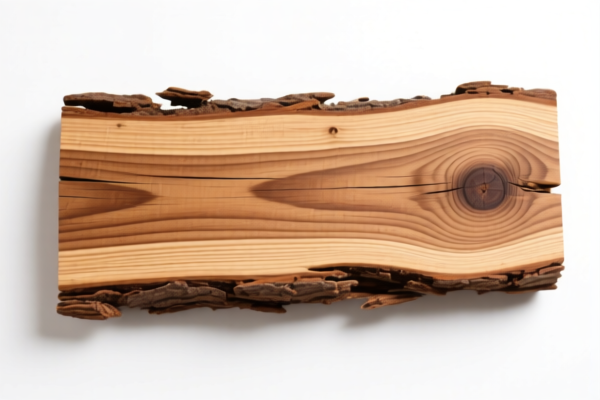
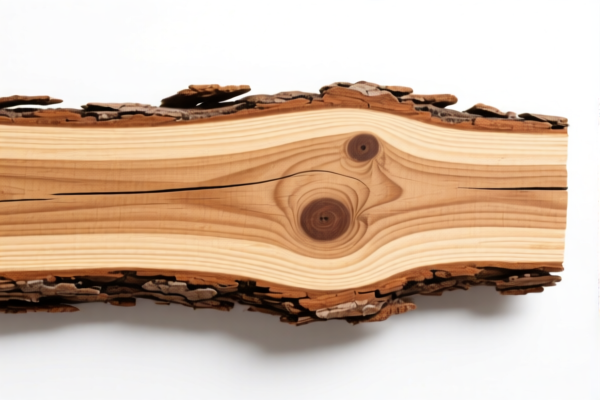
Rough Pine Wood refers to timber derived from the Pinus genus (Pine) that has been felled, debarked (or not), and roughly squared, but has not been planed, sanded, or processed beyond the initial roughing stage.
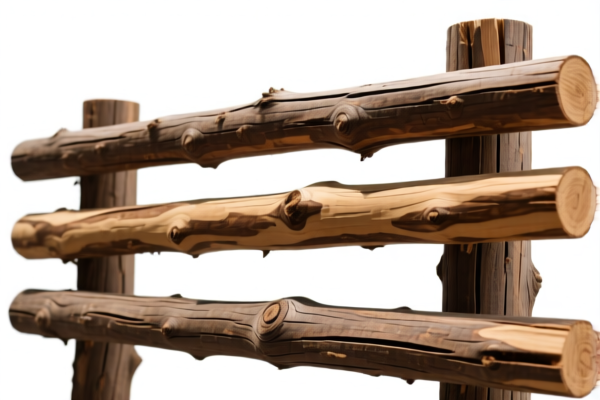
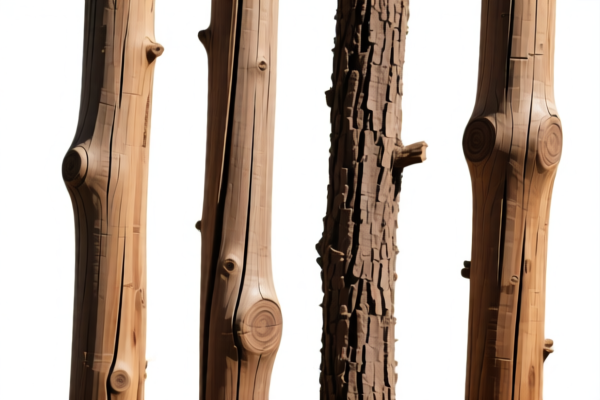
In international trade, the "roughness" is the critical differentiator. It dictates whether the product falls under: 1. Raw Logs (Fuel/Construction): Unprocessed logs intended for burning or further milling. 2. Rough-Sawn Timber: Wood cut to size but left with a rough surface, often used for construction framing or pallets.
⚠️ Key Classification Pivot:
- Is it logs/billets (fuel/structural raw material)? → 4401/4403 Series
- Is it sawn to length (even if rough)? → 4407 Series
- Is it Pine (Pinus spp.)? → Mandatory Sub-category
📦 Section 2: HS Code Classification Matrix (2026 Authoritative Mapping)
Based on the specific product inputs, Rough Pine Wood falls into one of the following six critical HS Codes. All listed items share the same 25% Total Duty structure due to "Additional Duties" (Section 301/China Specific).
| HS Code | Product Description | Primary Use Case | Processing State |
|---|---|---|---|
4401.11.00.00 |
Fuel Wood, in logs/billets/twigs (Coniferous) | Biomass fuel, firewood | Unprocessed logs/billets |
4401.21.00.00 |
Wood in chips/particles (Coniferous) | Pulp, particle board raw material | Chips or particles |
4403.21.01.65 |
Wood in the rough (Pine, < 15cm cross-section) | Raw lumber, further milling | Roughly squared, small dim |
4403.22.01.65 |
Wood in the rough (Other Pine) | General raw construction timber | Roughly squared, larger dim |
4407.11.00.42 |
Sawn/Pine (Eastern White/Red Pine), Not Treated, Rough | Construction framing, lumber | Sawn, >6mm thick, Rough |
4407.11.00.52 |
Sawn/Pine (General Other), Not Treated, Rough | General sawn lumber | Sawn, >6mm thick, Rough |
🔍 Critical Insight:
-4403Series = "In the rough" (often logs or squared beams, not yet sawn to final dimensions).
-4407Series = "Sawn or chipped lengthwise" (processed to specific lengths/dimensions but still rough).
-4401Series = Specifically for Fuel or Chips (do not use for construction timber!).
💰 Section 3: 2026 Tariff Rate Deep Dive (Detailed Breakdown)
✅ Applicable Market: United States (US)
✅ Origin: China (CN) (Implied by the "Additional Duty" structure)
✅ Effective Date: 2025-2026 (Current Regime)
🎯 The 25% Total Duty Structure (Universal for All Above Codes)
| Item | Content |
|---|---|
| Base Tariff Rate | 0.0% (Ad Valorem) Note: Standard WTO Most Favored Nation rate for wood is often low or zero. |
| Section 301 Additional Duty | +25.0% Triggered by "Made in China" + Wood Category restrictions. |
| Total Effective Tax | 25.0% |
| Tax Calculation | CIF Value (Cost + Insurance + Freight) × 25% |
| De Minimis Exemption | ❌ NO Wood products are strictly subject to the 301 tariff list; no small parcel exemption. |
| Legal Path | USITC Footnote / Section 301 List → 4401/4403/4407 → Additional Duty 25% |
📌 Explanation:
- The 25% surcharge is a punitive "Additional Duty" imposed specifically on Chinese-origin wood products under the Section 301 Trade Action.
- There is NO "Base Tax" offset. You pay 0% base + 25% penalty = 25% total.
- This applies to ALL listed HS Codes (4401,4403,4407) if they are Pine (Coniferous) from China.
🛠️ Section 4: Customs Clearance Operational Guide (Avoiding Traps)
✅ 1. Documentation Checklist (Non-Negotiable)
| Document | Requirement | Why It Matters |
|---|---|---|
| ✅ Species Certificate | ✔️ Must specify Pinus spp. | Misidentifying "Pine" as "Oak" or "Spruce" changes the HS code to a non-targeted category (different duty). |
| ✅ Dimensional Report | ✔️ Must show length/width/thickness | Distinguishes between 4403 (Rough) and 4407 (Sawn). |
| ✅ Treatment Certificate | ✔️ Must state "Not Treated" | If treated (chemical), it moves to 4407 sub-category "Treated" (higher scrutiny) or 38.08 (Pesticide). |
| ✅ Phytosanitary Cert | ✔️ Must be valid | Wood is a high-risk vector for pests (Bark Beetles, Pine Nematodes). |
| ✅ Fumigation Stamp | ✔️ Must be ISPM 15 compliant | If palletized, wood must be heat-treated/fumigated with visible stamp. |
✅ 2. Declaration Strategy (The "Rough" Trap)
🔥 Golden Rule: "Describe the finish, not the potential!"
| Scenario | Correct Declaration | Risk of Error |
|---|---|---|
| Logs cut to length but rough | "Rough Pine Logs, Not Planed" | ❌ Risk: If declared as "Sawn" but no planer marks, CBP may re-classify or inspect. |
| Sawn timber with rough surface | "Sawn Pine, Rough Surface, Not Planed" | ❌ Risk: If declared "Planed/Sanded" but it's not, it violates the description of 4407.11.00.42. |
| Fuel vs. Construction | Be Specific: "Fuel Wood" vs. "Lumber" | ❌ Risk: Declaring fuel wood as lumber to avoid 4401 restrictions? FRAUD RISK. |
| Pine Species | Specify "Eastern White Pine" or "Red Pine" | ❌ Risk: Generic "Pine" is okay, but specific species helps 4407.11.00.42 accuracy. |
✅ 3. Special Scenarios & Mitigation
| Situation | Strategic Advice |
|---|---|
| OEM/Custom Sizing | Provide custom cut lists. Ensure the "Rough" state is clearly defined (no sanding marks). |
| Mixed Consignment (Pine + Hardwood) | Do not declare "Rough Pine" for the whole shipment. Separate Pine (4403/4407) from Oak/Mahogany (4407.19). Mixed shipments get held for inspection. |
| Chip/Particle Export | If shipping chips, ensure it is labeled "Wood in chips" (4401.21). If it's just "logs", do not use this code. |
| Duty Drawback | Check Eligibility: Since the base is 0%, Duty Drawback (refund on re-export) is limited to the 25% portion. |
🌍 Section 5: Global Market Comparison (2026)
| Region | HS Code Match | Total Duty (China Origin) | Key Barrier |
|---|---|---|---|
| 🇺🇸 USA | 4401/4403/4407 |
25.0% (301 Tariff) | High. 25% surcharge is the main cost driver. |
| 🇨🇳 China | 4401/4403/4407 |
Varies (Export Tax) | Low. China often exports timber with subsidies. |
| 🇪🇺 EU | 4401/4403/4407 |
0% - 6% (No 301) | Low. Strict FLEGT/EUTR compliance required (Timber legality). |
| 🇨🇦 Canada | 4401/4403/4407 |
0% (FETPA) | Low. Similar trade rules, but strict pest control (CIP). |
📌 Conclusion:
- The USA is the only major market imposing a flat 25% Additional Duty on these specific Pine Wood codes from China.
- EU/Europe is a safer bet for volume, provided you have FLEGT/EUTR documentation proving sustainable sourcing.
📌 Section 6: Common Errors & "Blood Test" Warnings
❌ Error 1: Misidentifying "Rough" as "Planed"
👉 Consequence: Declaring as "Planed" (4407.19) when it is "Rough" (4407.11) can trigger a 25% penalty for under-declaration if the base rate differs, or confiscation if the product fails to meet the "Rough" standard for export licenses.
❌ Error 2: Mixing Fuel Wood with Construction Lumber
👉 Consequence: 4401 (Fuel) has different phytosanitary requirements than 4407 (Lumber). Mixing them leads to customs seizure of the entire batch for "Inconsistent Documentation."
❌ Error 3: Ignoring "Not Treated" Status
👉 Consequence: If wood is chemically treated (preservatives) but declared "Not Treated," it may require HS Code 4407 sub-category for "Treated" or even 38.08 (Insecticides). Misdeclaration = Fines.
❌ Error 4: Generic "Pine" Labeling
👉 Consequence: If the invoice just says "Pine Wood" without specifying Pinus strobus or Pinus resinosa, Customs may default to the most restrictive sub-category (4407.11.00.52 - "Other") to ensure tax collection, potentially missing out on specific duty preferences.
🎯 Section 7: Final Strategic Advice
🎯 The "Rough Pine" Mantra:
🔹 "Know your shape" (Log vs. Sawn vs. Chip).
🔹 "Know your finish" (Rough vs. Planed vs. Treated).
🔹 "Know your tax" (Base 0% + 301 25% = 25% Total).
✅ Action Plan:
1. Verify Species: Confirm Pinus spp. on all invoices.
2. Check Dimensions: Ensure >6mm thickness for 4407; <6mm might be "Chips" (4401).
3. Prepare Fumigation: ISPM 15 stamps are mandatory for all wood exports to the US/EU.
4. Calculate CIF x 25%: Budget for the 25% Additional Duty immediately. Do not assume 0% tax.
🚀 Pro Tip:
If your pine wood is sourced from Vietnam, Mexico, or Canada, you may qualify for Section 301 Exclusions or 0% tariffs.
Strategy: Route via non-China origin or apply for Special Duty Exclusion (Section 301) before shipping.
✨ Precision Classification = Profit Protection.
💼 Don't let a 25% tariff wipe out your margin. Classify correctly, declare clearly, and clear faster.
Customer Reviews
About HS Code Classification
The Harmonized System (HS) is an internationally standardized nomenclature developed by the World Customs Organization (WCO) to classify traded products. Over 200 countries use the HS system as the basis for customs tariffs, trade statistics, and import/export regulations.
Each HS code follows a hierarchical structure:
- Chapter (2 digits) — Broad category of goods (e.g., Chapter 84: Machinery and Mechanical Appliances)
- Heading (4 digits) — More specific grouping within the chapter
- Subheading (6 digits) — Internationally standardized breakdown, used by all WCO member countries
- National subdivisions (8-10 digits) — Country-specific extensions for further classification, such as US HTSUS 10-digit codes
Correct HS code classification is essential for smooth customs clearance, accurate duty payment, and compliance with trade regulations. Misclassification can lead to customs delays, overpayment of duties, or penalties.
When importing from CN to US, the applicable tariff rates may include:
- Most-Favored-Nation (MFN) rate — The standard duty rate applied to WTO members
- General rate — Applied to countries without trade agreements
- Trade remedy duties — Additional tariffs such as Section 301 (anti-dumping), Section 232 (national security), or countervailing duties
The information provided on this page is for reference purposes only. For official classification, please consult with your local customs authority or a licensed customs broker.