Rough Pine Wood Pile
CN → US| HS Code | Tariff Rate | Origin | Destination | Doc |
|---|---|---|---|---|
| 4407110042 | 35.0% | CN | US | Official Doc |
| 4407110044 | 35.0% | CN | US | Official Doc |
Product Images
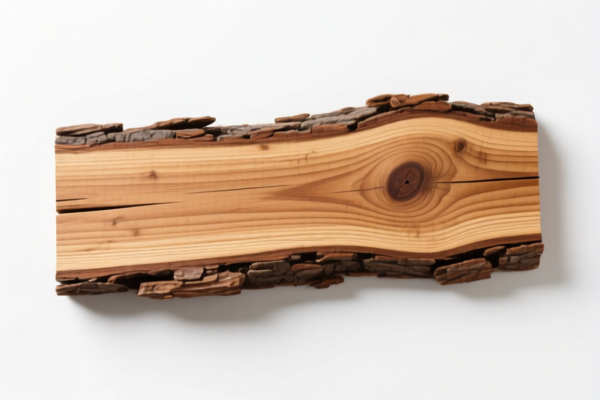
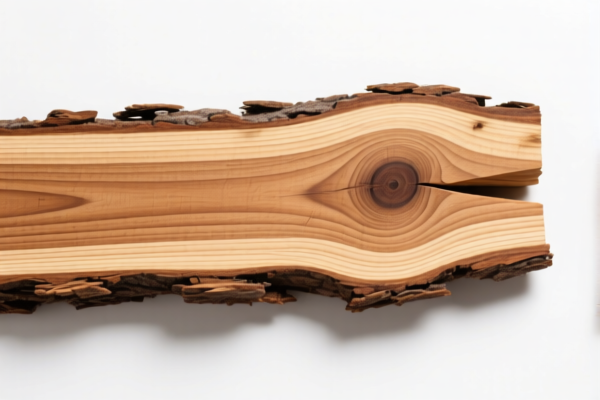
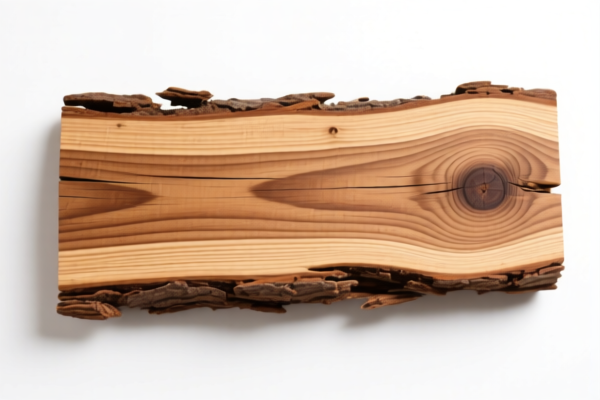
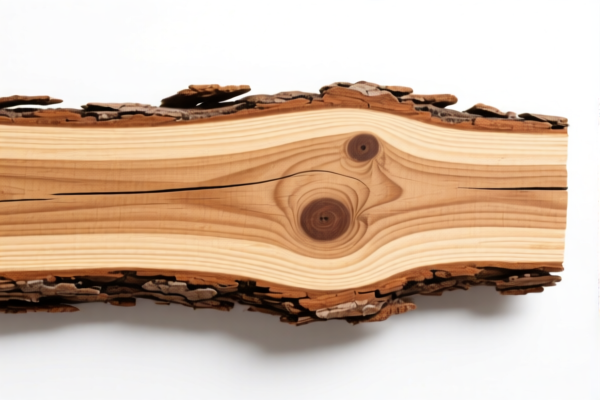
AI Analysis
🌲 Rough Pine Wood Pile (Unprocessed Sawnwood)
🌐 HS Code Reference & Customs Clearance Guide | 2026 Latest Tariff Analysis | Professional Entry Strategy
📌 I. Product Definition & Classification: Do You Know What "Rough Pine Wood" Really Is?
"Rough Pine Wood Pile" refers to coniferous wood that has been sawn, chipped, sliced, or peeled lengthwise. Crucially, it is not treated (chemically preserved) and remains in its "Rough" state (unplaned, unsanded, or end-jointed).
In international trade, this falls under Chapter 44: Wood and articles of wood. The classification depends entirely on the pine species and the state of processing (Rough vs. Treated/Planed).
⚠️ Key Distinction Point:
- If the wood is Rough (unplaned/un-sanded) and Not Treated: It is classified under 4407.11.
- If the wood is Planed/Sanded or Treated: It falls under different subheadings (not covered in this specific dataset).
- Species Matters: Different pine species (e.g., Eastern White Pine vs. Lodgepole Pine) have different tariff treatments, specifically regarding punitive "Additional Tariffs."
📦 II. HS Code Classification Details (Based on Provided Data)
| HS Code | Product Description | Condition | Species | Tax Rate |
|---|---|---|---|---|
| 4407.11.00.42 | Wood of Pine (Pinus spp.), Rough, Not Treated | Unplaned, Raw | Eastern White Pine (Pinus strobus) & Red Pine (Pinus resinosa) | 25.0% |
| 4407.11.00.44 | Wood of Pine (Pinus spp.), Rough, Not Treated | Unplaned, Raw | Lodgepole Pine (Pinus contorta) | 0.0% |
🔍 Critical Note:
- Both codes belong to 4407.11: "Wood sawn... of a thickness exceeding 6 mm: Coniferous: Of pine... Not treated: Rough."
- The only difference is the specific pine species and the resulting tax rate.
- 4407.11.00.42 carries a 25% Additional Tariff.
- 4407.11.00.44 has 0% Additional Tariff.
💰 III. 2026 Latest Tariff Rate Breakdown (Detailed Tax Clauses)
✅ Applicable Context: Based on the provided data, these rates reflect the total effective tax including base duties and additional levies.
🎯 1. 4407.11.00.42 — Rough Eastern White Pine & Red Pine
| Item | Content |
|---|---|
| Base Tariff | 0.0% |
| Additional Tariff | +25.0% |
| Total Tax Rate | 25.0% |
| Tax Calculation | CIF Value × 25% |
| Legal Basis | Derived from "Tax Detail: Base Tariff: 0.0%, Additional Tariff: 25.0%" |
📌 Explanation:
- This code applies specifically to Eastern White Pine (Pinus strobus) and Red Pine (Pinus resinosa).
- The 25% additional tariff is likely a punitive or safeguard measure (common for specific Chinese-origin or strategically sensitive timber imports in certain markets like the US under Section 301 or similar trade remedies).
- Cost Impact: High. You must budget for a 25% tax burden on the CIF value.
🎯 2. 4407.11.00.44 — Rough Lodgepole Pine
| Item | Content |
|---|---|
| Base Tariff | 0.0% |
| Additional Tariff | 0.0% |
| Total Tax Rate | 0.0% |
| Tax Calculation | $0 (Duty-Free) |
| Legal Basis | Derived from "Tax Detail: Base Tariff: 0.0%, Additional Tariff: 0.0%" |
📌 Explanation:
- This code applies specifically to Lodgepole Pine (Pinus contorta).
- No additional tariffs are applied. This is a duty-free entry for this specific species.
- Cost Advantage: Significant. If your wood is Lodgepole Pine, you save 25% in tariffs compared to Eastern White/Red Pine.
🛠️ IV. Customs Clearance Practical Advice (Avoiding Pitfalls)
✅ 1. Prepare Documentation Checklist (Mandatory)
| Document | Required? | Description |
|---|---|---|
| ✅ Commercial Invoice | ✔️ | Must clearly state "Rough Pine Wood," "Not Treated," and exact species (Pinus strobus, Pinus resinosa, or Pinus contorta). |
| ✅ Packing List | ✔️ | Detail weight, dimensions, and number of bundles/piles. |
| ✅ Phytosanitary Certificate | ✔️ | Critical for Wood: Issued by the country of origin, confirming the wood is free from pests and diseases (ISPM 15 standard). |
| ✅ Species Declaration | ✔️ | Provide botanical proof or supplier declaration specifying the exact Pinus species. Misidentification leads to wrong HS Code and penalties. |
| ✅ Mill Certificate | ✔️ | Proof of treatment status ("Not Treated") and roughness (unplaned/un-sanded). |
✅ 2. Classification Tips (Key Mnemonics)
🔥 "Species Decide, Rough vs. Planed, Tax Changes!"
| Scenario | Correct HS Code | Tax Rate | Why? |
|---|---|---|---|
| Eastern White/Red Pine + Rough + Not Treated | 4407.11.00.42 |
25% | Specific species trigger additional tariff. |
| Lodgepole Pine + Rough + Not Treated | 4407.11.00.44 |
0% | Specific species exempt from additional tariff. |
| Any Pine + Planed/Sanded | Not in Data | Varies | Changes from "Rough" to "Planed" → Different HS. |
| Any Pine + Treated | Not in Data | Varies | Changes from "Not Treated" to "Treated" → Different HS. |
| Thickness ≤ 6mm | Not in Data | Varies | Chapter 44.07 applies only if > 6mm. |
✅ 3. Special Handling & Risk Management
| Situation | Recommendation |
|---|---|
| Mixed Species Pile | If your shipment contains both Eastern White Pine and Lodgepole Pine, you cannot combine them under one HS Code. You must separate them or declare separately. Mis-mixing leads to 25% overpayment or underpayment penalties. |
| Thickness Verification | Ensure all planks are > 6mm. If any are ≤ 6mm, they may fall under 4407.90 or other headings. Check physical samples. |
| Treatment Status | "Not Treated" is key. If the wood has any chemical preservative (even surface spray), it is "Treated" → Not covered by this specific dataset. It will likely face different codes and phytosanitary rules. |
| Origin Declaration | Confirm the country of origin. While base tariffs are 0%, additional tariffs (like the 25%) may apply only to specific origins (e.g., China). Check local trade agreements. |
🌍 V. Global Market Comparison (2026 Outlook)
| Market | Recommended HS Code | Tariff (Approx.) | Key Requirement |
|---|---|---|---|
| 🇺🇸 US (for 4407.11.00.42) | 4407.11.00.42 |
25% | Phytosanitary Cert, Section 301 Compliance |
| 🇺🇸 US (for 4407.11.00.44) | 4407.11.00.44 |
0% | Phytosanitary Cert |
| 🇨🇳 China | 4407.11.00 |
Varies (MFN) | Fumigation Certificate |
| 🇪🇺 EU | 4407.11.00 |
Varies (0-20%) | EUTR Due Diligence (Timber Regulation) |
📌 Conclusion:
- The 25% tax difference between pine species is massive.
- Accurate species identification is the #1 priority for cost optimization.
- Phytosanitary compliance is non-negotiable for all wood products.
📌 VI. Common Errors & Pitfalls (Lessons Learned)
❌ Error 1: Labeling all pine wood as "Rough Pine" without specifying species.
👉 Consequence: Customs may assign the 25% rate by default or hold shipment for clarification.
❌ Error 2: Assuming "Pine" is one uniform category.
👉 Consequence: Lodgepole (0%) vs. Eastern White (25%) → 25% cost discrepancy.
❌ Error 3: Ignoring the "> 6mm" rule.
👉 Consequence: Thin plywood or sheets may be misclassified → Penalties + Retreatment.
❌ Error 4: Not declaring "Not Treated."
👉 Consequence: If treated, it falls under different regulations (e.g., ISPM 15 marking required differently, different chemical safety rules).
✅ Correct Practice:
"Rough Sawn Wood, Eastern White Pine (Pinus strobus), Not Treated, Thickness > 6mm, Raw Logs/Planks"
🎯 VII. Conclusion: Precision Classification Saves Money!
🎯 Remember the Rules:
🔹 "Species is King: Lodgepole = Free, White/Red = 25%."
🔹 "Rough & Untreated: Stick to 4407.11."
🔹 "Phytosanitary Cert is Mandatory – No Cert, No Entry."
📌 Pro Tip:
If you have a mixed shipment, consider sorting by species at origin. If Lodgepole Pine dominates, you can significantly reduce total tax burden. If Eastern White Pine dominates, factor the 25% cost into your pricing strategy.
📣 Immediate Action:
📞 Verify Species with your supplier (Botanical Name).
📄 Confirm Thickness (> 6mm).
🌿 Ensure Phytosanitary Certificate is in place.
🚀 Clear Customs Smoothly, Optimize Costs, Secure Supply Chain!
✨ Professional Classification, From Species Identification to Tax Savings!
💼 Your Timber, Your Terms, Your Compliance!
Customer Reviews
About HS Code Classification
The Harmonized System (HS) is an internationally standardized nomenclature developed by the World Customs Organization (WCO) to classify traded products. Over 200 countries use the HS system as the basis for customs tariffs, trade statistics, and import/export regulations.
Each HS code follows a hierarchical structure:
- Chapter (2 digits) — Broad category of goods (e.g., Chapter 84: Machinery and Mechanical Appliances)
- Heading (4 digits) — More specific grouping within the chapter
- Subheading (6 digits) — Internationally standardized breakdown, used by all WCO member countries
- National subdivisions (8-10 digits) — Country-specific extensions for further classification, such as US HTSUS 10-digit codes
Correct HS code classification is essential for smooth customs clearance, accurate duty payment, and compliance with trade regulations. Misclassification can lead to customs delays, overpayment of duties, or penalties.
When importing from CN to US, the applicable tariff rates may include:
- Most-Favored-Nation (MFN) rate — The standard duty rate applied to WTO members
- General rate — Applied to countries without trade agreements
- Trade remedy duties — Additional tariffs such as Section 301 (anti-dumping), Section 232 (national security), or countervailing duties
The information provided on this page is for reference purposes only. For official classification, please consult with your local customs authority or a licensed customs broker.