Rough Red Oak Construction Timber
CN → US| HS Code | Tariff Rate | Origin | Destination | Doc |
|---|---|---|---|---|
| 4409290655 | 38.2% | CN | US | Official Doc |
| 4407910022 | 35.0% | CN | US | Official Doc |
| 4403910020 | 35.0% | CN | US | Official Doc |
| 4403910040 | 35.0% | CN | US | Official Doc |
| 4409292660 | 35.0% | CN | US | Official Doc |
Product Images
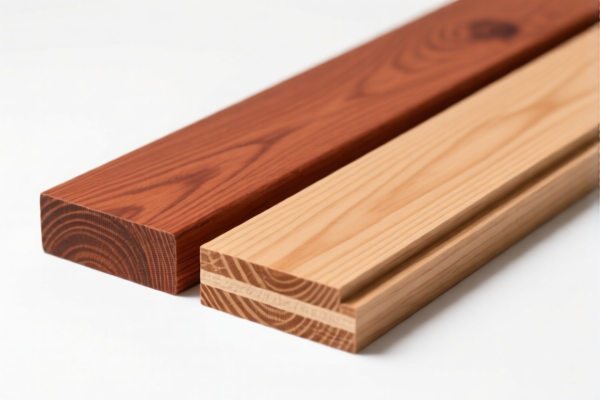
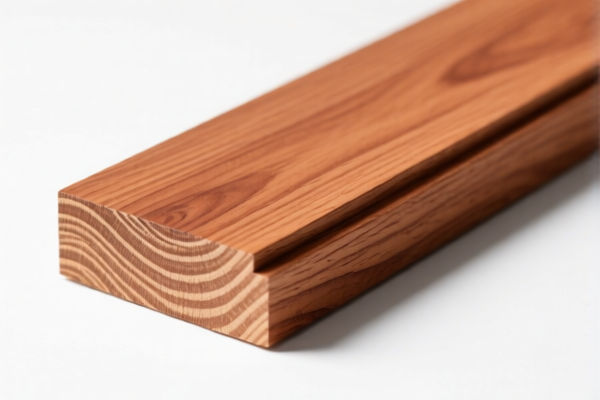
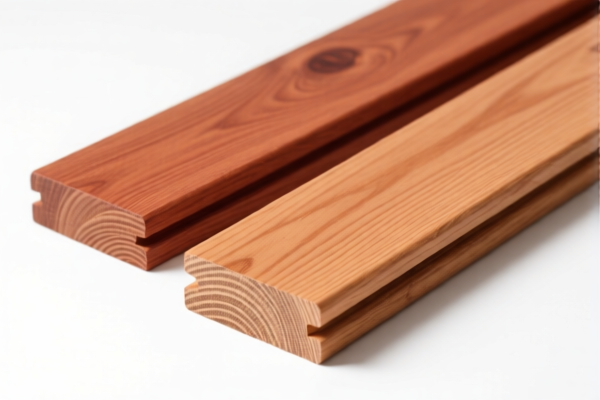
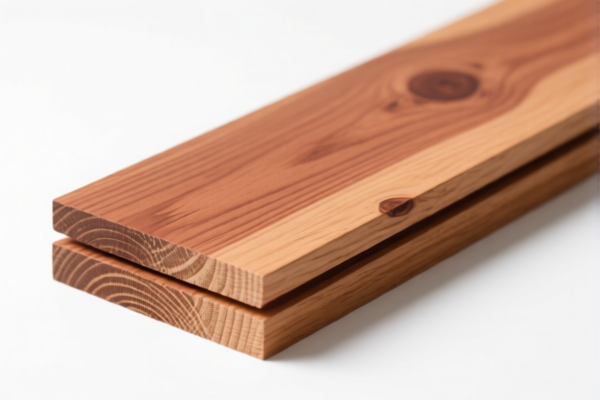
AI Analysis
🪵 Rough Red Oak Construction Timber (Red Oak Lumber)
🌐 HS Code Reference & Customs Clearance Guide | 2026 Latest Tariff Analysis | Professional Clearance Strategy for US Imports
📌 I. Product Definition & Classification: Understanding "Red Oak Timber"
Red Oak (Quercus rubra) is one of the most widely used hardwoods in the United States for flooring, furniture, and interior trim. In international trade, the classification depends entirely on the degree of processing:
- Rough/Lumber (Unprocessed/Minimal Processing): Logs, rough-sawn boards, or planks that have been sawn but not planed, tongued, or grooved. These are considered raw materials.
- Finished Flooring (Processed): Boards that have been surfaced, tongue-and-groove (T&G) profiled, or specifically shaped for installation as flooring. These are considered manufactured goods.
⚠️ Key Distinction:
- If the wood is sawn but rough (no fine surfacing, no T&G profile) → It falls under Chapters 4403 or 4407.
- If the wood is profiled for flooring (tongued/grooved, specific cross-section) → It falls under Chapter 4409.
📦 II. HS Code Classification Details (2026 Latest Tariff Authority)
Based on the provided data, here are the five possible HS Codes for Rough Red Oak Construction Timber, along with their specific definitions and tax implications.
| HS Code | Product Description | Application Scenario | Processing Level |
|---|---|---|---|
4409.29.06.55 |
Rough Red Oak Flooring Timber Material: Red Oak. Form: Meets flooring characteristics. |
Red oak boards specifically cut/shaped for flooring installation, even if described as "rough" in trade terms, if they fit flooring specs. | ✅ Profiled/Flooring Spec |
4407.91.00.22 |
Rough Red Oak Lumber Form: Longitudinally sawn, planed, tongued, grooved, sanded, finger-jointed, end-jointed, or otherwise combined. |
General red oak lumber that has been sawn and possibly planed/sanded, but not necessarily shaped for specific flooring use. | ✅ Sawn/Planed |
4403.91.00.20 |
Red Oak Rough-Sawn Timber Classification: Fitting 4403.91.00.20. |
Raw red oak logs or beams that have been roughly sawn (e.g., slabbed or cant logs) but not refined into dimensional lumber. | ⚠️ Roughly Sawed |
4403.91.00.40 |
Unbarked Rough-Square Red Oak Timber Description: Unbarked or roughly square-cut red oak. |
Red oak logs that are merely de-barked or roughly squared, often used for structural beams or rough construction. | ❌ Minimal Processing |
4409.29.26.60 |
Red Oak Non-Coniferous Flooring Material: Non-coniferous (Red Oak). Form: Other wood flooring. |
Red oak flooring that does not fit the specific "rough red oak flooring" definition of 4409.29.06.55, but is still classified as "wood flooring." | ✅ Flooring (Alternative) |
🔍 Key Reminder:
- Chapter 4403/4407 codes are for semi-processed wood (logs, rough lumber).
- Chapter 4409 codes are for finished/special-shaped wood (flooring, molding, tongue-and-groove).
- If your product is sold as "construction timber" but is actually shaped for flooring, customs may reclassify it to 4409, which can affect duty rates.
💰 III. 2026 Latest Tariff Rate Breakdown (Including Surcharges & Policy Add-ons)
✅ Applicable Country: United States (US)
✅ Country of Origin: China (CN)
✅ Effective Date: From November 10, 2025 (and subsequent imports)
🎯 1. 4409.29.06.55 — Rough Red Oak Flooring Timber
| Item | Details |
|---|---|
| Base Tariff | 3.2% (Ad Valorem) |
| Section 301 Surcharge | +25.0% |
| Section 122 Surcharge | +10.0% |
| Total Tariff Rate | 38.2% |
| Tax Calculation | CIF Value × 38.2% |
| De Minimis Eligible? | ❌ No (Deny De Minimis) |
| Legal Basis Path | IEEPA:9903.01.25 → USITC:4409.29.06.55 → FOOTNOTE:301/122 |
📌 Explanation:
- Base 3.2%: Standard Most Favored Nation (MFN) rate for certain wood flooring.
- 301 Surcharge (25%): Added tariff for Chinese goods under Section 301 of the Trade Act.
- Section 122 (10%): Additional duty for national security or specific trade remedies.
- Total 38.2%: This is a high-cost category. Do not under-declare.
🎯 2. 4407.91.00.22 — Rough Red Oak Lumber (Sawn/Planed)
| Item | Details |
|---|---|
| Base Tariff | 0.0% |
| Section 301 Surcharge | +25.0% |
| Section 122 Surcharge | +10.0% |
| Total Tariff Rate | 35.0% |
| Tax Calculation | CIF Value × 35.0% |
| De Minimis Eligible? | ❌ No (Deny De Minimis) |
| Legal Basis Path | IEEPA:9901.25 → IEEPA:9903.01.24 → USITC:4407.91.00.22 → FOOTNOTE:301/122 |
📌 Note:
- Base rate is 0%, but surcharges bring it to 35%.
- This is a common classification for general red oak lumber that is sawn but not shaped for specific flooring.
🎯 3. 4403.91.00.20 — Red Oak Rough-Sawn Timber
| Item | Details |
|---|---|
| Base Tariff | 0.0% |
| Section 301 Surcharge | +25.0% |
| Section 122 Surcharge | +10.0% |
| Total Tariff Rate | 35.0% |
| Tax Calculation | CIF Value × 35.0% |
| De Minimis Eligible? | ❌ No (Deny De Minimis) |
| Legal Basis Path | IEEPA:9901.25 → IEEPA:9903.01.24 → USITC:4403.91.00.20 → FOOTNOTE:301/122 |
📌 Note:
- Similar to4407, but for rougher timber (less processed than planed lumber).
- Often used for structural beams or outdoor furniture frames.
🎯 4. 4403.91.00.40 — Unbarked Rough-Square Red Oak Timber
| Item | Details |
|---|---|
| Base Tariff | 0.0% |
| Section 301 Surcharge | +25.0% |
| > Section 122 Surcharge | +10.0% |
| Total Tariff Rate | 35.0% |
| Tax Calculation | CIF Value × 35.0% |
| De Minimis Eligible? | ❌ No (Deny De Minimis) |
| Legal Basis Path | IEEPA:9901.25 → IEEPA:9903.01.24 → USITC:4403.91.00.40 → FOOTNOTE:301/122 |
📌 Note:
- This code applies to logs or very rough squares that are unbarked or minimally processed.
- Ensure your product is not just "logs" (which might have different phytosanitary requirements).
🎯 5. 4409.29.26.60 — Red Oak Non-Coniferous Flooring (Other)
| Item | Details |
|---|---|
| Base Tariff | 0.0% |
| Section 301 Surcharge | +25.0% |
| Section 122 Surcharge | +10.0% |
| Total Tariff Rate | 35.0% |
| Tax Calculation | CIF Value × 35.0% |
| De Minimis Eligible? | ❌ No (Deny De Minimis) |
| Legal Basis Path | IEEPA:9901.25 → IEEPA:9903.01.24 → USITC:4409.29.26.60 → FOOTNOTE:301/122 |
📌 Note:
- This is an alternative flooring code for red oak that doesn’t fit the specific "rough red oak flooring" definition of4409.29.06.55.
- Still subject to 35% total duty.
🛠️ IV. Customs Clearance Practical Advice (Real-World Pitfall Guide)
✅ 1. Documentation Checklist (All Required)
| Document | Required | Description |
|---|---|---|
| ✅ Commercial Invoice | ✔️ | Must clearly state "Red Oak," "HS Code," and "Country of Origin: China." |
| ✅ Packing List | ✔️ | Detail dimensions, board feet, and packaging type. |
| ✅ Phytosanitary Certificate | ✔️ | Critical for wood. Proves the wood is free from pests (ISPM 15 compliance). |
| ✅ Fumigation Certificate | ✔️ | If wood was not heat-treated, fumigation proof is required. |
| ✅ Product Photos | ✔️ | Show roughness, edges, and any branding. |
| ✅ Certificate of Origin | ✔️ | To confirm Chinese origin for surcharge calculation. |
| ✅ Third-Party Inspection Report | ✔️ | Optional but recommended for high-value shipments to prove quality/specs. |
✅ 2. Declaration Tips (Key Mantras)
🔥 “Wood is Wood, but Shape Defines Price!”
| Scenario | Correct Declaration | Mistake to Avoid |
|---|---|---|
| Rough Sawn Planks | 4403.91.00.20 or 4407.91.00.22 |
Misdeclare as "Flooring" → Higher duty (38.2%) |
| Tongue & Groove Flooring | 4409.29.06.55 |
Misdeclare as "Lumber" → Lower duty risk, but customs may penalize for misclassification |
| Logs/Rough Squares | 4403.91.00.40 |
Misdeclare as "Lumber" → If it’s too rough, it may be rejected as unfinished |
| Mixed Sizes | Declare all under one HS | Splitting into multiple HS codes incorrectly → Delays and audits |
✅ 3. Special Handling
| Situation | Handling Advice |
|---|---|
| ISPM 15 Compliance | Ensure all wood packaging (pallets, crates) is heat-treated and marked with the IPPC logo. |
| Moisture Content | Declare moisture content if it affects value. High moisture may lead to rejection. |
| Fumigation | If wood is not heat-treated, provide fumigation certificate before arrival. |
| Value Declaration | Use CIF Value (Cost + Insurance + Freight) for duty calculation. Under-declaration leads to penalties. |
🌍 V. Global Market Comparison (2026 Latest)
| Country/Region | Recommended HS Code | Tariff (China Origin) | Certification Requirements | Notes |
|---|---|---|---|---|
| 🇺🇸 USA | 4403.91.00.20 / 4409.29.06.55 |
35% - 38.2% | Phytosanitary + ISPM 15 | Highest duties due to 301/122 surcharges. |
| 🇨🇳 China | 4403.91.00.20 |
~5% | CCC (if finished) | No surcharges. |
| 🇪🇺 EU | 4407.91.00 |
~0% - 4% | FSC/PEFC (Sustainability) | No US-style surcharges. |
| 🇬🇧 UK | 4407.91.00 |
~0% - 4% | UKCA (if finished) | Similar to EU. |
| 🇦🇺 Australia | 4407.91.00 |
~5% | Biosecurity Check | Strict quarantine. |
📌 Conclusion:
- USA is the most expensive market for Chinese red oak timber due to 35-38% total duties.
- Consider supply chain diversification (e.g., sourcing from Vietnam, Canada, or Europe) to avoid surcharges.
📌 VI. Common Errors & Pitfall Guide (Lessons Learned)
❌ Error 1: Misclassifying Flooring as Lumber
👉 Consequence: Customs may reclassify to 4409.29.06.55 (38.2%) instead of 4407 (35%), leading to back taxes and penalties.
❌ Error 2: Missing Phytosanitary Certificate
👉 Consequence: Shipment quarantined or destroyed at port. Wood products are strictly regulated.
❌ Error 3: Incorrect HS Code for Roughness
👉 Consequence: If you declare 4403 (rough) but the wood is planed (4407), customs may audit and fine you.
❌ Error 4: Ignoring Section 122 Surcharge
👉 Consequence: Under-declaring duty by 10%. Customs will collect it plus late fees and interest.
✅ Correct Practice:
"Red Oak Lumber, Rough-Sawn, 2x4x8ft, Heat-Treated, ISPM 15 Compliant, HS Code 4403.91.00.20, Origin: China"
🎯 VII. Conclusion: Precision in Classification Saves Money!
🎯 Remember the Mantra:
🔹 "Rough Sawn: 35% | Flooring: 38.2% | No Phytosanitary: Rejected!"
🔹 "HS Code determines the surcharge. Get it wrong, and you pay 10% more."
📌 Pro Tip:
If your red oak is sourced from Vietnam, Canada, or Europe, you may qualify for 0% or low tariffs in the US.
Always apply for an Advance Ruling if you are unsure about the processing level (Rough vs. Flooring).
📣 Immediate Action:
📞 Contact a licensed customs broker + Provide product photos + Apply for HS Code Pre-Ruling
🚀 Ensure your red oak passes inspection, avoids penalties, and clears customs efficiently!
✨ Professional clearance starts with accurate classification!
💼 Your cost is worth every cent calculated correctly!
Customer Reviews
About HS Code Classification
The Harmonized System (HS) is an internationally standardized nomenclature developed by the World Customs Organization (WCO) to classify traded products. Over 200 countries use the HS system as the basis for customs tariffs, trade statistics, and import/export regulations.
Each HS code follows a hierarchical structure:
- Chapter (2 digits) — Broad category of goods (e.g., Chapter 84: Machinery and Mechanical Appliances)
- Heading (4 digits) — More specific grouping within the chapter
- Subheading (6 digits) — Internationally standardized breakdown, used by all WCO member countries
- National subdivisions (8-10 digits) — Country-specific extensions for further classification, such as US HTSUS 10-digit codes
Correct HS code classification is essential for smooth customs clearance, accurate duty payment, and compliance with trade regulations. Misclassification can lead to customs delays, overpayment of duties, or penalties.
When importing from CN to US, the applicable tariff rates may include:
- Most-Favored-Nation (MFN) rate — The standard duty rate applied to WTO members
- General rate — Applied to countries without trade agreements
- Trade remedy duties — Additional tariffs such as Section 301 (anti-dumping), Section 232 (national security), or countervailing duties
The information provided on this page is for reference purposes only. For official classification, please consult with your local customs authority or a licensed customs broker.