Rough Red Oak Furniture Wood
CN → US| HS Code | Tariff Rate | Origin | Destination | Doc |
|---|---|---|---|---|
| 4409290655 | 38.2% | CN | US | Official Doc |
| 4407910022 | 35.0% | CN | US | Official Doc |
| 4403910020 | 35.0% | CN | US | Official Doc |
| 4403910040 | 35.0% | CN | US | Official Doc |
| 4409292660 | 35.0% | CN | US | Official Doc |
Product Images
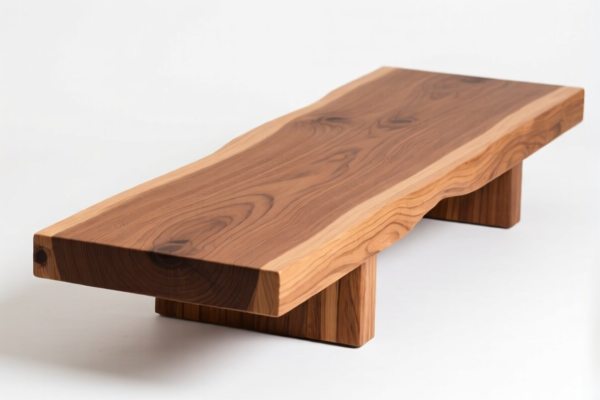
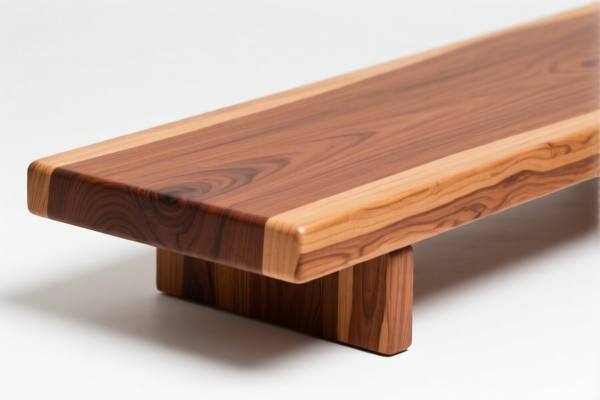
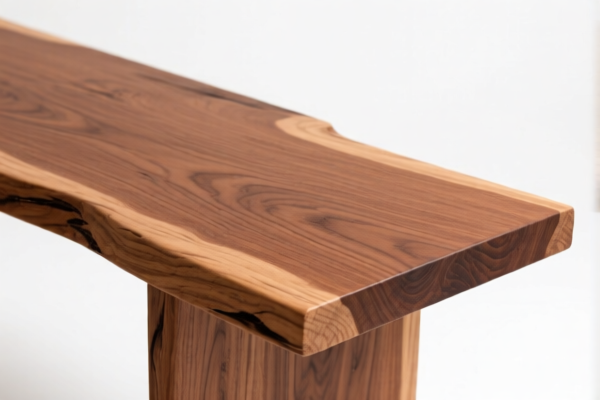
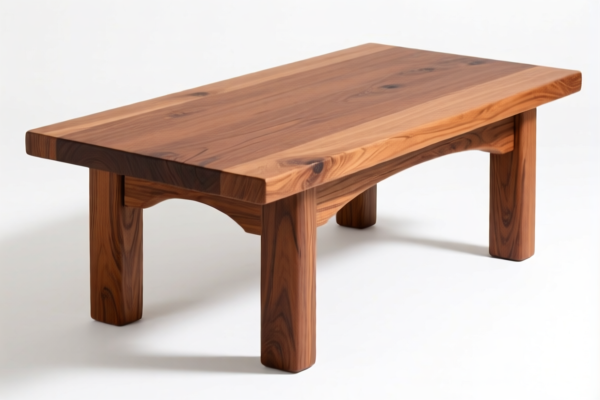
AI Analysis
🌳 Rough Red Oak Furniture Wood (Wooden Flooring & Raw Timber)
🌐 HS Code Reference & Customs Clearance Guide | 2026 Latest Tariff Analysis | Professional Entry Strategy
📌 I. Product Definition & Classification: What Exactly Is "Rough Red Oak"?
"Rough Red Oak" refers to red oak timber (Quercus rubra) that has undergone minimal processing. In international trade, the distinction between "raw lumber" and "finished flooring" is critical for classification and tax rates.
- Raw/Unprocessed Timber (Logs/Planks): Wood that is merely sawn, debarked, or roughly squared. It retains its natural shape and has not been shaped for final installation.
- Rough Flooring (Pre-finished/Ready-to-install): Wood specifically shaped (tongue-and-groove, grooved, or smoothed) to serve as flooring, but not yet varnished or painted.
⚠️ Key Distinction Point:
- If the wood is just sawn or roughly squared (logs, bolts, or rough planks) → Classified under Chapter 44.03 or 44.07 (Raw/Sawn Wood).
- If the wood is shaped specifically as flooring (e.g., with grooves for installation) → Classified under 44.09.29 (Flooring).
📦 II. HS Code Classification Details (2026 Latest Tariff Authority Comparison)
| HS Code | Product Description | Application Scenario | Processing State |
|---|---|---|---|
4409.29.06.55 |
Rough Red Oak Flooring Material: Red Oak. Shape: Meets flooring characteristics (e.g., grooved, tongue-and-groove). |
Pre-installed flooring boards, rough-sawn flooring ready for sanding/varnishing. | ✅ Shaped (Flooring profile) |
4409.29.26.60 |
Red Oak Flooring (Other Materials) Matches the classification for "other material" flooring under 44.09. |
Red oak boards specifically cut/sawn for flooring purposes, falling under general "other" subheadings. | ✅ Shaped (Flooring profile) |
4407.91.00.22 |
Rough Red Oak Sawn Wood Shape: Longitudinally sawn or planed wood. |
Planed or sawn lumber that has not yet been profiled into flooring; raw construction timber. | ⚠️ Sawn/Planed (Not flooring profile) |
4403.91.00.20 |
Red Oak Rough Sawed Wood Fits classification 4403.91.00.20. |
Roughly sawn red oak, suitable for further processing. | ❌ Raw (Rough sawn) |
4403.91.00.40 |
Unbarked or Roughly Squared Red Oak Unbarked or roughly squared red oak timber. |
Logs or bolts that are debarked or roughly squared but not fully sawn into boards. | ❌ Raw (Log/Rough square) |
🔍 Key Reminder:
- Flooring (44.09) typically carries a higher base duty than raw wood due to its finished nature, BUT in this specific trade scenario (China to US), the additional tariffs dominate the cost. - Raw Wood (44.03/44.07) has a 0% Base Duty, while Flooring (44.09) has a 3.2% Base Duty. - All items listed are subject to heavy US Additional Tariffs.
💰 III. 2026 Latest Tariff Rate Breakdown (Including Surtaxes & Policy Add-ons)
✅ Applicable Country: United States (US)
✅ Origin: China (CN)
✅ Effective Date: Post-November 2025 (Includes subsequent imports)
🎯 1. 4409.29.06.55 & 4409.29.26.60 —— Red Oak Flooring (Shaped)
| Item | Content |
|---|---|
| Base Duty | 3.2% (For 4409.29.06.55) / 0.0% (For 4409.29.26.60)* |
| Section 301 Additional Duty | +25.0% (USITC Footnote) |
| Section 122 / IEEPA Additional Duty | +10.0% (Targeting China/HK products) |
| Total Effective Tax Rate | 38.2% (for 4409.29.06.55) / 35.0% (for 4409.29.26.60) |
| Tax Calculation | CIF Value × Total Rate |
| De Minimis Exemption | ❌ NOT APPLICABLE (deny_de_minimis) |
| Legal Basis Path | USITC:4409.29 → SECTION_301:25% → IEEPA/SECTION_122:10% |
📌 Explanation:
- Base Duty:4409.29.06.55has a 3.2% base duty, making the total 38.2%.
- Base Duty:4409.29.26.60has a 0.0% base duty, making the total 35.0%.
- Additional Surtaxes: Both are heavily impacted by the 25% Section 301 tariff and the 10% IEEPA/Section 122 tariff.
- Result: These are high-cost imports. Do not rely on de minimis exemptions.
🎯 2. 4407.91.00.22 —— Rough Red Oak Sawn Wood (Planed/Sawn)
| Item | Content |
|---|---|
| Base Duty | 0.0% |
| Section 301 Additional Duty | +25.0% |
| Section 122 / IEEPA Additional Duty | +10.0% |
| Total Effective Tax Rate | 35.0% |
| Tax Calculation | CIF Value × 35.0% |
| De Minimis Exemption | ❌ NOT APPLICABLE (deny_de_minimis) |
| Legal Basis Path | USITC:4407.91 → SECTION_301:25% → IEEPA/SECTION_122:10% |
📌 Note:
- Even though the base duty is 0%, the 35% total rate makes it expensive. - Classification as "sawn or planed" (44.07) vs "raw" (44.03) does not change the tariff rate in this specific dataset, but it affects customs documentation.
🎯 3. 4403.91.00.20 & 4403.91.00.40 —— Raw Red Oak Timber (Rough Sawed/Unbarked)
| Item | Content |
|---|---|
| Base Duty | 0.0% |
| Section 301 Additional Duty | +25.0% |
| Section 122 / IEEPA Additional Duty | +10.0% |
| Total Effective Tax Rate | 35.0% |
| Tax Calculation | CIF Value × 35.0% |
| De Minimis Exemption | ❌ NOT APPLICABLE (deny_de_minimis) |
| Legal Basis Path | USITC:4403.91 → SECTION_301:25% → IEEPA/SECTION_122:10% |
📌 Note:
- These codes represent the least processed forms of red oak. -4403.91.00.40is for "unbarked or roughly squared" wood. -4403.91.00.20is for "rough sawed" wood. - Both carry the same 35% total effective rate. There is no tax advantage in importing raw timber vs. planed timber under current US-China trade rules.
🛠️ IV. Customs Clearance Practical Advice (Battle-Tested Pitfall Guide)
✅ 1. Required Documentation Checklist (None Missing)
| Document | Mandatory? | Notes |
|---|---|---|
| ✅ Product Specification Sheet | ✔️ | Must detail species (Red Oak), dimensions, moisture content, and processing state (rough, planed, or flooring profile). |
| ✅ Phytosanitary Certificate | ✔️ | Critical for Wood. Issued by the origin country's agricultural authority to prove freedom from pests/diseases. |
| ✅ Commercial Invoice | ✔️ | Must clearly state "Red Oak Wood" and HS Code. Avoid vague terms like "Furniture Parts" if it's raw wood. |
| ✅ Bill of Lading / Air Waybill | ✔️ | Standard shipping document. |
| ✅ Wood Packaging Material Declaration | ✔️ | If wood pallets/crates are used, they must be ISPM 15 compliant. |
| ✅ Certificate of Origin (CO) | ✔️ | To confirm China origin (triggers the 35% tax). |
✅ 2. Declaration Strategy (Key Mantra)
🔥 "Be Precise, Declare Species, Profile Matters, Tax Stays High!"
| Scenario | Correct Declaration | Wrong Practice |
|---|---|---|
| Flooring Boards (Grooved) | 4409.29.06.55 (Rough Red Oak Flooring) |
Declare as "Raw Lumber" (4403) → Customs Rejection/Re-classification |
| Plain Planks (Sawn) | 4407.91.00.22 (Rough Red Oak Sawn) |
Declare as "Flooring" → Over-declared Value/Complex Inspection |
| Logs/Unbarked Wood | 4403.91.00.40 (Unbarked Red Oak) |
Declare as "Finished Planks" → Mismatch with Physical Goods |
| Mixed Shipment | Split HS Codes | Combine all under one code → High Risk of Audit & Penalties |
✅ 3. Special Case Handling
| Situation | Handling Advice |
|---|---|
| Moisture Content | Ensure moisture content is declared (e.g., <19%). High moisture can lead to rejection or fumigation. |
| Pest Inspection | CBP (Customs and Border Protection) and APHIS (Animal and Plant Health Inspection Service) will inspect. Ensure wood is clean, no bark (if required), and no insect holes. |
| Wood Pallets | Must show ISPM 15 stamp. If missing, the entire shipment may be held or destroyed. |
| Tariff Engineering | Since all options carry 35-38% tax, there is no tax advantage to changing the HS code within this group. Focus on logistics efficiency and avoiding rejection instead. |
🌍 V. Global Market Comparison (2026 Latest)
| Country/Region | Recommended HS Code | Tariff (China Origin) | Certification | Remarks |
|---|---|---|---|---|
| 🇺🇸 USA | 4409.29 / 4407 / 4403 |
35% - 38.2% | Phytosanitary + ISPM 15 | Highest cost. All options heavily taxed. |
| 🇨🇳 China | 4409 / 4407 / 4403 |
Low/0% | Fumigation Certificate | Import duty is low, but export from China may have its own costs. |
| 🇪🇺 EU | 4409.29 / 4407.91 |
0% - 4.5% | FSC/PEFC (Optional but recommended) | No Section 301 or IEEPA surtaxes. Significantly cheaper than US. |
| 🇬🇧 UK | 4409.29 / 4407.91 |
0% - 4.5% | FSC/PEFC | Post-Brexit tariff lines similar to EU. |
| 🇦🇺 Australia | 4409.29 / 4407.91 |
5% - 8% | IPPC (ISPM 15) | Moderate duty, no political surtaxes. |
📌 Conclusion:
- USA is the most expensive market due to Section 301 (25%) and IEEPA/Section 122 (10%) surtaxes. - EU/UK/Asia offer significantly lower tariff barriers for the same product. - Strategy: If selling to the US, price the product to absorb 35%+ tax. If possible, consider sourcing from non-China origins (e.g., North America) to avoid these surtaxes.
📌 VI. Common Errors & Pitfall Guide (Lessons Learned)
❌ Error 1: Declaring "Flooring" when it is just "Raw Lumber"
👉 Consequence: Customs may reject the claim, delay the shipment, or reclassify it, causing demurrage fees.
❌ Error 2: Ignoring Phytosanitary Requirements
👉 Consequence: APHIS will detain the shipment for pest inspection. If pests are found, the shipment may be fumigated or destroyed at your expense.
❌ Error 3: Using Non-ISPM 15 Pallets
👉 Consequence: Entire container may be denied entry or require costly repalleting at the port.
❌ Error 4: Assuming De Minimis (Under $800) Applies
👉 Consequence: It does not. Wood products from China are explicitly excluded from de minimis exemptions under current US trade policy.
✅ Correct Practice:
"Red Oak, Rough Sawn, Unbarked, Phytosanitary Certified, Packed on ISPM 15 Pallets, HS Code: 4403.91.00.40"
🎯 VII. Conclusion: Professional Declaration, Save Time, Reduce Risk!
🎯 Remember the Mantra:
🔹 "Wood Needs Paperwork: Phytosanitary + ISPM 15"
🔹 "US Taxes Are High: 35% is the Floor, Not the Ceiling"
🔹 "HS Code Must Match Shape: Raw vs. Shaped Dictates Documentation"
🔹 "No De Minimis: Declare Every Pound"
📌 Pro Tip:
If you are importing large volumes, consider Advance Ruling (Pre-classification) with CBP to confirm the exact HS code and ensure all documentation is in order before shipment. This can prevent costly delays at the port of entry.
📣 Immediate Action:
📞 Contact your freight forwarder + Provide Phytosanitary Certificate + Verify ISPM 15 on pallets
🚀 Ensure smooth clearance, avoid detention, and manage costs effectively!
✨ Professional Customs Clearance Starts with Precise Classification!
💼 Every percentage point of tax counts in the hardwood trade!
Customer Reviews
About HS Code Classification
The Harmonized System (HS) is an internationally standardized nomenclature developed by the World Customs Organization (WCO) to classify traded products. Over 200 countries use the HS system as the basis for customs tariffs, trade statistics, and import/export regulations.
Each HS code follows a hierarchical structure:
- Chapter (2 digits) — Broad category of goods (e.g., Chapter 84: Machinery and Mechanical Appliances)
- Heading (4 digits) — More specific grouping within the chapter
- Subheading (6 digits) — Internationally standardized breakdown, used by all WCO member countries
- National subdivisions (8-10 digits) — Country-specific extensions for further classification, such as US HTSUS 10-digit codes
Correct HS code classification is essential for smooth customs clearance, accurate duty payment, and compliance with trade regulations. Misclassification can lead to customs delays, overpayment of duties, or penalties.
When importing from CN to US, the applicable tariff rates may include:
- Most-Favored-Nation (MFN) rate — The standard duty rate applied to WTO members
- General rate — Applied to countries without trade agreements
- Trade remedy duties — Additional tariffs such as Section 301 (anti-dumping), Section 232 (national security), or countervailing duties
The information provided on this page is for reference purposes only. For official classification, please consult with your local customs authority or a licensed customs broker.