Rough Red Oak Logs
CN → US| HS Code | Tariff Rate | Origin | Destination | Doc |
|---|---|---|---|---|
| 4409290655 | 38.2% | CN | US | Official Doc |
| 4407910022 | 35.0% | CN | US | Official Doc |
| 4403910020 | 35.0% | CN | US | Official Doc |
| 4403910040 | 35.0% | CN | US | Official Doc |
| 4409292660 | 35.0% | CN | US | Official Doc |
Product Images
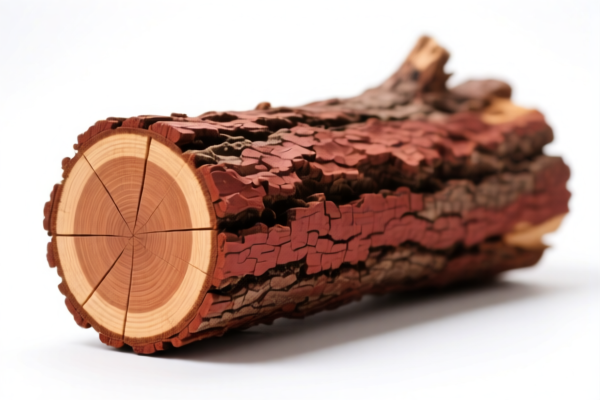
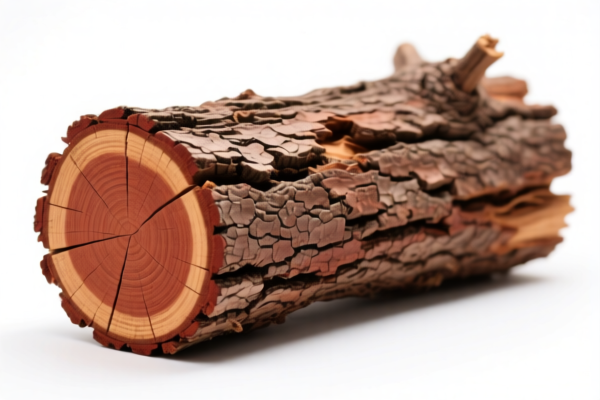
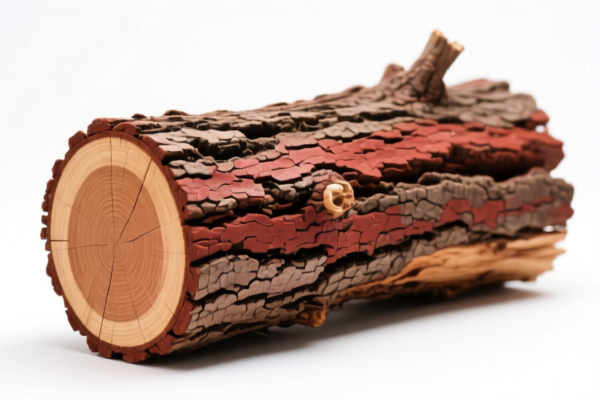
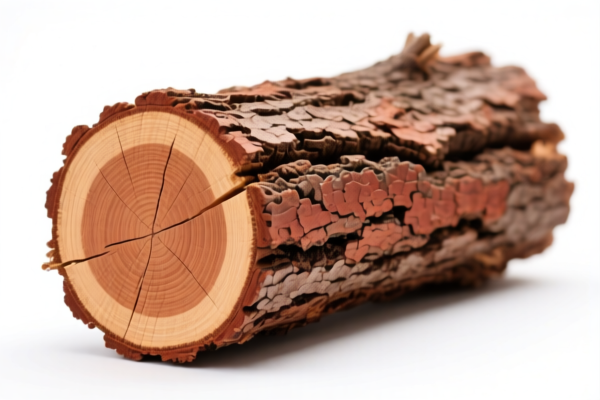
AI Analysis
🌳 Red Oak Logs (Unprocessed/ Roughly Hewed Red Oak)
🌐 HS Code Reference & Customs Clearance Guide | 2026 Tariff Analysis for US Imports | Professional Strategy for Wood Products
📌 I. Product Definition & Classification: What Are "Rough Red Oak Logs"?
"Rough Red Oak Logs" refer to unprocessed or minimally processed timber made from Quercus rubra (Red Oak). In international trade, the classification depends heavily on the physical form (logs vs. sawn) and the degree of processing (unpeeled, roughly squared, or sliced).
Key Distinction Points: * Log/Unpeeled State: If the wood is still in its natural cylindrical shape or simply roughly squared without being planked/sawn into boards → Classify under Heading 4403 (Wood prepared for flooring vs. raw timber). * Flooring/Board Form: If the wood has been planed, grooved, or shaped specifically for flooring applications → Classify under Heading 4409 (Wood continuously shaped along any of its edges, ends or faces). * Sawn/Sectioned: If the wood has been longitudinally sawn, sliced, or peeled into simple planks or veneer sheets without further shaping (like tongue-and-groove) → Classify under Heading 4407 (Wood sawn or chipped lengthwise).
⚠️ Critical Warning:
- If you declare "Rough Red Oak Logs" but they are actually ready-to-install flooring, you risk being reclassified to 4409, which carries a 38.2% total tax.
- If they are simple sawn planks (no tongue/groove), they may fall under 4407 or 4403 (35.0% total tax).
- Misclassification can lead to significant duty underpayment penalties.
📦 II. HS Code Classification Details (2026 Latest Tariff Schedule)
| HS Code | Product Description | Application Scenario | Processing Level |
|---|---|---|---|
4409.29.06.55 |
Rough Red Oak Flooring Timber | Material: Red Oak; Form: Features consistent with flooring (e.g., pre-shaped edges) | High (Shaped for flooring) |
4407.91.00.22 |
Rough Red Oak Wood, Longitudinally Sliced/Cut | Form: Wood sawn, chipped, or peeled lengthwise; not yet shaped as flooring | Medium (Sawn/Sliced) |
4403.91.00.20 |
Rough Red Oak Timber, Roughly Hewed | Form: Roughly squared, roughly sawn logs; simple preparation | Low (Raw/Roughly Hewed) |
4403.91.00.40 |
Unpeeled or Roughly Hewed Red Oak Timber | Material & Form: Highly consistent with raw/log state, unpeeled | Low (Raw/Unpeeled) |
4409.29.26.60 |
Red Oak Flooring, Non-Coniferous | Form: Other materials for flooring; Red Oak is non-coniferous | High (Shaped for flooring) |
🔍 Key Insight:
- The difference between 4403/4407 (35.0% tax) and 4409 (38.2% tax) is often just a few millimeters of machining (tongue, groove, or rebate).
- 4409 codes are for wood that has been "continuously shaped."
- 4403/4407 codes are for wood that is sawn, peeled, or roughly squared but not yet shaped into final profiles.
💰 III. 2026 Latest Tariff Rate Breakdown (Including Additional Duties & Policy Surcharges)
✅ Applicable Country: United States (US)
✅ Origin: China (CN)
✅ Effective Date: From November 10, 2025 (including subsequent imports)
🎯 1. 4409.29.06.55 & 4409.29.26.60 —— Red Oak Flooring (Shaped)
| Item | Content |
|---|---|
| Base Duty Rate | 3.2% (Ad Valorem) |
| Section 301 Duty | +25.0% (Additional Tariff from USITC Footnote 9903.88.01) |
| Section 122 Duty | +10.0% (Specific surcharge for certain wood products/China origin) |
| Total Tax Rate | 38.2% |
| Tax Calculation | CIF Value × 38.2% |
| De Minimis Eligibility | ❌ NO (deny_de_minimis) |
| Legal Basis Path | USITC:4409.29.06.55 → FOOTNOTE:9903.88.01 (25%) + IEEPA:9903.01.24 (10%) |
📌 Explanation:
- The 3.2% base rate is the standard MFN rate for wood flooring.
- The 25% Section 301 tariff applies to all Chinese-origin wood products in this category.
- The 10% Section 122 tariff is a specific surcharge often applied to raw wood or semi-processed wood from China.
- Total 38.2% is a high barrier. Ensure your product description clearly matches "flooring" if using this code.
🎯 2. 4407.91.00.22 —— Rough Red Oak, Sawn/Sliced
| Item | Content |
|---|---|
| Base Duty Rate | 0.0% (Ad Valorem) |
| Section 301 Duty | +25.0% |
| Section 122 Duty | +10.0% |
| Total Tax Rate | 35.0% |
| Tax Calculation | CIF Value × 35.0% |
| De Minimis Eligibility | ❌ NO (deny_de_minimis) |
| Legal Basis Path | USITC:4407.91.00.22 → FOOTNOTE:9903.88.01 (25%) + IEEPA:9903.01.24 (10%) |
📌 Note:
- Even though the base rate is 0%, the total cost is still 35% due to surcharges.
- This code is suitable if the wood is sawn into planks but not shaped into flooring profiles (no tongue/groove).
🎯 3. 4403.91.00.20 & 4403.91.00.40 —— Rough Red Oak Logs/Timber
| Item | Content |
|---|---|
| Base Duty Rate | 0.0% (Ad Valorem) |
| Section 301 Duty | +25.0% |
| Section 122 Duty | +10.0% |
| Total Tax Rate | 35.0% |
| Tax Calculation | CIF Value × 35.0% |
| De Minimis Eligibility | ❌ NO (deny_de_minimis) |
| Legal Basis Path | USITC:4403.91.00.20 / 4403.91.00.40 → FOOTNOTE:9903.88.01 (25%) + IEEPA:9903.01.24 (10%) |
📌 Note:
- These codes apply to raw or roughly prepared logs/timber.
- 4403.91.00.40 is specifically for unpeeled or roughly squared logs.
- 4403.91.00.20 is for other roughly prepared timber.
- If your "logs" are actually sawn lumber, do not use this code; use 4407.
🛠️ IV. Customs Clearance Practical Advice (Risk Avoidance Guide)
✅ 1. Required Documentation Checklist (Mandatory)
| Document | Required? | Notes |
|---|---|---|
| ✅ Product Specification Sheet | ✔️ | Must detail dimensions, moisture content, and degree of processing (e.g., "sawn" vs. "shaped"). |
| ✅ Photos (Inside/Out) | ✔️ | Show cross-section and ends. Critical for proving if it's a "log" or "sawn plank." |
| ✅ Commercial Invoice | ✔️ | Must specify "Red Oak," "Quercus rubra," and exact HS Code. |
| ✅ Phytosanitary Certificate | ✔️ | Mandatory for all wood products entering the US. Must certify no pests. |
| ✅ Fumigation Certificate | ✔️ | If applicable, to prove wood is treated. |
| ✅ Bill of Lading | ✔️ | Must match invoice description. |
✅ 2. Declaration Strategy (Key Mnemonics)
🔥 “Shape Defines the Code, Tax Differs by 3.2%!”
| Scenario | Correct HS Code | Wrong Code (Risk) |
|---|---|---|
| Raw Log / Unpeeled | 4403.91.00.40 (35.0%) |
Declaring as 4409 → Underpayment → Penalty |
| Roughly Hewed / Squared | 4403.91.00.20 (35.0%) |
Declaring as 4407 → Misclassification |
| Sawn Plank (No Tongue/Groove) | 4407.91.00.22 (35.0%) |
Declaring as 4409 → Overpayment (if you want cheaper) OR Misclassification |
| Flooring (Tongue/Groove) | 4409.29.06.55 (38.2%) |
Declaring as 4407 → Huge Penalty (Underpayment) |
📌 Critical Tip:
- If the wood has any continuous shaping (tongue, groove, rebated edges), it MUST be4409.
- If it is just flat-sawn or roughly cut, it is4407or4403.
- The 3.2% difference (38.2% vs. 35.0%) is small in percentage, but the legal risk of misclassifying a "log" as "flooring" or vice versa is high.
✅ 3. Special Cases & Handling
| Case | Handling Advice |
|---|---|
| Mixed Load (Logs + Flooring) | Split Declaration. Do not lump them together. Use separate HS codes for each line item. |
| Wood with Bark | Must declare as 4403 (Unpeeled). If bark is removed, it may become 4407 or 4403 (Hewed). |
| Heat-Treated Wood | Provide ISPM 15 Mark. Still subject to 35-38.2% tariff. |
| Re-exported from 3rd Country | Still subject to US tariffs if origin is China. Provide Certificate of Origin. |
🌍 V. Global Market Comparison (2026 Latest)
| Country/Region | Recommended HS Code | Total Duty | Certification | Notes |
|---|---|---|---|---|
| 🇺🇸 USA | 4409.29.06.55 |
38.2% | Phytosanitary + ISPM 15 | High tariff due to Sec 301 & 122 |
| 🇺🇸 USA | 4403.91.00.20 |
35.0% | Phytosanitary + ISPM 15 | Lower if not shaped as flooring |
| 🇨🇳 China | 4407/4409 |
5-15% | None (Import) | Lower base rates, no US surcharges |
| 🇪🇺 EU | 4409 |
0-6% | FSC/PEFC (Optional) | No Section 301/122 equivalents |
| 🇨🇦 Canada | 4409 |
5-10% | Phytosanitary | No Section 301 |
📌 Conclusion:
- USA has the highest barrier for Chinese Red Oak due to Section 301 (25%) and Section 122 (10%).
- EU/Canada do not apply these specific US surcharges, making them more cost-effective for non-US destined goods.
📌 VI. Common Mistakes & Pitfalls (Lessons Learned)
❌ Mistake 1: Declaring "Flooring" as "Logs" to pay 35% instead of 38.2%
👉 Consequence: Customs inspection finds tongue/groove. Penalty + Back Taxes + Seizure.
❌ Mistake 2: Not providing Phytosanitary Certificate
👉 Consequence: Rejected at Border. Re-export or Destroy. Delays cost thousands per day.
❌ Mistake 3: Mixing "Sawn Planks" and "Flooring" in one HS Code
👉 Consequence: Customs may assess the higher rate (38.2%) for the entire shipment if documentation is unclear.
❌ Mistake 4: Using "Red Oak" without specifying "Unpeeled" or "Sawn"
👉 Consequence: Customs officer has discretion to choose the code. If they choose 4409, you pay 38.2%. Be precise.
✅ Correct Approach:
"Red Oak Lumber, Roughly Hewed, Unpeeled, 2x4, Moisture 15%, ISPM 15 Treated, HS Code 4403.91.00.20"
🎯 VII. Conclusion: Precise Classification Saves Money!
🎯 Remember the Mnemonic:
🔹 “Logs & Sawn = 35%, Flooring = 38.2%.”
🔹 “Shape the edge, pay the 3.2% extra.”
🔹 “No Phytosanitary, No Entry.”
📌 Pro Tip:
If you are importing large volumes, consider applying for an Advance Ruling from US Customs and Border Protection (CBP). This legally binds the CBP to accept your HS Code classification, preventing surprise audits.
📣 Immediate Action:
📞 Contact your customs broker with photos and dimensions.
📝 Ensure your Commercial Invoice matches the HS Code exactly.
🚀 Avoid the 3.2% trap and the 35% penalty!
✨ Professional Clearance Starts with Accurate Classification!
💼 Every percent counts in wood trade!
Customer Reviews
About HS Code Classification
The Harmonized System (HS) is an internationally standardized nomenclature developed by the World Customs Organization (WCO) to classify traded products. Over 200 countries use the HS system as the basis for customs tariffs, trade statistics, and import/export regulations.
Each HS code follows a hierarchical structure:
- Chapter (2 digits) — Broad category of goods (e.g., Chapter 84: Machinery and Mechanical Appliances)
- Heading (4 digits) — More specific grouping within the chapter
- Subheading (6 digits) — Internationally standardized breakdown, used by all WCO member countries
- National subdivisions (8-10 digits) — Country-specific extensions for further classification, such as US HTSUS 10-digit codes
Correct HS code classification is essential for smooth customs clearance, accurate duty payment, and compliance with trade regulations. Misclassification can lead to customs delays, overpayment of duties, or penalties.
When importing from CN to US, the applicable tariff rates may include:
- Most-Favored-Nation (MFN) rate — The standard duty rate applied to WTO members
- General rate — Applied to countries without trade agreements
- Trade remedy duties — Additional tariffs such as Section 301 (anti-dumping), Section 232 (national security), or countervailing duties
The information provided on this page is for reference purposes only. For official classification, please consult with your local customs authority or a licensed customs broker.