Rough Sawn Western Red Cedar Lumber
CN → US| HS Code | Tariff Rate | Origin | Destination | Doc |
|---|---|---|---|---|
| 4407190068 | 35.0% | CN | US | Official Doc |
Product Images
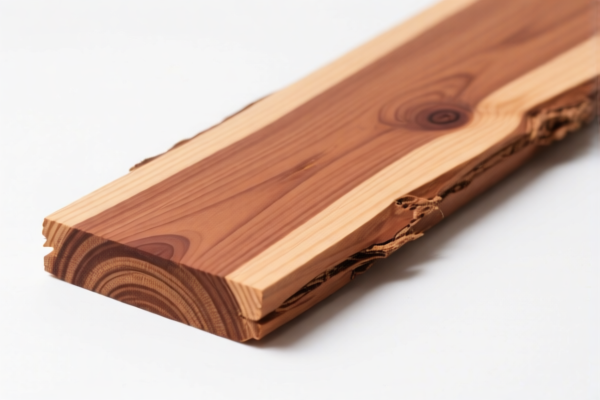
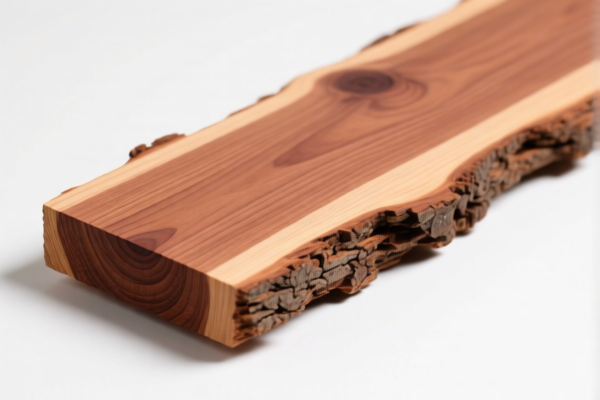
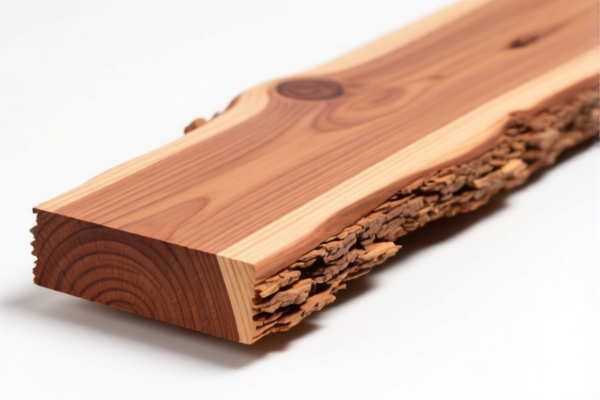
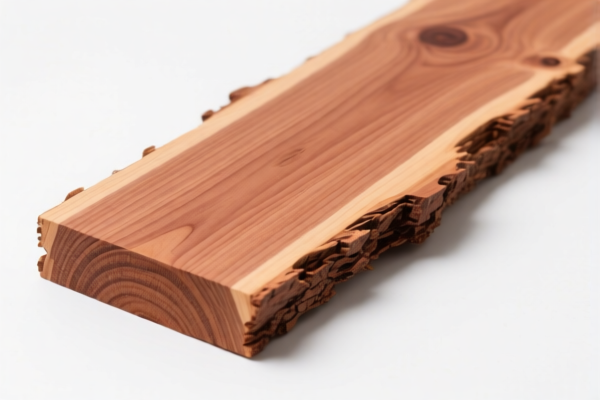
AI Analysis
🌲 Western Red Cedar Lumber (Rough Sawn)
🌐 HS Code Reference & Customs Clearance Guide | 2026 Latest Tariff Analysis | Professional Strategy for Wood Products
📌 I. Product Definition & Classification: Do You Really Understand "Rough Western Red Cedar"?
Western Red Cedar is a premium softwood renowned for its natural resistance to rot, insects, and weathering. In international trade, it is strictly regulated based on its processing level and wood species.
Key Distinction: "Rough" vs. "Planed/Sanded"
Rough Sawn (Unplaned): The wood has been sawn to dimension but has not been planed, sanded, or finished to a smooth surface. It retains the "saw marks" from the milling process. This is the critical factor for classification.
* Finished Sawn (Planed/Sanded):* If the wood has been smoothed, planed, or sanded, it generally moves to a different subheading (e.g., 4407.19.00.xx other processed types).
⚠️ Key Classification Point:
- If the lumber is only cut/sliced and remains uneven/rough → Classified under 4407.19.00.68
- If it has been planed, sanded, or tongued/grooved → May fall under different subheadings (e.g., 4407.10.xx or other 4407.19 variants depending on exact thickness and treatment).
- Thickness Note: The description specifies "thickness exceeding 6 mm," which is the standard threshold for Chapter 44 wood products.
📦 II. HS Code Classification Details (Based on Provided Data)
Based on the specific input data provided:
| HS Code | Product Description | Key Characteristics | Processing State |
|---|---|---|---|
4407.19.00.68 |
Rough Western Red Cedar Sawn Wood | Coniferous; Other; Not treated; Rough; Thickness > 6mm | ✅ Unplaned/Rough |
🔍 Detailed Breakdown of
4407.19.00.68:
- Chapter 44: Wood and articles of wood.
- Heading 4407: Wood sawn or chipped lengthwise, sliced or peeled, whether or not planed, sanded or end-jointed, of a thickness exceeding 6 mm.
- Subheading 4407.19: Other (Non-deciduous, i.e., Coniferous).
- Specific Code .68: Specifically identified as "Rough" Western Red Cedar that is "Not treated."📌 Important Warning:
- Do NOT use this code if the wood is pressure-treated, painted, or stained. "Not treated" is a strict requirement for this specific subcode.
- Do NOT use this code if the wood has been planed or sanded smooth. Once smoothed, it may fall under a different "Other" subcode within 4407.19.
💰 III. 2026 Latest Tariff Rate Details (US Market)
✅ Applicable Country: United States (US)
✅ Origin: China (CN) (Implied by the tax structure in the data)
✅ Effective Time: Current as of provided data
🎯 1. 4407.19.00.68 —— Rough Sawn Western Red Cedar (Rough, Untreated)
| Item | Content |
|---|---|
| Base Tariff Rate | 0.0% (ad valorem) |
| Section 301 / Additional Tariff | +25.0% |
| Total Tariff Rate | 25.0% |
| Tax Calculation | CIF Value × 25% |
| De Minimis Exemption | ❌ Not Eligible (High-value lumber shipments typically exceed de minimis thresholds or are restricted) |
| Legal Basis Path | USITC:4407.19.00.68 → Footnote: 301 Tariffs |
📌 Explanation:
- Base Rate (0%): Western Red Cedar, as a natural wood product, often enjoys a low base duty.
- Additional Tariff (25%): This is the critical cost driver. Under the Section 301 Trade Act (and subsequent USITC listings), certain Chinese-origin wood products are subject to an additional 25% duty.
- Total Cost Impact: You pay 25% of the landed value in tariffs alone. There is no base duty to offset this, so the full CIF value is taxed at 25%.
🛠️ IV. Customs Clearance Practical Advice (Avoiding Pitfalls)
✅ 1. Essential Documentation Checklist (Do Not Miss)
| Document | Required? | Purpose |
|---|---|---|
| ✅ Commercial Invoice | ✔️ | Must clearly state: "Western Red Cedar, Rough Sawn, Untreated, Thickness > 6mm." |
| ✅ Packing List | ✔️ | Detail dimensions, volume (MBF or CBM), and piece count. |
| ✅ Phytosanitary Certificate | ✔️ | CRITICAL for wood products. Issued by the country of origin’s agricultural authority to prove freedom from pests. |
| ✅ ISPM 15 Marking | ✔️ | If packed in wood pallets/crates, they must be heat-treated and marked with the ISPM 15 logo. |
| ✅ Species Declaration | ✔️ | Explicitly declare "Western Red Cedar" (Not "Lumber" or generic "Wood"). |
| ✅ Condition Declaration | ✔️ | State "Rough" and "Untreated" to justify HS Code 4407.19.00.68. |
✅ 2. Classification Strategy (Key Mnemonic)
🔥 "Rough & Raw, No Paint, No Sand, 25% on Hand!"
| Scenario | Correct HS Code | Tariff Impact |
|---|---|---|
| Rough Sawn, Untreated Cedar | 4407.19.00.68 |
25% |
| Planed/Sanded Cedar | Different Subcode (e.g., 4407.19.00.xx) | Likely 25% (check specific subcode) |
| Pressure-Treated Cedar | Different HS Code (e.g., 4407.10.xx) | Likely Higher + Treatment Chemical Duties |
| Pine/Fir (Non-Cedar) | 4407.10.xx |
Different base rate, but still 25% additional |
📌 Pro Tip:
- If you claim it is "Western Red Cedar," Customs may request botanical proof or lab samples if the value is high or if there is doubt. Ensure your invoice matches the species exactly.
- "Rough" is a technical term. If the supplier sends you "S4S" (Surfaced Four Sides), it is not rough. Do not misdeclare "Rough" for "Planed" wood to avoid audits.
✅ 3. Special Considerations for Wood Imports
| Issue | Recommendation |
|---|---|
| Moisture Content | Ensure wood is dry (typically 15-19% for outdoor use) but not over-dried. Excessive moisture can lead to mold, causing rejection. |
| Fumigation | If the wood is not ISPM 15 compliant, it may be fumigated at port at your expense. |
| Cedar Specifics | Western Red Cedar has a strong aroma. Ensure packaging is sealed to prevent odor leakage, which can sometimes trigger extra inspections. |
| Value Declaration | Declare FOB or CIF accurately. The 25% duty is applied to the CIF (Cost, Insurance, Freight) value. Under-declaring can lead to penalties. |
🌍 V. Global Market Comparison (Wood Products)
| Country/Region | Recommended HS Code | Base Tariff | Additional Duty (China Origin) | Total Est. Duty | Notes |
|---|---|---|---|---|---|
| 🇺🇸 United States | 4407.19.00.68 |
0% | +25% | 25% | Section 301 applies. |
| 🇨🇳 China | 4407.19.00.68 |
Varies | N/A | Lower | Import duty may apply if entering China. |
| 🇪🇺 European Union | 4407.19.00 |
0-12% | None | 0-12% | No Section 301 equivalent. EUTR (EU Timber Regulation) requires due diligence. |
| 🇬🇧 United Kingdom | 4407.19.00 |
0-12% | None | 0-12% | Post-Brexit UK Timber Regulation (UKTR) requires due diligence. |
| 🇨🇦 Canada | 4407.19.00 |
0% | None | 0% | CUSMA/USMCA may apply if Canadian origin. |
📌 Conclusion:
- The US market is uniquely expensive for Chinese wood products due to the 25% additional duty.
- If sourcing from non-China origins (e.g., Canada, EU, Southeast Asia), you can avoid the 25% surcharge, significantly reducing landed cost.
📌 VI. Common Mistakes & Pitfalls (Lessons Learned)
❌ Mistake 1: Declaring "Planed Siding" as "Rough Sawn Lumber"
👉 Consequence: Customs reclassifies, issues penalty, and may seize goods for misdeclaration.
❌ Mistake 2: Ignoring Phytosanitary Certificates
👉 Consequence: Immediate rejection/destroyed at port. No amount of paperwork fixes this after the fact.
❌ Mistake 3: Assuming "Cedar" means "Exempt from Duty"
👉 Consequence: You still owe 25% on the CIF value. The base rate is 0%, but the additional duty is not.
❌ Mistake 4: Confusing "Rough" with "Green"
👉 Consequence: "Green" refers to moisture content; "Rough" refers to surface finish. Both are independent. You can have "Rough & Dry" or "Planed & Green."
✅ Correct Practice:
"Western Red Cedar, Rough Sawn, Untreated, Thickness 1 1/2" x 6", Moisture 15-19%, Phytosanitary Certificate Attached, ISPM 15 Pallets."
🎯 VII. Conclusion: Precision Saves Money!
🎯 Remember the Rules:
🔹 "Rough = No Planing, No Sanding."
🔹 "Untreated = No Paint, No Chemicals."
🔹 "25% is the Price for Chinese Origin."
📌 Strategic Advice:
1. Verify Origin: If possible, source Western Red Cedar from Canada or Europe to avoid the 25% US tariff.
2. Pre-Ruling: If unsure about the "Rough" status, apply for an Advance Ruling from US Customs (CBP).
3. Documentation: Keep Phytosanitary Certificates and ISPM 15 marks impeccable. Wood is high-risk for inspection.
📣 Immediate Action:
📞 Confirm with your supplier: "Is this truly rough sawn? Is it untreated?"
🚀 Calculate landed cost: CIF Price × 1.25 (for duty) + Freight + Insurance + Handling.
💼 Don't let hidden 25% duties kill your margin!
✨ Professional Clearing Starts with Accurate Classification!
💼 Your Wood Product, Your Competitive Edge!
Customer Reviews
About HS Code Classification
The Harmonized System (HS) is an internationally standardized nomenclature developed by the World Customs Organization (WCO) to classify traded products. Over 200 countries use the HS system as the basis for customs tariffs, trade statistics, and import/export regulations.
Each HS code follows a hierarchical structure:
- Chapter (2 digits) — Broad category of goods (e.g., Chapter 84: Machinery and Mechanical Appliances)
- Heading (4 digits) — More specific grouping within the chapter
- Subheading (6 digits) — Internationally standardized breakdown, used by all WCO member countries
- National subdivisions (8-10 digits) — Country-specific extensions for further classification, such as US HTSUS 10-digit codes
Correct HS code classification is essential for smooth customs clearance, accurate duty payment, and compliance with trade regulations. Misclassification can lead to customs delays, overpayment of duties, or penalties.
When importing from CN to US, the applicable tariff rates may include:
- Most-Favored-Nation (MFN) rate — The standard duty rate applied to WTO members
- General rate — Applied to countries without trade agreements
- Trade remedy duties — Additional tariffs such as Section 301 (anti-dumping), Section 232 (national security), or countervailing duties
The information provided on this page is for reference purposes only. For official classification, please consult with your local customs authority or a licensed customs broker.