Rough Spruce Logs
CN → US| HS Code | Tariff Rate | Origin | Destination | Doc |
|---|---|---|---|---|
| 4401110000 | 35.0% | CN | US | Official Doc |
| 4403220165 | 35.0% | CN | US | Official Doc |
| 4403210165 | 35.0% | CN | US | Official Doc |
| 4401210000 | 35.0% | CN | US | Official Doc |
| 4407110052 | 35.0% | CN | US | Official Doc |
Product Images
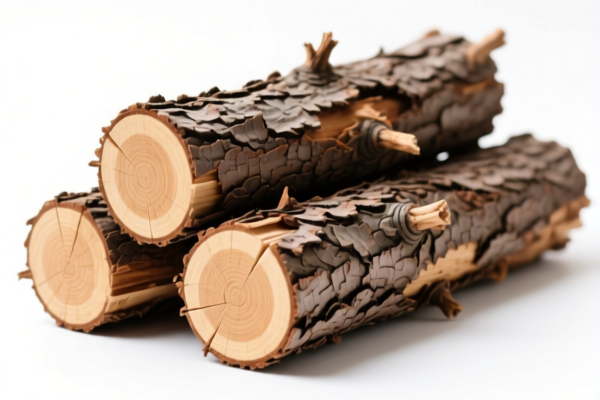
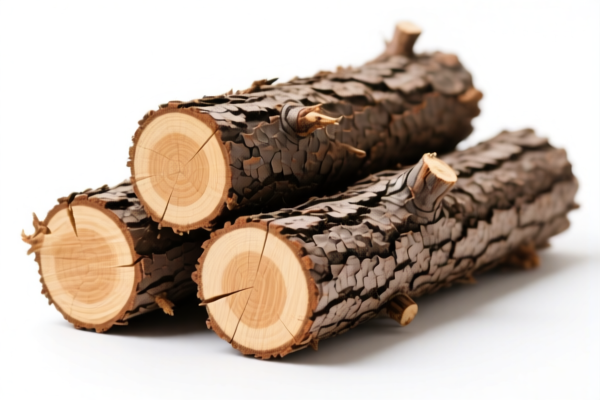
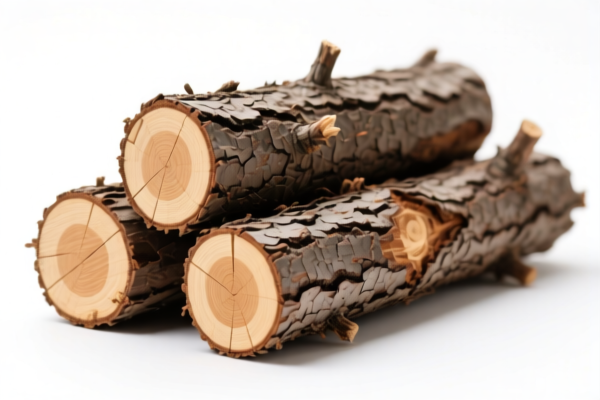
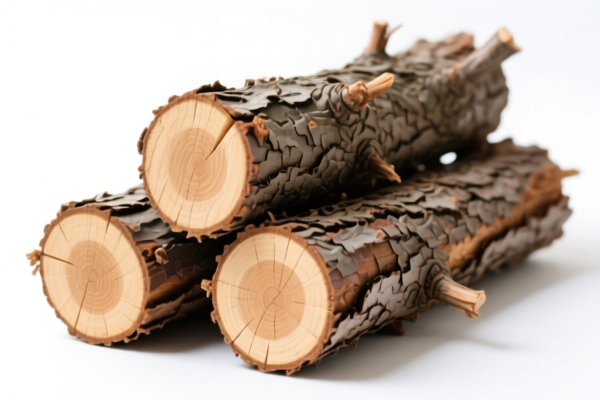
AI Analysis
🌲 Rough Spruce Logs (Wood Raw Materials)
🌐 HS Code Reference & Customs Clearance Guide | 2026 Latest Tariff Analysis | Professional Import Strategy
📌 I. Product Definition & Classification: Understanding "Rough Spruce Logs"
Rough Spruce Logs refer to coniferous wood (specifically Spruce, a type of Pine/Conifer) in its primary or semi-processed form. In international trade, these are categorized based on their processing stage and physical shape:
- Fuelwood / Raw Logs: Unprocessed, rough-cut logs intended for fuel or basic processing.
- Primary Form (Sawn/Chipped): Wood processed into rough squares, planks, or chips but not yet planed or glued.
- Rough Square Timber: Logs sawn into rectangular cross-sections, ready for further milling.
⚠️ Key Classification Point:
- If the wood is unprocessed or merely stripped of bark/sapwood and in log form → It falls under Chapter 44, Heading 4401 (Fuelwood) or specific log entries.
- If the wood is sawed or chipped longitudinally (even if rough/unplaned) → It falls under Chapter 44, Heading 4403 (Wood in the rough) or 4407 (Wood sawn/chipped lengthwise).
- Spruce/Pine Distinction: Spruce is generally classified under "Coniferous" (Pinaceae family). In the HS code structure, specific pine/spruce codes (like 4403.22, 4407.11) apply.
📦 II. HS Code Classification Details (2026 Latest Tariff Authority)
Based on the provided data, here is the precise mapping for Rough Spruce Logs and its variants:
| HS Code | Product Description | Physical Form | Tax Rate (Total) |
|---|---|---|---|
4401.11.00.00 |
Rough Spruce Logs (Fuel/Raw) | Coniferous wood, in log form (Fuel wood) | 35.0% |
4403.22.01.65 |
Rough Spruce Logs (Primary Form) | Spruce wood, in primary form (Unprocessed logs/bolts) | 35.0% |
4403.21.01.65 |
Rough Spruce (Rough Squares) | Spruce wood, in rough square timber form | 35.0% |
4401.21.00.00 |
Rough Spruce (Primary Wood Form) | Coniferous wood, in primary form (Sawlogs/Biofuel grade) | 35.0% |
4407.11.00.52 |
Rough Spruce (Coarse Processing) | Coniferous pine/spruce, coarsely sawn or chipped | 35.0% |
🔍 Important Note:
- All listed HS codes for Rough Spruce Logs carry the same total tax rate of 35.0%.
- The distinction lies in the physical description and intended use (Fuel vs. Structural/Industrial).
- Spruce is explicitly identified in codes4403.22,4403.21, and4407.11. Codes4401.11and4401.21are broader "Coniferous" categories but apply when the wood is in log/fuel form.
💰 III. 2026 Latest Tariff Rate Breakdown (Detailed Policy Analysis)
✅ Applicable Country: United States (US)
✅ Origin: China (CN) (Implied by the specific "Section 301" and "122 Clause" structure)
✅ Effective Date: Current (Post-2025 adjustments)
🎯 Universal Tax Structure for All Spruce Log Codes
For all the HS codes listed above (4401.11.00.00, 4403.22.01.65, etc.), the tax composition is identical:
| Item | Rate | Detail |
|---|---|---|
| Base Tariff | 0.0% | Standard Most Favored Nation (MFN) rate for raw wood/coniferous logs is often 0% or negligible. |
| Additional Tariff (Section 301) | +25.0% | Imposed under U.S. Trade Act of 1974, Section 301, targeting Chinese goods. |
| Section 122 Clause Tariff | +10.0% | Specific additional levy applied to certain wood products under U.S. Customs regulations. |
| Total Tax Rate | 35.0% | Sum of all applicable duties. |
| De Minimis Exemption | ❌ Not Eligible | Wood products are generally excluded from the $800 de minimis threshold. |
| Legal Basis Path | Section 301 → USITC Footnotes for 4401/4403/4407 → 122 Clause |
📌 Explanation:
- "Base Tariff 0%": Raw wood logs often enjoy low base tariffs to support U.S. manufacturing.
- "Additional Tariff 25%": This is the heavy hitter, part of the ongoing trade measures against Chinese-origin goods.
- "122 Clause 10%": A specific statutory addition for certain timber products, effectively increasing the cost of entry.
- Total 35%: This is a high-cost import. Importers must account for this in their landed cost calculations.
🛠️ IV. Customs Clearance Practical Advice (Battle-Tested Tips)
✅ 1. Documentation Checklist (Non-Negotiable)
| Document | Required? | Explanation |
|---|---|---|
| ✅ Commercial Invoice | ✔️ | Must clearly state: "Rough Spruce Logs," "Coniferous Wood," and precise HS Code. |
| ✅ Packing List | ✔️ | Detail weight, volume, and number of logs/packages. |
| ✅ Phytosanitary Certificate | ✔️ | Critical! Wood from China requires ISPM 15 compliance to prevent pest introduction. |
| ✅ Bill of Lading (B/L) | ✔️ | Ensure "Shipper" and "Consignee" details match invoice exactly. |
| ✅ Country of Origin Certificate | ✔️ | To confirm Chinese origin and apply the 35% rate accurately. |
| ✅ Material Safety Data Sheet (MSDS) | Optional | If treated or treated with preservatives, MSDS may be required. |
✅ 2. Declaration Tips (Key Mantras)
🔥 “Form Dictates Code, Origin Dictates Tax, Phytosanitary Saves Time!”
| Scenario | Correct Declaration | Wrong Practice |
|---|---|---|
| Logs for Fuel/Bioenergy | 4401.11.00.00 or 4401.21.00.00 |
Misdeclaring as "furniture parts" → Higher tax + penalties. |
| Raw Spruce Bolts | 4403.22.01.65 |
Declaring as "finished lumber" → Delayed clearance. |
| Rough Square Timber | 4403.21.01.65 |
Omitting "Rough" in description → Customs may downgrade or hold. |
| Coarsely Sawn Boards | 4407.11.00.52 |
Calling it "Planed Lumber" → Wrong HS, wrong tax. |
📌 Key Reminder:
- Physical State Matters: If the wood is sawn (even roughly), use 4403/4407. If it is in log form (unmilled), use 4401.
- Spruce Specificity: Ensure the product name explicitly mentions "Spruce" or "Coniferous" to match the HS code summary.
✅ 3. Special Handling Cases
| Case | Recommendation |
|---|---|
| Treated Wood | If chemically treated, ensure ISPM 15 marking is visible on each crate/log. |
| Mixed Species | If the shipment contains both Spruce and Pine, declare Spruce if it is the primary material, or split the entry if required by customs. |
| OEM/Custom Logs | Provide engineering drawings if the logs are cut to specific dimensions for a particular project. |
| Wood Chips | If the "logs" are actually chipped, declare under 4401.21.00.00 (Fuelwood in chip form). |
🌍 V. Global Market Comparison (2026)
| Country/Region | Recommended HS Code | Total Tax Rate | Certification | Remarks |
|---|---|---|---|---|
| 🇺🇸 USA | 4403.22.01.65 / 4401.11.00.00 |
35.0% | ISPM 15 + CBP Form | High tariff due to Section 301 + 122 Clause. |
| 🇨🇳 China | 4403.22.01.65 |
~0-5% | Fumigation Certificate | Low import tax for raw wood. |
| 🇪🇺 EU | 4403.22.00 |
~0-3% | FLEGT/EUTR | Strict environmental compliance; no 25% tariff. |
| 🇯🇵 Japan | 4403.22.00 |
~2-5% | Phytosanitary | Moderate tax; strong demand for softwood. |
📌 Conclusion:
- USA is the most expensive market for Chinese Rough Spruce Logs due to the 35% combined tariff.
- EU and Japan offer more competitive tax rates but have strict environmental and phytosanitary standards.
- Strategy: Consider sourcing from non-China origins (e.g., Russia, Canada, Baltic States) to avoid the 35% U.S. tariff, if possible.
📌 VI. Common Errors & Pitfalls (Lessons Learned)
❌ Error 1: Declaring "Spruce Logs" as "Furniture Parts"
👉 Consequence: HS Code mismatch → 100% penalty + seizure.
❌ Error 2: Ignoring ISPM 15 Phytosanitary Requirements
👉 Consequence: Shipment held at port → Storage fees + destruction risk.
❌ Error 3: Misclassifying "Rough Squares" as "Planed Lumber"
👉 Consequence: Incorrect tax application → Audit trigger + back taxes.
❌ Error 4: Not specifying "Spruce" in the description
👉 Consequence: Customs may apply a generic "Other Wood" rate, which could be higher or trigger additional scrutiny.
✅ Correct Approach:
"Rough Spruce Logs, Coniferous, Unprocessed, ISPM 15 Treated, HS Code 4403.22.01.65"
🎯 VII. Conclusion: Smart Classification, Cost Efficiency
🎯 Remember These Key Points:
🔹 "Logs vs. Sawn: 4401 vs. 4403"
🔹 "35% is the Price of Origin: Plan for the Tariff"
🔹 "Phytosanitary is Mandatory: No Certificate, No Entry"
📌 Pro Tip:
- If you are importing large volumes, consider applying for a Section 301 Exclusion if your specific product qualifies (check USTR lists).
- Always request a Binding Ruling from U.S. Customs (CBP) before shipment to confirm the HS Code and tax rate.
📣 Immediate Action:
📞 Contact your customs broker + Provide Phytosanitary Certificate + Apply for CBP Ruling
🚀 Ensure your Rough Spruce Logs clear customs smoothly, avoid penalties, and optimize landed costs.
✨ Professional clearance starts with accurate classification!
💼 Every percentage point of tax counts in the wood industry!
Customer Reviews
About HS Code Classification
The Harmonized System (HS) is an internationally standardized nomenclature developed by the World Customs Organization (WCO) to classify traded products. Over 200 countries use the HS system as the basis for customs tariffs, trade statistics, and import/export regulations.
Each HS code follows a hierarchical structure:
- Chapter (2 digits) — Broad category of goods (e.g., Chapter 84: Machinery and Mechanical Appliances)
- Heading (4 digits) — More specific grouping within the chapter
- Subheading (6 digits) — Internationally standardized breakdown, used by all WCO member countries
- National subdivisions (8-10 digits) — Country-specific extensions for further classification, such as US HTSUS 10-digit codes
Correct HS code classification is essential for smooth customs clearance, accurate duty payment, and compliance with trade regulations. Misclassification can lead to customs delays, overpayment of duties, or penalties.
When importing from CN to US, the applicable tariff rates may include:
- Most-Favored-Nation (MFN) rate — The standard duty rate applied to WTO members
- General rate — Applied to countries without trade agreements
- Trade remedy duties — Additional tariffs such as Section 301 (anti-dumping), Section 232 (national security), or countervailing duties
The information provided on this page is for reference purposes only. For official classification, please consult with your local customs authority or a licensed customs broker.